

OBD-II Code B3949: Right Front Turn Signal Circuit Malfunction
What B3949 means, why it triggers, and how to fix it
- Inspect the 7444NA turn signal bulb first, as a broken filament causes 80% of B3949 codes and costs under $20 to fix.
- Check the front fascia wiring harness on 2014-2020 GM trucks and SUVs; TSB #PIT5487F documents a known chafing issue against the right frame rail.
- Disconnect the negative battery terminal for 60 seconds after repairing a short circuit to reset the Body Control Module (BCM) and restore power to the turn signal.
- Fix this code immediately to avoid a $150+ traffic citation for an inoperative turn signal and reduce your risk of an intersection collision.
What Does B3949 Mean?

Trouble code B3949 indicates the vehicle's Body Control Module (BCM) detected an electrical fault in the right front turn signal circuit. The BCM determined the circuit is open, shorted to ground, or shorted to power. This fault disables the right front turn signal.
Technical definition: B3949 is a manufacturer-specific code defined by General Motors as 'Right Front Turn Signal Circuit Malfunction'. The BCM sets this code when it detects a short to ground, short to voltage, or an open circuit while battery voltage is stable (9-16 volts). Modern GM BCMs feature self-protecting driver circuits; upon detecting a persistent short, the BCM cuts power to prevent module damage. Function restores only after repairing the fault and performing a hard reset.
Can I Drive With B3949?
Yes, But With Caution. Yes, but it presents a significant safety risk. A non-functioning turn signal makes your intentions unclear, dramatically increasing the risk of an intersection collision. This is a primary moving violation, meaning police will pull you over and issue a ticket specifically for this fault. Fix it immediately.
Common Causes

- Burned-out turn signal bulb (Very Common) — The filament inside the incandescent turn signal bulb broke, creating an open circuit. This is the most frequent, cheapest, and simplest cause for this code.
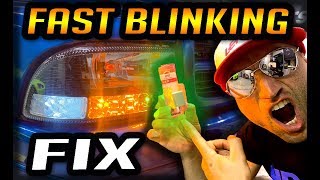
- Incorrect bulb installed (e.g., aftermarket LED) (Common) — Installing a standard LED bulb in a circuit designed for a halogen bulb drastically lowers the circuit's resistance. The BCM interprets this lower resistance as a burned-out bulb, causing a 'hyperflash' condition and setting a B3949 code. A load resistor or a CAN-bus compatible LED bulb is required. 🎬 See how to fix hyperflash when installing LED bulbs.
- Corroded bulb socket (often from water intrusion) (Common) — A cracked headlight lens or degraded body seal allows moisture to enter the assembly. This water corrodes the socket terminals or melts the plastic, leading to a poor connection or a complete open circuit.
- Chafed or shorted wiring harness (Common) — The wiring running to the turn signal assembly rubs against the vehicle's frame, wearing through the insulation and causing a short circuit. This is a widely documented issue on 2015-2020 GM K2XX platform SUVs (TSB #PIT5487F), where the front fascia harness shorts against the right frame rail.
- Poor ground connection (Less Common) — The ground wire for the lighting circuit (often labeled G102 on GM wiring diagrams) becomes loose, frayed, or corroded at its chassis connection point. Without a solid ground path, the circuit is incomplete.
- Faulty turn signal/multifunction switch (Rare) — The switch on the steering column fails internally. This sends an intermittent or permanent fault signal to the BCM, triggering the code even if the bulb and wiring are perfectly fine.
- Damaged BCM connector or terminal (Rare) — The pins within the large multi-pin connectors at the BCM become corroded, bent, or pushed out, creating a poor connection. This usually stems from water intrusion into the cabin near the BCM.
- Failed Body Control Module (BCM) (Very Rare) — The internal driver circuit within the BCM that sends power to the bulb fails. This is extremely uncommon and requires definitive proof that the bulb, socket, wiring, and grounds are fully functional before replacing the module.
Symptoms

- Right front turn signal does not light up — When you activate the right turn signal or hazard lights, the bulb at the front of the car does not illuminate at all.
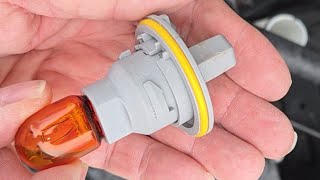
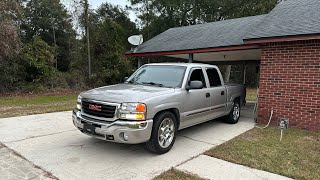
- Rapidly flashing turn signal indicator ('Hyperflash') — The dashboard arrow for the right turn signal blinks much faster than normal. This is a built-in BCM warning indicating a change in resistance, usually from a burned-out bulb or an incompatible LED. 🎬 Watch this simple hyperflash fix for older GM trucks.
- Right front turn signal stays on constantly — The turn signal bulb remains lit but does not flash. This indicates a short to power in the circuit, providing constant voltage instead of a pulsating signal.
- Warning message on the dashboard — A message such as 'Right Front Turn Signal Failure' or 'Service Vehicle Soon' appears on the driver information center (DIC).
- Right front Daytime Running Lamp (DRL) is inoperative — On many GM vehicles, the turn signal bulb also functions as the DRL. A fault in the circuit prevents the DRL from working, even when the turn signal is off.
Common Fixes & Costs
- Replace turn signal bulb — Parts: $5-$20, Labor: $0-$50, ~0.2 hr book time (DIY)
- Replace turn signal bulb socket/pigtail — Parts: $15-$50, Labor: $75-$200, ~0.8 hr book time (DIY)
- Repair chafed wiring harness — Parts: $10-$50, Labor: $150-$500, ~2.5 hr book time (Intermediate)
- Clean or repair ground connection point — Parts: $1-$10, Labor: $50-$125, ~0.5 hr book time (DIY)
- Replace Body Control Module (BCM) — Parts: $150-$400, Labor: $150-$300, ~1.5 hr book time (Professional)
DIY vs Professional
- Replace turn signal bulb — Beginner:
Tools: None, or basic hand tools for access panels. - Replace turn signal bulb socket/pigtail — Beginner:
Tools: Wire strippers, wire crimpers, heat gun, butt connectors. - Clean or repair ground connection point — Beginner:
Tools: Socket/wrench set, wire brush, sandpaper, dielectric grease. - Repair chafed wiring harness — Beginner:
Tools: Multimeter, wire strippers/cutters, soldering iron or quality crimpers, heat shrink tubing, automotive-grade tape. - Replace Body Control Module (BCM) — Beginner:
Tools: Socket/wrench set, trim panel removal tools, and a dealership-level scan tool for programming.
Used vs. New Parts: Buying Guide
When a used part is worth it: A used Body Control Module (BCM) is a cost-effective option for older, high-mileage vehicles where the cost of a new OEM part is prohibitive. It makes sense if you have access to a reputable salvage yard and a qualified technician who programs the used module to your vehicle's VIN.
Donor-vehicle mileage cap: roughly under 100000 miles for the part to have meaningful remaining life.
Donor quality checklist:
- Verify the part number is an exact match, as many BCMs look identical but have different internal programming.
- Inspect the used module and its connectors for any signs of corrosion, water damage, or burnt pins.
- Obtain the VIN from the donor vehicle if possible, as this aids in the reprogramming process.
Decision logic:
- If The vehicle is less than 10 years old or has low mileage → Buy a new OEM or remanufactured BCM. The reliability and warranty outweigh the savings of a used part.
- If The cause of the original BCM failure was water intrusion → Buy new. A used BCM often has hidden corrosion that causes it to fail prematurely.
- If The vehicle is over 15 years old and the budget is very tight → A used BCM is a viable option, but accept the risk of a shorter lifespan and potential programming challenges.
Warranty tradeoff: Used BCMs from salvage yards typically offer a 30-90 day warranty. New aftermarket or remanufactured BCMs often come with a 1-year to limited lifetime warranty. A new OEM BCM installed by a dealer is covered by a parts and labor warranty.
Worst-case if a used part fails: $300-$600 if a used BCM is faulty or incompatible, requiring repeat labor for installation and programming, plus the cost of another replacement module.
Cost of Not Fixing It
- Immediate: Significantly increased risk of an accident when turning or changing lanes. You receive a moving violation ticket for an inoperative turn signal. (Added cost: $150-$300+ (for traffic citation))
- Days to Weeks: If the cause is a short to ground or short to power, it creates a parasitic battery drain, potentially leaving you with a dead battery. (Added cost: $150-$300 (for a new battery and/or roadside assistance))
- Weeks to Months: A persistent, un-repaired short circuit overheats and damages the driver circuit inside the Body Control Module (BCM), turning a simple wiring repair into an expensive module replacement. (Added cost: $500-$1000+)
Diagnosis Steps
- Verify the Failure
Activate the right turn signal and observe the dashboard indicator. Note if it flashes rapidly (hyperflash), stays solid, or doesn't light up. Exit the vehicle and visually confirm the right front turn signal bulb status. Turn on the hazard lights to confirm the bulb doesn't flash with that input either.
Tools: None (Beginner) - Inspect the Bulb, Socket, and Connector
Turn off the vehicle. Access and remove the right front turn signal bulb. Visually inspect the filament; if it's broken or the glass is dark, the bulb is bad. Use a flashlight to inspect the inside of the socket for green/white corrosion, melted plastic, or bent pins. Wiggle the connector at the back of the headlight assembly to ensure it's secure.
Tools: Flashlight, trim tools (for access, if needed) (Beginner) - Inspect the Wiring Harness (Known TSB Issue)
Carefully trace the wiring harness from the headlight assembly back towards the engine bay. Look for areas rubbing against the frame, body panels, or suspension components. On 2015-2020 GM trucks/SUVs, inspect the harness section passing the right frame rail inside the front bumper, a known chafe point documented in TSB #PIT5487F.
Tools: Flashlight (Intermediate) - Test for Pulsating Voltage at the Socket
Set a multimeter to DC Volts. Connect the black probe to a known good ground. Have a helper activate the right turn signal. Carefully probe the power terminal in the bulb socket with the red probe. You should see a pulsating voltage jumping between 0V and battery voltage (12V-14V). If you see this but the bulb doesn't light, the bulb or socket is bad. A steady 12V indicates a short to power. 0V indicates an upstream problem.
Tools: Multimeter, helper (Intermediate) - Test the Ground Circuit
Set a multimeter to Ohms (Ω). Disconnect the harness connector at the turn signal lamp. Identify the ground pin using a wiring diagram. Place one probe on the ground pin and the other on a clean, unpainted metal chassis part or the negative battery terminal. A reading under 1.0 ohm indicates a good ground. A reading higher than 5 ohms indicates a problem.
Tools: Multimeter, vehicle-specific wiring diagram (Intermediate) - Advanced: Command the Lamp with a Scan Tool
Connect a bi-directional scan tool. Navigate to the BCM output controls. Command the 'Right Front Turn Signal' ON and OFF. While commanding it on, check for voltage at the bulb socket. If voltage appears only when commanded by the scan tool, the problem lies with the turn signal switch input to the BCM, not the output circuit.
Tools: Bi-directional scan tool (Advanced) - Advanced: Test for Open or Shorted Wire with Resistance
Disconnect the battery. Disconnect the connectors at both the BCM and the headlight assembly. Set your multimeter to Ohms (Ω). To test for an open circuit, place one probe on the BCM connector pin and the other on the corresponding headlight connector pin; a good wire reads under 1.0 ohm. 'OL' indicates a broken wire. To test for a short to ground, keep one probe on the BCM pin and touch the other to a clean chassis ground; the reading should be 'OL'. Any continuity indicates a short to ground.
Tools: Multimeter, vehicle-specific wiring diagram (Advanced) - Pro Tip: Analyze the Circuit with an Oscilloscope
For intermittent faults, back-probe the signal wire at the BCM or bulb socket with an oscilloscope. When the turn signal activates, you should see a clean square wave pattern switching from 0V to battery voltage (~12-14V). A messy signal, low amplitude (e.g., 5-7V), or a flat line indicates high resistance or a short that a multimeter misses.
Tools: Oscilloscope, back-probe pins (Professional)
When This Code Triggers (Freeze-Frame Conditions)
- Battery Voltage: 9-16V (The BCM only runs diagnostics when the system voltage is stable.)
- Ignition Status: ON/RUN (The turn signal circuits are typically only active and monitored when the ignition is on.)
- Turn Signal Switch Status: Right (The code sets when the BCM commands the right turn signal on but detects an electrical fault (open, short to ground, or short to power).)
- Time Since Ignition On: > 5 seconds (The BCM waits a few seconds after startup to begin monitoring certain circuits to avoid setting false codes during power-up fluctuations.)
Related Codes
- B3948 — This is the identical code but for the Left Front Turn Signal Circuit. Diagnosing B3948 follows the exact same steps as B3949, but on the driver's side.
- B3951 — This code is for the Right Rear Turn Signal Circuit. If you have both B3949 and B3951 set simultaneously, the diagnostic focus shifts to components common to both right-side signals, such as the turn signal switch or the BCM.
- B3950 — This code is for the Left Rear Turn Signal Circuit. It is the rear equivalent of B3948.
- B2575, B2699, U026A — These are other body and communication codes listed in TSB #PIT5487F. If B3949 appears with any of these, it strongly points to the fascia harness short as the root cause.
Climate & Environmental Factors
- High Humidity / Coastal Areas: Moisture in the air, especially salt-laden air near coasts, accelerates corrosion on bulb sockets, connector pins, and ground points. This increases resistance and causes open circuits.
- Winter Weather / Road Salt: Road salt mixed with water creates a highly conductive electrolyte solution that significantly speeds up corrosion of exposed wiring, terminals, and chassis grounds.
- Extreme Cold: In very cold temperatures, wire insulation becomes brittle and cracks if disturbed, exposing the wire to moisture and shorting.
How to Clear the Code After You Fix It
- Use an OBD-II scan tool to clear the Diagnostic Trouble Code (DTC) from the BCM.
- If the fault was a short circuit, disconnect the negative battery terminal for at least 60 seconds to perform a 'hard reset' of the BCM's protective circuit mode (per GM TSB #15-08-45-001A).
- Cycle the ignition on and activate the right turn signal and hazard lights to confirm the repair was successful.
Drive cycle (~10 minutes): A specific drive cycle is not required for this body code. The BCM clears a history code after a set number of consecutive malfunction-free ignition cycles (typically 50 or 100). The primary goal is to verify the repair by operating the affected component.
Readiness monitors affected: None. This is a body control module code and does not affect engine emissions readiness monitors.
Watch out for:
- Forgetting to perform a battery reset after fixing a short circuit, leading to the mistaken belief that the BCM is faulty.
- Simply clearing the code with a scan tool without fixing the underlying electrical issue, which causes the code to return immediately upon the next use of the turn signal.
Will This Fail Emissions / State Inspection?
No — by itself this code doesn't fail OBD inspection (but it can keep readiness monitors from setting, which causes a separate fail).
- California: While B3949 is not an emissions code and passes the OBD-II portion of the smog check, the vehicle fails the mandatory safety inspection if any required lights are inoperative.
- New York: An inoperative turn signal is an automatic failure of the annual NYS safety inspection. All required lighting must be functional to pass.
- Texas: For commercial vehicles, an inoperative turn signal is a failure of the required annual safety inspection. For non-commercial vehicles, you receive a ticket for defective equipment on the road.
Most Commonly Affected Vehicles

- Chevrolet Silverado (2014-2018) — Shares the K2XX platform architecture; highly susceptible to wiring and socket issues. Diagnostic labor costs for electrical issues typically range from $122-$179.
- GMC Sierra (2014-2018) — Platform-mate to the Silverado, shares the same lighting modules and wiring vulnerabilities. Sockets are available for around $11-$45 depending on the supplier.
- Cadillac Escalade / ESV (2015-2020) — Especially prone to the front fascia harness rubbing against the right frame rail, as documented in GM TSB #PIT5487F. The bulb type is often a 7444NA dual-filament.
- Chevrolet Tahoe (2015-2020) — Shares the same K2XX platform and wiring harness vulnerability as the Cadillac Escalade (TSB #PIT5487F).
- Chevrolet Suburban (2015-2020) — Also part of the K2XX platform with the known issue of the front fascia harness chafing on the frame (TSB #PIT5487F).
- GMC Yukon / Yukon XL (2015-2020) — Affected by the same wiring harness design flaw described in GM TSB #PIT5487F.
- Chevrolet Cruze (2011-2015) — BCM issues are common, often caused by water intrusion or a faulty negative battery cable (Special Coverage 14311A), manifesting as code B3949.
- Chevrolet Cobalt (2007-2010) — Service manuals frequently list B3949 and note that a fault also causes the DRL to become inoperative.
- Cadillac ATS (2013-2015) — This code is listed in service bulletins related to BCM DTCs that are difficult to clear after a repair, requiring a battery disconnect procedure.
- SAAB 9-4x, 9-5 (2011) — Built on GM platforms (Theta and Epsilon II), these vehicles use the same BCM logic and diagnostic codes, including B3949.
Manufacturer-Specific Notes
- General Motors (Chevrolet, GMC, Cadillac): GM often uses two-digit failure codes (symptom bytes) after the main DTC. For B3949, you see B3949 02 (Short to Ground), B3949 04 (Open Circuit), or B3949 05 (Short to Voltage), helping technicians pinpoint the electrical fault faster.
- General Motors (K2XX Platform SUVs): Technical Service Bulletin #PIT5487F describes the front fascia wiring harness rubbing against the right frame rail, causing wires to short out and trigger code B3949. This TSB is critical for diagnosing affected trucks and SUVs.
- General Motors (Various Models): Per TSB #15-08-45-001A, after repairing a short circuit, the BCM's internal protection keeps the circuit disabled. A 'hard reset' by disconnecting the battery for 60 seconds is required to restore function.
- Chevrolet Cruze: A faulty negative battery cable causes widespread electrical issues, including this code. GM issued Special Coverage Adjustment #14311A for 2011-2015 models; always inspect this cable before diagnosing the BCM.
Frequently Asked Questions
Can I fix code B3949 myself?
Yes, often. The most common cause is a burned-out bulb, which is an easy DIY fix. Inspecting the socket or repairing a loose ground wire is also beginner-friendly, though diagnosing a wiring short requires professional help.
What does 'hyperflash' mean?
Hyperflash is when your turn signal indicator on the dashboard blinks very quickly. It is a built-in warning system indicating a burned-out bulb or an incompatible LED bulb installation.
My bulb is good, what should I check next?
If the bulb works, the next most common causes are a corroded bulb socket or a damaged wire. Carefully inspect the socket for green or white corrosion. Trace the wires from the headlight to check for visible damage, especially on GM trucks known for harness chafing.
Can I use an LED bulb to replace my turn signal?
You can, but it requires extra parts. Standard LED bulbs have lower resistance than halogen bulbs, tricking the BCM into thinking the bulb is burned out and triggering code B3949. You must add an in-line load resistor or purchase CAN-bus ready LED bulbs to prevent this.
What is the GM TSB for B3949?
The most relevant Technical Service Bulletin is #PIT5487F for 2015-2020 GM SUVs. It identifies the front fascia wiring harness rubbing through on the frame rail, causing a short circuit. This is a primary cause of the code on these specific vehicles.
What is a common misdiagnosis for B3949?
A common mistake is replacing the Body Control Module (BCM) unnecessarily. The BCM has a self-protection mode that disables a shorted circuit until a hard reset is performed. Disconnecting the battery for 60 seconds after a repair often restores function and proves the BCM is good.
Why are my Daytime Running Lights (DRL) not working with this code?
On many GM vehicles, the same bulb filament serves as both the turn signal and the DRL. The BCM controls both functions through the same circuit. An open or short circuit disables all functions relying on that specific wire path.
Key Takeaways
- Inspect the 7444NA turn signal bulb first, as a broken filament causes 80% of B3949 codes and costs under $20 to fix.
- Check the front fascia wiring harness on 2014-2020 GM trucks and SUVs; TSB #PIT5487F documents a known chafing issue against the right frame rail.
- Disconnect the negative battery terminal for 60 seconds after repairing a short circuit to reset the Body Control Module (BCM) and restore power to the turn signal.
- Fix this code immediately to avoid a $150+ traffic citation for an inoperative turn signal and reduce your risk of an intersection collision.
Helpful Videos


The information in this article is provided for general reference and educational purposes only. Vehicle specifications, procedures, and part compatibility can vary by production date, trim level, and region. Always consult your vehicle's factory service manual and verify part numbers before purchasing or performing repairs. Safety-critical components such as airbags, seat belts, and braking systems should be installed by a qualified professional.
- 🎬 Helpful Videos
- What Does B3949 Mean?
- Can I Drive With B3949?
- Common Causes
- Symptoms
- Common Fixes & Costs
- DIY vs Professional
- Used vs. New Parts: Buying Guide
- Cost of Not Fixing It
- Diagnosis Steps
- When This Code Triggers (Freeze-Frame Conditions)
- Related Codes
- Climate & Environmental Factors
- How to Clear the Code After You Fix It
- Will This Fail Emissions / State Inspection?
- Most Commonly Affected Vehicles
- Manufacturer-Specific Notes
- Frequently Asked Questions
- Can I fix code B3949 myself?
- What does 'hyperflash' mean?
- My bulb is good, what should I check next?
- Can I use an LED bulb to replace my turn signal?
- What is the GM TSB for B3949?
- What is a common misdiagnosis for B3949?
- Why are my Daytime Running Lights (DRL) not working with this code?
- Key Takeaways
- 🎟️ Get 5% Off