

B3935 on 2007 Saturn RELAY: Causes for No-Start and Security Light
Code B3935 on a 2007 Saturn Relay means the anti-theft system is preventing the engine from starting. The most common cause is radio frequency interference (RFI) from other keys or fobs on your keychain. Before replacing any parts, remove all other items from the Relay's key and try to start it again; this is a free fix that often works and is recommended by GM service bulletins.
- B3935 means your Relay's anti-theft system is preventing it from starting.
- Before any repairs, try the FREE fix: remove the Relay key from your keychain and try starting the engine with the key by itself to rule out radio interference.
- Your spare key is the best diagnostic tool. If it works when the main key doesn't, the main key is broken and needs to be replaced.
- Do not replace the starter, battery, or BCM until you have ruled out RFI and a faulty key, as per GM's own service bulletins.
What's Unique About the 2007-2007 Saturn RELAY
The 2007 Saturn Relay and its U-body platform mates (Chevy Uplander, Buick Terraza, Pontiac Montana SV6) use the GM Passkey III+ (PK3+) immobilizer system, which is known to be sensitive to Radio Frequency Interference (RFI) at its 125 kHz operating frequency. GM has issued multiple Technical Service Bulletins, including for the Relay platform, explicitly warning technicians not to replace parts for this code until RFI from other devices on the owner's keychain has been ruled out. This makes it unique because the most common cause isn't a broken part, but rather external interference from items like other car keys, toll passes, or even aftermarket phone chargers.
Diagnostic Flowchart
Tap your situation to follow the diagnostic path that matches what you're seeing on this vehicle.
Symptoms You May Notice
- Engine will not crank
- Engine starts briefly and then immediately stalls
- Flashing or illuminated security light on the dashboard
- A single click sound when turning the key to 'Start'
- Driver Information Center (DIC) may display a message like 'Service Theft System' or 'Starting Disabled'.
- Replacing the starter motor. A click without a crank can point to a starter, but with code B3935, the security system is the primary suspect.
- Replacing the battery. While a weak battery can cause various electrical issues, it will not specifically set the B3935 code. However, poor connections or low voltage can sometimes cause the BCM to act erratically.
- Replacing the Body Control Module (BCM) or Powertrain Control Module (PCM) prematurely. The provided TSBs specifically warn against replacing modules for this code without first investigating RFI.
Most Likely Causes
- Radio Frequency Interference (RFI) 🔴 High Probability As documented in GM Technical Service Bulletins like #PIC5650M, the Passkey III+ system is susceptible to interference. The TSBs list numerous sources, including other transponder keys, keyless fobs, office/gate access cards, toll passes, and even aftermarket electronics like LED lights or phone chargers plugged into the vehicle.
How to confirm: Remove the Saturn Relay key from the keychain so it is completely isolated from any other keys or electronic devices. Unplug any aftermarket accessories from power outlets. Insert the single key into the ignition and attempt to start the vehicle. If it starts and runs normally, RFI was the cause.
Typical fix: Keep the Saturn Relay key on its own ring or ensure no other RFID-enabled devices are near the ignition cylinder when starting the car. This is a behavioral change, not a parts replacement.
Est. part cost: $0 - Worn or Damaged Ignition Key 🟡 Medium Probability The transponder chip embedded in the head of the key can be damaged from being dropped, exposed to moisture, or can simply fail internally over time, preventing it from correctly responding to the car's security challenge.
How to confirm: Try starting the vehicle with a known-good spare key. If the spare key works consistently and the primary key does not (even when isolated), the primary key's transponder has failed.
Typical fix: A new key must be purchased from a dealer or automotive locksmith and programmed to the vehicle. This often requires a special tool or a specific 30-minute relearn procedure.
Est. part cost: $50-$150 - Faulty Ignition Lock Cylinder / Transponder Antenna ⚪ Low Probability The exciter coil (antenna) that energizes and communicates with the key's transponder is part of the ignition lock cylinder assembly. A break in its wiring or an internal failure can prevent it from communicating with the key, even if the key is good.
How to confirm: If neither the primary nor spare key will start the vehicle (after ruling out RFI), the problem is likely with the car itself. A professional would use a scan tool to check for communication between the TDM and the key and test the antenna circuit. A multimeter can be used to test the resistance of the exciter coil circuit; a reading outside the expected 5-20 Ohm range indicates a failure.
Typical fix: The ignition lock cylinder assembly needs to be replaced. After replacement, a key relearn procedure must be performed.
Est. part cost: $100-$250
Rare But Worth Checking
- Failing Body Control Module (BCM): The BCM houses the Theft Deterrent Module (TDM) logic for the Passkey III+ system. While rare, an internal failure of the BCM can cause this code and other strange electrical issues. This should only be considered after all other possibilities (RFI, key, antenna) have been exhausted, as it is an expensive and complex repair requiring programming.
Diagnosis Steps
- Check for a flashing or solid security light on the instrument cluster when the no-start condition occurs.
- Isolate the Saturn Relay key. Remove it completely from your keychain, away from any other keys, fobs, or RFID cards.
- Unplug any aftermarket devices (phone chargers, dash cams) from the vehicle's power outlets.
- Attempt to start the vehicle with the isolated key. If it starts, the problem is RFI. Keep the key separate going forward.
- If the isolated key does not work, try a known-good spare key. If the spare key works, the original key is faulty and needs replacement.
- If neither key works, the issue is likely with the vehicle. The next step is to check the ignition lock cylinder's antenna circuit, which may require professional diagnosis.
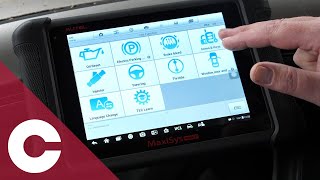
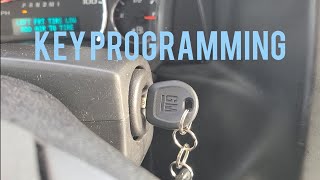
- If a new key is required, perform the 30-minute key relearn procedure. This involves cycling the key to 'ON' for three consecutive 10-minute intervals. After each 10-minute cycle, the security light should go out. Turn the key off for 5-10 seconds between cycles. After the third cycle is complete, the key should be learned. 🎬 See a walkthrough of the 30-minute key relearn process.
- Only consider replacing the BCM if all other steps fail to resolve the issue and other BCM-related electrical problems are present.
Parts You'll Likely Need
- Transponder Ignition Key
(OEM #89024245 (GM), 88891799 (GM))— If the original key's internal transponder chip has failed, a new key is the only solution. This is confirmed by testing a spare key.
Trusted brands: ACDelco, Strattec (690552)
OEM price range: $70-$120
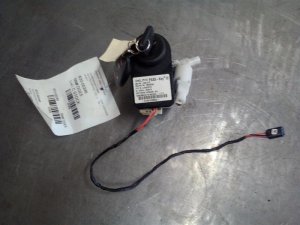
Aftermarket price range: $20-$60 - Ignition Lock Cylinder with Transponder Antenna
(OEM #19240042 (GM))— If neither a primary nor a spare key works, the antenna ring that reads the key, which is part of the lock cylinder, may have failed.
Trusted brands: ACDelco (D1496G), Dorman (924-895), Standard Motor Products
OEM price range: $150-$250
Aftermarket price range: $80-$150
Related Codes That Often Appear With This One
- B3055 — This code means 'No Transponder Modulation or No Transponder'. It often appears with B3935 when RFI or a faulty key prevents the system from receiving any signal at all.
- B3060 — This code means 'Unprogrammed Transponder'. It can be set alongside B3935 if interference corrupts the key's signal, making it appear as an unknown key to the system.
Technical Service Bulletins (TSBs) & Recalls
- PIC5650M: Warns of intermittent no crank/no start with security light and codes B3055, B3060, B3935, and others.
- PIC5650L: Specifically advises against replacing parts for codes B3055, B3060, and B3935 and directs technicians to ask about Radio Frequency Identification devices used by the customer.
- PIC5650C / PIC5650K: Later versions of the same bulletin that provide an extensive list of potential RFI sources, including aftermarket LED lighting, cell phone chargers, USB power banks, and various access/toll passes that can 'jam' the 125 kHz signal.
Platform-Specific Known Issues
- The GM Passkey III+ system used in the entire U-body minivan lineup (Relay, Uplander, Terraza, Montana SV6) is highly sensitive to radio frequency interference, a fact acknowledged by GM in service bulletins. Owners frequently report that simply separating the car key from other fobs on their keychain permanently resolves the intermittent no-start condition. One owner of a 2006 Relay reported a years-long battle with the anti-theft system that the dealer could not diagnose, which was eventually solved by having a specialist replace the BCM and bypass the immobilizer, though this left the security light on permanently.
Mechanic-Grade Diagnostic Values
- Ignition Key Transponder Exciter Coil Resistance — expected: 5 - 20 Ohms. Failure: A reading of 0 Ohms (short) or infinite/O.L. (open) indicates a failed coil or wiring.
- BCM/TDM System Voltage During Key-On — expected: Greater than 9.0 Volts. Failure: Voltage dropping below 9.0V during the key-on sequence can cause the security handshake to fail.
Scan Tool Commands That Help
- Tech2 / GDS2: Live Data: 'Immobilizer Fuel Disable' status — To confirm if the Body Control Module (BCM) has actively commanded the Engine Control Module (ECM) to disable fuel as a result of a security fault. An 'Active' or 'Yes' status confirms the theft system is the reason for the no-start.
- Tech2 / GDS2: Immobilizer Learn / Security Programming — This function is required after replacing a key, the Body Control Module (BCM), or the ignition lock cylinder to program the new components to the vehicle's security system.
Wiring & Ground Locations
- Body Control Module (BCM) — Below the left side of the dashboard, to the left of the steering column.. The BCM contains the Theft Deterrent Module (TDM) logic for the Passkey III+ system. All security communication and key authentication calculations happen here.
- Theft Deterrent Exciter Module (Antenna) — Located in the steering column, surrounding the ignition lock cylinder.. This is the antenna that powers the key's transponder chip and reads its signal. A failure in this component or its wiring is a direct cause of codes B3055 and B3935.
- G200 — On the right side of the main dash support beam, above the glove compartment area.. This is a major instrument panel ground. A poor connection at G200 can cause erratic behavior in multiple modules, including the BCM, potentially leading to intermittent security faults.
Real Owner Repair Stories
- YouTube user with a 2007 Chevy Uplander (2007 Chevrolet Uplander (platform mate)) — Message on dash: 'Starting Disabled'. The engine would not start.
❌ Tried (didn't work) Replacing the vehicle battery., Using a non-GM, 'knockoff' key without an embedded transponder chip.
✅ What actually fixed it The problem was resolved by using the correct GM key that contained the proper Passkey III+ transponder chip. The non-chip key was being rejected by the security system, causing the 'Starting Disabled' message.
OEM Part Supersession History
19240042 (GM)→ACDelco D1496G (Professional Series)— Standard aftermarket replacement part number for the OEM ignition lock cylinder assembly.
Heads up: This replacement part requires a security relearn procedure (e.g., the 30-minute relearn) to be performed after installation to sync with the vehicle's keys and BCM.
Helpful Videos
Used OEM Parts in Stock
New Aftermarket Parts Available



The information in this article is provided for general reference and educational purposes only. Vehicle specifications, procedures, and part compatibility can vary by production date, trim level, and region. Always consult your vehicle's factory service manual and verify part numbers before purchasing or performing repairs. Safety-critical components such as airbags, seat belts, and braking systems should be installed by a qualified professional.
- Saturn RELAY:
- 🎬 Helpful Videos
- 🛍️ Shop This Part
- What's Unique About the 2007-2007 Saturn RELAY
- Diagnostic Flowchart
- Symptoms You May Notice
- Most Likely Causes
- Rare But Worth Checking
- Diagnosis Steps
- Parts You'll Likely Need
- Related Codes That Often Appear With This One
- Technical Service Bulletins (TSBs) & Recalls
- Platform-Specific Known Issues
- Mechanic-Grade Diagnostic Values
- Scan Tool Commands That Help
- Wiring & Ground Locations
- Real Owner Repair Stories
- OEM Part Supersession History
- 🎟️ Get 5% Off