

B3935 on 2007-2009 Saturn Aura: No-Start Causes and Immobilizer Fixes
Code B3935 on a Saturn Aura almost always indicates a security system problem where the car can't authenticate the ignition key. The most common cause, cited in official GM bulletins, is radio frequency interference (RFI) from other keys or fobs on your keychain. The first and easiest fix is to remove all other items from your car key and try starting it again. If that fails, a simple 30-minute key relearn procedure often resolves the issue without needing new parts.
- Before spending any money, try starting the car with ONLY the Saturn key, away from any other keys or fobs. This free step solves the problem for many owners.
- If isolating the key doesn't work, perform the 30-minute, 3-cycle key relearn procedure before replacing any parts.
- This code indicates a security system fault, not a problem with the starter or battery.
- If a spare key works, your primary key has failed and needs to be replaced and programmed. The OEM part number is likely 23372322.
- Do not replace the BCM or other expensive modules unless all simpler causes (RFI, bad key, ignition reader) have been professionally ruled out.
What's Unique About the 2007-2009 Saturn AURA
The GM immobilizer system (Pass-Key III) used in the Saturn Aura and its Epsilon platform mates (like the Pontiac G6 and Chevy Malibu) is notoriously sensitive to radio frequency interference (RFI). Manufacturer Technical Service Bulletins (TSBs) specifically warn technicians *not* to replace parts for this code until RFI from other devices on the owner's keychain has been ruled out. This is a well-documented quirk of the platform that can lead to a no-start condition that is often fixed for free simply by isolating the key.
Diagnostic Flowchart
Tap your situation to follow the diagnostic path that matches what you're seeing on this vehicle.
Symptoms You May Notice
- Engine will not crank (no-crank, no-start)
- Engine starts and then immediately stalls
- Security indicator light is on or flashing on the instrument cluster.
- Rapidly locking and unlocking of doors on its own in some cases.
- Replacing the starter motor
- Replacing the battery
- Replacing the Body Control Module (BCM) or Theft Deterrent Module (TDM) without first ruling out RFI and faulty keys.
Most Likely Causes
- Radio Frequency Interference (RFI) 🔴 High Probability As documented in TSBs PIC5650L and PIC5650M, the immobilizer system is sensitive to other RFID devices like other car keys, key fobs, or building access cards that operate near the 125 kHz frequency. These signals can corrupt the 'challenge-response' communication between the key and the car.
How to confirm: Remove the Saturn ignition key from your keychain. Ensure no other keys, fobs, or cards are near the ignition switch. Attempt to start the vehicle with the isolated key. If it starts, RFI was the cause.
Typical fix: Keep the Saturn ignition key on its own or separated from other electronic devices on the keychain.
Est. part cost: $0 - Worn or Damaged Ignition Key 🟡 Medium Probability The transponder chip embedded in the plastic head of the key can be damaged from drops or wear over time, preventing it from communicating correctly. The internal electronics can also simply fail.
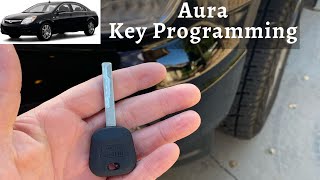
How to confirm: Try starting the vehicle with a spare key. If the spare key works reliably, the original key is faulty. If a spare is not available, a locksmith can test the transponder signal from the key. 🎬 Watch: How to program a new transponder key yourself.
Typical fix: A new key must be purchased and programmed to the vehicle. This can be done by a dealership or an automotive locksmith. The OEM part number for a replacement transponder key is often cited as 23372322.
Est. part cost: $70-$150 - Failing Ignition Lock Cylinder/Reader ⚪ Low Probability The exciter coil and reader that energize and read the key's transponder chip are located around the ignition lock cylinder. This component can fail, though it's less common than key issues. A replacement cylinder may or may not come with keys.
How to confirm: If RFI is ruled out and multiple known-good keys fail to start the vehicle, the problem is likely with the reader or its wiring. This requires professional diagnosis with a scan tool to monitor data from the Theft Deterrent Module.
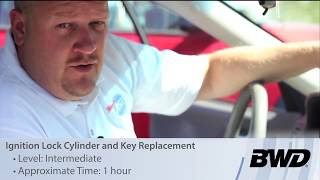
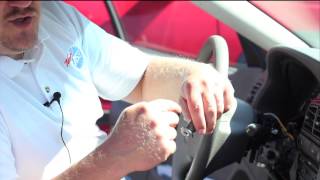
Typical fix: Replacement of the ignition lock cylinder and/or the transponder reader coil. An example OEM part number for the lock cylinder is 15841209. Aftermarket options like the Standard Motor Products US646L are also available. 🎬 Watch this walkthrough on replacing the ignition lock cylinder.
Est. part cost: $100-$250
Rare But Worth Checking
- Faulty Theft Deterrent Module (TDM) or Body Control Module (BCM): This is rare and should only be considered after all other possibilities, especially RFI and key failure, have been exhaustively ruled out. TSBs specifically advise against replacing modules as a first step. Some owners on forums have reported chasing electrical issues back to the BCM, but this is not a common fix for B3935 alone.
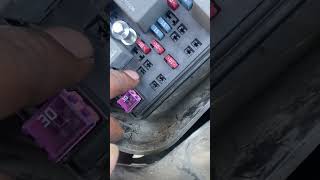
- Cracked Solder Joint in Underhood Fuse Box: On the GM Epsilon platform, a hot, no-start condition can sometimes be caused by a cracked solder joint on the internal circuit board of the underhood fuse box. Thermal expansion separates the crack, breaking continuity for the starter signal. 🎬 See how to diagnose an intermittent no-start on this platform. While not a direct cause of B3935, it can present with similar no-crank symptoms.
Diagnosis Steps
- Check for Technical Service Bulletins (TSBs). For this issue, TSBs PIC5650L and PIC5650M are highly relevant.
- Isolate the ignition key. Remove it from the keychain and move all other fobs, keys, and RFID cards away from the ignition area.
- Attempt to start the car with the isolated key. If it starts, the problem is RFI. Advise keeping the key separate.
- If the issue persists, try a spare key if one is available. If the spare works, the primary key is faulty.
- Perform the '30-Minute Relearn Procedure'. Turn the key to 'ON' (without starting) and wait about 10 minutes until the security light turns off. Turn the key 'OFF' for 10-30 seconds. Repeat this cycle two more times for a total of three 10-minute cycles. On the fourth attempt, try to start the engine. This can often resynchronize the key and TDM.
- Inspect the key for any visible damage or cracks in the plastic head.
- If the relearn fails and no spare key is available, scan the vehicle for other related codes like B3055 and B3060 to confirm an immobilizer system fault.
- At this point, professional diagnosis is recommended to test the ignition reader/exciter coil and the Theft Deterrent Module (TDM) circuits.
Parts You'll Likely Need
- Ignition Key with Transponder
(OEM #23372322)— If the original key's internal transponder chip has failed, a new key is the only solution. This is the most commonly replaced part after RFI is ruled out.
Trusted brands: ACDelco, Dorman
OEM price range: $50-$100 (plus programming)
Aftermarket price range: $20-$40 (plus programming). - Ignition Lock Cylinder
(OEM #15841209)— If the reader coil integrated with the lock cylinder fails, it will need to be replaced. This part often does not include new keys and must be coded to the existing keys.
Trusted brands: ACDelco, Standard Motor Products, Dorman
OEM price range: $150-$200
Aftermarket price range: $100-$180.
Related Codes That Often Appear With This One
- B3055 — This code means 'Key Not Present'. It often appears with B3935 because RFI or a bad key can prevent the system from detecting the key's signal at all.
- B3060 — This code means 'Unauthenticated Key'. It indicates the system received a signal from a key, but it wasn't a recognized key. This can also be caused by RFI scrambling the signal.
Technical Service Bulletins (TSBs) & Recalls
- PIC5650M: Notes B3935 in relation to intermittent no crank/no start/stall with security light on, and lists several other related DTCs.
- PIC5650L: Identifies B3935 with no crank/no start/stall and security light, and explicitly states not to replace parts but to ask the customer about Radio Frequency Identification devices on their keychain.
- PIE0232: An engineering information bulletin asking technicians to gather data on vehicles with B3935 (and related codes) *before* repair, reinforcing the focus on RFI as a primary diagnostic step.
Platform-Specific Known Issues
- The vehicle's immobilizer system is highly sensitive to Radio Frequency Interference, as documented by GM in TSB #PIC5650L, which explicitly warns against replacing parts before checking for RFI from other devices on the customer's keychain.
- Some owners on forums report that even after replacing the ECM and performing the relearn procedure, a no-start condition can persist, sometimes pointing to deeper wiring or BCM issues.
Hidden / Shadow Codes Worth Checking
- B3935 57: The '57' is a symptom byte indicating 'Transponder Authentication Error'. While the base code B3935 points to a security handshake failure, the symptom byte is a more specific identifier used by dealer-level scan tools like the Tech2. (see via GM Tech2 or GDS2 scan tool.)
Scan Tool Commands That Help
- GM Tech2: Body > Immobilizer > Programming > Key Diagnosis — This function allows a technician to view the status of learned keys and diagnose issues with the Passkey III system directly, which is essential when troubleshooting B3935.
- GM Tech2: Body > Body Control Module > Special Functions > Key Fob Function Test — Used to test the communication between the key fob and the BCM, which can help differentiate between a key transponder issue (B3935) and a remote keyless entry problem.
- SPS (Service Programming System): Body Control Module Reprogramming — In some GM models, a software update for the BCM was released to fix intermittent no-start conditions that set code B3935. This is performed if the issue persists after ruling out common causes.
Wiring & Ground Locations
- Theft Deterrent Module (TDM) — Located on the left side of the dash, mounted on the ignition key cylinder housing.. This is the primary module that reads the key's transponder. All wiring to and from this module, including its connection to the BCM, is critical for the immobilizer system to function.
- Body Control Module (BCM) — Located in the center console, on the left/passenger side near the dash, often behind a trim panel.. The BCM works with the TDM to control the immobilizer system. It receives messages from the TDM and can command the security light to flash. A faulty BCM or poor connection can cause or mimic immobilizer issues.
- G203 — A common ground point located under the dash, on the right side of the center console, near the floor.. This ground is shared by multiple components, including the Body Control Module (BCM). A loose or corroded G203 can cause a wide range of difficult-to-diagnose electrical issues, including problems with the BCM that could lead to security system faults.
- G105 / G106 — Engine compartment grounds. G105 is on the center rear of the 3.6L engine or left front of the 2.4L. G106 is on the left rear or rear of the 2.4L engine.. While not directly tied to the TDM, these are primary engine grounds. A poor engine ground can cause intermittent no-crank conditions that may be misdiagnosed as a security issue, as the starter may not receive adequate ground to engage.
Real Owner Repair Stories
- YouTube user 'Repairs By JC' (2007 Saturn Aura) — Intermittent no-start, especially after the car warms up. It would not crank.
❌ Tried (didn't work) Initial diagnosis pointed towards standard immobilizer or starter issues.
✅ What actually fixed it The starter relay was not receiving a proper ground from the underhood fuse box. The internal circuitry of the fuse box was faulty. The fix demonstrated was to add an external ground wire to the ground pin of the starter relay, which resolved the no-crank condition. The creator noted this is a better fix than replacing the fuse box, which may have the same design flaw. - Reddit user on r/AskMechanics (2007 Saturn Aura) — Intermittent no-start, no crank. Fuel pump could be heard priming, but no voltage was detected at the starter solenoid exciter wire.
❌ Tried (didn't work) Bench tested the starter (it worked fine)., Cleaned connections for the neutral safety switch., Replaced the neutral safety switch.
✅ What actually fixed it The new neutral safety switch was out of adjustment. The switch has slotted mounting holes allowing for adjustment, and it was not correctly positioned to signal that the car was in Park or Neutral, thus preventing the starter from engaging. Adjusting its position fixed the no-crank issue.
Model Year Variations Within This Range
- 2009: For the 2009 model year, the standard 2.4L 4-cylinder engine was paired with a new 6-speed 6T40 automatic transmission with TAPshift, replacing the 4-speed 4T45-E used in 2007-2008 models. While this doesn't directly affect the B3935 code, it's a significant powertrain change within the generation.
Helpful Videos
Used OEM Parts in Stock

New Aftermarket Parts Available


The information in this article is provided for general reference and educational purposes only. Vehicle specifications, procedures, and part compatibility can vary by production date, trim level, and region. Always consult your vehicle's factory service manual and verify part numbers before purchasing or performing repairs. Safety-critical components such as airbags, seat belts, and braking systems should be installed by a qualified professional.
- Saturn AURA:
- 🎬 Helpful Videos
- 🛍️ Shop This Part
- What's Unique About the 2007-2009 Saturn AURA
- Diagnostic Flowchart
- Symptoms You May Notice
- Most Likely Causes
- Rare But Worth Checking
- Diagnosis Steps
- Parts You'll Likely Need
- Related Codes That Often Appear With This One
- Technical Service Bulletins (TSBs) & Recalls
- Platform-Specific Known Issues
- Hidden / Shadow Codes Worth Checking
- Scan Tool Commands That Help
- Wiring & Ground Locations
- Real Owner Repair Stories
- Model Year Variations Within This Range
- 🎟️ Get 5% Off