

B3935 on 2007-2010 Pontiac G6: No-Start Causes and Fixes
This code means your G6's anti-theft system has failed to authenticate the key, causing a no-start or start-and-stall condition. The most common cause is radio frequency (RF) interference from other keys or fobs on your keychain. The fix is often free: simply remove the ignition key from your keychain and try starting the car with the key by itself.
- Before any other action, try starting the car with the ignition key completely isolated from all other keys, fobs, or cards. This is the most common fix and is free.
- If isolating the key doesn't work, use your spare key to determine if the primary key has failed.
- Do not replace the battery, starter, or BCM without first ruling out Radio Frequency Interference and a faulty key.
- If you replace the ignition lock cylinder or get a new key, a 30-minute 'Security Relearn Procedure' will be required before the car will start.
- This code indicates a security system issue that will prevent the car from running, so it cannot be ignored.
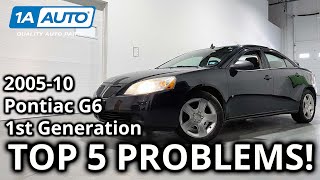
What's Unique About the 2007-2010 Pontiac G6 🎬 Watch: Common issues and top problems for the Pontiac G6

The Pontiac G6 uses the GM Passkey III+ (PK3+) anti-theft system, which is highly sensitive to radio frequency interference. This is not just a theory; GM issued specific Technical Service Bulletins (TSBs) for this platform, including #PIC5650L and its successor #PIC5650M, advising technicians *not* to replace parts for this code initially, but to first ask the customer about other RFID devices on their keychain. These devices can include other car keys, office access cards, toll passes, and even aftermarket phone chargers or LED lights. This highlights that external interference is the most common and officially recognized cause of B3935 on the G6 and its Epsilon platform sister vehicles like the Chevy Malibu and Saturn Aura.
Diagnostic Flowchart

Tap your situation to follow the diagnostic path that matches what you're seeing on this vehicle.
Symptoms You May Notice

- Engine will not crank or crank but not start (no-start)
- Engine starts and then immediately stalls
- Security light (an icon of a car with a padlock) is illuminated or flashing on the dashboard
- An intermittent no-start condition that may seem random
- Message on Driver Information Center (DIC) like 'Service Theft System'
- Replacing the battery or starter motor. These will not fix a security-related no-start condition where the security light is illuminated.
- Replacing the Body Control Module (BCM) first. The TSBs and common experience strongly indicate that RFI and key issues should be ruled out first, as BCM failure is a much less common cause for this code.
Most Likely Causes

- Radio Frequency Interference (RFI) 🔴 High Probability The GM Passkey III+ system operates at 125 kHz and is very sensitive to interference from other electronic devices. This is explicitly mentioned in TSBs #PIC5650L and #PIC5650M. Common sources include other vehicle keys (even non-transponder ones), office/gym access cards, toll passes, and aftermarket accessories like phone chargers and LED lights plugged into the car.
How to confirm: Remove the G6 ignition key from your keychain so it is completely isolated from other car keys, fobs, office access cards, or any other electronic device. Also, unplug any aftermarket phone chargers, dash cams, or LED lighting. Try to start the vehicle with the single, isolated key. If it starts, RFI is the confirmed cause.
Typical fix: Keep the ignition key on a separate, non-metallic ring, free from other electronic devices. This is often a zero-cost fix.
Est. part cost: $0 - Damaged or Faulty Ignition Key Transponder 🟡 Medium Probability The transponder chip embedded in the head of the key can be damaged from being dropped, exposure to moisture, or simply fail with age. The key is a small electronic device that can wear out.
How to confirm: Attempt to start the vehicle with a known-good spare key. If the spare key works reliably and the original key does not (even when isolated), the original key's transponder is faulty. This is the most definitive test.
Typical fix: A new key must be purchased and programmed to the vehicle by a dealership or a qualified automotive locksmith. The GM part number for a replacement key blank is often cited as 23372322.
Est. part cost: $70-$150 - Faulty Ignition Lock Cylinder / Passlock Sensor ⚪ Low Probability The ignition lock cylinder houses the exciter ring (antenna) that reads the key's transponder. Wear and tear on the cylinder or failure of the integrated antenna can cause intermittent signal loss, leading to the authentication failure.
How to confirm: This requires more advanced diagnostics. If the key is good and RFI is ruled out, the lock cylinder is the next likely suspect. A technician would test the signal and wiring continuity at the lock cylinder's connector. A user on TahoeYukonForum.com with a similar GM system confirmed this fix after other steps failed.
Typical fix: Replace the ignition lock cylinder assembly. This repair requires a 'Security Relearn Procedure' to be performed before the vehicle will start. The ACDelco OEM part is #25832354 (also listed as D1493F). Aftermarket options like the Dorman 924-719 are also available.
Est. part cost: $100-$250
Rare But Worth Checking
- Faulty Body Control Module (BCM): The BCM is the 'brain' of the anti-theft system. While it can fail, it is rarely the cause of this specific code and should only be considered after all other possibilities (RFI, key, lock cylinder, wiring) have been exhausted. A common issue on the G6 is a poor connection at the BCM, which can be resolved by disconnecting, cleaning, and reconnecting the connectors with a low-voltage dielectric grease.
- Damaged Wiring or Poor Ground: A break, chafe, or corrosion in the wiring between the ignition lock cylinder and the BCM can cause a signal loss and trigger B3935. This is more likely if other electrical work has been performed under the dashboard. A poor ground connection at the BCM can also cause a wide range of unpredictable electronic issues, including this code.
- Weak Vehicle Battery: Low system voltage during cranking can cause the BCM and other modules to behave erratically, potentially leading to a false security event. If the battery is old or weak, it can be a contributing factor to intermittent no-start issues, even if it's not the root cause of B3935.
Diagnosis Steps
- Confirm the symptoms: No-start or start/stall with an active security light.
- Scan for codes: Confirm B3935 is present. Note any other codes like B3055 or B3060.
- Isolate the Key: This is the most important step. Remove the G6 key from all other keys, fobs, and RFID cards. Unplug any aftermarket chargers or devices from the car's power outlets.
- Retest with Isolated Key: Try to start the car. If it starts, the problem is RFI. The diagnosis is complete.
- Test Spare Key: If the issue persists, try starting the car with a known-good spare key. If the spare works, the original key is faulty.
- Perform Security Relearn Procedure: If no spare key is available, or after replacing a component, you must perform the 30-minute relearn procedure. Turn the key to the 'ON' position (do not start) and wait for the security light to turn off (approx. 10 minutes). Turn the key off for 5-10 seconds. Repeat this process two more times for a total of three 10-minute cycles. After the third cycle, turn the key off, then try to start the engine. A fully charged battery is critical for this procedure to succeed.
- Inspect Ignition Cylinder and Wiring: If all else fails, the problem likely lies with the ignition lock cylinder or its wiring, which requires professional inspection and testing.
Parts You'll Likely Need
- Ignition Key
(OEM #23372322)— If the original key's transponder chip has failed, a new key is the only solution. This is confirmed by testing with a spare key.
Trusted brands: ACDelco, Strattec
OEM price range: $70-$120
Aftermarket price range: $40-$80 - Ignition Lock Cylinder
(OEM #25832354 (D1493F))— If the key and RFI are ruled out, the antenna within the lock cylinder assembly is the next most likely failure point. This part contains the Passlock sensor/exciter ring.
Trusted brands: ACDelco, Dorman, Standard Motor Products
OEM price range: $150-$250
Aftermarket price range: $80-$150
Related Codes That Often Appear With This One
- B3055 — This code means 'No Transponder Modulation' or 'Key Not Present' and often appears with B3935 when RFI is so strong it prevents any signal from being read, or when the key is completely dead. It is mentioned in TSB #PIC5650M.
- B3060 — This code for 'Unprogrammed Transponder' or 'Unauthenticated Key' can also be triggered by the same communication errors that cause B3935. It is also cited in TSB #PIC5650M.
Technical Service Bulletins (TSBs) & Recalls
- Bulletin #PIC5650M: Supersedes previous versions. Addresses intermittent no-crank/no-start with security light
Platform-Specific Known Issues
- The GM Passkey III+ system used in the G6 is notoriously sensitive to radio frequency interference, as documented in TSBs #PIC5650L and #PIC5650M.
- The Body Control Module (BCM) is located under the center console, and poor connections at its main connector can cause various electrical issues, including this one. Cleaning the contacts is a known fix for some electrical gremlins on this platform.
- A user on the Car Talk Community forum with an '08 G6 GT described intermittent stalling and no-start issues that dealerships struggled to diagnose, highlighting the frustrating and seemingly random nature of electrical problems on this platform.
Hidden / Shadow Codes Worth Checking
- B3935 57: Transponder Authentication Error. The '57' symptom byte specifies that the transponder's calculation in response to the BCM's challenge did not match the BCM's own calculation. This points to a data corruption or calculation error rather than a simple 'no read' event. (see via GM GDS2 or other professional-level scan tools capable of reading manufacturer-specific symptom bytes.)
Scan Tool Commands That Help
- GM Tech 2 / GDS2: Module Diagnostics > BCM > Data Display > Immobilizer Data — To view live data parameters like 'Immobilizer Key Status', 'Transponder Key Present', and 'Invalid Key'. This is the primary method to see what the BCM is seeing from the key and why it's rejecting it.
- GM Tech 2 / GDS2: Special Functions > Immobilizer > Key Learn — This function is required after replacing a key or the Body Control Module (BCM) to program the new components to the vehicle.
- GM Tech 2: Special Functions > Reset Immobilizer — Used to reset the immobilizer module if it is being replaced or moved to another vehicle. This function requires entering the vehicle's security code.
Wiring & Ground Locations
- BCM — Located with the fusebox on the passenger side of the center console.. The BCM is the central module for the Passkey III+ system. All signals from the ignition cylinder's antenna are processed here. Poor connections or a bad ground at the BCM can directly cause B3935.
- BCM Connectors X1, X2, X3, X4 — These are the main connectors at the Body Control Module (BCM). X1 and X2 are 72-pin, X3 is 40-pin.. The wiring from the ignition cylinder's exciter coil runs to one of these connectors. A diagnostic procedure would involve disconnecting these to test for opens or shorts in the wiring between the BCM and the ignition switch.
- G201 / G203 — Located under the center console, on the front support bracket.. These are primary instrument panel ground points. A loose or corroded ground here can cause erratic behavior in the BCM, leading to false security codes like B3935.
- G105 / G106 — Located on the engine/transmission studs in the engine compartment.. These are main engine and transmission grounds. While less likely to cause a BCM-specific code, poor engine grounding can cause system-wide voltage issues that may indirectly affect module stability during cranking.
Real Owner Repair Stories
- Reddit user in r/MechanicAdvice (2000 Chevy Impala (uses a similar Passlock system)) — Solid security light on, car would not crank. The previous intermittent issue (flashing light fixed by waiting 10 mins) became a permanent no-start.
❌ Tried (didn't work) Standard 10-minute and 30-minute security relearn procedures., Using a spare key., Starting in neutral., Manually unlocking the driver's door with the key.
✅ What actually fixed it The user did not report the final fix, but the next step advised by multiple technicians in the thread was to perform a 'resistor bypass' of the Passlock sensor, indicating the ignition switch/lock cylinder itself was the highly suspected point of failure after all other simple remedies failed.
OEM Part Supersession History
12458191, 12533953, 15822350, 19168637→25832354— Part consolidation and potential design updates over the life of the platform and related vehicles.
Heads up: While part number 25832354 is listed for the G6's sister platforms (Malibu, etc.), it is critical to verify fitment by VIN. Some aftermarket listings for this part number do NOT include the Pontiac G6, suggesting a potential variation in the housing or connector despite a similar electronic function.
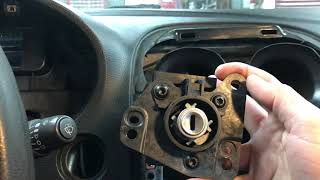
Helpful Videos
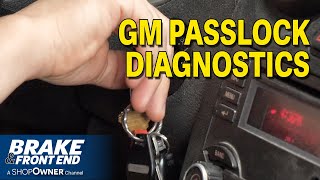
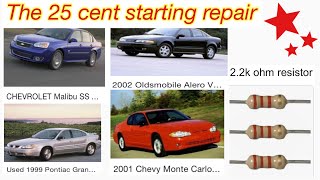
Used OEM Parts in Stock

New Aftermarket Parts Available


The information in this article is provided for general reference and educational purposes only. Vehicle specifications, procedures, and part compatibility can vary by production date, trim level, and region. Always consult your vehicle's factory service manual and verify part numbers before purchasing or performing repairs. Safety-critical components such as airbags, seat belts, and braking systems should be installed by a qualified professional.
- Pontiac G6:
- 🎬 Helpful Videos
- 🛍️ Shop This Part
- What's Unique About the 2007-2010 Pontiac G6
- Diagnostic Flowchart
- Symptoms You May Notice
- Most Likely Causes
- Rare But Worth Checking
- Diagnosis Steps
- Parts You'll Likely Need
- Related Codes That Often Appear With This One
- Technical Service Bulletins (TSBs) & Recalls
- Platform-Specific Known Issues
- Hidden / Shadow Codes Worth Checking
- Scan Tool Commands That Help
- Wiring & Ground Locations
- Real Owner Repair Stories
- OEM Part Supersession History
- 🎟️ Get 5% Off