

B3935 on 2015-2022 GMC Yukon: Understanding Transponder and No-Start Issues
Code B3935 on a GMC Yukon means there's a 'Transponder Authentication Error' with the security system. Before replacing any parts, check for radio frequency interference (RFI) from aftermarket devices near the ignition, as this is a common cause outlined in GM Technical Service Bulletins. Specific culprits can include non-OEM phone chargers, dash cams, and even building access cards on the same keychain. The fix could be as simple as removing an interfering device.
- B3935 is a security code indicating a key authentication failure.
- The most important first step is to remove all sources of potential Radio Frequency Interference (RFI) from near the ignition and try again.
- Do not immediately replace parts. GM TSBs specifically warn that the cause is often external interference or a software issue, not a failed part.
- Try your spare key. This is the easiest way to determine if your primary key has gone bad.
- If simple steps don't work, the solution may be a BCM software update that must be performed by a professional with the correct tools.
What's Unique About the 2015-2022 Gmc YUKON
For this generation of GMC Yukon and its sister platforms (Chevy Tahoe/Suburban, Cadillac Escalade), General Motors has issued multiple Technical Service Bulletins (TSBs) acknowledging that B3935 is often caused by external factors rather than faulty parts. TSBs PIC5650L and PIC5650M specifically advise technicians *not* to replace any parts initially, but to investigate Radio Frequency Identification (RFI) interference from devices the customer may be using. The immobilizer system operates at 125 kHz, and other devices operating in the 120-135 kHz range can easily interfere. This is a significant departure from a typical part failure diagnosis and highlights the system's sensitivity on these K2XX/T1XX platform vehicles.
Diagnostic Flowchart
Tap your situation to follow the diagnostic path that matches what you're seeing on this vehicle.
Generation note: The 2015-2022 model years cover the end of the fourth generation (2015-2020, K2XX platform) and the beginning of the fifth generation (2021-2022, T1XX platform) GMC Yukon. The underlying issue with the immobilizer system and its sensitivity to interference, as documented in TSBs, is relevant to vehicles across this entire year range and on both platforms.
Symptoms You May Notice
- Intermittent no-crank, no-start condition
- Engine starts and then immediately stalls
- Security indicator light is on or flashing on the instrument cluster
- "Service Theft Deterrent System" message on the driver information center
- "No Fob Detected" message on the driver information center (for vehicles with keyless start).
- Replacing the ignition switch
- Replacing the Body Control Module (BCM) without first attempting a software update
- Replacing the immobilizer module or key without checking for Radio Frequency Interference
Most Likely Causes
- Radio Frequency Interference (RFI) 🔴 High Probability As documented in GM TSBs PIC5650L/M and PIE0232, the immobilizer system on these vehicles is sensitive to external radio frequencies from aftermarket devices. The system's 125 kHz operating frequency is susceptible to interference from common items like phone chargers, dash cams, gate openers, and even other vehicle keys on the same ring.
How to confirm: Remove all other keys, fobs, and aftermarket electronic devices (like phone chargers, dash cams, or gate openers) from the keychain and the area around the ignition switch. Try to start the vehicle with only the single Yukon key present. If the vehicle starts, re-introduce items one by one to find the culprit.
Typical fix: Identify and remove the source of the interference. Keep other electronic devices away from the ignition key when starting the vehicle.
Est. part cost: $0 - Body Control Module (BCM) Software Glitch 🟡 Medium Probability TSB PI1180A specifically mentions that for a no-start condition with B3935 and B2955 on 2015 Yukons, an updated software calibration for the BCM is the fix. This indicates a known software issue where the BCM fails to correctly read the immobilizer data.
How to confirm: A GM dealership or a qualified shop with a Tech2/MDI scan tool and access to the GM programming system (TIS2WEB) can check the current software version against the latest available calibrations. The TSB is very specific that this applies to a "No Click, No Crank, No Start" condition with both codes present.
Typical fix: Reprogram the BCM with the latest software calibration. This is not a DIY repair and typically takes about 0.5 labor hours.
Est. part cost: $0 (labor cost for programming will apply) - Damaged or Weak Key Transponder ⚪ Low Probability Keys can be damaged from being dropped or from a failing internal battery. This is a general cause for any vehicle with a transponder key system, not specific to the Yukon.
How to confirm: Try starting the vehicle with your spare key. If the spare key works consistently and the primary key does not, the primary key is likely the issue. Also, try placing the non-working key in the designated transmitter pocket (often in the center console) as this can sometimes allow a start with a weak fob battery.
Typical fix: Replace the faulty key and have it programmed to the vehicle by a dealer or automotive locksmith.
Est. part cost: $75-$250
Rare But Worth Checking
- Faulty Immobilizer Control Module / Antenna Ring: This is the component that energizes and reads the key transponder. While it can fail, GM TSBs strongly advise ruling out all other causes first, as this is an uncommon failure point and often misdiagnosed. Diagnostic procedures suggest replacing this module (TDM) only after a known good key also fails to start the vehicle.
- Faulty Body Control Module (BCM): A hardware failure in the BCM is possible but rare. This would typically be diagnosed only after a software update fails to resolve the issue and all wiring has been checked. In some cases, unrelated issues like faulty door locks can point to a failing BCM.
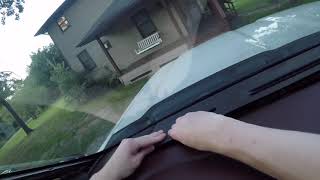
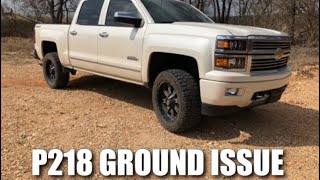
- Poor Ground Connections: While not a direct cause of B3935, poor chassis or engine ground connections are a known issue on GM trucks and can cause a variety of electrical problems, including intermittent no-start conditions that could be misdiagnosed. A user with a 2017 Escalade fixed a 'click-no-start' issue by performing a "Big 3" ground wire upgrade. TSB PIT5405C specifically identifies a poor BCM ground at G218 🎬 Watch: How to locate and fix the G218 ground connection. as a cause for no-start and other electrical issues.
Diagnosis Steps
- Check for any Technical Service Bulletins (TSBs) related to your vehicle's VIN. Pay special attention to PIC5650M and PI1180A.
- Scan for all DTCs in all modules, paying close attention to codes that appear with B3935, especially B2955.
- Remove ALL other keys, fobs, and electronic devices from the area around the ignition. This includes aftermarket phone chargers, dash cams, garage door openers, and even RFID work badges. Attempt to start the vehicle with just the primary key.
- If the vehicle still won't start, try the spare key. If the spare key works, the primary key is the likely culprit.
- For keyless start models, if the fob is not detected, place it in the transmitter pocket (usually inside the center console or a cup holder) and try to start the vehicle. This bypasses the need for a strong remote signal.
- If neither key works and RFI has been ruled out, consult a professional. The next step is likely checking the BCM software version and applying an update if one is available, as per TSB PI1180A.
- If software updates do not resolve the issue, a technician will need to perform a detailed diagnosis of the immobilizer antenna ring, wiring, and the BCM itself.
Parts You'll Likely Need
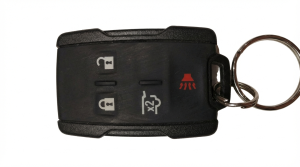
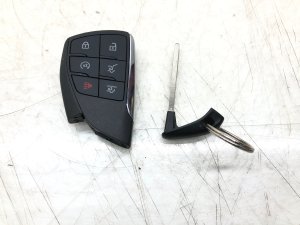
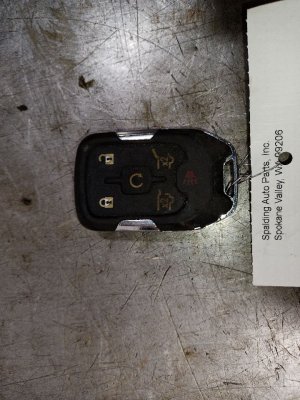
- Ignition Key/Fob (2015-2020)
(OEM #13580804, 13508280 (FCC ID: HYQ1AA))— This is needed if the transponder chip in the original key has failed for the 4th generation Yukon. This is confirmed by the spare key working correctly.
Trusted brands: ACDelco
OEM price range: $150-$250
Aftermarket price range: $75-$150 - Ignition Key/Fob (2021-2022)
(OEM #13537964, 13541567 (FCC ID: YG0G21TB2))— This is needed if the transponder chip in the original key has failed for the 5th generation Yukon. This is confirmed by the spare key working correctly.
Trusted brands: ACDelco
OEM price range: $170-$270
Aftermarket price range: $50-$150
Related Codes That Often Appear With This One
- B3055 — Related to a key transponder problem, often set alongside B3935 during a failed authentication attempt. Mentioned in TSBs PIC5650M and PIE0232.
- B3060 — Another code indicating a failure in the transponder key authentication process, also mentioned in the same TSBs as B3055.
- B2955 — Specifically mentioned in TSB PI1180A as being set with B3935 when a BCM software update is needed to fix a no-start condition.
- C0750, C0755, C0760, C0765, C0775 — These are Tire Pressure Monitoring System (TPMS) codes, but TSB PIC5650M notes they can appear alongside B3935, likely due to widespread RFI affecting multiple vehicle systems that use radio frequency communication.
Technical Service Bulletins (TSBs) & Recalls
- PIC5650L: Advises against replacing parts for B3935 and points to Radio Frequency Identification interference as a likely cause.
- PIC5650M: Supersedes PIC5650L, also mentions intermittent no-start/stall with B3935 and a list of other codes (including TPMS), suggesting a common external cause like aftermarket electronics.
- PI1180A: Recommends a BCM software update to fix a specific 'no click, no crank, no start' condition when B3935 and B2955 are present together on 2015 models.
- PIE0232: An earlier engineering bulletin from 2012 for 2013 models showing GM was investigating RFI as a root cause for B3935 and related codes even before this Yukon generation was released.
Platform-Specific Known Issues
- RFI Sensitivity: Per TSB PIC5650L/M, these vehicles can exhibit a no-start or stall due to Radio Frequency Identification interference. The bulletin explicitly states not to replace parts before investigating this. Specific sources of interference mentioned by owners include aftermarket LED lighting and cheap USB chargers.
- BCM Software: Per TSB PI1180A, a specific no-start condition with codes B3935 and B2955 is resolved by a BCM software update.
Mechanic-Grade Diagnostic Values
- Key Resistance Value (Ohm) — expected: Not Applicable. This generation Yukon uses a Passkey III+ transponder system, not the older VATS/Passkey system that relies on a fixed resistor pellet in the key. Diagnosis is based on a digital challenge-and-response authentication, not a resistance measurement.. Failure: Attempting to measure resistance on the key will not yield a useful diagnostic value for this system.
Hidden / Shadow Codes Worth Checking
- B3935 with Symptom Byte (e.g., B3935 57): GM's dealer-level scan tool (GDS2) may display an additional two-digit symptom byte that provides more specific information about the failure. For example, '57' may indicate an invalid or mismatched transponder calculation. This provides more granular detail than the base DTC. (see via GM GDS2 or high-end professional scan tools with OEM-level capabilities.)
- B3935 and B2955 together: According to TSB PI1180A, when B3935 is present with B2955 (Security Sensor Data Circuit Malfunction), it specifically points to a BCM software glitch on 2015 models that requires a calibration update to fix a 'No Click, No Crank, No Start' condition. (see via Any standard OBD-II scanner that can read Body Control Module codes.)
Scan Tool Commands That Help
- GDS2 (GM Techline Connect): Immobilizer Learn / Vehicle Theft Deterrent Learn — Used after replacing the BCM, ECM, or ignition key to program the new component(s) to the vehicle. This function guides the technician through the security relearn process.
- GDS2 (GM Techline Connect): Body Control Module Reprogramming with SPS — Used to apply updated software calibrations to the BCM. This is the specific fix for the issue described in TSB PI1180A where codes B3935 and B2955 are present.
- No Tool Required: 30-Minute Manual Relearn Procedure — This procedure can be used to relearn a key if you don't have access to a scan tool. It involves cycling the ignition ON for 10 minutes, OFF for 5 seconds, and repeating this two more times for a total of 3 cycles and approximately 30 minutes. This can sometimes resolve issues after a battery disconnect or if the system loses its key memory, but it will not fix underlying hardware or software faults.
Wiring & Ground Locations
- G218 — Located on the driver's side A-pillar, behind the instrument panel/kick panel area.. This is a primary ground connection for the Body Control Module (BCM). TSB PIT5405C identifies a poor connection at G218 as a cause for a wide range of electrical issues, including no-start conditions and various communication DTCs. The ground can be compromised by the dash insulator foam getting trapped between the ground eyelet and the body, or by a loose nut. A faulty ground here can prevent the BCM from properly operating the immobilizer system, leading to a B3935 code even if the key and antenna are good.
Real Owner Repair Stories
- Tahoe Yukon Forum (2015+ GM Truck/SUV (K2XX Platform)) — Multiple codes, intermittent no-start, various electrical gremlins.
❌ Tried (didn't work) Replacing battery, Cleaning module connections, Cleaning ground under driver's seat.
✅ What actually fixed it The user found the main ground wire for the ECM, which bolts to the front passenger side of the engine block, was corroded and nearly broken inside the crimped ring terminal. Replacing this ground cable resolved the issues. - Camaro5 Forum (2012 Chevrolet Camaro (Similar GM immobilizer system)) — No crank, 'Service Theft Deterrent System' message, code B3935.
❌ Tried (didn't work) Disconnecting battery, Initial 30-minute relearn attempt.
✅ What actually fixed it The owner's aftermarket switchblade-style key had failed. The fix was to have a new, standard key cut by a locksmith and then successfully perform the 3x10 minute relearn procedure. This confirms that a faulty key transponder can be the direct cause.
Helpful Videos

We Have This Part in Stock



The information in this article is provided for general reference and educational purposes only. Vehicle specifications, procedures, and part compatibility can vary by production date, trim level, and region. Always consult your vehicle's factory service manual and verify part numbers before purchasing or performing repairs. Safety-critical components such as airbags, seat belts, and braking systems should be installed by a qualified professional.
- Gmc YUKON:
- 🎬 Helpful Videos
- 🛍️ Shop This Part
- What's Unique About the 2015-2022 Gmc YUKON
- Diagnostic Flowchart
- Symptoms You May Notice
- Most Likely Causes
- Rare But Worth Checking
- Diagnosis Steps
- Parts You'll Likely Need
- Related Codes That Often Appear With This One
- Technical Service Bulletins (TSBs) & Recalls
- Platform-Specific Known Issues
- Mechanic-Grade Diagnostic Values
- Hidden / Shadow Codes Worth Checking
- Scan Tool Commands That Help
- Wiring & Ground Locations
- Real Owner Repair Stories
- 🎟️ Get 5% Off