

B3935 on 2010-2017 GMC Terrain: No Start, Security Light Causes and Fixes
Code B3935 on a 2010-2017 GMC Terrain means the anti-theft system can't authenticate your key, causing a no-start and security light. The most common cause is radio frequency interference (RFI) from other items on your keychain. Before buying parts, remove all other keys and devices from your keyring and try starting the vehicle again.
- B3935 means your car's security system is preventing it from starting.
- The most likely cause is not a broken part, but interference from other keys or cards on your keychain.
- Always try starting with an isolated key and then the spare key before attempting any repairs.
- A 30-minute key relearn procedure can often resolve the issue if keys are not the problem.
- This is a well-documented issue on both the GMC Terrain and its sibling, the Chevrolet Equinox.
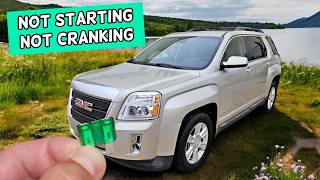
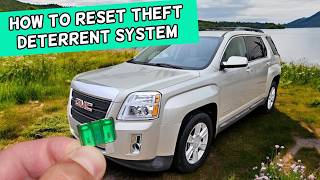
What's Unique About the 2010-2017 Gmc TERRAIN 🎬 Watch: Troubleshooting a GMC Terrain that won't start or crank.

The first-generation GMC Terrain, along with its platform-mate the Chevrolet Equinox, uses a Pass-Key III+ immobilizer system that is notoriously sensitive to Radio Frequency Interference (RFI). Manufacturer Technical Service Bulletins (TSBs) like PIC5650 repeatedly advise technicians to check for RFI from other keys, access cards, or even phone chargers before replacing any parts. This sensitivity is the most common reason for this code and is often overlooked, leading to unnecessary repairs.
Diagnostic Flowchart

Tap your situation to follow the diagnostic path that matches what you're seeing on this vehicle.
Symptoms You May Notice

- Engine will not crank or start.
- Engine starts briefly and then immediately stalls.
- The security warning light (an icon of a car with a lock) is illuminated or flashing on the instrument cluster.
- A "Service Theft Deterrent System" message may appear on the driver information center.
- A complete no-crank, no-click condition when turning the key.
- Replacing the starter motor. A starter issue will not cause a security light to come on.
- Replacing the Body Control Module (BCM) without first ruling out RFI and key issues. This is an expensive and often unnecessary repair.
Most Likely Causes

- Radio Frequency Interference (RFI) 🔴 High Probability As documented in TSBs PIC5650L and PIC5650M, the immobilizer system in this vehicle is highly sensitive to external radio signals. This includes other car keys (especially other GM keys), office key cards, toll passes, or even some aftermarket phone chargers near the ignition.
How to confirm: Remove everything from the GMC key ring except the single vehicle key. Move any electronic devices away from the ignition area and attempt to start the vehicle. If it starts, RFI was the cause. This is the first step recommended by GM technicians.
Typical fix: Keep the vehicle key isolated from other keys and RFID-emitting devices. Many owners on forums report solving the issue permanently this way.
Est. part cost: $0 - Weak or Faulty Ignition Key 🟡 Medium Probability The transponder chip embedded in the key can be damaged from being dropped, or the key's signal can weaken over time. The key housing may also become worn, causing a poor connection with the antenna in the ignition.
How to confirm: Try starting the vehicle with your spare key. If the spare key works consistently, the original key is the problem. This is a very reliable diagnostic step.
Typical fix: Replace the faulty key. This requires purchasing a new key and having it programmed to the vehicle by a dealership or a qualified automotive locksmith. Some owners have successfully swapped the transponder chip from a broken key into a new key shell.
Est. part cost: $75-$250 - Weak Vehicle Battery ⚪ Low Probability Low system voltage during startup can sometimes cause communication errors between the various control modules, including the theft-deterrent system. The BCM is sensitive to voltage drops and may fail to authenticate the key. A battery voltage below 9 volts can trigger issues.
How to confirm: Test the vehicle's main 12V battery with a multimeter or battery tester. A healthy, resting battery should be at approximately 12.6 volts. If it's below 12.2 volts, it may be too weak to operate all systems correctly during the high-draw event of starting.
Typical fix: Recharge or replace the vehicle's 12V battery.
Est. part cost: $150-$300
Rare But Worth Checking
- Faulty Ignition Lock Cylinder / Antenna Ring: The antenna ring (also called an exciter coil or transponder antenna) is housed in the ignition lock cylinder. This component energizes and reads the key's transponder chip. It can fail or develop hairline cracks in its wiring, leading to intermittent or complete failure to read the key. A user on Chevy HHR Network reported a similar issue where the relearn procedure would fail until the damaged transponder pickup (antenna) was replaced. A YouTube video by Dorman Products shows the replacement process for a similar GM vehicle.
- Faulty Theft Deterrent Module (TDM) or Body Control Module (BCM): While rare, the module responsible for reading the key can fail. In some cases, a software update for the BCM may be available to fix logic errors, as noted in TSB PI1180A for other GM models which also lists DTC B3935. This is typically a last resort after all other causes are ruled out.
- Damaged Wiring or Connectors: Damage to the wiring between the ignition lock cylinder antenna and the TDM/BCM can cause this code. This is uncommon but can happen if prior work was done on the steering column or dashboard.
Diagnosis Steps
- Check the dashboard for the security light. If it's on or flashing, this confirms a theft-deterrent system issue.
- Remove all other keys, fobs, and access cards from your GMC Terrain key ring. Try to start the vehicle with the single, isolated key. This is the most important first step.
- If the vehicle still doesn't start, try using your spare key. If the spare key works, the primary key is faulty.
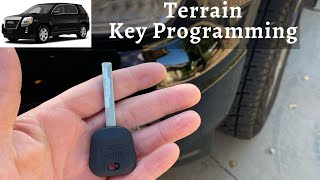
- If neither key works, attempt the 30-minute key relearn procedure. Turn the key to the 'ON' position (do not start) and wait for the security light to turn off, which takes about 10 minutes. Turn the key off for 5-10 seconds. Repeat this process two more times for a total of three 10-minute cycles. After the third cycle, turn the key off and then try to start the engine. The vehicle should have relearned the key. A fully charged battery is critical for this procedure to succeed.
- Check the vehicle's main battery to ensure it has a full charge (at least 12.6V). A weak battery can cause the relearn procedure to fail.
- If the issue persists, the vehicle should be scanned with a professional tool capable of reading Body/Chassis codes to confirm B3935 and check for other related DTCs like B3055 or B3060.
- If a key is confirmed to be bad, a new one must be cut and programmed by a dealer or locksmith.
- If keys and RFI are ruled out, a professional technician will need to diagnose the ignition lock cylinder's antenna ring, the Theft Deterrent Module, BCM, and related wiring.
Parts You'll Likely Need
- Transponder Ignition Key
(OEM #GM 13504200 (Strattec 5913397))— If one key fails while the spare works, the transponder chip in the primary key has likely failed. A replacement is needed.
Trusted brands: ACDelco, Strattec, Car Keys Express
OEM price range: $100-$200
Aftermarket price range: $50-$120 - Ignition Lock Cylinder Housing w/ Antenna
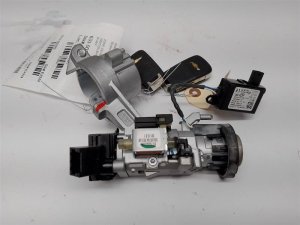
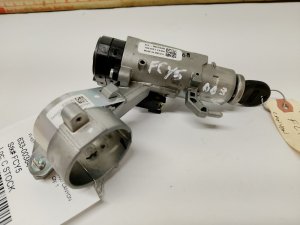
(OEM #GM 22966415 (Antenna Bracket))— If both keys fail and the relearn procedure doesn't work, the antenna that reads the key may be faulty. It is often replaced as part of the ignition lock cylinder assembly.
Trusted brands: GM Genuine Parts, Dorman
OEM price range: $80-$150
Aftermarket price range: $60-$100
Related Codes That Often Appear With This One
- B3055 — Stands for 'No Transponder Modulation or No Transponder.' This code often appears with B3935 and indicates a problem with the key itself or the signal it's sending. Both are listed together in TSBs PIC5650M and PIC5650L.
- B3060 — Stands for 'Unprogrammed Transponder.' This suggests the key is not programmed to the vehicle. It's also frequently seen with B3935 in GM service bulletins.
Technical Service Bulletins (TSBs) & Recalls
- PIC5650M: Mentions B3935 in relation to intermittent no-crank/no-start conditions with the security light on.
- PIC5650L: Explicitly warns against replacing parts for B3935 and instructs to ask the customer about Radio Frequency Identification (RFID) devices on their keychain.
- PIC5650B: Provides a detailed explanation of RFI from various sources (toll passes, other keys, access cards) causing intermittent no-start conditions and codes B3055, B3060, and B3935 on the 2010-2015 GMC Terrain.
- PI1180A: While for different GM trucks/SUVs, it details a BCM software update to fix a no-start condition where B3935 is set, showing it's a known software issue in the GM family.
Platform-Specific Known Issues
- The immobilizer system's high sensitivity to Radio Frequency Interference is the most significant vehicle-specific issue, as documented in multiple GM Technical Service Bulletins.
- Owners on forums frequently report that this issue appears suddenly and is resolved by simply separating their car key from other fobs on the same ring.
Hidden / Shadow Codes Worth Checking
- B3935 57: The '57' is a symptom byte that may be displayed on professional scan tools like the Tech2, indicating 'Transponder Authentication Error'. It specifies that the key was read, but the security challenge failed. (see via GM Tech2 or GDS2 scan tool.)
Scan Tool Commands That Help
- GDS2 (Global Diagnostic System 2): Immobilizer Learn — This function is used after replacing a key, the BCM, or the ECM to program keys to the vehicle. It initiates the security relearn process electronically.
- GDS2 (Global Diagnostic System 2): Data Bus Diagnostic Tool — If communication issues are suspected between the BCM and other modules, this tool can be used to verify which modules are active on the CAN bus and help pinpoint a communication breakdown.
- Techline Connect (formerly TIS2Web): BCM Reprogramming (SPS) — Used to apply updated software calibrations to the Body Control Module. This is specifically mentioned in TSB PI1180A as a fix for B3935 on some GM models to correct logic errors.
Wiring & Ground Locations
- BCM (Body Control Module) — Located under the driver's side of the dashboard. On the passenger side of the center console, behind a trim cover, is a fuse box with multiple fuses for the BCM.. The BCM manages the Pass-Key III+ immobilizer system. Poor connections, corrosion, or blown fuses related to the BCM will prevent key authentication.
- BCM Connector C3 (Light Blue) — At the BCM under the driver's dash.. Contains key power and communication wires. Pin 5 (Brown) is an accessory voltage feed, and Pin 6 (Pink) is an ignition voltage feed.
- BCM Connector C4 (Black) — At the BCM under the driver's dash.. Contains the main ground for the BCM. Pin 26 (Black/White stripe) is a critical ground connection.
- G101 — Located on the left front of the engine compartment.. This is a major engine and chassis ground point. A loose or corroded G101 can cause various electrical issues, including communication errors between modules.
- G210 / G218 — Located on the left side of the dash, behind the kick panel.. This is a primary interior ground point for modules located in the dash, including the BCM. A poor connection here can directly impact BCM operation.
Real Owner Repair Stories
- Camaro5 Forums user 'RedTexasSS' (2012 Chevrolet Camaro SS (Uses a similar GM Passkey system)) — No crank, no start, "Service Theft Deterrent System" message.
❌ Tried (didn't work) Disconnecting and reconnecting the battery., An initial attempt at the 30-minute relearn procedure with the original key.
✅ What actually fixed it A Snap-on scanner revealed code B3935. A new, inexpensive standard key was cut by a locksmith. The 30-minute relearn procedure was performed successfully with the new key (three cycles of 10 minutes ON, then OFF). The car then started and ran normally, confirming the original key's transponder had failed.
OEM Part Supersession History
20832469, 22740631, 22782576→22929627— Part revision and consolidation for the Body Control Module (BCM) with active noise control.
Heads up: These BCMs are for models with the active noise control option. The correct BCM must be chosen based on vehicle options, and programming is required after installation.13584695→13586273— Part revision for the Body Control Module (BCM) for 2016-2017 models.
Heads up: This part is specific to later models in the generation. Using the wrong year BCM will result in function loss or failure to program.
Model Year Variations Within This Range
- 2016-2017: The GMC Terrain received a facelift for the 2016 model year, which included updated exterior styling and interior technology. While the fundamental Pass-Key III+ system remained, the BCM part numbers changed, and later models may have different software revisions. For example, BCM P/N 13586273 supersedes the original part for 2016-2017 models.
Helpful Videos

Used OEM Parts in Stock


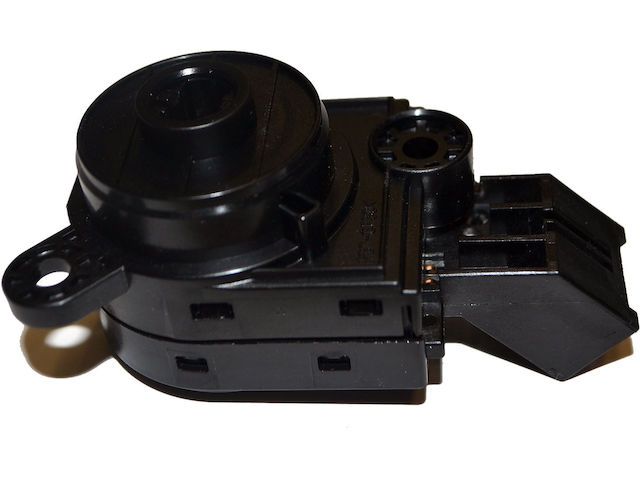
New Aftermarket Parts Available



The information in this article is provided for general reference and educational purposes only. Vehicle specifications, procedures, and part compatibility can vary by production date, trim level, and region. Always consult your vehicle's factory service manual and verify part numbers before purchasing or performing repairs. Safety-critical components such as airbags, seat belts, and braking systems should be installed by a qualified professional.
- Gmc TERRAIN:
- 🎬 Helpful Videos
- 🛍️ Shop This Part
- What's Unique About the 2010-2017 Gmc TERRAIN
- Diagnostic Flowchart
- Symptoms You May Notice
- Most Likely Causes
- Rare But Worth Checking
- Diagnosis Steps
- Parts You'll Likely Need
- Related Codes That Often Appear With This One
- Technical Service Bulletins (TSBs) & Recalls
- Platform-Specific Known Issues
- Hidden / Shadow Codes Worth Checking
- Scan Tool Commands That Help
- Wiring & Ground Locations
- Real Owner Repair Stories
- OEM Part Supersession History
- Model Year Variations Within This Range
- 🎟️ Get 5% Off