

B3935 on 2022-2026 GMC Savana: Security System Fault, No-Start Causes & Fixes
Code B3935 on a 2022-2026 GMC Savana indicates a security system problem causing a no-start or stall. Before replacing any parts, check for and remove sources of radio frequency interference (RFI) like phone chargers or other keys on the keychain, as this is a common cause noted in official GM Technical Service Bulletins and often requires no new parts.
- B3935 means your van's security system doesn't recognize your key, preventing it from starting.
- The most likely cause, specific to this vehicle, is radio frequency interference. Unplug all aftermarket chargers and gadgets and remove other fobs from your keychain before doing anything else.
- If interference isn't the issue, try your spare key. If the spare works, your primary key needs to be replaced and programmed.
- Do not replace expensive parts like the Body Control Module (BCM) until RFI and a faulty key have been definitively ruled out.
- Any repair beyond checking for interference or trying a spare key will require a professional with the right tools to program security components.
What's Unique About the 2022-2026 Gmc SAVANA
For this generation of GMC Savana and its platform-mate, the Chevrolet Express, the immobilizer system is notably sensitive to Radio Frequency Interference (RFI). While B3935 on many vehicles points directly to a faulty key or control module, General Motors has issued specific and repeatedly updated Technical Service Bulletins (TSBs), most notably PIC5650M, advising technicians to first suspect RFI from aftermarket accessories. The TSB lists a wide range of potential culprits, from cheap USB chargers and aftermarket LED lights to building access cards and even other vehicle keys on the same ring. This makes the diagnostic approach unique, prioritizing the removal of environmental factors over immediate component testing.
Diagnostic Flowchart
Tap your situation to follow the diagnostic path that matches what you're seeing on this vehicle.
Symptoms You May Notice
- Engine will not crank (no-crank, no-start).
- Engine starts and immediately stalls.
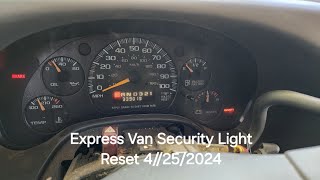
- Security indicator light (often a car with a padlock symbol) is on or flashing on the instrument panel.
- Intermittent no-start condition that may seem random.
- "Service Theft Deterrent System" message on the driver information center.
- Replacing the ignition key or BCM without first checking for and eliminating all possible sources of Radio Frequency Interference (RFI), as advised by GM TSB PIC5650M.
- Replacing the starter motor or battery when the issue is an immobilizer-commanded no-start. A proper diagnosis would show the starter relay is not being commanded to engage by the BCM/PCM.
Most Likely Causes
- Radio Frequency Interference (RFI) 🔴 High Probability As documented in GM TSBs PIC5650L, PIC5650M, and PIE0232, the vehicle's security system operating on the 125 kHz frequency is sensitive to external electronic signals. The bulletins explicitly list items like cell phone chargers, aftermarket LED lights, toll passes, and even other vehicle fobs as known sources of interference.
How to confirm: Remove all aftermarket electronic devices (phone chargers, dash cams, toll passes) from the vehicle. Remove all other keys, fobs, and access cards from the GMC key ring. Attempt to start the vehicle with only the single ignition key present. If it starts, the issue is RFI.
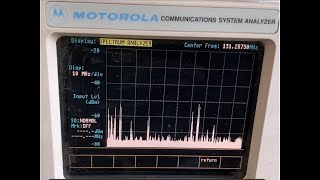
Typical fix: Identify and remove the source of the RFI. No parts replacement is necessary. The owner's manual contains a Radio Frequency Statement that warns against this possibility. 🎬 See this guide on troubleshooting and identifying RFI sources.
Est. part cost: $0 - Weak or Damaged Key Transponder 🟡 Medium Probability Keys can be damaged by drops or water, and internal electronics can fail over time. This is a common failure point for any transponder key system.
How to confirm: Try starting the vehicle with a known-good spare key. If the spare key works consistently, the primary key's internal transponder chip is faulty. A locksmith or dealer can also test the key's signal output.
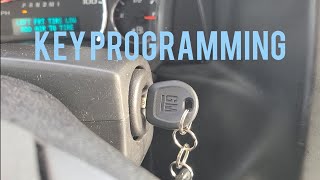
Typical fix: The faulty key must be replaced. A new key will need to be cut and electronically programmed to the vehicle by a dealer or qualified automotive locksmith. A 30-minute relearn procedure may be required. 🎬 Watch: How to perform the 30-minute key relearn process.
Est. part cost: $75-$250 - Body Control Module (BCM) Software Glitch ⚪ Low Probability GM has released software updates for other models (per TSB PI1180A) to address a no-start condition with B3935 and B2955 set, caused by the BCM not allowing a correct read of the immobilizer information. This is a known, though less frequent, possibility for the Savana platform.
How to confirm: This requires a technician with a GM-specific scan tool (MDI, Tech2) to check the current software calibration of the BCM against the latest version available from GM's TIS2Web service.
Typical fix: Reprogramming the BCM with the latest software calibration using the GM Service Programming System (SPS).
Est. part cost: $0 (labor cost only) - Faulty Immobilizer Exciter Coil (Antenna) ⚪ Low Probability The coil is a simple antenna and generally reliable, but physical damage to the ignition cylinder or wiring can cause it to fail.
How to confirm: This requires advanced diagnostics with a scan tool to monitor the data from the immobilizer system. If the BCM is not receiving any signal from the key, and the key is known-good, the coil is suspect. An oscilloscope can also be used to verify the RF signal from the coil.
Typical fix: Replacement of the exciter coil, which is typically located around the ignition lock cylinder.
Est. part cost: $50-$150
Rare But Worth Checking
- Faulty Body Control Module (BCM): While a software glitch is more common, the BCM hardware itself can fail due to issues like cracked solder joints or water damage. This is typically a last resort after all other possibilities, including wiring, have been exhausted. Replacement often requires programming a new or used module to the vehicle's VIN and key data.
- Damaged Wiring or Connectors: Damage to the wiring between the exciter coil and the BCM can prevent the key's signal from being read. This is rare but should be inspected before replacing an expensive module, especially if the vehicle has had recent dash work or a history of rodent damage.
Diagnosis Steps
- Verify the complaint and check for the security light on the dashboard.
- Scan the Body Control Module (BCM) for DTC B3935 and any other related codes like B3055 or B3060.
- Question the driver about any aftermarket electronics plugged into the vehicle (e.g., phone chargers, GPS, dash cams, LED lights). TSB PIC5650M provides a comprehensive list.
- Remove all other keys, fobs, and access cards from the vehicle's keychain.
- Unplug ALL aftermarket accessories. Attempt to start the vehicle. If it starts, the issue is RFI. Re-introduce items one by one to find the culprit.
- If the no-start condition persists, try the vehicle's spare key. If the spare key works, the primary key is defective.
- If neither key works and RFI has been ruled out, perform the 30-minute key relearn procedure: Turn the key to 'ON' for 10 minutes until the security light goes out. Turn off for 5 seconds. Repeat this cycle two more times for a total of three cycles.
- If the relearn fails, inspect the wiring and connector at the immobilizer exciter coil around the ignition cylinder for any visible damage or looseness.
- If wiring appears intact, the issue likely lies with the exciter coil or the BCM itself. This requires professional diagnosis with a dealer-level scan tool to monitor live data and confirm the point of failure.
- Check for any available BCM software updates using GM's TIS2Web, as a re-flash can sometimes resolve the issue.
Parts You'll Likely Need
- Transponder Ignition Key
(OEM #23300334 (Circle + / PK3+))— If the internal transponder chip in the original key has failed, a new key is required. This is a common point of failure after RFI is ruled out. The key uses a Philips 46 transponder chip.
Trusted brands: ACDelco (OEM), Strattec, Ilco
OEM price range: $100-$200
Aftermarket price range: $20-$120
Related Codes That Often Appear With This One
- B3055 — This code relates to a problem with the key transponder itself (No Transponder Key Programmed). It often appears with B3935 because if the key isn't recognized or programmed, an authentication error will also occur.
- B3060 — This code indicates an issue with the immobilizer antenna (exciter coil) circuit (Unprogrammed Transponder Immobilizer Coil Circuit). It can be logged alongside B3935 if the antenna fails to power up the key's transponder, leading to an authentication failure.
- C0750, C0755, C0760, C0765, C0775 — These codes are related to tire pressure monitoring but were noted in TSB PIC5650M as potentially appearing with B3935 during intermittent no-start events, suggesting a broader electronic module communication issue possibly caused by widespread RFI.
- B2955 — This code for 'Security Sensor Data Circuit Malfunction' was mentioned along with B3935 in TSB PI1180A for other GM trucks, indicating a BCM software issue that could be resolved with a reflash.
Technical Service Bulletins (TSBs) & Recalls
- PIC5650M: The most current and comprehensive TSB, superseding previous versions. Addresses intermittent no crank/no start/stall with security light on, listing B3935 among other codes and providing an extensive list of RFI sources to check before replacing parts.
- PIC5650L: An earlier version of the above TSB, showing a history of GM addressing this specific RFI-related issue.
- PI1180A: A TSB for other GM trucks that addresses a no-start with B3935 and B2955 by reprogramming the BCM, indicating a potential software-based fix.
Platform-Specific Known Issues
- This platform is known to be sensitive to Radio Frequency Interference (RFI) from aftermarket devices like phone chargers, dash cams, or even other electronic keys on the same keychain. GM has issued Technical Service Bulletins (PIC5650L, PIC5650M) advising technicians to investigate RFI as a primary cause for code B3935 before replacing any components.
Hidden / Shadow Codes Worth Checking
- B3935 57: The '57' is a symptom byte meaning 'Transponder Authentication Error'. It specifies the type of failure within the B3935 code, confirming the issue is with the challenge/response calculation between the key and the module, after the key's initial presence was detected. (see via GM GDS2 or equivalent professional scan tool that can read manufacturer-specific symptom bytes.)
- B2955: Security Sensor Data Circuit Malfunction. When this code appears with B3935, it strongly points to a BCM software issue that can be fixed with a re-flash, as noted in GM TSB PI1180A. (see via Standard scan tool capable of reading Body Control Module codes.)
Scan Tool Commands That Help
- GDS2 (GM Diagnostic Software): Module Diagnostics > Body Control Module — To directly access the BCM, view live data related to the immobilizer system, and check for specific DTCs and symptom bytes.
- GDS2 (GM Diagnostic Software): Configure/Reset Functions > Immobilizer Learn — This function is used to program new keys or relearn existing keys to the vehicle's BCM/TDM after a key or module replacement. It is a required step to make new components work.
- GDS2 with SPS (Service Programming System): Body Control Module Reprogramming — Used to update the BCM's software to the latest calibration. This is the specific fix for issues caused by software glitches, such as the one described in TSB PI1180A where B3935 and B2955 are set together.
Wiring & Ground Locations
- BCM Location — Typically located behind the lower right side of the dashboard.. This is the central module for the security system. Physical access may be needed to inspect connectors for damage or corrosion, or to replace the module.
- G302 (Ground) — On older but related van platforms, this ground is located behind the left kick panel. Ground locations are often shared across generations.. A poor ground connection for the BCM can cause a wide range of intermittent electrical issues, including no-start conditions and false security codes. Verifying this ground is clean and tight is a critical diagnostic step.
- BCM Ground Path Warning — Can pass through the left instrument panel junction block.. A GM service bulletin warns that the BCM can be internally damaged if its ground path is removed while battery power is still connected. The negative battery cable MUST be disconnected before servicing BCM grounds or related junction blocks.
Real Owner Repair Stories
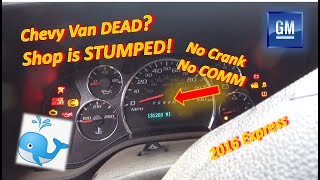
- YouTube channel 'Pine Hollow Auto Diagnostics' (2017 Chevrolet Express Van (platform twin)) — No-start condition, security light behavior on the dash. Vehicle had already been to a dealer and another shop with no resolution.
❌ Tried (didn't work) Diagnostics by two other shops, including a GM dealer, failed to identify the cause.
✅ What actually fixed it The final fix was a blown 2-Amp fuse in a related circuit. The issue presented as a complex security problem but was a simple electrical fault. - YouTube channel 'Rainman Ray's Repairs' (Chevrolet Silverado with similar CAN bus architecture) — No-crank, 'Service Theft Deterrent' message, multiple modules offline on scan tool.
❌ Tried (didn't work) Attempting to reprogram keys failed because the necessary modules were not communicating.
✅ What actually fixed it The root cause was water intrusion and corrosion in a CAN bus splice pack connector under the driver's side sill plate. Cleaning the corrosion from the connector pins restored communication to all modules and resolved the no-start condition. - YouTube channel 'A&J Towing and Recovery' (GMC Van) — No-start after a new key was cut, 'Service Theft Deterrent System' message displayed.
❌ Tried (didn't work) Simply cutting the new key was not enough.
✅ What actually fixed it Successfully performing the 30-minute manual key relearn procedure. The video shows the three 10-minute cycles of turning the key to 'ON' and waiting for the security light to go out, which allowed the vehicle's computer to learn the new key and start.
"I Checked Everything" — The Actual Cause
- A common pattern for this code is for all security system components (key, BCM, exciter coil) to test good, with the actual cause being external. The most frequent is Radio Frequency Interference (RFI) as noted in TSBs. Another documented cause is a corroded CAN bus splice pack connector, which interrupts module communication and mimics a security system failure. In one case on a similar platform, a simple blown 2A fuse was the culprit after two shops failed to diagnose it.
OEM Part Supersession History
13518593, 13532662→13534192— GM often supersedes parts to incorporate hardware improvements, software updates, or manufacturing process changes. The specific reason is not typically published.
Heads up: When replacing a BCM, it is critical to use the correct superseded part number for the vehicle's VIN and program it correctly. Using an incorrect or unprogrammed module will not work.
Model Year Variations Within This Range
- 2022-2026: The diagnostic advice from GM has been updated over time. TSB PIC5650L from 2024 was superseded by PIC5650M in 2025, indicating that GM is continually refining the list of potential RFI sources and diagnostic procedures for this intermittent no-start concern.
Helpful Videos
We Have This Part in Stock


The information in this article is provided for general reference and educational purposes only. Vehicle specifications, procedures, and part compatibility can vary by production date, trim level, and region. Always consult your vehicle's factory service manual and verify part numbers before purchasing or performing repairs. Safety-critical components such as airbags, seat belts, and braking systems should be installed by a qualified professional.
- Gmc SAVANA:
- 🎬 Helpful Videos
- 🛍️ Shop This Part
- What's Unique About the 2022-2026 Gmc SAVANA
- Diagnostic Flowchart
- Symptoms You May Notice
- Most Likely Causes
- Rare But Worth Checking
- Diagnosis Steps
- Parts You'll Likely Need
- Related Codes That Often Appear With This One
- Technical Service Bulletins (TSBs) & Recalls
- Platform-Specific Known Issues
- Hidden / Shadow Codes Worth Checking
- Scan Tool Commands That Help
- Wiring & Ground Locations
- Real Owner Repair Stories
- "I Checked Everything" — The Actual Cause
- OEM Part Supersession History
- Model Year Variations Within This Range
- 🎟️ Get 5% Off