

B3935 on 2009-2016 Chevrolet Traverse: Security Light and No-Start Fixes
On a 2009-2016 Traverse, code B3935 almost always means there's radio frequency interference near your key, causing a no-start and security light. Before buying parts, remove all other keys, fobs, and access cards from your keychain. This simple step often resolves the issue for $0.
- B3935 means your car's anti-theft system is preventing it from starting.
- The most likely cause is not a broken part, but interference from other keys, fobs, or electronics near your ignition key.
- The first and most effective diagnostic step is to remove all other items from your keychain and try the key by itself.
- If interference isn't the cause, the next most likely culprit is a faulty key, followed by a much rarer failure of the ignition lock cylinder.
What's Unique About the 2009-2016 Chevrolet TRAVERSE
The first-generation Chevrolet Traverse, along with its GM Lambda platform mates (Buick Enclave, GMC Acadia, Saturn Outlook), is highly sensitive to Radio Frequency Interference (RFI). Manufacturer Technical Service Bulletins (TSBs) like PIC5650M repeatedly warn technicians not to replace any parts for this code until all possible sources of RFI are removed from the driver's keychain and the vehicle's cabin. This sensitivity is the most common trigger for code B3935 on this specific vehicle, as the low-power 125 kHz signal from the key's transponder is easily 'jammed' by other electronic devices.
Diagnostic Flowchart
Tap your situation to follow the diagnostic path that matches what you're seeing on this vehicle.
Symptoms You May Notice
- Vehicle will not crank or start
- Engine starts but stalls immediately
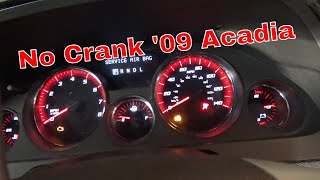
- Security indicator light is on or flashing on the dashboard
- "Service Theft Deterrent System" message may appear on the driver information center.
- "No Fob Detected" message on vehicles with keyless start, though the vehicle may start if the fob is placed in the designated pocket.
- Replacing the starter
- Replacing the battery
- Replacing the Body Control Module (BCM) without first exhaustively checking for RFI and trying a spare key.
Most Likely Causes
- Radio Frequency Interference (RFI) 🔴 High Probability As documented in a series of GM TSBs (PIC5650B through PIC5650M), the PassKey III+ immobilizer system is very sensitive to external radio signals. The signal from the key's transponder is low power and easily 'jammed' by other fobs, access cards, aftermarket chargers, and even LED lights.
How to confirm: Remove ALL other items from the ignition key ring. TSBs specifically list: other vehicle keys/fobs, office/gate access cards, toll passes, fuel station speed passes, and decorative items. Also unplug any aftermarket chargers, dash cams, or USB power banks from the vehicle's power outlets. If the vehicle starts normally with just the single Traverse key, RFI was the cause.
Typical fix: Keep the Traverse key isolated from other electronic devices and fobs. No parts are required.
Est. part cost: $0 - Worn or Damaged Ignition Key 🟡 Medium Probability The PassKey III+ (PK3) transponder chip is embedded in the plastic head of the key. This chip can be damaged from drops, water exposure, or simply fail internally over time, preventing it from responding correctly to the security challenge.
How to confirm: Try starting the vehicle with a known-good spare key. If the spare key works reliably and the original does not (even when isolated from RFI sources), the original key is faulty.
Typical fix: Replace the faulty key. A new key must be cut and electronically programmed to the vehicle by a dealership or an automotive locksmith. The key blank itself is often marked with a circle and a '+' symbol or 'PK3'.
Est. part cost: $70-$150 - Faulty Ignition Lock Cylinder / Immobilizer Antenna ⚪ Low Probability The exciter coil (antenna) that surrounds the ignition lock cylinder energizes the key's transponder and reads its signal. This component or its wiring can fail, though it is less common than key or interference issues. The lock cylinder itself can also wear out mechanically.
How to confirm: This requires professional diagnosis. A technician would use a scan tool to monitor immobilizer data (like key status) and may use specialized tools like an RFI meter to test the function of the antenna coil directly.
Typical fix: Replacement of the ignition lock cylinder, which often includes the immobilizer antenna coil. The new components and all existing/new keys must be programmed to the vehicle using the key relearn procedure.
Est. part cost: $150-$300
Rare But Worth Checking
- Failing Body Control Module (BCM): While rare, the BCM is the central computer for the theft deterrent system and can fail. Symptoms often include other bizarre electrical issues like flickering lights, erratic door locks, or parasitic battery drain. TSB PI1180A was released for other GM models where a BCM software update was the fix for B3935, confirming the BCM can be the root cause. This is a last resort after all other causes are ruled out, and replacement requires professional programming.
- Wiring Harness Issues: Damage or corrosion in the wiring between the ignition lock cylinder's antenna and the BCM can cause an intermittent signal loss, triggering B3935. This is uncommon but can happen, especially on older, high-mileage vehicles. Diagnosis involves checking for continuity and resistance in the specific harness wires.
Diagnosis Steps
- Check the dashboard for an illuminated or flashing security light. This confirms an anti-theft issue.
- Remove the ignition key. Take everything else off the key ring: other keys, fobs, store loyalty cards, and any metal or plastic tags.
- Unplug any aftermarket devices from the vehicle, such as phone chargers, dash cams, USB power banks, and even aftermarket LED interior lights.
- Re-insert the single, isolated Traverse key and attempt to start the vehicle. If it starts, you have found the source of the interference.
- If the vehicle still does not start, try using a spare key if you have one. If the spare key works, the primary key is faulty.
- If neither key works and interference has been ruled out, attempt the 30-minute key relearn procedure. Turn the key to the 'ON' position (do not try to start) and wait for approximately 10-11 minutes until the security light stops flashing and turns off. Turn the key off for 10 seconds. Repeat this ON/OFF cycle two more times for a total of three cycles (approx. 30-33 minutes). After the third cycle, turn the key off, then try to start the engine. Ensure the battery is fully charged before starting this procedure.
- If the issue persists, the vehicle requires professional diagnosis with a scan tool to check the Theft Deterrent Module, BCM, and ignition lock cylinder antenna for faults and to monitor live data.
Parts You'll Likely Need
- Transponder Ignition Key
(OEM #13520320 (replaces 23259495, 23326747))— If the transponder chip in the original key has failed, a new key is the only solution. This part requires cutting and programming.
Trusted brands: ACDelco, Strattec
OEM price range: $70-$120
Aftermarket price range: $40-$80 - Ignition Lock Cylinder with Immobilizer Antenna
(OEM #23122150)— If the antenna coil around the lock cylinder fails, it cannot power or read the key's transponder chip. This part often comes as an assembly. Replacement requires programming.
Trusted brands: ACDelco (GM Genuine), Dorman (924-796)
OEM price range: $95-$150
Aftermarket price range: $60-$100
Related Codes That Often Appear With This One
- B3055 — This code translates to 'No Transponder Key' or 'Key Problem'. It is frequently set alongside B3935 as the BCM may first fail to detect a key at all before it fails the authentication check.
- B3060 — This code indicates an 'Unprogrammed Transponder Key'. It is also part of the immobilizer system and can be set during the same failure event as B3935, especially if there is severe interference or a failing key.
Technical Service Bulletins (TSBs) & Recalls
- PIC5650M: The most recent version, superseding previous ones. It details the intermittent no-crank/no-start with security light on due to RFI from a long list of aftermarket devices and other fobs, listing B3935 as a primary code.
- PIC5650L: An earlier version of the same bulletin, which explicitly advises against replacing parts and to ask the customer about RFID devices. [Bulletin #PIC5650L]
- PIE0232: An engineering information request from GM seeking data on low-mileage 2013 vehicles with B3935, B3055, and B3060, showing it was an active area of investigation.
- PI1180A: A bulletin for different GM trucks/SUVs that addresses B3935 with a BCM software update, confirming the BCM can be a source of the fault.
Platform-Specific Known Issues
- This platform is subject to Technical Service Bulletin PIC5650M, which specifically addresses intermittent no-start conditions with code B3935 caused by Radio Frequency Interference from aftermarket devices or other items on the key ring.
- Owners on traverseforum.com frequently report this exact issue, with the overwhelming majority of successful fixes involving simply cleaning the keychain of all other fobs and electronic cards. The second most common fix is a new key, followed by the much rarer ignition lock cylinder replacement.
Scan Tool Commands That Help
- GDS2 (GM Global Diagnostic System 2): Immobilizer Learn — This function is required after replacing a key, the BCM, or the ignition lock cylinder. It guides the technician through the process of programming new keys to the vehicle's immobilizer module.
- GDS2 (GM Global Diagnostic System 2): Module Diagnostics > BCM > Data Display > Immobilizer Data — To see live data from the theft deterrent system. A technician can view parameters like 'Transponder Key State' (e.g., Present, Not Present, Invalid Key) to determine if the BCM is recognizing the key chip at all, which helps differentiate between a bad key, antenna, or BCM issue.
- Tech2/GDS2: Service Programming System (SPS) — When replacing the Body Control Module (BCM), the new module must be programmed with the vehicle's specific configuration and VIN. The SPS application, often launched from GDS2, connects to GM's online servers to get the correct software and calibration files for the new BCM.
Wiring & Ground Locations
- Body Control Module (BCM) — Located under the driver's side of the dashboard, typically to the left of the steering column, and may require removal of the lower dash trim panel for access.. The BCM houses the Theft Deterrent Module (TDM) logic. All signals from the ignition key's transponder are processed here. A poor connection at any of its 7+ connectors (often labeled X1, X2, etc.) or a faulty BCM itself will cause immobilizer faults like B3935.
- G201 — On the metal support structure of the instrument panel, in the upper left corner near the driver's side A-pillar. Access requires disassembling parts of the dashboard.. This is a primary instrument panel ground point. Multiple modules, potentially including the BCM or related components, rely on this ground. A loose or corroded G201 can cause intermittent and difficult-to-diagnose electrical issues, including immobilizer problems.
- G110 — Located on the right rear of the engine, mounted to the back of the cylinder head.. This ground is for the engine harness and is critical for various engine components. While less directly related to the BCM, a poor ground here can introduce electrical noise that may interfere with sensitive systems, and GM has issued bulletins for other models regarding loose G110 grounds causing widespread issues.
- Ignition Switch/Immobilizer Antenna Connector — At the back of the ignition lock cylinder housing within the steering column.. This connector carries the low-power signal from the immobilizer antenna (exciter coil) to the BCM. The wires are typically small and can be damaged during other steering column repairs. Checking for a secure connection and testing continuity of the wires (often a 2 or 3-wire connector) to the BCM is a key diagnostic step if RFI and the key have been ruled out.
Real Owner Repair Stories
- Camaro5 Chevy Camaro Forum (2012 Chevrolet Camaro SS) — No crank, no start, "Service Theft Deterrent System" message on dash.
❌ Tried (didn't work) Disconnecting and reconnecting the battery., Performing the 30-minute key relearn procedure with the original, faulty key.
✅ What actually fixed it A Snap-on scanner revealed code B3935. The owner had a new, inexpensive, non-remote key cut by a locksmith. They then successfully performed the 30-minute (3x10 min) key relearn procedure with the new key, which allowed the car to start and run. The original key's transponder had failed. - Chevrolet Forum (2007 Chevrolet Silverado) — Vehicle would not start after replacing the battery, with a "Service Theft Deterrent System" message displayed.
❌ Tried (didn't work) Unhooking the battery again.
✅ What actually fixed it A tow truck driver showed the owner a hard reset procedure: disconnect both battery cables and hold the positive and negative cable terminals together for 45-60 seconds. After reconnecting the battery, the vehicle started normally. This procedure drains all residual power from the modules, forcing a complete reset.
OEM Part Supersession History
22891589→23122150— Standard part evolution, likely for improved durability or manufacturing efficiency. This is the Ignition Lock Housing which contains the immobilizer antenna.
Model Year Variations Within This Range
- 2013-2016: The 2013 model year introduced a significant interior and dashboard refresh, including changes to the center stack and infotainment systems (MyLink). While the underlying PassKey III+ system remained, the BCM and surrounding electronics were updated. This could lead to slight differences in BCM part numbers and software versions compared to the 2009-2012 models. Always verify the part number by VIN when replacing a BCM.
Helpful Videos

Used OEM Parts in Stock


New Aftermarket Parts Available


The information in this article is provided for general reference and educational purposes only. Vehicle specifications, procedures, and part compatibility can vary by production date, trim level, and region. Always consult your vehicle's factory service manual and verify part numbers before purchasing or performing repairs. Safety-critical components such as airbags, seat belts, and braking systems should be installed by a qualified professional.
- Chevrolet TRAVERSE:
- 🎬 Helpful Videos
- 🛍️ Shop This Part
- What's Unique About the 2009-2016 Chevrolet TRAVERSE
- Diagnostic Flowchart
- Symptoms You May Notice
- Most Likely Causes
- Rare But Worth Checking
- Diagnosis Steps
- Parts You'll Likely Need
- Related Codes That Often Appear With This One
- Technical Service Bulletins (TSBs) & Recalls
- Platform-Specific Known Issues
- Scan Tool Commands That Help
- Wiring & Ground Locations
- Real Owner Repair Stories
- OEM Part Supersession History
- Model Year Variations Within This Range
- 🎟️ Get 5% Off