

B3935 on 2012-2019 Chevrolet Sonic: No-Start Causes and Immobilizer Fixes
On a 2012-2019 Chevy Sonic, code B3935 indicates a security system error that prevents the car from starting. The most common cause is not a broken part, but Radio Frequency Interference (RFI) from other keys or fobs on your keychain. The fix is usually free: isolate the Sonic key from all other devices and try starting the car again.
- B3935 means your Sonic's anti-theft system is preventing it from starting.
- DO NOT replace any parts before performing the free, 30-second fix: remove the Sonic key from your keychain and try starting the car with the key by itself.
- Unplug any aftermarket phone chargers, dash cams, or LED lights, as these are known sources of Radio Frequency Interference (RFI) that cause this code.
- If the RFI fix doesn't work, try your spare key to rule out a failed primary key before seeking professional help.
What's Unique About the 2012-2019 Chevrolet SONIC

For the Chevrolet Sonic and its platform-mates (like the Chevy Trax and Buick Encore), the B3935 code is overwhelmingly linked to external factors rather than component failure. General Motors has issued multiple Technical Service Bulletins (TSBs), including PIC5650M and PIC5650L, explicitly warning technicians *not* to replace parts for this code initially. Instead, the primary cause is almost always Radio Frequency Interference (RFI) from other devices on the owner's keychain, a known sensitivity for this vehicle generation. The TSBs list items like other vehicle keys, toll passes, building access cards, and even aftermarket USB chargers or LED lights as potential sources of interference.
Diagnostic Flowchart
Tap your situation to follow the diagnostic path that matches what you're seeing on this vehicle.
Symptoms You May Notice
- Intermittent no-crank, no-start condition.
- Engine starts and immediately stalls.
- Security indicator light is illuminated or flashing on the dashboard.
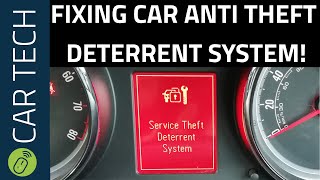
- "Service Theft Deterrent System" message on the instrument cluster. 🎬 Watch: Troubleshooting a Sonic that won't start due to anti-theft
- Replacing the starter motor. A starter will not fix a security-related no-start condition.
- Replacing the vehicle's main battery without proper testing. While a low battery can cause many electrical issues, it's not the direct cause of a B3935 code.
- Replacing the Body Control Module (BCM) without first ruling out RFI and a faulty key, as explicitly warned against in GM service bulletins.
Most Likely Causes

- Radio Frequency Interference (RFI) 🔴 High Probability GM TSBs PIC5650L and PIC5650M specifically highlight this as the primary cause for this platform. The immobilizer system's 125 kHz frequency is easily disrupted by other RFID devices like office key cards, gas station fobs, or even other car keys. The TSBs explicitly list a wide range of sources including aftermarket LED lights and phone chargers.
How to confirm: Remove the Sonic ignition key from your keychain. Ensure no other keys, fobs, or access cards are near the ignition. Unplug any aftermarket phone chargers or dash cams. If the car starts consistently with the key isolated, RFI was the cause. This is the critical first step recommended by GM.
Typical fix: Keep the ignition key separate from other RF-emitting devices. No parts are required.
Est. part cost: $0 - Failing or Weak Ignition Key Transponder 🟡 Medium Probability The transponder chip in the key can fail from age, drops, or internal damage. A user on Reddit reported this issue after accidentally damaging the key while swapping the fob case.
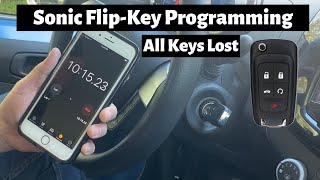
How to confirm: Try starting the vehicle with a known-good spare key. If the spare key works reliably while the primary key fails, the primary key's transponder is faulty. This is a definitive test. 🎬 See how to perform a 30-minute key relearn process
Typical fix: Replace the faulty key. A new key must be cut and programmed to the vehicle by a dealer or automotive locksmith. A Reddit user reported a dealer quote of $96 for the key and $135 for programming.
Est. part cost: $75-$200 - Weak Key Fob Battery ⚪ Low Probability While the transponder chip is passively powered by the car's exciter coil, a very weak fob battery (CR2032) can sometimes contribute to communication issues, especially in push-to-start models or where the fob's electronics cause passive interference.
How to confirm: Replace the CR2032 battery inside the key fob. If the issue is resolved, this was the cause.
Typical fix: Replace the CR2032 battery.
Est. part cost: $2-$10
Rare But Worth Checking
- Faulty Immobilizer Exciter Coil (Antenna Ring): This is the antenna ring around the ignition cylinder that powers and reads the key chip. If it fails, it cannot communicate with a known-good key. Diagnosis involves checking for a signal with a scan tool or testing the coil's resistance. The OEM part number for the antenna on a 2012-2017 Sonic is 13523300.
- Body Control Module (BCM) Issue: In rare cases, a software glitch or internal BCM failure can cause this code. This should only be considered after all other possibilities are exhausted. Other TSBs, like PI1180A for different GM models, point to a BCM reflash as a fix when B3935 appears with B2955, though this is less common for the Sonic.
- Wiring or Ground Issues: A loose or corroded ground wire, particularly for the BCM, can cause a host of intermittent electrical issues, including security faults. A user on the Sonic Owners Forum traced a no-crank issue to bad battery cable connections. Another user on Reddit experienced multiple electrical problems, including timing codes, after a ground wire was left loose during a repair.
Diagnosis Steps
- Check for a security light on the dashboard. A solid or flashing light confirms an active anti-theft issue.
- Isolate the Chevrolet Sonic key. Remove it from your keychain, away from all other keys, fobs, and RFID cards. This is the most critical first step.
- Unplug any aftermarket devices like phone chargers, dash cams, USB hubs, or aftermarket LED lights, as these are all cited as potential RFI sources in GM bulletins.
- Attempt to start the vehicle with the isolated key. If it starts, the problem is RFI.
- If the vehicle still does not start, try your spare key (also isolated). If the spare works, your primary key has failed.
- If neither key works, replace the battery (CR2032) in one of the key fobs as a low-cost check.
- Check battery terminals and primary ground connections for tightness and corrosion.
- If the problem persists, the vehicle requires professional diagnosis with a scan tool to check the immobilizer antenna and BCM data for 'Invalid Key' or similar messages.
Parts You'll Likely Need

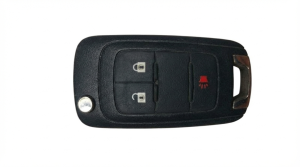
- Ignition Key (Flip Key)
(OEM #13579215, 13504202 (Varies by year/options))— If the internal transponder chip fails, the key must be replaced and programmed to the vehicle. The flip key style is common on these models.
Trusted brands: ACDelco, Strattec 🎬 Watch: DIY tutorial for programming a new Sonic flip key
OEM price range: $90-$200
Aftermarket price range: $50-$120 - Key Fob Battery
(OEM #CR2032)— A simple and inexpensive potential fix, especially if other key fob functions are also weak.
Trusted brands: Duracell, Energizer, Panasonic
OEM price range: $5-$10
Aftermarket price range: $2-$5 - Immobilizer Transceiver Antenna
(OEM #13523300)— In the rare event the antenna that reads the key fails, it will need to be replaced. It is located around the ignition cylinder.
Trusted brands: ACDelco (Genuine GM)
OEM price range: $30-$40
Aftermarket price range: $20-$30
Related Codes That Often Appear With This One
- B3055 — This code means 'No Transponder Modulation,' indicating the system couldn't detect a key at all. It often appears with B3935 when RFI is strong or the key is completely dead.
- B3060 — This code for 'Unprogrammed Transponder' can be set if interference corrupts the key's signal, making it appear as an unknown key. It is also listed alongside B3935 in the main RFI-related TSBs.
Technical Service Bulletins (TSBs) & Recalls

- PIC5650M / PIC5650L: Warns technicians not to replace parts for B3935 and other codes related to intermittent no-start, but to first investigate Radio Frequency Interference from devices on the customer's keychain or in the vehicle.
- PIC5650B: An earlier version of the TSB that also lists the Sonic and advises checking for RFID devices on the key ring for no-start conditions with code B3935.
- PIC5650C / F / K: Later revisions of the same TSB, adding more vehicle models and providing more detail on potential RFI sources like aftermarket LED lights and USB chargers, and suggesting tools to detect RFI.
Platform-Specific Known Issues
- High susceptibility to Radio Frequency Interference (RFI) is the most significant issue for this platform, as documented in TSBs PIC5650M and PIC5650L.
- A recall (NHTSA #17V249000, GM #17130) was issued for 2013-2016 Sonics for a software issue where the 'key in ignition' reminder chime may not work, though this is separate from the B3935 no-start condition.
Hidden / Shadow Codes Worth Checking
- B3935 57: This is a symptom byte that specifies 'Transponder Authentication Error'. It confirms the BCM read the key and recognized it as a learned key, but the cryptographic challenge/response calculation failed. This points more specifically to a faulty chip in the key or strong RFI, rather than an unknown key. (see via A dealer-level scan tool like GM GDS2 or a high-end bidirectional tool capable of reading manufacturer-specific symptom bytes.)
Scan Tool Commands That Help
- GM GDS2/SPS: IMMO Immobilizer Learn - Setup (Program Transponder or Remote Key) — This function, accessed via the Service Programming System (SPS), is required to add a new key or to erase all existing keys and learn a new set. This is the official procedure for replacing a lost or faulty key.
- GM GDS2: Module Diagnostics > Remote Control Door Lock Receiver > Configure/Reset Functions > Add or Replace Key Fobs — Used to program the remote functions (lock/unlock/panic) of the key fob after the transponder chip has been learned by the immobilizer system.
- DIY / Manual Procedure: 30-Minute All Keys Lost Relearn Procedure — If all keys are lost and you have a new, cut key, this procedure can program the key without a scan tool. It involves three cycles of turning the key to 'ON' for 10 minutes and 30 seconds each, turning 'OFF' briefly between cycles. The security light going out indicates the end of each cycle.
Wiring & Ground Locations
- Body Control Module (BCM) — Located under the driver's side dashboard, behind the fuse panel, near where the driver's left foot would be.. The BCM is the primary module for the immobilizer system. It receives the key data from the antenna, performs the authentication, and enables or disables starting. Poor connections or ground issues at the BCM can cause B3935.
- Immobilizer Antenna (LIN Bus) — The data wire for the immobilizer antenna is a Green/Purple wire that connects to the BCM at the green 25-pin plug, in pin 2.. This is the Local Interconnect Network (LIN) bus wire that carries the key's transponder data from the antenna ring around the ignition cylinder to the BCM. A break or short in this wire will prevent the BCM from reading the key, leading to codes like B3055 or B3935.
- G303 (Ground) — Located on the left side B-pillar, behind the trim panel.. This is a major body ground point. While not directly tied to the immobilizer in all diagrams, intermittent ground issues are a known cause of difficult-to-diagnose electrical problems in GM vehicles. A poor ground here can affect BCM operation.
- BCM Connectors — The BCM has multiple large connectors, typically color-coded (e.g., white 26-pin, green 25-pin, blue 27-pin, pink 27-pin).. Knowing the specific connector and pin for a circuit (like the immobilizer LIN bus) is critical for testing continuity, voltage, and resistance when diagnosing a potential wiring fault instead of a component failure.
OEM Part Supersession History
13504202, 20873621, 13504266→13579215— Part consolidation and minor revisions by GM over the vehicle's production run.
Heads up: These are flip keys for turn-key ignition models. They are not compatible with push-to-start systems. The FCC ID (e.g., OHT01060512) must match for the remote functions to work correctly.13501916, 13579216→13575177— Part consolidation for keys with the remote start option.
Heads up: This key is for vehicles equipped with remote start (has 4 buttons instead of 3). The button layout must match the original key exactly for all functions to work. The FCC ID is often KR55WK50073.13506936→13587704— Revision of the Body Control Module (BCM).
Heads up: When replacing a BCM, it must be programmed to the vehicle using GM's Service Programming System (SPS). A used BCM cannot be reprogrammed with a scan tool unless the EEPROM chip is physically swapped or virginized.
Model Year Variations Within This Range
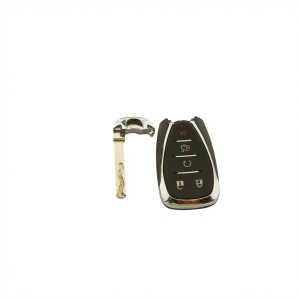
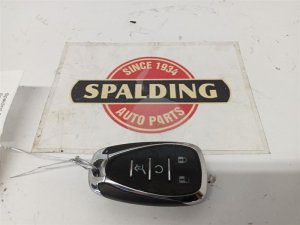
- 2017-2019: The 2017 model year received a significant facelift. While the immobilizer system functions similarly, key fob part numbers and BCM part numbers may differ from earlier models. For example, a smart key for 2017+ models might use part number 13508767 with FCC ID HYQ4AA, which is different from the earlier flip keys. Always verify part numbers by VIN.
Helpful Videos
Used OEM Parts in Stock



New Aftermarket Parts Available


The information in this article is provided for general reference and educational purposes only. Vehicle specifications, procedures, and part compatibility can vary by production date, trim level, and region. Always consult your vehicle's factory service manual and verify part numbers before purchasing or performing repairs. Safety-critical components such as airbags, seat belts, and braking systems should be installed by a qualified professional.
- Chevrolet SONIC:
- 🎬 Helpful Videos
- 🛍️ Shop This Part
- What's Unique About the 2012-2019 Chevrolet SONIC
- Diagnostic Flowchart
- Symptoms You May Notice
- Most Likely Causes
- Rare But Worth Checking
- Diagnosis Steps
- Parts You'll Likely Need
- Related Codes That Often Appear With This One
- Technical Service Bulletins (TSBs) & Recalls
- Platform-Specific Known Issues
- Hidden / Shadow Codes Worth Checking
- Scan Tool Commands That Help
- Wiring & Ground Locations
- OEM Part Supersession History
- Model Year Variations Within This Range
- 🎟️ Get 5% Off