

B3935 on 2015-2022 Chevrolet Malibu: Causes and Fixes for No-Start Issues
Code B3935 on a 2015-2022 Malibu means the car's security system can't authenticate the key, causing a no-start or stall. The most common cause is not a broken part, but radio frequency interference (RFI) from other devices on your keychain or in the car. Before replacing parts, remove all other keys, fobs, and electronics from your keychain and try again.
- B3935 means your Malibu's security system is preventing it from starting.
- The most likely cause is radio interference. Before anything else, remove all other items from your keychain and unplug aftermarket accessories.
- If interference isn't the issue, try your spare key to rule out a bad primary key.
- A simple 10-minute 'key relearn' procedure can often resolve the lockout without any tools.
- Do not replace expensive parts like the starter or BCM until all RFI sources and key-related issues have been eliminated.
What's Unique About the 2015-2022 Chevrolet MALIBU

The Chevrolet Malibu, particularly in the generations spanning 2015-2022, is highly susceptible to this issue due to its sensitivity to Radio Frequency Interference (RFI). General Motors has issued multiple, evolving Technical Service Bulletins (TSBs), such as PIC5650M, specifically warning technicians 🎬 Watch: A quick guide to fixing Malibu anti-theft issues. not to replace parts until RFI has been ruled out. This is a well-documented quirk where external signals from aftermarket devices (like phone chargers, LED lights, or even other car keys) jam the 125 kHz frequency used for key communication, leading to the authentication failure.
Diagnostic Flowchart

Tap your situation to follow the diagnostic path that matches what you're seeing on this vehicle.
Generation note: This year range covers the end of the 8th generation (2015-2016 Malibu Limited) and the full 9th generation (2016.5-2022), which are built on the Epsilon II and E2XX platforms respectively. The immobilizer systems and their sensitivity to RFI are similar across both generations, and the diagnostic advice in GM's TSBs applies broadly to these models. However, the 9th generation relies more heavily on a separate PEPS (Passive Entry Passive Start) module, making it a unique point of failure compared to the 8th generation's more BCM-centric design.
Symptoms You May Notice
- Engine will not crank (no-click, no-start)
- Engine starts and immediately stalls
- Security indicator light is on or flashing on the dashboard.
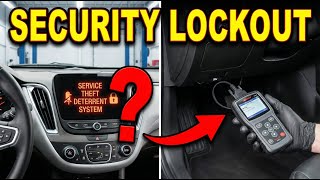
- Message on the driver information center like 'Service Theft Deterrent System'.
- Message on the driver information center like 'No Fob Detected' (for push-to-start models).
- Replacing the starter motor. A starter will not engage if the BCM has disabled the start command due to a security failure.
- Replacing the fuel pump. While the car may stall, the root cause is the security system disabling fuel, not a faulty pump.
- Replacing the vehicle's battery without first testing it. While low voltage can be a cause, it's often not the primary issue for this specific code.
Most Likely Causes

- Radio Frequency Interference (RFI) 🔴 High Probability As documented in GM TSBs PIC5650L and PIC5650M, the immobilizer system in these vehicles is sensitive to external radio signals that can 'jam' the 125 kHz frequency used for key communication. Specific sources cited by GM include aftermarket LED lights, USB phone chargers, toll passes, and even other vehicle keys on the same ring.
How to confirm: Remove everything from the key ring except the Malibu key itself. This includes other car keys, office access cards, toll passes, and any electronic devices. Also, unplug any aftermarket phone chargers, dash cams, LED lights, or USB power banks inside the car. If the car starts with the key isolated, RFI is the cause. For push-to-start models, if the car starts when the fob is placed in the dedicated transmitter pocket (usually in the center console), this also strongly points to an interference issue.
Typical fix: Keep the car key on a separate ring from other fobs and radio-emitting devices. Identify and remove the interfering aftermarket device from the vehicle.
Est. part cost: $0 - Weak or Defective Key Fob/Transponder 🟡 Medium Probability
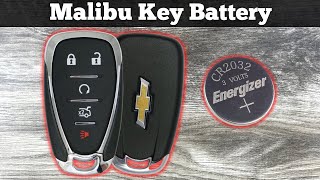
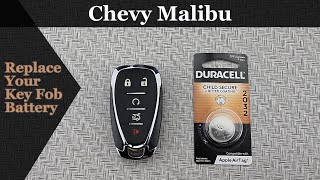
How to confirm: First, replace the CR2032 battery in the key fob. A low battery can cause a weak signal. If that doesn't work, try starting the car with the spare key. If the spare key works consistently, the primary key's internal transponder chip is likely faulty.
Typical fix: Replace the faulty key fob. This requires purchasing a new key and having it programmed to the vehicle by a locksmith or dealership.
Est. part cost: $70-$250 - Low Vehicle Battery Voltage ⚪ Low Probability
How to confirm: Test the vehicle's 12V battery with a multimeter or a battery tester. A voltage below 12.4V at rest may be insufficient to power all modules correctly during startup, leading to communication errors.
Typical fix: Charge or replace the vehicle's 12V battery.
Est. part cost: $150-$300 - Faulty Body Control Module (BCM) Software ⚪ Low Probability GM has released software updates for some models to correct BCM logic that could incorrectly trigger this code. TSB PI1180A specifically addresses a no-start with B3935 and B2955, which can be fixed by a BCM reprogram.
How to confirm: This can only be confirmed by a GM dealership or a qualified shop with access to GM's Service Programming System (SPS). They can check if a software update is available for your vehicle's BCM by checking against your VIN.
Typical fix: Reprogram the BCM with the latest software calibration. This is typically a 0.5-hour labor charge.
Est. part cost: $0 (if under warranty) or $100-$200 for labor
Rare But Worth Checking
- Faulty Immobilizer Antenna/Ignition Lock Cylinder: The antenna ring around the ignition switch or start button energizes and reads the key's transponder. While not a common failure point, its wiring can be damaged or the component itself can fail, preventing it from reading the key. This may set code B3060 alongside B3935.
- Faulty Body Control Module (BCM): In rare cases where software updates and all other diagnostics fail, the BCM itself may have an internal hardware fault requiring replacement. This is an expensive last resort, and should only be considered after all other causes, especially RFI, have been exhaustively ruled out.
Diagnosis Steps
- Check for a flashing security light on the dash. This confirms a theft-deterrent issue.
- Isolate the key. Remove all other keys, fobs, access cards, and electronic devices from the keychain.
- Unplug all aftermarket devices from the car's power outlets (chargers, dash cams, LED lights, USB power banks, etc.).
- Attempt to start the vehicle with the isolated key. If it starts, you have identified an RFI issue.
- For push-to-start models, if the car still doesn't start, place the key fob in the dedicated transmitter pocket (often inside the center console storage area) and try starting again. If it starts, this confirms a weak signal, likely due to RFI or a low fob battery.
- If the car still doesn't start, try the spare key. If the spare key works, the first key is faulty.
- Replace the CR2032 battery in the non-working key fob.
- If neither key works and RFI is ruled out, you can attempt the '30-Minute Relearn Procedure' (for adding a new key when all are lost). This procedure involves turning the key to ON for 10 minutes, three consecutive times. Note: Simpler programming may be available if you have one working key.
- If the issue persists, have the vehicle's 12V battery professionally tested to ensure it has adequate voltage and cranking amps.
- If all else fails, the vehicle requires professional diagnosis with a scan tool to check the BCM for stored codes, check for available software updates per TSB PI1180A, and live data from the immobilizer system.
Parts You'll Likely Need

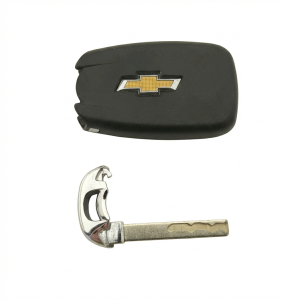
- Key Fob / Transponder Key
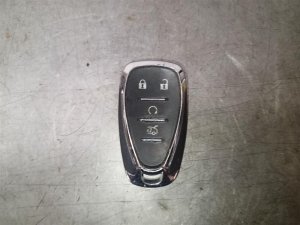
(OEM #13529662, 13508769, 13584497 (5-button, FCC ID: HYQ4EA for 2016-2022 models))— If one key fails while the spare works, the transponder chip in the original key has failed. It must be replaced and programmed.
Trusted brands: ACDelco, Strattec
OEM price range: $115-$200
Aftermarket price range: $50-$100 - Key Fob Battery (CR2032) — A weak battery can cause a weak signal, leading to intermittent authentication failures. It's the cheapest and easiest first part to replace.
Trusted brands: Energizer, Duracell, Panasonic
OEM price range: $5-$10
Aftermarket price range: $2-$5
Related Codes That Often Appear With This One
- B3055 — Relates to a problem with the transponder key itself. Often appears with B3935 when the key is the source of the issue or RFI is present.
- B3060 — Indicates an issue with the transponder antenna circuit (the ring around the ignition). It can be set along with B3935 if there's an RFI problem or a hardware fault in the antenna.
- B2955 — This code, related to the security sensor data circuit, is specifically mentioned in TSB PI1180A as appearing alongside B3935 when a BCM software update is required.
Technical Service Bulletins (TSBs) & Recalls
- PIC5650M: Advises technicians about intermittent no-crank/no-start with security light on and DTCs including B3935, pointing towards RFI as a primary cause and warning against unnecessary parts replacement. Lists specific RFI sources like LED lights and USB chargers.
- PIC5650L: An earlier version of the RFI-related TSB, also warning against unnecessary parts replacement for code B3935.
- PI1180A: Addresses an intermittent no-start with DTCs B3935 and B2955, recommending a BCM software update as the fix.
Platform-Specific Known Issues
- Per TSB #PIC5650M, these vehicles are known to have intermittent no-start conditions with code B3935 due to Radio Frequency Interference from aftermarket devices like phone chargers, LED lights, and even non-GM keys on the same keychain.
- A user on iATN (International Automotive Technicians Network) described a scenario with B3935 where the scan tool showed 'invalid key' and 'transponder key not present' intermittently, highlighting the elusive nature of the fault.
Mechanic-Grade Diagnostic Values
- Immobilizer Exciter Coil Resistance — expected: 7-9 Ohms. Failure: A reading outside of this range (open circuit or high resistance) indicates a faulty coil.
Hidden / Shadow Codes Worth Checking
- B3935 02: Transponder Authentication Failed. This specific symptom code points directly to a failure in the cryptographic challenge/response between the key and the module, often caused by RFI or a faulty key transponder. (see via GM GDS2 (Global Diagnostic System 2) or equivalent high-end scan tool.)
- B3935 04: Invalid Key. This indicates the module read a transponder, but its value is not one of the keys learned to the vehicle. (see via GM GDS2 (Global Diagnostic System 2) or equivalent high-end scan tool.)
Scan Tool Commands That Help
- GDS2: Immobilizer Learn — Used after replacing a key, the BCM, or the PEPS module. This function guides the technician through the process of teaching new keys to the vehicle's security system.
- GDS2: BCM Data Display — To monitor live data from the immobilizer system. A technician can view parameters like 'Number of Learned Keys', 'Key in Ignition Status', and 'Transponder Value' to see what the module is seeing in real-time during a start attempt.
- GDS2: Module Diagnostics > Body Control Module > Control Functions — This allows a technician to perform bidirectional tests on various BCM-controlled components to rule out other system failures.
Wiring & Ground Locations

- K9 Body Control Module (BCM) — On 9th generation Malibus (2016.5+), it is located on the floor under the dash on the front passenger side, to the right of the center console. The carpet must be pulled back for access.. The BCM is the central hub for the theft deterrent system. A poor connection or water intrusion at this location can cause B3935 and numerous other electrical faults.
- K129 Passive Entry Passive Start (PEPS) Control Module — On 9th generation Malibus, this module is often located in the trunk, sometimes accessible by looking up from inside the trunk, or under the rear package tray shelf behind the rear seat.. This module specifically handles the keyless entry and push-to-start functions. A failure here can directly cause B3935, even if the BCM is good. It is a common point of failure that is often overlooked.
- G303 / G304 — These are common interior ground points located under the carpet in the driver or passenger footwell area, often near the A-pillar kick panel.. The BCM and other interior modules rely on these grounds. Corrosion or a loose connection at these points can cause intermittent and difficult-to-diagnose communication errors, including B3935.
- Main Engine/Transmission Ground Strap — Typically runs from the engine block (often near the starter) to the chassis.. While not a direct cause, a poor main ground can introduce electrical noise and voltage drops throughout the vehicle during cranking, which can disrupt sensitive module communications and trigger security codes.
Real Owner Repair Stories
- ChevyMalibuForum user report (2017 Chevrolet Malibu) — Intermittent no-start, security light on, code B3935 stored.
❌ Tried (didn't work) Replacing the key fob battery, Isolating the key to rule out RFI, Dealer initially suspected a faulty BCM
✅ What actually fixed it The Passive Entry Passive Start (PEPS) module, located in the trunk, was found to be faulty. Replacing and programming the PEPS module resolved the no-start condition permanently.
OEM Part Supersession History
13597908, 13504235, 13584828→13527813 (example PEPS module supersession)— Hardware and firmware revisions to improve reliability and resolve communication issues.
Heads up: When replacing a PEPS or BCM module, it is critical to use the latest superseded part number available from GM for the vehicle's VIN. Using an older part number, even if new, may reintroduce the original fault.
Model Year Variations Within This Range
- 2015-2016: The 2016 model year was a split. The 'Malibu Limited' was a carryover of the 8th generation (Epsilon II platform) and had a more traditional immobilizer system integrated primarily within the BCM.
- 2016.5-2022: The redesigned 9th generation Malibu (E2XX platform) introduced a standard Passive Entry/Push-Button Start system that relies on a separate PEPS control module, in addition to the BCM, for key authentication. This module is a common failure point for B3935 on these later models.
Helpful Videos

We Have This Part in Stock





The information in this article is provided for general reference and educational purposes only. Vehicle specifications, procedures, and part compatibility can vary by production date, trim level, and region. Always consult your vehicle's factory service manual and verify part numbers before purchasing or performing repairs. Safety-critical components such as airbags, seat belts, and braking systems should be installed by a qualified professional.
- Chevrolet MALIBU:
- 🎬 Helpful Videos
- 🛍️ Shop This Part
- What's Unique About the 2015-2022 Chevrolet MALIBU
- Diagnostic Flowchart
- Symptoms You May Notice
- Most Likely Causes
- Rare But Worth Checking
- Diagnosis Steps
- Parts You'll Likely Need
- Related Codes That Often Appear With This One
- Technical Service Bulletins (TSBs) & Recalls
- Platform-Specific Known Issues
- Mechanic-Grade Diagnostic Values
- Hidden / Shadow Codes Worth Checking
- Scan Tool Commands That Help
- Wiring & Ground Locations
- Real Owner Repair Stories
- OEM Part Supersession History
- Model Year Variations Within This Range
- 🎟️ Get 5% Off