

B3935 on 2007-2014 Chevrolet Malibu: No-Start Causes and Security System Fixes
Code B3935 on a Chevy Malibu almost always indicates a security system fault causing a no-start condition. The most common cause is radio frequency interference from other devices on your keychain. Before replacing any parts, try starting the car with the ignition key completely isolated from other keys or fobs.
- B3935 means your car's anti-theft system is preventing it from starting.
- The most likely cause is interference from other keys or RFID cards on your keychain. Always try starting with just the single car key first.
- If isolating the key doesn't work, try a spare key to rule out a faulty primary key.
- A '10-minute security relearn' procedure is a free DIY step that can often resolve temporary system glitches.
- Do not replace expensive parts like the BCM or starter until all simple, free solutions have been attempted.
What's Unique About the 2007-2014 Chevrolet MALIBU
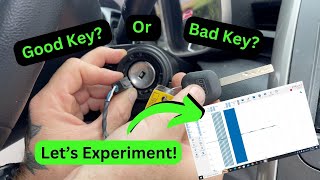
On this generation of Malibu and other GM vehicles from the era using the Passkey III/III+ immobilizer system, the design is notoriously sensitive to outside interference. The issue is so common that GM issued multiple Technical Service Bulletins (TSBs), like PIC5650 and PIE0232, advising technicians to first check for Radio Frequency Identification (RFID) devices on the owner's keychain before replacing any parts. This sensitivity is the single most important platform-specific quirk 🎬 Watch: A real-world example of these strange immobilizer issues. related to code B3935.
Diagnostic Flowchart
Tap your situation to follow the diagnostic path that matches what you're seeing on this vehicle.
Generation note: This range covers the end of the 6th generation (2007), the entire 7th generation (2008-2012), and the first two years of the 8th generation (2013-2014). The Passkey III+ immobilizer system design and its related issues are common across all three generations, as confirmed by wide-ranging TSBs and shared platform architecture with vehicles like the Pontiac G6 and Saturn Aura.
Symptoms You May Notice
- Engine will not crank (no-crank, no-start)
- Engine starts but stalls within a few seconds
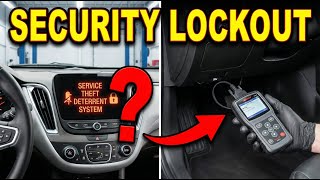
- Security light (a car with a padlock symbol) is flashing or steadily illuminated on the instrument cluster.
- Message on Driver Information Center (DIC) may display "Service Theft Deterrent System".
- Replacing the starter
- Replacing the battery (unless it's too weak to power the modules, which can cause similar symptoms)
- Replacing the Body Control Module (BCM) without first ruling out RFI, key issues, and software updates.
Most Likely Causes
- Radio Frequency Interference (RFI) 🔴 High Probability The vehicle's immobilizer system is sensitive. GM TSBs PIC5650L/M and PIE0232 directly name this as a primary cause for intermittent no-start conditions with this code, instructing technicians to check for RF devices on the keychain first. The immobilizer operates at 125 kHz, and other devices operating in the 120-135 kHz range can cause interference.
How to confirm: Remove the single ignition key from the keychain. Ensure no other keys, key fobs (including those for other cars), or RFID-enabled cards (like office access cards or gas station speed-pass fobs) are near the ignition switch. Attempt to start the vehicle with the isolated key. This is the most common and successful first diagnostic step reported by owners.
Typical fix: Keep the ignition key on its own ring or ensure no other RFID-emitting devices are bundled with it. No parts are required.
Est. part cost: $0 - Failing or Weak Ignition Key Transponder 🟡 Medium Probability The electronic chip embedded in the key head (a Circle Plus 'PK3' or 'ID46' chip) can degrade or fail over time from drops, water damage, or wear.
How to confirm: Try starting the vehicle with a known-good spare key. If the spare key works reliably and the primary key does not, the primary key is faulty. This is a definitive test.
Typical fix: The faulty key must be replaced. A new key will need to be cut and then programmed to the vehicle's immobilizer system by a dealer or an automotive locksmith with a capable scan tool.
Est. part cost: $50-$150 - Temporary Security System Glitch 🟡 Medium Probability
How to confirm: Attempt the 'Security Relearn Procedure'. Turn the key to the 'ON' position (do not start), and leave it there for 10-11 minutes until the security light stops flashing and turns off or stays solid. Turn the key off for 30 seconds, then try to start the engine. This may need to be repeated up to three times for a total 30-minute cycle.
Typical fix: Completing the relearn procedure successfully will reset the security system and allow the car to start. This often works after a battery has been disconnected or has died. No parts are required.
Est. part cost: $0
Rare But Worth Checking
- Body Control Module (BCM) Software Error: This is a known issue specifically for some 2014 models. TSB PI1180A documents that a BCM software glitch can cause B3935 along with B2955. The fix is a software update (reflash) performed by a dealer using the Service Programming System (SPS).
- Faulty Immobilizer Reader Coil: The reader coil is an antenna ring around the ignition lock cylinder that powers the key transponder and reads its signal. If it fails, it cannot communicate with the key, leading to this code. It is often serviced with the ignition lock cylinder.
- Wiring Damage: Damaged or corroded wires between the immobilizer reader coil and the Body Control Module can prevent the key's signal from being received correctly. This can be caused by previous dash work or chafing over time.
- Failing Body Control Module (BCM) or Theft Deterrent Module (TDM): In rare cases, after all other possibilities are exhausted, the module itself may have failed. A technician on iATN reported a case where a TDM was damaged by a faulty starter installation, leading to B3935. Replacement requires programming by a dealer or a well-equipped independent shop.
Diagnosis Steps
- Verify the primary symptom: a no-crank or start-and-stall condition with the security light on.
- Isolate the ignition key. Remove ALL other keys, fobs, and RFID cards from the keychain and attempt to start the engine. This is the most critical first step.
- If the issue persists, try starting the vehicle with a known-good spare key. If the spare works, the original key is faulty and needs replacement.
- If no spare is available or it also fails, perform the security relearn procedure: Key 'ON' for 10-11 minutes until the security light changes state (stops flashing or goes out), then key 'OFF' for 30 seconds. Repeat this cycle three times. After the third cycle, turn the key off for 30 seconds, then attempt to start.
- Check the vehicle battery. A weak or failing battery can cause a low voltage condition for the BCM/TDM, leading to security system errors. Ensure the battery has a full charge.
- If the vehicle is a 2014 model and the issue persists, contact a GM dealer to inquire about TSB PI1180A and a potential BCM software update, especially if code B2955 is also present.
- If all the above steps fail, the vehicle requires professional diagnosis. This will involve using a scan tool to check live data from the TDM/BCM, testing the wiring between the immobilizer coil and the module, and testing the coil itself.
Parts You'll Likely Need
- Ignition Key with Transponder
(OEM #15824471 (or superseding numbers like 23372322). Key uses a B111PT 'Circle Plus' / ID 46 chip.)— The internal chip can fail, causing the authentication error. This is the most likely part to fail if RFI is not the cause.
Trusted brands: ACDelco, Strattec
OEM price range: $70-$120
Aftermarket price range: $25-$60 - Ignition Lock Cylinder with Immobilizer Reader
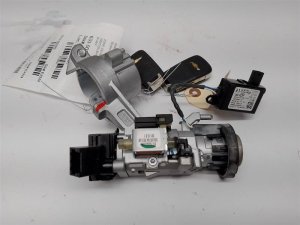
(OEM #e.g., 20939745 (assembly with switch/key/immobilizer for some models))— The reader coil (antenna) that communicates with the key can fail. It is often serviced with the ignition lock cylinder.
Trusted brands: ACDelco, Dorman
OEM price range: $150-$250
Aftermarket price range: $80-$150
Related Codes That Often Appear With This One
- B3055 — Stands for 'No Transponder Key or Key Not Present'. This can be set along with B3935 if the signal is intermittent, corrupted by interference, or the reader coil is failing.
- B3060 — Stands for 'Unidentified Key'. This code indicates the module received a signal but could not recognize it as a valid, learned key, which is a related symptom of the authentication failure.
- B2955 — Often seen with B3935 on 2014 models, indicating a BCM software issue per TSB PI1180A.
Technical Service Bulletins (TSBs) & Recalls
- PIC5650M / PIC5650L: Mentions B3935 in relation to intermittent no-start and specifically calls out Radio Frequency Identification as a potential cause.
- PIC5650B: Supersedes earlier versions and reiterates that RFID devices can interfere with the Passkey system, advising to check the customer's keychain.
- PIE0232: An engineering information request asking for data on vehicles with B3935, B3055, or B3060, instructing dealers to first verify no RF devices are present before proceeding with repairs.
- PI1180A: Details a BCM software calibration update to fix a no-start condition with DTCs B3935 and B2955 on some 2014-2015 models.
Platform-Specific Known Issues
- As documented in GM TSB PIC5650L, these vehicles are highly susceptible to intermittent no-start conditions caused by Radio Frequency Interference from devices on the keychain.
- For 2014 models, a BCM software glitch can cause this code and requires a dealer-installed update per TSB PI1180A.
- A user on ChevroletForum.com experienced B3935 on a similar GM platform and, after trying multiple keys, required a new Theft Deterrent Module to resolve the issue, highlighting that module failure is a possible, though less common, cause.
Scan Tool Commands That Help
- GDS2/Tech2 (GM Scan Tool): Body Control Module Programming and Setup — Required after replacing the BCM to calibrate the new module to the vehicle. Also used to apply software updates like the one mentioned in TSB PI1180A to fix bugs.
- GDS2/Tech2 (GM Scan Tool): Immobilizer Learn / Key Learn — Used to program new or additional keys to the vehicle's immobilizer system. This function is necessary when a key is replaced or when adding spares. All existing keys are typically erased during this process and must be relearned.
Wiring & Ground Locations
- BCM (Body Control Module) — Located under the center console for the 2008-2012 (7th gen) models. For some earlier models, it may be on the passenger side of the center console.. The BCM is the central module that receives the signal from the key via the immobilizer coil and makes the decision to allow the car to start. A poor connection or faulty BCM is a root cause of B3935.
- G201 / G203 — Located under the center console, on the right side of the front support bracket, near the BCM on 2008 models.. These are primary ground points for the Body Control Module. A loose or corroded ground at this location can cause intermittent and difficult-to-diagnose BCM-related issues, including security system faults like B3935.
- BCM Connector C2 (or J2) — A multi-pin connector at the Body Control Module.. This connector contains the wiring from various body inputs. For example, on some GM models, the signal from the immobilizer system runs through a specific pin (e.g., pin 61 on some Cobalt/G5 models) in this connector. Damage or corrosion at this specific pin or wire can interrupt the signal from the key reader.
Real Owner Repair Stories
- YouTube channel 'Pine Hollow Auto Diagnostics' (Chevy Malibu (year not specified, but similar Passkey system)) — Intermittent crank-no-start and crank-and-stall conditions. Security light was active. The issue was more likely to occur after the vehicle had been sitting and gone to 'sleep'.
❌ Tried (didn't work) Using a spare key produced the same intermittent results, ruling out a single faulty key.
✅ What actually fixed it The immobilizer module itself was failing. It would still energize the antenna ring but would intermittently fail to properly communicate and authenticate the key, leading to the no-start. Replacing the immobilizer module resolved the problem.
Model Year Variations Within This Range
- 2007-2014: The system used is Passkey III or the more advanced Passkey III+ (PK3+). Passkey III is a fixed code system, while Passkey III+ uses a rolling/changing code for each ignition cycle, making it more secure. While the diagnostic approach is similar, the underlying handshake between the key and module is more complex on PK3+ systems.
- 2014: Some 2014 models are subject to a specific BCM software glitch addressed by TSB PI1180A, which causes B3935 and B2955 to set together. This requires a dealer software reflash, which is not a common cause for other years in this range.
Helpful Videos
We Have This Part in Stock


The information in this article is provided for general reference and educational purposes only. Vehicle specifications, procedures, and part compatibility can vary by production date, trim level, and region. Always consult your vehicle's factory service manual and verify part numbers before purchasing or performing repairs. Safety-critical components such as airbags, seat belts, and braking systems should be installed by a qualified professional.
- Chevrolet MALIBU:
- 🎬 Helpful Videos
- 🛍️ Shop This Part
- What's Unique About the 2007-2014 Chevrolet MALIBU
- Diagnostic Flowchart
- Symptoms You May Notice
- Most Likely Causes
- Rare But Worth Checking
- Diagnosis Steps
- Parts You'll Likely Need
- Related Codes That Often Appear With This One
- Technical Service Bulletins (TSBs) & Recalls
- Platform-Specific Known Issues
- Scan Tool Commands That Help
- Wiring & Ground Locations
- Real Owner Repair Stories
- Model Year Variations Within This Range
- 🎟️ Get 5% Off