

B3935 on 2017-2021 Chevrolet Express: Security Fault, No-Start Causes and Fixes
On a 2017-2021 Chevy Express, code B3935 almost always indicates radio frequency (RF) interference with the ignition key, not a broken part. The fix is usually free: remove all other keys, fobs, and RFID cards from your keychain and try starting the van with the key by itself.
- B3935 means your Express van's security system has failed to authenticate the key, preventing it from starting.
- The most common cause is NOT a broken part. It is radio frequency (RF) interference from other keys, fobs, or electronics near the ignition.
- Before any repair, attempt to start the van using only the ignition key, separated from everything else on your keychain. This is a free fix that often works.
- If isolating the key doesn't work, try your spare key to determine if your primary key has failed.
- Do not replace expensive parts like the BCM or starter until you have definitively ruled out RF interference and a faulty key, as strongly advised by GM's own service bulletins.
What's Unique About the 2017-2021 Chevrolet EXPRESS
For this generation of Chevrolet Express and its twin, the GMC Savana, GM has issued multiple Technical Service Bulletins (TSBs) explicitly warning technicians that B3935 is very often caused by external factors rather than component failure. The official manufacturer advice in TSBs like PIC5650L and PIC5650M is to investigate and eliminate sources of Radio Frequency (RF) interference before replacing any parts. This is especially relevant for commercial vans like the Express, which are often operated with large keyrings holding other vehicle keys or building access cards, and may have aftermarket electronic accessories installed that can generate RFI (e.g., phone chargers, LED lights).
Diagnostic Flowchart
Tap your situation to follow the diagnostic path that matches what you're seeing on this vehicle.
Symptoms You May Notice
- Intermittent no-crank or no-start condition
- Engine starts and then immediately stalls
- Security light is illuminated or flashing on the dashboard
- "Service Theft Deterrent System" message on the instrument cluster
- Multiple seemingly unrelated electrical issues if the BCM is failing (e.g., door locks, radio, turn signals not working).
- Replacing the Body Control Module (BCM) without ruling out RF interference.
- Replacing the ignition switch or lock cylinder when the key or RF interference is the actual problem.
- Replacing the starter or battery due to the no-start symptom without checking for security codes first.
- Replacing the fuel pump, as a start-and-stall symptom can mimic a fuel delivery issue.
Most Likely Causes
- Radio Frequency (RF) Interference 🔴 High Probability As documented in GM TSBs PIC5650L and PIC5650M, the Passkey III+ immobilizer system is sensitive to external radio signals operating near its 125 kHz frequency. This is the most common cause.
How to confirm: Remove the Express ignition key from the keychain. Ensure no other keys, key fobs (especially from other GM vehicles), RFID access cards, or toll passes are near the ignition. Unplug any aftermarket phone chargers, dash cams, GPS trackers, or LED lights, as these are known RFI sources. Attempt to start the vehicle with only the single, isolated key. If it starts, RF interference was the cause.
Typical fix: Keep the ignition key on a separate ring or ensure other electronic items are not near the ignition switch when starting. No parts are typically required.
Est. part cost: $0 - Defective Ignition Key Transponder 🟡 Medium Probability The Philips 46 transponder chip inside the key head can fail from age, physical damage (like being dropped), or internal faults.
How to confirm: Attempt to start the vehicle with a known-good spare key. If the vehicle starts and runs correctly with the spare key, the original key is faulty.
Typical fix: The defective key must be replaced. A new key will need to be cut and programmed to the vehicle by a dealership or a qualified automotive locksmith. The vehicle will then need to undergo a 30-minute relearn procedure.
Est. part cost: $75-$200
Rare But Worth Checking
- Faulty Body Control Module (BCM): This is an uncommon cause. The BCM should only be suspected after all other possibilities, especially RF interference and key issues, have been exhaustively ruled out. TSB PI1180A notes that on some GM models, a BCM software update is the fix when B3935 appears with B2955, but this TSB does not explicitly list the Express/Savana. A failing BCM may also cause other unrelated electrical issues.
- Faulty Immobilizer Antenna (Exciter Coil): The antenna ring around the ignition lock cylinder powers and reads the key chip. While it can fail, it is not a common failure point. This part is often integrated into the ignition lock cylinder assembly, and its failure would typically require replacing the entire assembly.
- Damaged Wiring: A break, short, or corrosion in the wiring harness between the ignition lock cylinder's exciter coil and the Body Control Module (BCM) can interrupt communication and set this code. This would require a visual inspection of the harness in the steering column and continuity checks on the relevant wires.
Diagnosis Steps
- Check for the security light on the dash. Note if it is solid or flashing.
- Isolate the ignition key. Remove all other keys, fobs, and RFID cards from the keyring. Unplug all aftermarket accessories (chargers, dash cams, LED lights, etc.).
- Attempt to start the vehicle with the isolated key. If it starts, the problem is RF interference.
- If it does not start, try a spare key. If the spare key works, the primary key is defective.
- If neither key works, inspect the ignition key and the ignition lock cylinder for any visible damage.
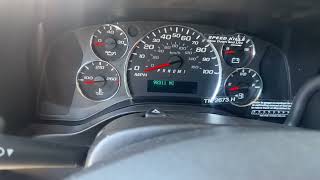
- Perform the '30-Minute Relearn Procedure' to try and resynchronize the key with the vehicle's security system. This involves turning the key to 'ON' for 10-11 minutes (until the security light goes out), turning it 'OFF' for 30 seconds, and repeating this cycle two more times for a total of three cycles and about 30-33 minutes. A battery charger is recommended during this process. 🎬 See this walkthrough of the 30-minute relearn procedure
- If the issue persists, use a professional scan tool to read live data from the Body Control Module to check the immobilizer status and look for other related fault codes.
- Follow the specific GM diagnostic trouble tree for code B3935, which will involve checking wiring continuity between the BCM and the exciter coil, and potentially testing the BCM and immobilizer antenna.
Parts You'll Likely Need
- New Ignition Key
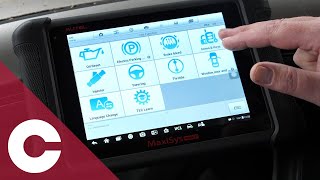
(OEM #23300334)— If the transponder chip in the original key has failed, a new key is the only solution. This is the most likely part to be replaced after RF interference is ruled out. The key contains a Philips 46 transponder chip. 🎬 Watch: How to program new GM transponder keys
Trusted brands: ACDelco (OEM), Strattec (5928275)
OEM price range: $100-$200
Aftermarket price range: $50-$120
Related Codes That Often Appear With This One
- B3055 — This code means 'No Transponder Modulation,' indicating the BCM couldn't detect a key signal at all. It often appears with B3935 when RF interference is strong or the key is failing.
- B3060 — This code means 'Unprogrammed Transponder.' It can be set if interference corrupts the key's signal, making the BCM think it's an unknown key.
- C0750, C0755, C0760, C0765, C0775 — These are Tire Pressure Monitor (TPM) sensor codes. TSB PIC5650M notes that the same RFI that disrupts the key's 125 kHz signal can also interfere with the TPM system, causing these codes to appear simultaneously with B3935.
Technical Service Bulletins (TSBs) & Recalls
- PIC5650L: Intermittent no crank, no start, or start stall concern with the security light coming on. Advises against part replacement and points to Radio Frequency Identification interference.
- PIC5650M: Supersedes PIC5650L, expands the list of RFI-causing devices to include aftermarket LED lighting and various USB/12V chargers. Lists B3935 along with TPM codes that can be caused by the same interference.
- PI1180A: While not for the Express specifically, it shows a precedent for B3935 being caused by a BCM software glitch on other GM trucks of the era when it appears with code B2955.
Platform-Specific Known Issues
- GM Technical Service Bulletin #PIC5650L explicitly warns technicians *not* to replace any parts for this concern initially, but to first investigate RF interference from devices on the customer's keychain.
- GM TSB #PIC5650M expands on this, listing B3935 as a potential code for intermittent no-start or start/stall issues caused by aftermarket equipment like LED lights or phone chargers creating RF interference.
- Owner Experience: A common story on forums for the Express/Savana platform is a sudden no-start that is completely resolved by simply removing other keys (like a Ford key or a house key with a chip) from the same keyring as the GM key.
Mechanic-Grade Diagnostic Values
- Immobilizer Exciter Coil Resistance — expected: 7-15 Ohms. Failure: An open circuit (infinite resistance) or a reading significantly outside the expected range indicates a failed coil.
- GDS2 Live Data: 'Immobilizer Fuel Disable' status — expected: 'No' or 'Inactive'. Failure: A status of 'Yes' or 'Active' confirms the BCM has commanded the ECM to prevent the engine from running due to a security fault.
Hidden / Shadow Codes Worth Checking
- B3935 02: Transponder Mismatch: The key's transponder is valid but programmed to a different vehicle. (see via GM GDS2 or equivalent professional scan tool.)
- B3935 04: Invalid Transponder Response: The key was recognized but failed the cryptographic challenge/response calculation. This often points to a faulty chip in the key itself. (see via GM GDS2 or equivalent professional scan tool.)
- B3935 71: Invalid Serial Data Received: The data stream between the exciter coil and the BCM is corrupt or nonsensical. This strongly suggests RF interference or a wiring/connection issue. (see via GM GDS2 or equivalent professional scan tool.)
Scan Tool Commands That Help
- GDS2: Module Diagnostics > Body Control Module > Immobilizer Data Display — Use this to view the live status of the key being read by the system. Parameters like 'Immobilizer Key Status' will show 'Valid Key', 'Invalid Key', or 'Challenge/Response Failed', which helps pinpoint if the BCM is seeing the key correctly.
- GDS2: Module Diagnostics > Body Control Module > Key and Transponder Programming — This function is required after replacing a key or the BCM. It allows the technician to add new keys to the BCM's memory and perform the security relearn procedure.
Wiring & Ground Locations
- BCM (Body Control Module) — Behind the driver's side of the instrument panel, near the emergency brake pedal assembly.. The BCM is the central computer for the Passkey III+ system. All communication from the ignition key's exciter coil is processed here. A loose connector or internal fault in the BCM can cause B3935.
- G218 — On the left-hand (driver's side) A-pillar frame, behind the kick panel or front dash insulator.. This is a critical ground point for the BCM. A poor connection at G218, often due to factory paint under the terminal, can cause voltage instability and a host of communication errors, including immobilizer faults.
- Immobilizer Exciter Coil Harness — Runs from the ignition lock cylinder inside the steering column down to the BCM.. This harness carries the low-frequency signal from the key. It is susceptible to chafing or damage where it passes through the steering column's tilt/telescope mechanism, which can cause an intermittent or total loss of signal.
Real Owner Repair Stories
- Chevrolet Forum user experience (2017 Chevrolet Express) — Sudden no-start condition with security light on, engine would start and immediately stall. Code B3935 was present.
❌ Tried (didn't work) Waiting several hours, Attempting to start multiple times
✅ What actually fixed it The owner removed their work building's RFID access card from the same keyring as the van's ignition key. With the ignition key isolated, the van started and ran perfectly. The issue was confirmed to be RF interference. - iATN (International Automotive Technicians Network) discussion (2019 Chevrolet Express) — Intermittent no-start, security light on, code B3935.
❌ Tried (didn't work) Isolating the key from any RFI sources, Testing with a known-good spare key, Performing the 30-minute relearn procedure
✅ What actually fixed it A technician tested the resistance of the immobilizer exciter coil and found it was an open circuit (infinite resistance). Replacing the ignition lock cylinder assembly, which contained the new exciter coil, resolved the issue. - Independent repair shop documentation (2018 GMC Savana (sister vehicle)) — Chronic intermittent no-start with B3935 that became more frequent over time. Sometimes would not start for days.
❌ Tried (didn't work) Replacing both ignition keys, Replacing the ignition lock cylinder/exciter coil, Cleaning ground G218
✅ What actually fixed it After all other components were ruled out, the Body Control Module (BCM) was replaced and programmed using a GDS2 scan tool. The problem was completely resolved, indicating an internal failure of the BCM's immobilizer logic.
When the Usual Fixes Don't Work
- While the vast majority of B3935 cases on this platform are caused by simple RF interference as stated in TSBs PIC5650L/M, there are documented professional repairs where the root cause was a hard part failure. In one case, a 2019 Express required a new ignition lock cylinder because the integrated exciter coil had failed its resistance test. In another, a 2018 Savana required a complete BCM replacement after new keys and other checks failed to resolve the problem. These instances confirm that while RFI should always be the first check, technicians should not completely rule out component failure if the simple fixes do not work.
OEM Part Supersession History
23300334→84539868— Standard part number update by GM. The new part integrates the latest revisions.
Heads up: While older stock of 23300334 may be available and work, it is best practice to use the latest part number (84539868) when ordering a replacement key to ensure full compatibility.
Helpful Videos
Used OEM Parts in Stock

New Aftermarket Parts Available

The information in this article is provided for general reference and educational purposes only. Vehicle specifications, procedures, and part compatibility can vary by production date, trim level, and region. Always consult your vehicle's factory service manual and verify part numbers before purchasing or performing repairs. Safety-critical components such as airbags, seat belts, and braking systems should be installed by a qualified professional.
- Chevrolet EXPRESS:
- 🎬 Helpful Videos
- 🛍️ Shop This Part
- What's Unique About the 2017-2021 Chevrolet EXPRESS
- Diagnostic Flowchart
- Symptoms You May Notice
- Most Likely Causes
- Rare But Worth Checking
- Diagnosis Steps
- Parts You'll Likely Need
- Related Codes That Often Appear With This One
- Technical Service Bulletins (TSBs) & Recalls
- Platform-Specific Known Issues
- Mechanic-Grade Diagnostic Values
- Hidden / Shadow Codes Worth Checking
- Scan Tool Commands That Help
- Wiring & Ground Locations
- Real Owner Repair Stories
- When the Usual Fixes Don't Work
- OEM Part Supersession History
- 🎟️ Get 5% Off