

B3935 on 2014-2017 Chevrolet SS: Immobilizer Fault, No-Start Causes and Fixes
Code B3935 on a Chevy SS almost always indicates radio frequency (RF) interference with the key, causing a no-start and security light. Before replacing parts, remove other keys, fobs, and your phone from near the ignition. This is a known issue documented in GM Technical Service Bulletins and is usually a free fix.
- B3935 on your Chevy SS is a security code that disables the engine, usually due to a key authentication failure.
- DO NOT replace any parts before performing the simplest test: remove the SS key from your keychain and try starting the car with the key isolated from all other electronics.
- This issue is so common that GM has issued service bulletins (PIC5650K) specifically telling technicians to check for Radio Frequency (RF) interference first.
- If isolating the key doesn't work, try your spare key. This will quickly determine if the problem is your primary key or the vehicle itself.
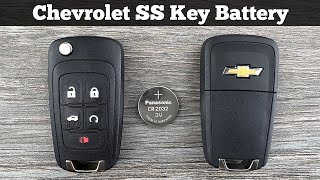
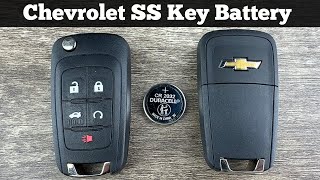
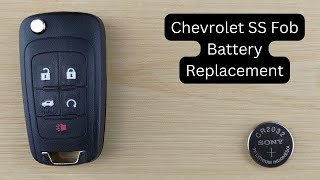
- The most likely required 'part' is a new CR2032 battery for your key fob, which is an inexpensive fix.
What's Unique About the 2014-2017 Chevrolet CHEVEROLET SS
The 2014-2017 Chevrolet SS, based on the Australian Holden VF Commodore, uses a sensitive immobilizer system that operates at 125 kHz. General Motors has issued multiple Technical Service Bulletins (TSBs), specifically the PIC5650 series, warning that this code is frequently triggered by external Radio Frequency (RF) interference, not by a faulty part. The official advice for technicians is to investigate and eliminate sources of interference—such as other vehicle keys, building access cards, and even aftermarket phone chargers—before replacing any components, which is a unique and critical first step for this platform.
Diagnostic Flowchart
Tap your situation to follow the diagnostic path that matches what you're seeing on this vehicle.
Symptoms You May Notice
- Engine does not crank (no-crank).
- Engine starts and immediately stalls.
- Security indicator light on the dashboard is on solid or flashing.
- "Service Theft Deterrent System" message may appear on the Driver Information Center (DIC).
- "No Fob Detected" message on the DIC.
- Replacing the vehicle's main 12V battery.
- Replacing the starter motor.
- Replacing the ignition switch without proper diagnosis.
- Replacing the Body Control Module (BCM) before ruling out RF interference and key-related issues, which is specifically advised against in GM TSBs.
Most Likely Causes
- Radio Frequency (RF) Interference 🔴 High Probability The immobilizer system's 125 kHz frequency is easily disrupted by other common RFID devices. GM TSBs #PIC5650M and #PIC5650K directly address this, listing other keys, office key cards, gas station fobs, aftermarket electronics (like phone chargers or LED lights), and even toll passes as primary causes.
How to confirm: Remove all other keys, fobs, and access cards from the keychain. Unplug any aftermarket phone chargers, dash cams, or USB devices. Attempt to start the vehicle with only the single, isolated Chevrolet SS key. If the vehicle starts, RFI was the cause.
Typical fix: Keep the ignition key separate from other RF-emitting devices. No parts are required.
Est. part cost: $0 - Weak or Dead Key Fob Battery 🟡 Medium Probability A weak battery may not provide enough power for the key's transponder to complete the security handshake, especially in the presence of minor RF interference. For push-to-start models, a weak fob battery can be overcome by placing the fob in the designated transmitter pocket, which helps amplify the signal.
How to confirm: Try starting the vehicle with the spare key. If the spare key works reliably, the primary key's battery is the most likely culprit.
Typical fix: Replace the CR2032 battery inside the key fob.
Est. part cost: $2-$10 - Damaged or Faulty Key Transponder ⚪ Low Probability The key fob can be damaged from being dropped or from water exposure, causing the internal transponder chip to fail. A user on the Camaro5 forums reported fixing a B3935 code by replacing a faulty key and performing the relearn procedure.
How to confirm: If the spare key works and replacing the battery in the primary key does not solve the issue, the key itself is likely damaged.
Typical fix: The key must be replaced and programmed to the vehicle by a dealer or a qualified automotive locksmith. An 'add key' procedure can be performed by the owner if one working key is still available.
Est. part cost: $150-$400
Rare But Worth Checking
- Faulty Body Control Module (BCM): This is a rare cause. In some other GM models, a BCM software glitch can cause B3935, requiring a dealer re-program. On the related Holden Commodore platform, the BCM integrates the immobilizer function, and a failure requires replacement and programming. This should only be considered after all other causes are ruled out, as specifically advised by GM TSBs.
- Faulty Immobilizer Antenna/Exciter Coil: The antenna ring around the ignition that powers the key transponder can fail, but this is uncommon. It would typically require trying multiple known-good keys that all fail to work.
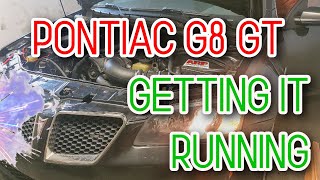
- Poor BCM or Chassis Ground Connection: On the platform-mate Pontiac G8, a YouTube user demonstrated that a loose or corroded ground wire for the fuse box or BCM caused intermittent immobilizer issues that mimicked a bad key. Cleaning the ground connections resolved the problem.
Diagnosis Steps
- Observe the security light on the dashboard. A flashing or solid light confirms an active anti-theft event.
- Remove the Chevrolet SS key from your keychain. Separate it from all other keys, fobs, access cards, and your cell phone by at least a few feet.
- Unplug any aftermarket accessories from the vehicle's power outlets (e.g., phone chargers, dash cams, USB power banks, aftermarket LED lights). TSB PIC5650K specifically calls these out as potential RFI sources.
- Attempt to start the vehicle with the isolated key. If it starts, the problem is RF interference.
- If the vehicle still does not start, try the spare key (also isolated). If the spare key works, the issue is with your primary key (battery or internal damage).
- Replace the CR2032 battery in the non-working key fob and try again.
- If neither key works and RF interference has been ruled out, check chassis and BCM ground connections for tightness and corrosion, as this has been documented to cause similar issues on platform mates.
- If the issue persists, the vehicle may have a fault with the BCM, immobilizer antenna, or associated wiring, which requires professional diagnosis with a scan tool capable of reading GM body codes.
Parts You'll Likely Need
- Key Fob Battery
(OEM #CR2032)— This is the most common part needed if RF interference is not the cause and the spare key works.
Trusted brands: Energizer, Duracell, Panasonic
OEM price range: $5-$10
Aftermarket price range: $2-$8 - Key Fob / Transmitter
(OEM #13500319 (FCC ID: KR55WK50073))— Required if the original key's internal transponder is damaged. Must be programmed to the vehicle.
Trusted brands: ACDelco, GM Genuine Parts
OEM price range: $125-$300
Aftermarket price range: $35-$150
Related Codes That Often Appear With This One
- B3055 — This code means 'No Transponder Modulation' and is often set with B3935 when RF interference is strong enough to block the key's signal entirely. It is mentioned in TSB #PIC5650M.
- B3060 — This code for 'Unprogrammed Transponder' can also be triggered by communication errors between the key and the vehicle's security module. It is also cited in TSB #PIC5650M.
Technical Service Bulletins (TSBs) & Recalls
- PIC5650M: Addresses intermittent no crank, no start, or start stall with security light on and lists B3935 as a possible DTC. Expands the list of RFI sources to include aftermarket LED lights and chargers.
- PIC5650K: Warns against replacing parts for B3935 and points to Radio Frequency Identification interference as a likely cause. Suggests using diagnostic tools to scan for RFI.
Platform-Specific Known Issues
- GM Technical Service Bulletin #PIC5650M addresses an intermittent no-crank or start/stall condition with the security light on, specifically listing B3935 as a potential code. It provides a long list of RFI sources including other keys, toll passes, and aftermarket LED lighting.
- GM Technical Service Bulletin #PIC5650K explicitly states that for a no-start concern with code B3935, technicians should NOT replace any parts. The bulletin directs them to first investigate whether the customer uses any Radio Frequency Identification (RFID) devices that could be causing interference, and even suggests using a specific tool (EL-52545) to scan the cabin for stray RF signals.
Mechanic-Grade Diagnostic Values
- Immobilizer Exciter Coil Resistance — expected: 7-10 Ohms. Failure: An open circuit (infinite resistance) or a reading outside this range indicates a faulty coil.
Hidden / Shadow Codes Worth Checking
- B3935 57: Transponder Authentication Error. This is the most common symptom byte, indicating the BCM recognized the key but the cryptographic challenge/response failed. (see via GM GDS2 (Global Diagnostic System 2) or equivalent high-end scan tool with manufacturer-specific data.)
- B3935 03: No Response From Transponder. The BCM sent a challenge but received no signal back from the key. This could point to a very weak key battery, a dead key, or a faulty exciter coil. (see via GM GDS2 (Global Diagnostic System 2) or equivalent high-end scan tool.)
- B3935 07: Invalid Transponder Key Data. The key sent a response, but the data was corrupt or did not match the expected value. This often points to a damaged key transponder chip. (see via GM GDS2 (Global Diagnostic System 2) or equivalent high-end scan tool.)
Scan Tool Commands That Help
- GDS2: Module Diagnostics > Body Control Module > Data Display — Use this to view live data such as 'Immobilizer Key Status' and 'Transponder Key Present' to see what the BCM is detecting from the key in real-time.
- GDS2 / SPS2: Immobilizer Learn — This function is required after replacing the BCM or adding new keys. It programs the security information for the keys and modules. The ECM and BCM must have matching VINs before the ignition will switch on.
- GDS2 / SPS2: BCM Programming/Setup — This is required when a new BCM is installed. The Service Programming System (SPS) is used to load the correct software and VIN into the new module.
Wiring & Ground Locations
- Body Control Module (BCM) — Located in the driver's side of the cabin, behind the lower dashboard trim, to the left of the steering column.. The BCM is the central module that controls the immobilizer system. All key authentication signals are processed here. A poor connection or internal failure of the BCM is a rare but possible cause of B3935.
- BCM Ground — On the related Holden Commodore, a primary ground point for the BCM and interior electronics is located on the A-pillar, accessible by removing the driver's side kick panel.. A loose or corroded ground can cause intermittent and difficult-to-diagnose electrical issues, including immobilizer faults that may trigger B3935. This aligns with reports from the similar Pontiac G8 platform.
- BCM Connector X1, Pin 21 — On a similar GM BCM, Pin 21 of the X1 connector is the 'Security Indicator Control' circuit, which controls the security light on the dash.. While not a direct cause, a technician could use this pin to test the circuit's integrity if the security light is not behaving as expected during diagnosis.
Real Owner Repair Stories
- JustCommodores.com.au forum user 'ben_att' (Holden VF SS Ute (Australian platform twin to the Chevrolet SS)) — Complete no-start, no-crank condition. No communication with the BCM via scan tool. Pressing the start button would only cause an audible click from a relay for less than a second before turning off.
❌ Tried (didn't work) Connecting GM's SPS2 programming software, which failed because the software required the ignition to be turned 'ON', but the dead BCM prevented this.
✅ What actually fixed it The user's BCM was completely dead. The final solution required replacing the BCM with a new unit from the dealer and then successfully programming it. A critical tip shared by another user was to force the car into 'true ignition mode' by pressing and holding the start button for about 30 seconds, which can allow programming to proceed even when the system is not fully responsive.
OEM Part Supersession History
13506931→13594692— Part number update/revision by GM.
Heads up: A forum user with a Holden VF SS reported being supplied part 13594692 by a dealer as the correct replacement for his VIN when his original BCM was 13506931. This indicates this is a valid supersession path.
Model Year Variations Within This Range
- 2016-2017: The 2016 model year introduced a mid-cycle refresh with a new front fascia, functional hood vents, and new LED daytime running lights. While these changes were primarily cosmetic and aerodynamic, the addition of new OEM LED lighting could be a factor in RFI diagnosis if the lighting modules were to fail, though this is not a documented common cause.
Helpful Videos

Used OEM Parts in Stock
New Aftermarket Parts Available


The information in this article is provided for general reference and educational purposes only. Vehicle specifications, procedures, and part compatibility can vary by production date, trim level, and region. Always consult your vehicle's factory service manual and verify part numbers before purchasing or performing repairs. Safety-critical components such as airbags, seat belts, and braking systems should be installed by a qualified professional.
- Chevrolet CHEVEROLET SS:
- 🎬 Helpful Videos
- 🛍️ Shop This Part
- What's Unique About the 2014-2017 Chevrolet CHEVEROLET SS
- Diagnostic Flowchart
- Symptoms You May Notice
- Most Likely Causes
- Rare But Worth Checking
- Diagnosis Steps
- Parts You'll Likely Need
- Related Codes That Often Appear With This One
- Technical Service Bulletins (TSBs) & Recalls
- Platform-Specific Known Issues
- Mechanic-Grade Diagnostic Values
- Hidden / Shadow Codes Worth Checking
- Scan Tool Commands That Help
- Wiring & Ground Locations
- Real Owner Repair Stories
- OEM Part Supersession History
- Model Year Variations Within This Range
- 🎟️ Get 5% Off