

B3935 on 2013-2017 Chevrolet Captiva: Security Fault, No-Start Causes and Fixes
On a 2013-2017 Chevrolet Captiva, code B3935 almost always indicates a no-start condition due to radio frequency (RF) interference with the key. The fix is usually free: remove all other keys, fobs, and electronics from your keychain and try starting the engine with the Captiva key by itself. Unplugging aftermarket phone chargers is also a critical first step.
- B3935 on your Captiva means the anti-theft system has disabled the engine due to a key authentication error.
- The most common cause is Radio Frequency Interference (RFI). Before any repairs, try starting the engine with the ignition key completely isolated from other keys, fobs, and cards. This fix costs nothing.
- Do not replace expensive parts like the Body Control Module (BCM) or starter until you have ruled out RFI and a bad key, as strongly advised by GM's own service bulletins.
- If isolating the key doesn't work, try your spare key. This will quickly determine if your primary key has failed.
What's Unique About the 2013-2017 Chevrolet CAPTIVA
The Chevrolet Captiva from this era, being a GM Theta platform vehicle, is particularly susceptible to this issue, as documented in GM's own Technical Service Bulletins (TSBs). The bulletins, PIC5650L and PIC5650M, specifically warn technicians *not* to replace parts for this code initially, but to first investigate RF interference from devices on the owner's keychain or aftermarket accessories plugged into the car. This indicates a known sensitivity in the platform's Passkey III+ security system design. Another TSB for platform mates, PIT5030E, notes that if the flip-style key is not fully extended, the transponder may be too far from the reader, also causing a no-start.
Diagnostic Flowchart
Tap your situation to follow the diagnostic path that matches what you're seeing on this vehicle.
Symptoms You May Notice
- Intermittent no-crank, no-start condition
- Engine starts and immediately stalls
- Security indicator light (car with a lock icon) is illuminated or flashing on the dashboard.
- Clicking sound from the dash but the engine does not turn over 🎬 See how to diagnose a clicking no-start on a Captiva.
- Message on Driver Information Center (DIC) like 'Start disabled due to theft'.
- Replacing the starter motor. 🎬 Check these starter fuses and relays before replacing the motor. A starter issue typically presents as a single click or no sound, but it is not related to a security light.
- Replacing the Body Control Module (BCM) without ruling out RFI and key issues first. This is an expensive repair that often does not solve the problem, as warned against in TSB PIC5650L.
- Replacing the ignition switch. While a faulty switch can cause a no-start, it usually doesn't set a B3935 security code.
Most Likely Causes
- Radio Frequency Interference (RFI) 🔴 High Probability As documented in TSBs PIC5650L and PIC5650M, the security system on this platform is sensitive to external electronic signals operating in the 125 kHz range. Other keys, key fobs, garage door openers, or even low-quality aftermarket phone chargers and dash cams can disrupt the signal between the ignition key and the car's immobilizer antenna.
How to confirm: Remove the Captiva key from the keychain. Isolate it from all other keys, fobs, and RFID cards. Unplug all aftermarket accessories (phone chargers, dash cams). Attempt to start the engine. If it starts, RFI is the cause.
Typical fix: Keep the ignition key separate from other electronic items. Replace cheap aftermarket chargers with higher-quality, properly shielded ones. This fix is typically free.
Est. part cost: $0 - Defective or Damaged Key Transponder 🟡 Medium Probability The transponder chip inside the key (Philips ID 46 Circle +) can be damaged if the key is dropped or exposed to water. The internal programming can also become corrupted. On flip-keys, if the blade is not fully extended, it can cause an intermittent read failure.
How to confirm: After ruling out RFI, try starting the vehicle with a known-good spare key. If the spare key works consistently, the primary key is defective. An automotive locksmith can also test the transponder's signal.
Typical fix: Replace the faulty key. A new key will need to be cut and programmed to the vehicle by a dealership or an automotive locksmith. In some cases, reprogramming the existing key may work if it's just a software corruption issue.
Est. part cost: $80-$200 - Weak Vehicle Battery ⚪ Low Probability Low system voltage (below 12.4V) during startup can cause various electronic modules, including the BCM, to behave erratically and fail to communicate properly, leading to false security codes.
How to confirm: Test the vehicle's 12V battery with a multimeter or battery tester. A healthy battery should read above 12.4 volts at rest. Check for corroded or loose terminals.
Typical fix: Recharge or replace the vehicle's 12V battery.
Est. part cost: $150-$250
Rare But Worth Checking
- Faulty Immobilizer Antenna / Exciter Coil: This is the ring around the ignition lock cylinder that powers and reads the key chip. While it can fail electrically, it's much less common than RFI or a bad key. It should only be suspected if multiple known-good keys fail to start the vehicle and RFI has been ruled out. A potential replacement part number is GM 13580789.
- Faulty Body Control Module (BCM): A failure within the BCM itself is rare. TSB PIC5650L specifically advises against replacing modules for this code. This should be the last resort after all other possibilities have been exhausted by a professional. Sometimes a BCM glitch can be resolved with a 'hard reset' by disconnecting the battery cables and touching them together.
- Corroded BCM Ground Wire: A poor ground connection for the BCM (often located near the A-pillar in the driver's footwell) can cause intermittent voltage drops and erratic behavior, leading to false security codes like B3935.
Diagnosis Steps
- Verify the complaint: Confirm the no-start or start-stall symptom and check for an illuminated security light on the dashboard.
- CRITICAL FIRST STEP: Isolate the ignition key. Remove it from the keychain, away from all other keys, fobs, and RFID cards.
- Unplug all aftermarket accessories like phone chargers, dash cams, or GPS units to eliminate them as sources of RFI.
- Ensure the flip-key is fully extended and locked straight before inserting it into the ignition.
- Attempt to start the vehicle with the isolated key. If it starts, the problem is interference or key position.
- If the vehicle still does not start, try the spare key (also isolated). If the spare key works, the original key is defective.
- If neither key works, check the vehicle's 12V battery to ensure it has sufficient voltage (above 12.4V) and clean, tight terminals.
- If the issue persists, attempt the 30-minute key relearn procedure. Turn the key to 'ON' (do not start) for about 10-11 minutes until the security light goes out. Turn the key 'OFF' for 30 seconds. Repeat this sequence two more times for a total of three cycles. After the third cycle, try to start the engine. 🎬 Watch: A visual guide to resetting the anti-theft system.
- If the problem persists, professional diagnosis is needed. A scan tool capable of reading B-codes can confirm B3935 and look for specific symptom bytes like '57' for more detail.
Parts You'll Likely Need
- Transponder Ignition Key
(OEM #96624219)— If the transponder chip in the primary key has failed, a new key is the only solution. This is confirmed by testing a spare key.
Trusted brands: ACDelco (GM Genuine: 96624219), Strattec (7011685), Ilco (B114R-PT)
OEM price range: $80-$150
Aftermarket price range: $17-$90 - Key Fob Battery
(OEM #CR2032)— While less common than RFI for a no-start (as the transponder is passive), a weak battery can cause other erratic electronic behaviors. It's an inexpensive item to rule out.
Trusted brands: Duracell, Energizer
OEM price range: $5-$10
Aftermarket price range: $2-$5
Related Codes That Often Appear With This One
- B3055 — This code means 'No Transponder Modulation or No Transponder,' indicating the BCM couldn't detect a key at all. It often appears with B3935 when RFI is severe or the key is failing.
- B3060 — This code means 'Unprogrammed Transponder,' indicating the BCM read a key, but its ID isn't learned by the vehicle. It can be set alongside B3935 if interference corrupts the signal.
- C0750, C0755, C0760, C0765, C0775 — These are Tire Pressure Monitor (TPM) sensor codes. TSB PIC5650M notes that the same RFI that disrupts the key's 125 kHz signal can also interfere with the TPM system, causing these codes to appear simultaneously with B3935.
Technical Service Bulletins (TSBs) & Recalls
- PIC5650L: Warns against replacing parts for B3935, B3055, and B3060, and directs technicians to investigate Radio Frequency Identification interference first.
- PIC5650M: Also lists B3935 in the context of intermittent no-start/stall issues with the security light on, pointing towards si
Platform-Specific Known Issues
- This platform is subject to GM Technical Service Bulletin #PIC5650L, which explicitly warns technicians to investigate Radio Frequency Interference (RFI) from devices on the customer's keychain before replacing any components for code B3935.
- TSB #PIC5650M expands on this, listing B3935 as a potential code for intermittent no-start or start/stall issues caused by aftermarket equipment.
- Owners report a wide range of intermittent electrical issues on forums, from keys getting stuck to the vehicle shutting off while driving, which can sometimes be related to the same faulty grounds or BCM issues that trigger B3935.
Mechanic-Grade Diagnostic Values
- Immobilizer Exciter Coil Resistance — expected: While specific values for the Captiva's Passkey III+ coil are not published, older GM Passkey systems had specific resistance values for the key pellet (e.g., 402Ω to 11.8kΩ). A diagnostic test for the coil itself would involve checking for continuity (a few ohms, not an open or short circuit).. Failure: An open circuit (infinite resistance) or a short to ground (0 ohms) on the exciter coil wiring would indicate a failure.
Hidden / Shadow Codes Worth Checking
- B3935 57: This specific symptom byte means 'Transponder Authentication Error'. It confirms the BCM recognized a learned key, but the cryptographic challenge/response calculation failed. This points strongly toward a faulty key chip or severe RFI rather than an unprogrammed key. (see via GM GDS2 (Global Diagnostic System 2) or other professional-level scan tool capable of reading manufacturer-specific symptom bytes.)
- B3935 3A: This symptom byte means 'Incorrect Transponder Key'. It indicates the key's transponder ID itself was not on the BCM's list of learned keys. This would typically occur if an incorrect or unprogrammed key was used. (see via GM GDS2 or other professional scan tool.)
Scan Tool Commands That Help
- GDS2 (GM Global Diagnostic System 2): Module Diagnostics > Remote Control Door Lock Receiver > Configure/Reset Functions > Add or Replace Key Fobs — This function is used to program new or additional key fobs to the vehicle after a key has been replaced.
- GDS2 (GM Global Diagnostic System 2): Immobilizer Learn / Vehicle Theft Deterrent (VTD) Learn — This is a critical function required after replacing the BCM or keys. It teaches the vehicle's security modules the new component's encrypted code, allowing the vehicle to start. It is often a more robust alternative to the manual 30-minute relearn procedure.
Wiring & Ground Locations
- Body Control Module (BCM) — Located in the center of the dash, behind the center console/radio area. Access requires removing trim panels.. The BCM is the central computer for the Passkey III+ immobilizer system. It receives the key data from the antenna and makes the decision to allow the engine to start. All related wiring converges here.
- G218 — A primary body ground point located behind the driver-side kick panel, near the A-pillar.. A poor or corroded connection at G218 is a known cause for various electrical issues on GM platforms, including BCM malfunctions that can trigger false security codes like B3935. TSB PIT5405C on other GM models specifically calls out checking this ground for looseness or trapped insulation.
- Immobilizer Antenna (Exciter Coil) — A ring-shaped antenna located around the ignition lock cylinder, under the steering column shrouds.. This antenna powers the passive transponder chip in the key and reads its signal. A break in its wiring or an internal failure will prevent the BCM from ever seeing the key, leading to codes like B3055 or B3935.
Real Owner Repair Stories
- SaturnFans.com Forums (2008 Saturn VUE 3.6L (platform equivalent to Captiva Sport)) — Intermittent no-crank, no-click. When it did start, the anti-theft icon would appear on the dash. The car would also sometimes lock itself.
❌ Tried (didn't work) Unspecified initial diagnostics.
✅ What actually fixed it The owner discovered a specific operational sequence that resolved the issue consistently. The fix was to always lock the car with the remote (clicking twice), then before starting: unlock with the remote, get in, close the door, turn the key to 'ON', wait for the anti-theft icon to extinguish, then crank the engine. This suggests a timing or logic issue in the BCM that was reset by this specific sequence.
OEM Part Supersession History
ACDelco GM Original Equipment (OE)→GM Genuine Parts— Branding change.
Heads up: Some GM Genuine Parts may have formerly appeared as ACDelco GM Original Equipment (OE). The parts are functionally identical.
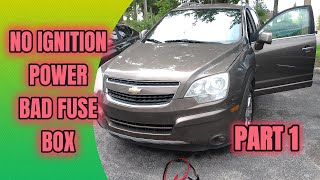
Helpful Videos
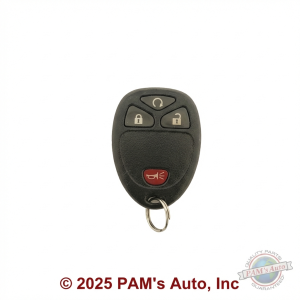
We Have This Part in Stock



The information in this article is provided for general reference and educational purposes only. Vehicle specifications, procedures, and part compatibility can vary by production date, trim level, and region. Always consult your vehicle's factory service manual and verify part numbers before purchasing or performing repairs. Safety-critical components such as airbags, seat belts, and braking systems should be installed by a qualified professional.
- Chevrolet CAPTIVA:
- 🎬 Helpful Videos
- 🛍️ Shop This Part
- What's Unique About the 2013-2017 Chevrolet CAPTIVA
- Diagnostic Flowchart
- Symptoms You May Notice
- Most Likely Causes
- Rare But Worth Checking
- Diagnosis Steps
- Parts You'll Likely Need
- Related Codes That Often Appear With This One
- Technical Service Bulletins (TSBs) & Recalls
- Platform-Specific Known Issues
- Mechanic-Grade Diagnostic Values
- Hidden / Shadow Codes Worth Checking
- Scan Tool Commands That Help
- Wiring & Ground Locations
- Real Owner Repair Stories
- OEM Part Supersession History
- 🎟️ Get 5% Off