

B3935 on 2015-2022 Cadillac Escalade ESV: Security System Fault, No Start Causes and Fixes
Code B3935 on your Escalade ESV typically indicates a security system communication error, causing a no-start or stall. Before replacing any parts, check for radio frequency (RF) interference from devices near your key fob, as this is a common cause identified in multiple GM Technical Service Bulletins (TSBs). Common interfering items include other vehicle fobs, building access cards, and even some aftermarket phone chargers.
- B3935 means your Escalade's anti-theft system is preventing it from starting due to a key authentication error.
- The most likely cause is NOT a broken part, but radio frequency interference from other devices on your keychain.
- Before going to a shop, try starting the car with the key fob completely by itself. Also, try replacing the fob's battery.
- If the problem persists, especially on a 2015 model, a BCM software update may be required.
- Avoid replacing expensive components like the BCM unless a professional has ruled out RF interference and software issues.
What's Unique About the 2015-2022 Cadillac ESCALADE ESV
On this generation of Escalade (K2XX platform) and its platform mates like the Chevrolet Tahoe/Suburban and GMC Yukon/Yukon XL, the immobilizer system is notoriously sensitive to Radio Frequency Interference (RFI). GM has issued multiple Technical Service Bulletins (TSBs), such as #PIC5650M and its successors, advising technicians that this code is often caused by external RFI and that parts replacement is frequently unnecessary. This is a significant departure from older systems where a bad key or module was the default diagnosis. Additionally, 2015 models are specifically called out in TSB PI1180A for a BCM software bug that can cause this code when set with B2955. A poor BCM ground at location G218 is also a well-documented issue on this platform, causing a wide range of electrical problems including no-start conditions.
Diagnostic Flowchart
Tap your situation to follow the diagnostic path that matches what you're seeing on this vehicle.
Symptoms You May Notice
- Intermittent no-crank or no-start condition.
- Engine starts and immediately stalls.
- Security indicator light is illuminated or flashing on the dashboard.
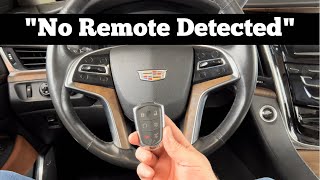
- "No Remote Detected" message on the Driver Information Center (DIC).
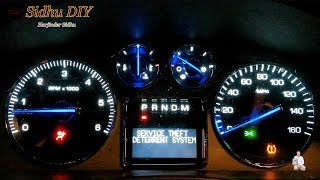
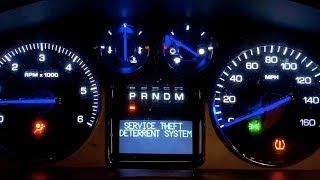
- "Service Theft Deterrent System" message on the 🎬 Watch this video to understand the Service Theft Deterrent message DIC.
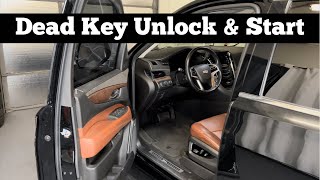
- Passive entry (keyless door unlocking) may be inoperative, but the vehicle will start when the fob is placed in the transmitter pocket.
- Replacing the Body Control Module (BCM) without checking for RF interference, available software updates, or the G218 ground integrity.
- Replacing the starter motor when the no-start is caused by the security system disabling the starting circuit.
- Replacing the ignition switch or push-to-start button when the issue is with key fob authentication.
Most Likely Causes
- Radio Frequency (RF) Interference 🔴 High Probability The vehicle's immobilizer system operates at 125 kHz, and other electronic devices can interfere with the signal between the key fob and the vehicle's antenna. This is well-documented in GM TSBs like PIC5650, which lists common culprits like other car keys, building access cards, toll passes, and even aftermarket LED lights or phone chargers.
How to confirm: Remove all other keys, fobs, and electronic devices (like office access cards, gas station speed passes, or other RFID tags) from the keychain. Try starting the vehicle with the key fob completely isolated. If the vehicle starts consistently, interference was the cause. The issue may not be reproducible if the customer removes the interfering item before bringing the vehicle in for service.
Typical fix: Keep the vehicle's key fob on its own ring, separate from other electronic devices that may cause interference. No parts are replaced. Advise the customer of the sensitivity per GM TSBs.
Est. part cost: $0 - Body Control Module (BCM) Software Glitch 🟡 Medium Probability A specific GM Preliminary Information bulletin (PI1180A) was issued for 2015 models (and related K2XX platforms) for a 'No Click, No Crank, No Start' condition with B3935 and B2955 set, caused by a software issue in the BCM.
How to confirm: A GM dealer or qualified shop with access to the Service Programming System (SPS) must check the current BCM calibration against the latest version available on TIS2WEB. This fix only applies if both B3935 and B2955 are present.
Typical fix: Reprogram the Body Control Module (BCM) with the updated software calibration. This is a 0.5-hour labor operation under warranty.
Est. part cost: $0 (software only) - Weak or Defective Key Fob ⚪ Low Probability
How to confirm: First, replace the CR2032 battery in the key fob. If the issue persists, try using the vehicle's second key fob. If the second fob works reliably, the first fob is likely faulty. You can also try starting the vehicle by placing the problematic fob in the transmitter pocket, which is located in the center console 🎬 Watch: How to start your Escalade with a dead fob storage bin under the removable mat.
Typical fix: Replace the key fob battery. If the fob itself is defective, it will need to be replaced and programmed to the vehicle by a dealer or automotive locksmith.
Est. part cost: $5-$15 for a battery, $150-$400 for a new OEM fob and programming.
Rare But Worth Checking
- Faulty Theft Deterrent Module (TDM) or Body Control Module (BCM): While possible, GM TSBs specifically advise against replacing modules for this code unless all other possibilities (especially RF interference and software updates) have been exhausted. A hardware failure is rare compared to the other listed causes. If a known-good key still fails, the TDM/BCM becomes a suspect.
- Damaged Wiring or Poor Connection: A break or short in the wiring between the immobilizer antenna, TDM, and BCM could cause this code, but it is uncommon without prior collision damage, rodent activity, or previous interior repairs. A known poor connection point on these vehicles is the BCM ground G218.
Diagnosis Steps
- Verify the complaint. Note the status of the security light on the dashboard.
- Ask the driver if they have any Radio Frequency Identification (RFID) devices on their keychain, such as work ID badges, gas station payment fobs, other car keys, or community gate passes. Also ask about aftermarket electronics like phone chargers or LED lighting.
- Remove all other items from the key ring and attempt to start the vehicle with the isolated key fob.
- If the vehicle fails to start, try the second key fob.
- If the second fob also fails, place the fob in the designated transmitter pocket inside the center console storage bin and try starting the vehicle again.
- Replace the CR2032 battery in the key fob as a low-cost, high-probability step.
- Scan the BCM and all other modules for any accompanying trouble codes. Note if B3055, B3060, or B2955 are present.
- If codes B3935 and B2955 are present on a 2015 model, consult a dealer about TSB PI1180A regarding a BCM software update. This applies to a 'No Click, No Crank' scenario.
- Inspect BCM ground G218. This ground is located under the driver's side dash near the speaker. Check for a loose nut or for the dash insulator mat being trapped under the ground eyelet, causing high resistance. Clean and tighten the connection.
- If the problem is intermittent and cannot be duplicated, review TSB #PIC5650L/M with the customer, which advises against parts replacement and points to RF interference.
- A technician can use an RFI meter to scan for stray signals near the ignition or keyless entry antennas to definitively identify an external interference source.
- Only after exhausting all the above steps should a technician begin diagnosing the TDM, BCM, or wiring for a hardware fault.
Parts You'll Likely Need
- Key Fob Battery (CR2032) — A weak battery can cause intermittent communication issues, leading to authentication failure. It's the cheapest and easiest first step.
Trusted brands: Energizer, Duracell, Panasonic
OEM price range: $5-$10
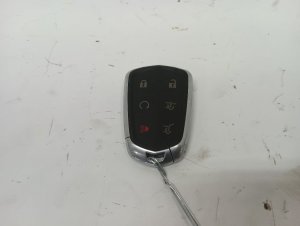
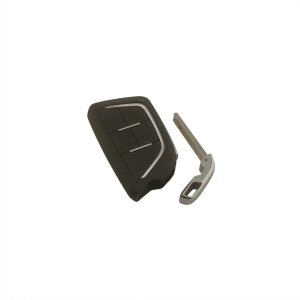
Aftermarket price range: $2-$8 - Keyless Entry Remote Fob (6-Button)
(OEM #13580812 (Other interchangeable P/Ns: 13594028, 13598511, 13510242))— If one fob is faulty and the other works, the fob itself has failed. This is a low-probability cause. The FCC ID for this fob is HYQ2AB.
Trusted brands: ACDelco (OEM)
OEM price range: $150-$250
Aftermarket price range: $50-$150
Related Codes That Often Appear With This One
- B3055 — Relates to a problem with the key transponder. Often set alongside B3935 due to RF interference or a faulty key. (Cited in TSB #PIC5650M and other diagnostic aids)
- B3060 — Indicates an issue with the transponder antenna circuit. It can be triggered by the same RF interference that causes B3935. (Cited in TSB #PIC5650M and other diagnostic aids)
- B2955 — Relates to the security sensor data circuit. A specific TSB for 2015 models (PI1180A) notes that B3935 and B2955 together point to a BCM software issue requiring an update.
- C0750, C0755, C0760, C0765, C0775 — These are Tire Pressure Monitor (TPM) sensor codes. TSB #PIC5650M lists them as potentially appearing with B3935, possibly due to broader RF interference issues or a sensitive BCM, as TPM sensors also use RF communication.
Technical Service Bulletins (TSBs) & Recalls
- PIC5650M: Addresses intermittent no crank/no start/stall with security light on, listing B3935 and other codes, pointing towards RF interference.
- PIC5650L: Predecessor to PIC5650M with similar guidance against parts replacement for B3935, focusing on RF interference.
- PI1180A: Specific to 2015 models, calls for a BCM software update when B3935 and B2955 are set together for a no-crank condition.
- PIT5405C: Details numerous electrical issues, including no-start (P0513), that can be caused by a poor BCM ground at G218 or a shorted starter B+ cable.
Platform-Specific Known Issues
- A known issue, documented in TSB #PIC5650L, involves intermittent no-start conditions caused by Radio Frequency (RF) interference. The official fix is to advise the customer to remove RFID-emitting devices from their keychain, not to replace vehicle parts.
- For 2015 models specifically, a BCM software update was released under TSB PI1180A to fix a no-start condition that sets codes B3935 and B2955.
- Owner forums for K2XX platform vehicles frequently discuss this issue. A common story involves a dealer replacing the BCM or other modules unnecessarily, only for the owner to later discover that another key fob on their keychain was the source of the interference.
- A poor BCM ground at G218 is a common problem on this platform, often caused by sound deadening material getting caught under the terminal. This can cause a no-start and numerous other electrical faults.
Mechanic-Grade Diagnostic Values
- BCM low reference circuit resistance — expected: Less than 2.0 Ohms. Failure: 2.0 Ohms or greater indicates an open or high resistance in the circuit.
- BCM signal circuit voltage to ground — expected: Less than 1.0 Volt. Failure: 1.0 Volt or greater indicates a short to voltage on the circuit.
- Glass breakage loop resistance to ground (if equipped) — expected: Less than 20 Ohms. Failure: Greater than 20 Ohms indicates high resistance or a break in the loop, which can cause security system issues.
Hidden / Shadow Codes Worth Checking
- B3935 57: The '57' is a symptom byte indicating 'Transponder Authentication Error'. It specifies that the BCM read a valid key transponder value, but the secondary security calculation failed. This is visible on a dealership-level scan tool like GDS2. (see via GM GDS2 or equivalent professional scan tool.)
Scan Tool Commands That Help
- GDS2 / Techline Connect (SPS2): Immobilizer Learn / Add or Replace Key Fobs — Used after replacing a key fob or the Body Control Module (BCM). The system requires a 10-minute (SPS) or 30-minute (manual) security relearn procedure to program the new components.
- GDS2 / Techline Connect (SPS2): Body Control Module Programming — Required to install updated software calibrations. Specifically used to perform the fix for TSB PI1180A on 2015 models where codes B3935 and B2955 are present.
- GDS2: Control Functions (Bidirectional) — Allows the technician to command various BCM outputs (lights, locks, etc.) on and off directly from the scan tool. This helps verify that the BCM is powered, grounded, and capable of communication, helping to isolate the fault to the immobilizer function specifically.
Wiring & Ground Locations
- G218 — Under the driver's side of the instrument panel, near the A-pillar and dash speaker.. This is a primary ground connection for the Body Control Module (BCM). It is notoriously prone to high resistance due to the dash sound insulator material getting trapped under the ground lug during assembly. A poor ground here can cause voltage drops and communication errors within the BCM, leading to a no-start and setting codes like B3935 or other communication DTCs.
- BCM Connectors X4 & X7 — On the Body Control Module (BCM) itself.. These specific connectors house critical circuits. For example, the Run/Crank relay coil control is in connector X4. On vehicles with the optional glass breakage sensor, the circuit is tested at connector X7. Knowing these locations allows for targeted pin-point testing of specific immobilizer-related circuits.
Real Owner Repair Stories
- YouTube video and forum discussions for K2XX platform trucks/SUVs (2014-2018 Chevrolet Silverado / GMC Sierra (same platform)) — Flickering lights, instrument cluster going blank, service stabilitrak messages, intermittent no-start, multiple random DTCs.
❌ Tried (didn't work) Replacing the battery, Checking fuses, Scanning for codes without physical inspection of grounds
✅ What actually fixed it The BCM ground G218, located under the driver's side dash, had sound insulation material caught under the nut, causing a poor connection. The fix was to remove the nut, cut away the insulation, clean the contact surfaces, and retighten the ground nut securely.
"I Checked Everything" — The Actual Cause
- A common scenario for this code is for a technician to follow TSB PIC5650, find no RF interference, and replace the BCM, only for the problem to return. The actual cause is often a high-resistance BCM ground at G218, which creates intermittent voltage drops that mimic module failure or interference but won't be found with an RF meter.
Model Year Variations Within This Range
- 2015: A specific BCM software calibration was released under TSB PI1180A to fix a 'No Click, No Crank' condition where DTCs B3935 and B2955 are set together. This software fix does not apply to other years or different symptom combinations.
- 2021-2022: The 2021 model year introduced an all-new vehicle platform with a different electrical architecture (GM's Vehicle Intelligence Platform or 'Global B'). The BCM, displays, and communication networks are fundamentally different from the 2015-2020 models. While the code's meaning is the same, diagnostic procedures, module locations, and part numbers will not be interchangeable with the earlier models.
Helpful Videos
We Have This Part in Stock

The information in this article is provided for general reference and educational purposes only. Vehicle specifications, procedures, and part compatibility can vary by production date, trim level, and region. Always consult your vehicle's factory service manual and verify part numbers before purchasing or performing repairs. Safety-critical components such as airbags, seat belts, and braking systems should be installed by a qualified professional.
- Cadillac ESCALADE ESV:
- 🎬 Helpful Videos
- 🛍️ Shop This Part
- What's Unique About the 2015-2022 Cadillac ESCALADE ESV
- Diagnostic Flowchart
- Symptoms You May Notice
- Most Likely Causes
- Rare But Worth Checking
- Diagnosis Steps
- Parts You'll Likely Need
- Related Codes That Often Appear With This One
- Technical Service Bulletins (TSBs) & Recalls
- Platform-Specific Known Issues
- Mechanic-Grade Diagnostic Values
- Hidden / Shadow Codes Worth Checking
- Scan Tool Commands That Help
- Wiring & Ground Locations
- Real Owner Repair Stories
- "I Checked Everything" — The Actual Cause
- Model Year Variations Within This Range
- 🎟️ Get 5% Off