

B3935 on 2007 Buick Terraza: Security System No-Start Causes and Fixes
On a 2007 Buick Terraza, code B3935 indicates a security system fault causing a no-start or start-and-stall condition. The most likely cause is Radio Frequency Interference (RFI) from other keys or aftermarket electronics. Before replacing any parts, remove the ignition key from your keychain and unplug any phone chargers, as this free step often resolves the issue.
- B3935 on a 2007 Terraza means the anti-theft system has disabled the engine due to a key authentication failure.
- The most common cause is Radio Frequency Interference (RFI). The first and most important step is to isolate the ignition key from all other keys, fobs, and cards, and unplug any aftermarket chargers.
- Do NOT replace any parts, especially the BCM, until RFI has been ruled out, as advised by GM's own service bulletins.
- If RFI is not the issue, try a spare key to determine if the primary key has failed.
- A 30-minute security relearn procedure is a free DIY step that can sometimes resolve the fault after ruling out RFI and a bad key.
What's Unique About the 2007-2007 Buick TERRAZA

The 2007 Buick Terraza, part of the GM U-body platform, is highly susceptible to Radio Frequency Interference (RFI) that can trigger security system faults like B3935. GM issued multiple Technical Service Bulletins, including PIC5650L and PIC5650M, specifically warning technicians *not* to replace parts for this code until RFI from other keys, fobs, or aftermarket electronics has been ruled out. This makes an external factor, rather than a vehicle component failure, the most probable cause. The issue is common across its sister vehicles like the Chevrolet Uplander, Pontiac Montana SV6, and Saturn Relay.
Diagnostic Flowchart
Tap your situation to follow the diagnostic path that matches what you're seeing on this vehicle.
Symptoms You May Notice
- Engine will not crank (no-crank)
- Engine cranks but will not start
- Engine starts and immediately stalls
- Security light is on or flashing on the instrument cluster
- "Service Theft System" or "Starting Disabled" message on the Driver Information C 🎬 Watch: How to fix a no-crank with a flashing security lightenter (DIC).
- Replacing the Body Control Module (BCM) without first ruling out RFI and a faulty key.
- Replacing the starter motor, which will not engage if the security system has disabled it.
- Replacing the battery, as B3935 points specifically to a security authentication failure, not necessarily a voltage issue.
Most Likely Causes

- Radio Frequency Interference (RFI) 🔴 High Probability As documented in GM TSBs PIC5650L/M, the Passkey III+ security system in this platform is sensitive to interference from other RFID-enabled cards (office access cards), other vehicle key fobs on the same keychain, or aftermarket electronics plugged into the vehicle's power outlets (like phone chargers, dash cams, or even some LED lights). The system's 125 kHz operating frequency is easily 'jammed'.
How to confirm: Remove the Buick ignition key from the keychain so it is isolated from all other keys, fobs, and cards. Unplug all devices from the 12V power outlets. If the vehicle starts reliably, RFI was the cause.
Typical fix: Keep the ignition key on its own, separate from other electronic items. No parts are required. This is a behavioral change, not a parts replacement.
Est. part cost: $0 - Faulty or Weak Ignition Key 🟡 Medium Probability The transponder chip (often a PK3 or Circle+ type) embedded in the key head can fail over time or be damaged if the key is dropped. A weak chip may fail the security challenge-response.
How to confirm: After ruling out RFI, try starting the vehicle with a spare key. If the spare key works consistently, the primary key is faulty.
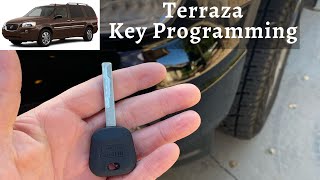
Typical fix: Replace the faulty key. A new key must be cut and programmed to the vehicle by a locksmith or dealership. Some keys allow for a DIY programming procedure if you have one working key.
Est. part cost: $50-$150 - Faulty Ignition Lock Cylinder / Exciter Coil ⚪ Low Probability The exciter coil is a wire antenna ring around the ignition cylinder that powers the key's transponder. A break in this wire or internal failure of the lock cylinder assembly can prevent communication with the key.
How to confirm: If RFI is ruled out and a known-good spare key also fails to start the vehicle, the issue is likely with the car's hardware. A technician can test the resistance of the exciter coil, which should be between 7-15 ohms. An open circuit (infinite resistance) confirms failure.
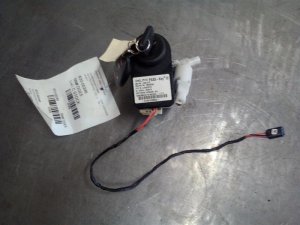
Typical fix: Replace the ignition lock cylinder assembly, which typically includes the exciter coil. The system will require a security relearn procedure after replacement. An example part is the ACDelco D1499A.
Est. part cost: $100-$250
Rare But Worth Checking
- Body Control Module (BCM) Failure: While rare, an internal hardware or software fault in the BCM can cause this code. This should only be considered after all other causes, especially RFI and the key itself, have been definitively ruled out. The TSBs specifically warn against replacing modules prematurely. In some cases on related platforms, unstable system voltage from bad battery terminals has been found to cause BCM glitches that trigger this code.
- Damaged Wiring or Connectors: A break, corrosion, or loose pin in the wiring between the ignition lock cylinder, Theft Deterrent Module (TDM), and BCM can cause intermittent signal loss and trigger B3935. One owner of a related GM vehicle found backed-out pins in the main BCM harness connector.
Diagnosis Steps
- Verify the security light is on or flashing on the dashboard during the no-start event.
- Isolate the ignition key: Remove it completely from any keychain containing other keys, fobs, or RFID cards (like office badges).
- Unplug all aftermarket accessories from the 12V power outlets (phone chargers, dash cams, USB power banks, aftermarket LED lighting etc.).
- Attempt to start the vehicle with the isolated key. If it starts, the problem is RFI.
- If it still doesn't start, try a known-good spare key (also isolated). If the spare key works, the original key is defective.
- If neither key works, perform the 30-minute security relearn procedure. Turn the key to 'ON' for 10 minutes until the security light goes out. Turn off for 5-10 seconds. Repeat two more times for a total of three cycles. After the third cycle, the key should be relearned and the engine should start. Note: If the security light 🎬 Watch: A professional guide to the GM security relearn procedure never turns off during the 10-minute cycles, the relearn has failed, indicating a hard fault with the key or vehicle hardware.
- If the issue persists, use a scan tool capable of reading Body (B) codes to check for other codes like B3055 and B3060.
- If all else fails, the vehicle requires professional diagnosis to test the wiring and resistance of the ignition lock cylinder's exciter coil and check for faults with the Body Control Module.
Parts You'll Likely Need

- Ignition Key
(OEM #GM 15232922 (B99-PHT Blank))— If a spare key works and the original does not (after ruling out RFI), the transponder chip in the primary key has failed. The key for this vehicle is a PK3 transponder type.
Trusted brands: ACDelco, Strattec
OEM price range: $70-$120
Aftermarket price range: $40-$80 - Ignition Lock Cylinder with Exciter Coil
(OEM #ACDelco D1499A)— If both a known-good key and a new key fail to start the vehicle, and RFI is ruled out, the exciter coil antenna within the ignition lock cylinder assembly is the next most likely failure point.
Trusted brands: ACDelco (GM Genuine Parts), Standard Motor Products
OEM price range: $120-$180
Aftermarket price range: $80-$130
Related Codes That Often Appear With This One
- B3055 — This code means 'No Transponder Modulation' and is often set with B3935 when RFI scrambles the signal or the key is faulty. It is mentioned in TSB PIC5650M.
- B3060 — This code for an 'Unprogrammed Transponder' can be logged alongside B3935 if communication is corrupted, making the BCM think the key is not learned. It is also cited in TSB PIC5650M.
Technical Service Bulletins (TSBs) & Recalls
- PIC5650M: Advises that an intermittent no crank/no start with B3935, B3055, and B3060 may be present and related to RFI. Also includes TPM codes (C0750-C0775) in the list of potential RFI-induced codes.
- PIC5650L: Explicitly states 'Technician should not replace any parts for this concern' and points to Radio Frequency Identification devices as the likely cause.
- PIC5650C/K: Later versions of the TSB that provide an extensive list of potential RFI sources, including other vehicle keys, toll passes, building access cards, aftermarket LED lights, and various USB/12V chargers.
Platform-Specific Known Issues
- The security system on this platform is known to be highly sensitive to Radio Frequency Interference, as documented by GM in TSBs PIC5650L and PIC5650M. This is the most common cause of intermittent no-start conditions with code B3935.
- Owners on forums for the Terraza's platform mates, like the Chevrolet Uplander, frequently report resolving no-start issues simply by isolating the key or discovering an aftermarket phone charger was the source of interference.
Hidden / Shadow Codes Worth Checking
- B3935 57: 'Transponder Authentication Error'. This symptom byte confirms the BCM recognized a learned key, but the cryptographic challenge/response calculation failed. It strongly suggests a faulty key chip or RFI, rather than an unprogrammed key. (see via GM Tech2, GDS2, or other professional scan tool capable of reading manufacturer-specific symptom bytes.)
- B3935 3A: 'Incorrect Transponder Key'. This symptom byte indicates the key's transponder ID was not found in the BCM's list of learned keys, which could happen if a non-programmed key is used. (see via GM Tech2, GDS2, or other professional scan tool.)
Scan Tool Commands That Help
- Tech 2 / GDS2: Vehicle Theft Deterrent (VTD) Learn — Used after replacing a key, ignition cylinder, or BCM to program the new components to the vehicle and allow the engine to start.
- Tech 2 / GDS2: BCM/TDM Module Diagnostics — To view live data from the theft deterrent system, check key status, and read specific symptom bytes like 'B3935 57' to narrow down the diagnosis.
- Tech 2 / GDS2: Reset PASSkey Security — Can be used to clear security-related faults after a repair or to attempt to resolve a system glitch before performing a full 30-minute relearn.
Wiring & Ground Locations

- Body Control Module (BCM) — Below the left side of the instrument panel, to the left of the steering column.. The BCM is the brain of the Passkey III+ system. It stores learned key data and performs the security handshake. A loose connector or internal fault here is a root cause of B3935.
- Theft Deterrent Exciter Module — Located in the steering column, forming a ring around the ignition lock cylinder.. This is the antenna that powers the transponder chip in the key. A broken wire or failed module prevents any communication with the key, leading to codes B3935 and B3055.
- G103 — A ground point located at the left rear of the engine compartment on the cowl, above the brake booster.. This ground serves the BCM and Instrument Panel Cluster (IPC). A poor connection here can cause erratic BCM behavior and trigger false security codes.
- Splice Pack SP205 — Located on the dash harness near the headlamp switch connector, accessible behind the left dash access panel.. This splice pack connects various data and power lines. Corrosion or a loose connection within this pack can interrupt communication between security system components.
Real Owner Repair Stories
- YouTube video (Chevrolet Uplander (platform mate)) — Message on dash: "Starting disabled". Engine would not start.
❌ Tried (didn't work) Replacing the battery.
✅ What actually fixed it The owner discovered they were using a non-chipped, knockoff ignition key. Switching to a proper GM key with the embedded transponder chip resolved the issue immediately.
Helpful Videos
Used OEM Parts in Stock
New Aftermarket Parts Available



The information in this article is provided for general reference and educational purposes only. Vehicle specifications, procedures, and part compatibility can vary by production date, trim level, and region. Always consult your vehicle's factory service manual and verify part numbers before purchasing or performing repairs. Safety-critical components such as airbags, seat belts, and braking systems should be installed by a qualified professional.
- Buick TERRAZA:
- 🎬 Helpful Videos
- 🛍️ Shop This Part
- What's Unique About the 2007-2007 Buick TERRAZA
- Diagnostic Flowchart
- Symptoms You May Notice
- Most Likely Causes
- Rare But Worth Checking
- Diagnosis Steps
- Parts You'll Likely Need
- Related Codes That Often Appear With This One
- Technical Service Bulletins (TSBs) & Recalls
- Platform-Specific Known Issues
- Hidden / Shadow Codes Worth Checking
- Scan Tool Commands That Help
- Wiring & Ground Locations
- Real Owner Repair Stories
- 🎟️ Get 5% Off