

B3935 on 2015-2019 Buick LaCrosse: Understanding Security System Faults and No-Start Causes
Code B3935 on a 2015-2019 Buick LaCrosse almost always indicates a security system problem where the key's transponder fails authentication, often due to Radio Frequency Interference (RFI). Before replacing any parts, remove all other keys, fobs, and access cards from your keychain and try starting the car again, as this is the most common and no-cost fix documented extensively in GM Technical Service Bulletins.
- B3935 means your car's security system is preventing it from starting.
- The most common cause is not a broken part, but interference from other electronic items on your keychain.
- Before spending any money, try starting the car with the key fob completely isolated from other keys or cards.
- If isolation doesn't work, try the spare key or replace the battery in the non-working key fob.
- Only seek professional repair if these simple, no-cost steps fail to resolve the issue.
What's Unique About the 2015-2019 Buick LACROSSE
For this generation of Buick LaCrosse and other contemporary GM vehicles, the B3935 code is frequently caused by external factors rather than a failed component. GM has issued multiple, evolving Technical Service Bulletins (TSBs) under the designation PIC5650, highlighting that Radio Frequency Interference (RFI) from other devices on a keychain can disrupt the low-frequency (125 kHz) signal between the key and the car, triggering this code. The official advice across numerous versions of this TSB is to rule out these external interference sources before any parts are replaced.
Diagnostic Flowchart
Tap your situation to follow the diagnostic path that matches what you're seeing on this vehicle.
Generation note: The 2015-2019 model years span the end of the second generation (2010-2016, on the Epsilon II platform) and the entire third generation (2017-2019, on the P2XX/E2XX platform). The TSBs related to this issue cover a wide range of GM vehicles from these years, including the LaCrosse, indicating the cause and diagnostic approach are consistent across both LaCrosse generations and their respective platforms.
Symptoms You May Notice
- Intermittent no-crank, no-start condition.
- Engine starts and then immediately stalls.
- Security indicator light is illuminated or flashing on the dashboard.
- "No Fob Detected" or "Service Theft Deterrent System" message on the driver information center (for vehicles with keyless start).
- Remote Keyless Entry (RKE) functions poorly or not at all.
- Replacing the vehicle's main 12V battery, when the issue is with the key fob or security system.
- Replacing the starter motor, when the security system is what's preventing the crank signal.
- Replacing the ignition switch without first ruling out key, interference, and security module issues.
- Replacing the Engine Control Module (ECM) when the fault lies within the BCM or key authentication process.
Most Likely Causes
- Radio Frequency Interference (RFI) 🔴 High Probability The vehicle's theft deterrent system operates on a low-power 125 kHz radio frequency that can be easily 'jammed' by other electronic devices, a condition GM has documented extensively in TSBs like PIC5650M. Common culprits include other vehicle keys, office building access cards, gas station payment fobs, and even aftermarket phone chargers or LED lights.
How to confirm: Remove the LaCrosse key from your keychain, isolating it from all other car keys, keyless entry fobs, office building access cards, and gas station payment fobs. Move these items far away from the vehicle. Attempt to start the vehicle with the isolated key. If it starts reliably, RFI was the cause.
Typical fix: Keep the vehicle key separate from other RFID-emitting devices. Do not use decorative metal rings around the ignition switch, as these can also cause interference.
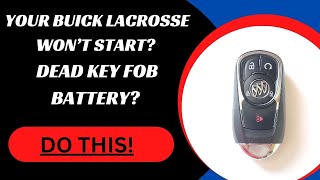
Est. part cost: $0 - Weak or Dead Key Fob Battery 🟡 Medium Probability The transponder chip inside the key fob requires power from the fob's internal battery to transmit its signal. A weak battery can lead to a weak or inconsistent signal that the car cannot properly authenticate, sometimes triggering a 'REPLACE BATTERY IN REMOTE KEY' message.
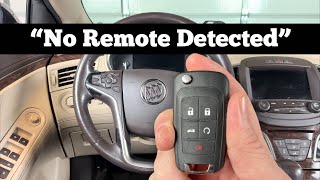
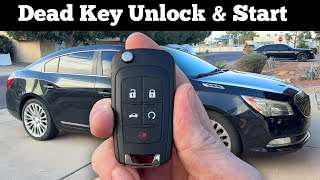
How to confirm: Try starting the car with your spare key fob. If the spare key works reliably, the primary key's battery is the likely culprit. For push-to-start models, placing the 'dead' fob in the designated transmitter pocket may allow the car to start. For 2015-2016 models, this pocket is in the bottom of the center console armrest storage. 🎬 Watch: How to start 2015-2016 models with a dead fob. For 2017-2019 models, it's inside the center console storage area. 🎬 See how to use the transmitter pocket on 2017-2019 models.
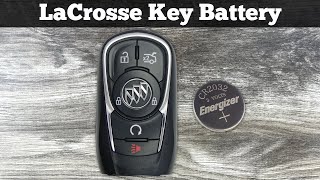
Typical fix: Replace the CR2032 battery inside the key fob. 🎬 Watch this quick DIY guide to replacing your fob battery.
Est. part cost: $2-$10 - Damaged Key or Transponder ⚪ Low Probability
How to confirm: If the key fob battery is new and RFI has been ruled out, but the spare key works perfectly, the transponder chip in the primary key may be damaged from being dropped or from water exposure. A locksmith or dealer can test the key's signal.
Typical fix: The key must be replaced and programmed to the vehicle by a dealer or a qualified automotive locksmith.
Est. part cost: $150-$400
Rare But Worth Checking
- Body Control Module (BCM) Software Glitch: In some cases, particularly when seen with code B2955 ('Security System Sensor Data Circuit'), GM has released updated software calibrations for the BCM to address intermittent no-start conditions. This requires a dealer or equipped independent shop to reprogram the module using the Service Programming System (SPS). This specifically addresses a 'No Click, No Crank, No Start' condition.
- Faulty Body Control Module (BCM) or Wiring: While rare, a hardware failure in the BCM or a wiring issue between the BCM and the immobilizer antenna can cause this code. This should only be considered after all other, more common causes have been eliminated, as per GM's TSBs. In some forum discussions, owners have ultimately resolved persistent issues by replacing and reprogramming the BCM after all key and interference-related fixes failed.
Diagnosis Steps
- Verify that the security light is on or flashing on the instrument cluster when the no-start condition occurs.
- Isolate the Buick key fob. Remove it from the keychain and move any other keys, fobs, or access cards (especially office badges or other car fobs) far away from the vehicle.
- Attempt to start the vehicle with the isolated key. If it starts, the problem is RFI. Advise keeping the key separate.
- If the issue persists, try the vehicle's spare key. If the spare key works, the problem lies within the first key fob (likely its battery or the transponder itself).
- Replace the battery (typically a CR2032) in the malfunctioning key fob.
- For push-button start models, try placing the key fob in the transmitter pocket. On 2015-2016 models, this is in the bottom of the center console armrest storage. On 2017-2019 models, it's inside the center console storage area after removing the top tray. Then press the start button. If the car starts, it confirms a weak fob battery or signal.
- If neither key works and interference is ruled out, the vehicle should be scanned for other related DTCs. If B2955 is also present, a BCM software update is the most likely fix, per TSB PI1180A.
- As a final step, a professional technician should inspect the wiring for the immobilizer system and diagnose the Body Control Module (BCM) for potential hardware failure.
Parts You'll Likely Need
- Key Fob Battery
(OEM #CR2032)— This is the most common part to fail, causing a weak transponder signal that leads to authentication errors.
Trusted brands: Energizer, Duracell, Panasonic
OEM price range: $5-$10
Aftermarket price range: $2-$8 - Transponder Key Fob
(OEM #ACDelco 13508767 (for 2017-2019 models, verify by VIN))— If the key's internal transponder chip is damaged, the entire key fob assembly must be replaced and programmed to the vehicle.
Trusted brands: ACDelco (GM Original Equipment)
OEM price range: $150-$300
Aftermarket price range: $70-$150 - Emergency Key Blade Insert
(OEM #13589533 / 13590048 (verify by VIN))— Often sold separately from the fob, this physical key is needed for manual door entry and some programming procedures.
Trusted brands: ACDelco
OEM price range: $20-$40
Aftermarket price range: $5-$15
Related Codes That Often Appear With This One
- B3055 — This code relates to a problem with the key transponder itself (No Transponder Modulation or No Transponder). It often appears with B3935 as part of the same security system fault, frequently caused by RFI.
- B3060 — This code indicates an issue with the transponder antenna or its circuit (Unmodulated Transponder). It can be triggered by the same RFI that causes B3935.
- B2955 — Indicates a fault in the security system sensor data circuit. When B2955 appears with B3935, GM has issued a specific TSB (PI1180A) recommending a BCM software update to fix the no-start condition.
Technical Service Bulletins (TSBs) & Recalls
- PIC5650M: Mentions B3935 in relation to intermittent no-crank/no-start or stall concerns caused by security system issues, and lists numerous sou
Platform-Specific Known Issues
- A series of Technical Service Bulletins (PIC5650) from GM explicitly state that intermittent no-start conditions with code B3935 are often caused by Radio Frequency Identification (RFID) devices on the owner's keychain. The bulletins advise against replacing parts until this possibility is thoroughly investigated.
- For push-to-start models, the owner's manual specifies a 'transmitter pocket' to be used when the fob battery is dead. For the 2015-2016 LaCrosse, this is in the armrest storage compartment. For the 2017-2019 LaCrosse, it is also in the center console storage area.
Mechanic-Grade Diagnostic Values
- Battery Voltage at Theft Deterrent Module (TDM) — expected: Greater than 9.0 Volts. Failure: Voltage below 9.0V may prevent the TDM from running its diagnostic and setting the code properly.
Hidden / Shadow Codes Worth Checking
- B3935 57: The '57' is a GM-specific symptom byte meaning 'Invalid Or Incorrect Data'. This specifies that the transponder's response to the security challenge was received but did not match the BCM/TDM's calculation, confirming an authentication failure rather than a 'no signal' condition. (see via A professional scan tool capable of reading GM-specific body codes, such as a Snap-on scanner or the dealer-level GDS2/Tech2.)
Scan Tool Commands That Help
- GDS2 (GM Dealer Software): Immobilizer Learn / Add or Replace Key Fobs — This function is required after replacing a key or the Body Control Module (BCM). It guides the technician through the process of programming new transponders to the vehicle's immobilizer system.
- GDS2 (GM Dealer Software): BCM Programming and Setup (via SPS) — When replacing the BCM, the new module must be programmed with the vehicle's specific calibration file using the Service Programming System (SPS). This loads the correct software and vehicle options. A setup procedure must follow to learn keys and other security information.
- Professional Scan Tool: Clear All DTCs — After a successful repair (like replacing a key battery or performing a relearn), the history code B3935 should be cleared. The code will also self-clear after 100 fault-free ignition cycles.
Wiring & Ground Locations
- Body Control Module (BCM) — On 2017-2019 models, the BCM is located in the center console, accessible by removing the lower panel on the passenger side footwell. It has 7 different colored connectors.. The BCM is the central module for the theft deterrent system. All key authentication signals are processed here. A poor connection at one of its main connectors could cause this fault.
- G103 (or similar cowl ground) — On many GM platforms, a primary ground point (often designated G103) is located on the cowl in the engine compartment, sometimes above the brake booster.. This ground point often serves the BCM, Instrument Panel Cluster (IPC), and Data Link Connector (DLC). A loose or corroded G103 can cause intermittent and difficult-to-diagnose electrical issues, including security system faults.
Real Owner Repair Stories
- Camaro5 Forums (2012 Chevrolet Camaro SS (similar GM Passkey III+ system)) — No crank, "Service Theft Deterrent System" message on DIC. Remote start worked, but engine would die when the key was inserted and turned to 'Run'.
❌ Tried (didn't work) Disconnecting and reconnecting the 12V battery., A 30-minute key relearn procedure (three 10-minute cycles) did not work with the original, faulty key.
✅ What actually fixed it The owner had a new, inexpensive standard key cut by a locksmith. They then successfully performed the 30-minute relearn procedure (Key ON for 10 min until security light goes out, repeat 3 times). This allowed the car to start and run, confirming the original switchblade key's transponder had failed.
OEM Part Supersession History
13580690→13594692— This is a common supersession for the Body Control Module (BCM) in many 2014-2020 GM vehicles.
Heads up: The replacement BCM (13594692) requires programming and setup procedures using the GM Service Programming System (SPS) to function correctly in the vehicle. It is not a plug-and-play part.
Model Year Variations Within This Range
- 2017-2019: The 2017-2019 third-generation LaCrosse moved to the P2XX platform. The Body Control Module (BCM) is located behind the passenger side of the center console. This differs from the second-generation (2015-2016) Epsilon II platform, where component locations may vary.
Helpful Videos
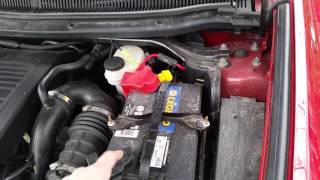
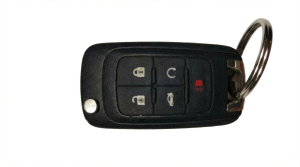
Used OEM Parts in Stock


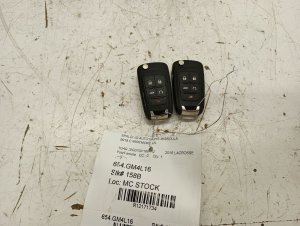
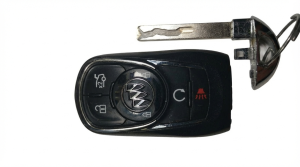

New Aftermarket Parts Available


The information in this article is provided for general reference and educational purposes only. Vehicle specifications, procedures, and part compatibility can vary by production date, trim level, and region. Always consult your vehicle's factory service manual and verify part numbers before purchasing or performing repairs. Safety-critical components such as airbags, seat belts, and braking systems should be installed by a qualified professional.
- Buick LACROSSE:
- 🎬 Helpful Videos
- 🛍️ Shop This Part
- What's Unique About the 2015-2019 Buick LACROSSE
- Diagnostic Flowchart
- Symptoms You May Notice
- Most Likely Causes
- Rare But Worth Checking
- Diagnosis Steps
- Parts You'll Likely Need
- Related Codes That Often Appear With This One
- Technical Service Bulletins (TSBs) & Recalls
- Platform-Specific Known Issues
- Mechanic-Grade Diagnostic Values
- Hidden / Shadow Codes Worth Checking
- Scan Tool Commands That Help
- Wiring & Ground Locations
- Real Owner Repair Stories
- OEM Part Supersession History
- Model Year Variations Within This Range
- 🎟️ Get 5% Off