

B3935 on 2016-2023 Buick Envision: No-Start, Security Light Causes & Fixes
Code B3935 on a Buick Envision typically indicates a no-start or stalling condition with the security light on. Before replacing any parts, remove all other Radio Frequency (RFID) devices like toll passes or other key fobs from your keychain, as interference is the most common cause documented by GM in Technical Service Bulletins.
- B3935 means your car's security system doesn't recognize your key.
- The most likely cause is not a broken part, but interference from other electronic devices in your car or on your keychain. Remove them first.
- If removing interference doesn't work, try the spare key or replace the key fob battery (CR2032).
- Use the backup transponder slot (in the center console) to start the car with a weak fob battery.
- Only consider expensive repairs like BCM replacement after all simpler causes have been exhaustively ruled out.
What's Unique About the 2016-2023 Buick ENVISION
The Buick Envision, along with many other modern GM vehicles built on platforms like the D2XX, has a sensitive immobilizer system. GM has issued multiple Technical Service Bulletins (TSBs) highlighting that this system is particularly prone to Radio Frequency Interference (RFI). The TSBs specifically advise against replacing parts until RFI from common items like other vehicle keys, toll passes, or even aftermarket LED lights has been ruled out as the cause of the no-start condition.
Diagnostic Flowchart
Tap your situation to follow the diagnostic path that matches what you're seeing on this vehicle.
Generation note: The 2016-2023 year range covers the first generation (2016-2020) and the second generation (2021-2023) of the Buick Envision. The Technical Service Bulletins regarding this issue cover model years across both generations, indicating the potential for this problem exists in either. The underlying immobilizer technology is shared across a wide range of GM vehicles from this era.
Symptoms You May Notice
- Intermittent no-crank or no-start condition.
- Engine starts and then immediately stalls.
- Security indicator light is illuminated or flashing on the dashboard.
- "No Fob Detected" message on the Driver Information Center (DIC).
- Vehicle will not power on to RUN or Accessory mode, preventing the ability to shift out of Park (symptom of a potential BCM failure).
- Replacing the Body Control Module (BCM) or ignition switch before ruling out RF interference and key fob issues. The TSBs specifically warn technicians not to replace parts for this concern until RFI is investigated.
- Confusing a weak main vehicle battery with a security system fault. If you hear clicking and other systems act erratically, test the 12V battery first.
Most Likely Causes
- Radio Frequency Interference (RFI) 🔴 High Probability As documented extensively in GM TSBs PIC5650L and PIC5650M, the vehicle's security system is sensitive to external radio signals that can 'jam' the key fob's transponder signal.
How to confirm: Remove all other keys, key fobs, toll passes, building access cards, and aftermarket electronic devices (like phone chargers) from the keychain and the vehicle's interior. Try starting the vehicle again. TSB PIC5650C provides a detailed list of potential RFI sources.
Typical fix: Isolate the key fob from other RFID-emitting devices. TSB PIC5650C specifically lists: other vehicle keys, toll passes, gate/door access cards, fuel station speed passes, aftermarket LED lights, cell phone chargers, USB power banks, and other 12-volt accessories. Keep these items away from the ignition/start button area.
Est. part cost: $0 - Weak or Dead Key Fob Battery 🟡 Medium Probability A weak battery may not provide enough power for the transponder to communicate effectively with the vehicle's immobilizer antenna.
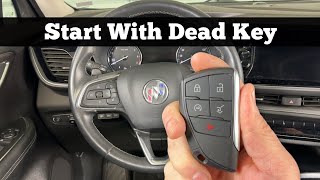
How to confirm: Try using the spare key fob. If the spare key works reliably, the battery in the primary key is the likely culprit. You can also try placing the problematic fob in the designated transponder pocket/slot inside the vehicle, which can often start the car even with a weak battery. On the Envision, this is typically located inside the center console storage compartment. 🎬 Watch: How to start your Envision with a dead key fob
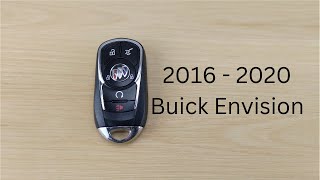
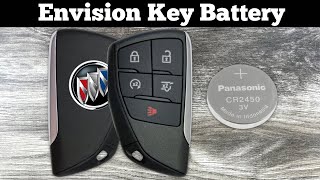
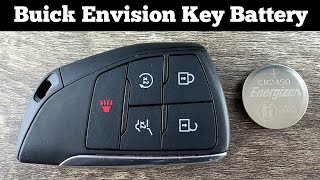
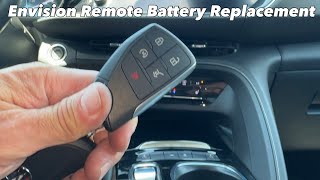
Typical fix: Replace the battery in the key fob, which is a CR2032 coin cell. 🎬 See this battery replacement walkthrough for 2016-2020 models
Est. part cost: $2-$10 - Damaged Key Fob ⚪ Low Probability
How to confirm: If a new battery and removing RFI sources don't solve the issue, and the spare key works perfectly, the internal circuitry of the primary key fob may be damaged from being dropped or from water exposure.
Typical fix: Replace and program a new key fob. This usually requires a dealership or an automotive locksmith.
Est. part cost: $150-$400
Rare But Worth Checking
- Faulty Body Control Module (BCM): This is a rare cause. GM TSBs strongly advise ruling out all other possibilities first. However, TSB 21-NA-244 details a specific internal BCM fault where the key fob's active functions (button presses) work, but passive functions (entry/starting) fail completely, even in the backup slot. This fault will not allow the car to enter RUN or Accessory mode. The fix is BCM replacement and programming. In other cases (per TSB PI1180A), a software anomaly can cause B3935, which can be fixed with a BCM reflash.
- Weak or Failing Main Vehicle Battery: A low main vehicle battery can cause a variety of seemingly unrelated electrical issues, including illuminating the security light and preventing the car from starting. Symptoms like clicking noises and slow wipers when trying to start are classic signs. This can be misdiagnosed as an immobilizer problem when it's actually a simple lack of power.
- Aftermarket Accessories: Aftermarket LED lighting (especially interior dome lights), remote starters, or certain USB phone chargers can generate enough RFI to interfere with the immobilizer system. TSB PIC5650C explicitly calls out these devices as known causes of interference. If the issue started after installing a new accessory, try disconnecting it.
Diagnosis Steps
- Check the dashboard for a solid or flashing security light.
- Remove ALL other keys, fobs, access cards, and toll passes from your keychain and from near the vehicle's center console/ignition area, per GM TSB PIC5650 series.
- Try starting the vehicle with only the Buick key fob present.
- If the vehicle still won't start, try using your spare key fob.
- If the spare key works, replace the battery (CR2032) in the non-working key fob.
- If the battery replacement doesn't work, or if neither key works, try placing the key fob in the vehicle's transponder slot (consult your owner's manual for the location, often in the center console storage bin) and attempt to start the engine.
- If the vehicle starts in the backup slot, the key fob battery is almost certainly the issue. If it does not start even in the backup slot, the problem is more severe.
- If the issue persists, check the main 12V vehicle battery to ensure it is fully charged and healthy.
- If all else fails, the key itself may be faulty, or there could be a rarer issue with the BCM or immobilizer antenna requiring professional diagnosis with a scan tool.
Parts You'll Likely Need
- Key Fob Battery
(OEM #CR2032)— This is the most common and inexpensive part to fail, causing a weak transponder signal.
Trusted brands: Energizer, Duracell, Panasonic
OEM price range: $5-$15
Aftermarket price range: $2-$10 - Keyless Entry Remote Fob
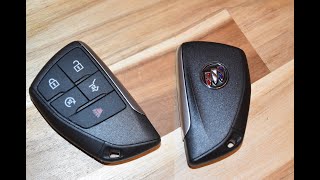
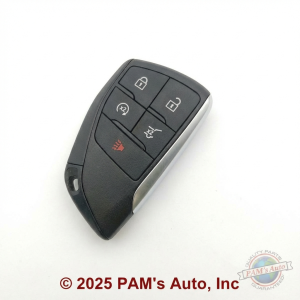
(OEM #13532385, 13584500, 13508406 (FCC ID: HYQ4AA))— If the key fob's internal transponder is damaged, the entire unit must be replaced and programmed. Verify part number by VIN. 🎬 Watch: Easy DIY battery replacement for 2021-2024 key fobs
Trusted brands: ACDelco, GM Genuine Parts
OEM price range: $150-$400
Aftermarket price range: $50-$150
Related Codes That Often Appear With This One
- B3055 — This code relates to the key transponder and is often set along with B3935 as part of the same immobilizer fault event, as noted in TSBs PIC5650M and PIE0232.
- B3060 — This is another code related to the transponder system, indicating an issue with the transponder's internal function or communication, and is frequently seen with B3935.
- B2955 — This code for 'Security Sensor Data Circuit Malfunction' can be set along with B3935 when a specific BCM software anomaly occurs, which can be fixed by reprogramming the BCM per TSB PI1180A.
Technical Service Bulletins (TSBs) & Recalls
- PIC5650M: Diagnostic Tip - Security Light On Intermittently / No Crank/No Start Or Start Stall And Keyless Access.
- PIC5650L: Predecessor to PIC5650M with similar guidance, advising not to replace parts and to inquire about RFID use.
- PIC5650C: Provides a detailed list of aftermarket devices and other items that are known to cause Radio Frequency Interference (RFI).
- 21-NA-244: Details a specific BCM internal fault that causes a 'No Fob Detected' message and requires BCM replacement.
- PI1180A: Addresses a no-start condition with DTCs B3935 and B2955 caused by a software anomaly, fixed by reprogramming the BCM.
Platform-Specific Known Issues
- A series of GM Technical Service Bulletins (PIC5650) have been released over several years, repeatedly warning that intermittent no-start conditions with code B3935 are often caused by Radio Frequency Interference.
- The bulletins list common sources of interference, including other vehicle keys, building access cards, toll passes, aftermarket LED lights, and various USB/12-volt powered devices.
- The official recommendation is to advise the customer to remove these items from their keychain and vehicle interior before proceeding with any hardware replacement.
- A separate TSB (21-NA-244) identifies a specific internal BCM failure that can cause a 'No Fob Detected' message and no-start condition that is not related to RFI or the key fob itself.
Hidden / Shadow Codes Worth Checking
- B3935 57: The '57' is a symptom byte that may be displayed on a dealer-level scan tool, specifically identifying the fault as 'Transponder Authentication Error'. (see via GM GDS2 or other professional-grade scan tool that can read manufacturer-specific symptom codes.)
Scan Tool Commands That Help
- GM GDS2/SPS: Body Control Module Programming and Setup — Used to reprogram the BCM with updated software from GM's TIS2WEB service. This is the specific fix for a no-start condition where codes B3935 and B2955 are set together, per TSB PI1180A.
- Professional Scan Tool (Autel, XTOOL, etc.): BCM Soft Reset — On a platform-mate vehicle, a no-crank condition that occurred after a low battery event was resolved by performing a soft reset of the BCM. This can be a quick first step if the issue appeared after charging or jump-starting the vehicle.
- Professional Scan Tool (XTOOL, Autel, etc.) or GDS2: Immobilizer/Key Learning (All Keys Lost) — This function is required when replacing a key fob or the BCM. It involves a mandatory 30-minute security wait period (three 10-minute cycles) to program a new key when no working keys are available.
Wiring & Ground Locations
- K9 Body Control Module (BCM) — For 2016-2019 models, the BCM is located in the center console, directly behind the lower panel on the passenger side of the vehicle.. The BCM is the central module for the immobilizer system. It receives the signal from the key fob via the immobilizer antenna and makes the decision to allow the engine to start. All related wiring converges here.
- BCM Ground (Probable) — General GM documentation points to a ground point designated G103, located on the cowl in the engine compartment (often above the brake booster), as a common grounding point for the BCM and Remote Door Lock Receiver.. A poor ground connection at the BCM can cause a wide range of erratic electrical behavior, including communication errors like B3935. Verifying this ground is tight and free of corrosion is a key diagnostic step for intermittent electrical issues.
- OBD-II Data Link Connector (DLC) — Located under the dashboard to the left of the steering wheel.. This is the port used to connect a scan tool to communicate with the BCM and other modules to read codes, view data, and perform programming functions.
Real Owner Repair Stories
- Reddit user vampdivascar (2017 Buick Envision) — Recurring dead battery, key fob not working, and vehicle would not start.
❌ Tried (didn't work) Replacing the main vehicle battery., Replacing the key fob battery., Verifying the alternator was working correctly.
✅ What actually fixed it The issue was traced to a faulty side detection module (for blind spot monitoring). This module was causing a 'low voltage' issue and likely corrupting the vehicle's data bus, leading to widespread electrical problems. Replacing the side detection module resolved the no-start and battery drain issues. - YouTube channel 'Salem Doyle' (2019 Chevrolet Equinox (platform-mate)) — No-crank, no-start condition after the vehicle sat for a few days and the battery became low.
❌ Tried (didn't work) Charging the battery.
✅ What actually fixed it The technician used a scan tool to perform a 'soft reset' on the Body Control Module (BCM). After the reset, the vehicle started normally. The technician noted that disconnecting the negative battery terminal for a period might achieve the same result for someone without a scan tool.
OEM Part Supersession History
39051215→42623830— Part revision or update by the manufacturer.
Heads up: These BCMs are often specific to certain features. For example, part #42623830 is specified for vehicles with Rear Park Assist (RPO code UD7). Crucially, a used BCM from another vehicle cannot be reprogrammed by a GM dealer; it must be 'cloned' by a third-party specialist service.13537291→13548775 (Interchangeable)— Alternative part number for the same component.
Heads up: Always verify the correct BCM part number for the vehicle's specific VIN and options before ordering.
Model Year Variations Within This Range
- 2016-2020 (First Gen) vs 2021-2023 (Second Gen): The Body Control Modules use different part numbers between generations, indicating hardware and/or software changes. A BCM for a 2019 model (e.g., ID 13519672) is not interchangeable with one for a 2021 model (e.g., 13537291). While the underlying cause of B3935 (RFI, key issues) is common to both, the specific replacement part is different.
- 2016-2023: The 'All Keys Lost' programming procedure is consistent across many GM vehicles of this era. It requires turning the physical key blade in the driver's door lock five times to initiate, followed by three 10-minute security wait cycles, for a total of 30 minutes.
Helpful Videos

Used OEM Parts in Stock
New Aftermarket Parts Available


The information in this article is provided for general reference and educational purposes only. Vehicle specifications, procedures, and part compatibility can vary by production date, trim level, and region. Always consult your vehicle's factory service manual and verify part numbers before purchasing or performing repairs. Safety-critical components such as airbags, seat belts, and braking systems should be installed by a qualified professional.
- Buick ENVISION:
- 🎬 Helpful Videos
- 🛍️ Shop This Part
- What's Unique About the 2016-2023 Buick ENVISION
- Diagnostic Flowchart
- Symptoms You May Notice
- Most Likely Causes
- Rare But Worth Checking
- Diagnosis Steps
- Parts You'll Likely Need
- Related Codes That Often Appear With This One
- Technical Service Bulletins (TSBs) & Recalls
- Platform-Specific Known Issues
- Hidden / Shadow Codes Worth Checking
- Scan Tool Commands That Help
- Wiring & Ground Locations
- Real Owner Repair Stories
- OEM Part Supersession History
- Model Year Variations Within This Range
- 🎟️ Get 5% Off