

B3928 on 2018-2024 Chevrolet Traverse: 'No FOB Detected', Causes, and Fixes
On a 2018-2024 Traverse, code B3928 almost always indicates a Body Control Module (BCM) software glitch, not a failed part. This typically happens after a battery replacement or jump-start. The fix is a specific BCM reprogramming procedure outlined in GM TSB #23-NA-163, which must be performed by a dealer or qualified shop. This issue also affects numerous platform mates, including the Buick Enclave, GMC Acadia, and Cadillac XT5/XT6.
- Code B3928 on a 2018-2024 Traverse almost always means you need a software update, not new parts.
- The problem is usually triggered by a weak battery, jump-start, or battery replacement.
- Do not let a repair shop replace the BCM or other expensive parts before attempting the specific reprogramming procedure found in TSB #23-NA-163.
- This is not a DIY repair; it requires special dealer-level software tools.
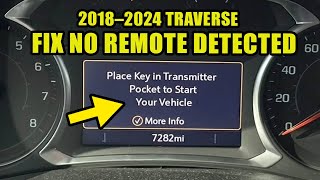
- If your car won't start, try placing the key fob in the designated transmitter pocket inside the center console as a potential temporary workaround.
- This issue is common across many GM models from the same era, including the GMC Acadia, Buick Enclave, and Chevy Equinox.
What's Unique About the 2018-2024 Chevrolet TRAVERSE
The 2018-2024 Traverse, along with other GM vehicles of the same era (such as the Buick Enclave, GMC Acadia, and Chevy Blazer), uses a specific 'GEN3R' Body Control Module (BCM) that is prone to memory corruption after a low-voltage event, such as a battery change or jump-start. This glitch causes the BCM to 'forget' the programmed key fobs, leading to a no-start condition and setting B3928 and related codes. GM acknowledged this with Technical Service Bulletin #23-NA-163, which details a specific software-based repair, warning technicians not to replace the BCM or other parts unnecessarily.
Diagnostic Flowchart
Tap your situation to follow the diagnostic path that matches what you're seeing on this vehicle.
Symptoms You May Notice
- No-crank, no-start condition
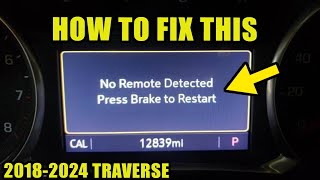
- Message on dash: 'No FOB Detected' or 'No Remote Detected'
- Vehicle starts and immediately stalls
- Key fob functions (lock/unlock) are inoperative
- Multiple warning lights on the dashboard
- Replacing the Body Control Module (BCM)
- Replacing the key fob detection (PEPS) antennas
- Replacing the key fobs
- Replacing the vehicle's main battery (without performing the BCM reprogram)
Most Likely Causes
- Body Control Module (BCM) Memory Corruption 🔴 High Probability A low-voltage event (weak battery, jump-start, battery replacement) can cause the specific 'GEN3R' BCM used in these vehicles to suffer a memory corruption event. This is a known vulnerability acknowledged by GM.
How to confirm: Scan for codes. The presence of B3928 along with three or more other antenna codes (B3924, B3925, B3926, B3927) and especially code B389A 00 strongly confirms this issue as described in TSB #23-NA-163. The TSB notes that if B389A 00 is not present, a technician may need to disconnect and reconnect the battery for a minimum of 30 seconds and check again.
Typical fix: The BCM needs to be reprogrammed by a GM dealer or a qualified independent shop using the specific procedure outlined in TSB #23-NA-163. This is a software fix, not a hardware replacement. The procedure may involve selecting 'Programming A Per Bulletin 23-NA-163' or 'Special Data Reset A' in the GM Service Programming System (SPS).
Est. part cost: $0
Rare But Worth Checking
- Faulty Key Fob: A dead battery in the fob is a simple first check. If a spare fob works, the other may be faulty. However, if neither fob works, the issue is almost certainly the BCM glitch.
- Faulty PEPS Antenna or Wiring: While B3928 technically points to an antenna circuit, it is extremely rare for this to be the actual cause on this platform when multiple other antenna codes are also present. This should only be investigated after the BCM reprogramming has been ruled out.
Diagnosis Steps
- Attempt to start the vehicle by placing the key fob in the transmitter pocket, which is usually located inside the center console or in a specific slot detailed in the owner's manual. This is a backup method that may bypass the issue temporarily.
- Check the battery in your key fob. Replace it if it's old.
- Connect a professional-grade scan tool capable of reading GM body codes.
- Check for codes in the Body Control Module (BCM). Note if B3928 is present with other codes like B3924-B3927 and B389A.
- If B389A is not present but the other codes are, try disconnecting the main vehicle battery for at least 30 seconds, reconnecting, and scanning for codes again.
- If multiple antenna codes and B389A are present, do not replace any parts. The vehicle must be taken to a dealer or qualified shop.
- Provide the service advisor with the TSB number: 23-NA-163. This ensures they perform the correct BCM reprogramming procedure instead of attempting unnecessary parts replacement.
- A technician can confirm the BCM is the affected 'GEN3R' type by checking the part number in GDS2, as instructed by the TSB.
- If only a single antenna code is present, a technician may need to diagnose that specific antenna circuit, but this is highly unlikely.
Parts You'll Likely Need
- BCM Reprogramming Service — This is a software fix, not a physical part. The cost is for the labor and use of specialized equipment at a dealership or qualified repair shop to perform the procedure outlined in TSB 23-NA-163.
OEM price range: $100-$400
Aftermarket price range: N/A - GEN3R Body Control Module (BCM)
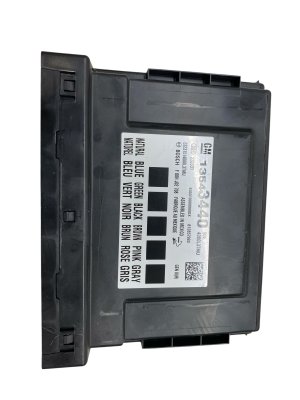
(OEM #13533813, 13533814, 13529492, 13527297, etc.)— This part should NOT be replaced unless the software reprogramming from TSB 23-NA-163 fails to resolve the issue. 🎬 Watch: Professional walkthrough of the GM BCM replacement and setup. The TSB explicitly warns against replacing the module as a first step. The listed part numbers are examples of 'GEN3R' BCMs susceptible to this glitch.
Trusted brands: ACDelco (OEM)
OEM price range: $120-$250
Aftermarket price range: N/A
Related Codes That Often Appear With This One
- B3924, B3925, B3926, B3927 — These are sibling codes for the other passive entry antennas in the vehicle. When they appear together with B3928, it strongly indicates the system-wide BCM glitch rather than multiple simultaneous hardware failures.
- B389A 00 — This code for 'Environment Identification' is the primary DTC that confirms the BCM memory corruption issue when seen with the antenna codes, as per TSB #23-NA-163. The '00' is a symptom byte indicating 'No Additional Symptom Information', and its presence is a key diagnostic criterion.
Technical Service Bulletins (TSBs) & Recalls
- 23-NA-163: Corrects a customer concern of No Crank, No Start, Quick Start/Stall, No FOB Detected, or Key FOBs Inoperative with DTCs B3924-B3928 set, caused by BCM memory corruption after a low-voltage event. It applies to vehicles with a 'GEN3R' BCM and provides a specific software reset procedure.
Platform-Specific Known Issues
- GM Technical Service Bulletin #23-NA-163 was issued to address this specific problem. It describes a condition where a low voltage event can cause BCM memory corruption, leading to a no-crank/no-start situation and setting codes B3924, B3925, B3926, B3927, and B3928. The official fix is a specific BCM reprogramming procedure.
- Owner Experience: Dealer Service: Owners encountering this issue should be well-informed before visiting a dealership. There are forum reports of dealers attempting to charge diagnostic fees or for the TSB repair itself, even when the vehicle is under warranty. Knowing the TSB number and that this is a known issue can help ensure the correct, and correctly billed, repair is performed.
Hidden / Shadow Codes Worth Checking
- B389A 00: This primary code for 'Environment Identification' confirms the BCM memory corruption. The '00' symptom byte, meaning 'No Additional Symptom Information', is a required condition for the TSB #23-NA-163 procedure. (see via A professional GM-specific scan tool like the GDS2 is required to view this code and its symptom byte from the Body Control Module (BCM).)
- B3928 00: The '00' symptom byte on this and related antenna codes (B3924-B3927) is the specific condition called out in TSB #23-NA-163 that confirms the software glitch. (see via GM GDS2 or an equivalent professional scan tool capable of reading manufacturer-specific body codes and symptom bytes.)
Scan Tool Commands That Help
- GDS2 (GM Diagnostic Software): Module Diagnostics > [K9] Body Control Module > Identification Information — This path is used to view the BCM's Base Model Part Number (BMPN) to confirm it is a 'GEN3R' type, which is a mandatory first step before proceeding with the TSB 23-NA-163 repair.
- SPS (Service Programming System): K9 Body Control Module “Programming A Per Bulletin 23-NA-163 and 23-NA-165 Only” — This is the primary software recovery procedure. It should be used first on vehicles that have not had a prior, failed immobilizer learn attempt. It must be immediately followed by the 'Body Control Module IMMO Learn with Existing Transponder or Remote Key' procedure.
- SPS (Service Programming System): K9 Body Control Module “Programming B Per Bulletin 23-NA-163 Only” — This is the secondary recovery path, to be used ONLY if a standard immobilizer learn was already attempted and failed to fix the issue *before* 'Programming A' was performed. This must be followed by the more comprehensive 'Engine Control Module and Body Control Module IMMO Learn' procedure.
Wiring & Ground Locations
- Body Control Module (BCM) — Located in the center console area, accessible from the passenger side footwell, next to the fuse box.. This is the module that suffers the memory corruption and requires reprogramming. Physical access is needed to check connections or if replacement is required after reprogramming fails.
- G303 — Located near the base of the left (driver's side) 'B' pillar, behind the kick panel.. This is a major body ground point. While the B3928 issue is primarily software-related, ensuring the BCM has a solid ground is a fundamental check in any electrical diagnosis.
- G302 — Located at the base of the right-hand (passenger side) B-pillar, behind interior trim panels.. This is another major body ground. Verifying the integrity of main ground points is crucial before condemning any control module.
Model Year Variations Within This Range
- 2018-2024: TSB #23-NA-163 has been revised multiple times, with the latest versions (dated August 2024 and March 2025) specifically adding the Chevrolet Traverse and other models to its applicability list. This confirms the issue affects the entire second generation of the Traverse.
Helpful Videos

We Have This Part in Stock





The information in this article is provided for general reference and educational purposes only. Vehicle specifications, procedures, and part compatibility can vary by production date, trim level, and region. Always consult your vehicle's factory service manual and verify part numbers before purchasing or performing repairs. Safety-critical components such as airbags, seat belts, and braking systems should be installed by a qualified professional.
- Chevrolet TRAVERSE:
- 🎬 Helpful Videos
- 🛍️ Shop This Part
- What's Unique About the 2018-2024 Chevrolet TRAVERSE
- Diagnostic Flowchart
- Symptoms You May Notice
- Most Likely Causes
- Rare But Worth Checking
- Diagnosis Steps
- Parts You'll Likely Need
- Related Codes That Often Appear With This One
- Technical Service Bulletins (TSBs) & Recalls
- Platform-Specific Known Issues
- Hidden / Shadow Codes Worth Checking
- Scan Tool Commands That Help
- Wiring & Ground Locations
- Model Year Variations Within This Range
- 🎟️ Get 5% Off