

B3926 on 2018-2024 GMC Terrain: Causes for "No Fob Detected" and Fixes
On a 2018-2024 GMC Terrain, code B3926 typically indicates a fault with one of the passive keyless entry antennas or its circuit. This often leads to a "No Fob Detected" message and a no-start condition. The most common fixes are replacing the faulty antenna (frequently the one in the rear bumper) or a BCM software update as outlined in manufacturer TSBs.
- B3926 on a GMC Terrain almost always points to an issue with the keyless entry system, not the key fob itself.
- Symptoms are severe, often preventing the car from starting.
- Before replacing any parts, try the backup starting procedure by placing the fob in the designated slot inside the car's center console cupholder.
- The most common hardware failure is the rear bumper antenna or its wiring; the most common software issue is a BCM glitch fixed by a dealer update per TSB #23-NA-163.
- This is a known issue on the GMC Terrain and its platform-mate, the Chevrolet Equinox.
What's Unique About the 2018-2024 Gmc TERRAIN

The second-generation GMC Terrain (2018-2024), built on the GM D2XX platform, relies on a network of several small antennas for its passive entry and start system. A failure of just one of these antennas, particularly the one in the rear bumper which is exposed to the elements, can disrupt the entire system, leading to frustrating no-start or 'No Fob Detected' issues even when the key is inside the vehicle. GM has acknowledged these issues by releasing Technical Service Bulletins (TSBs) that provide specific diagnostic and repair procedures, which sometimes involve software updates to correct BCM memory corruption after a low-voltage event, rather than just part replacement. [Bulletin #23-NA-163, Bulletin #21-NA-277]
Diagnostic Flowchart
Tap your situation to follow the diagnostic path that matches what you're seeing on this vehicle.
Symptoms You May Notice
- "No Fob Detected" message on the driver information center
- Vehicle will not crank or start (No Crank/No Start)
- Engine starts but immediately stalls
- Keyless entry functions (lock/unlock by touching door handle) are inoperative
- Remote start may not work
- Intermittent operation of keyless functions that may seem to resolve on its own, only to return later.
- Replacing the key fob battery. While a weak fob battery can cause similar symptoms, it typically won't set a specific antenna circuit DTC like B3926. The vehicle will usually display a 'Replace Key Fob Battery' message. However, a partially weak battery may be unable to communicate for passive start while still working for remote lock/unlock functions.
- Replacing the main 12V vehicle battery without proper diagnosis. While a low battery can cause the BCM software glitch described in TSB #23-NA-163, the battery itself is not the direct cause of the antenna circuit fault code.
Most Likely Causes

- Faulty Passive Entry Antenna 🔴 High Probability Antennas, especially those in the bumpers or trunk area, are exposed to moisture and physical stress, leading to failure over time. The rear bumper antenna is a very common point of failure.
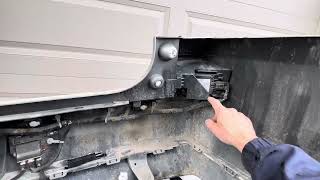
How to confirm: Locate the specific antenna associated with the code (service information required to map B3926 to a location, but it's often the rear bumper or center console antenna). Inspect for visible damage or corrosion. A diagnostic scan tool can often read the signal strength from each antenna to confirm a weak or dead unit. Accessing the rear bumper antenna requires removing the bumper cover.
Typical fix: Replace the faulty antenna. These are often plug-and-play components once accessed. The rear bumper antenna replacement involves removing the bumper cover, unplugging the old antenna, 🎬 See this walkthrough on replacing a GM keyless antenna and installing the new one.
Est. part cost: $10-$30 - Body Control Module (BCM) Software Glitch 🟡 Medium Probability GM has issued TSBs #23-NA-163 and #21-NA-277 which mention this code and provide repair information that can include software updates to correct logic errors. TSB #23-NA-163 specifically notes that a low voltage condition (from a jump start, battery replacement, etc.) can cause a memory corruption event in the BCM, leading to this and other related codes.
How to confirm: A GM dealer or qualified shop with access to GM's service programming system (SPS) can check if the BCM has the latest software calibration. The TSB specifies this procedure only applies to GEN3R BCMs, which can be identified via the GDS2 scan tool.
Typical fix: Reprogram the Body Control Module (BCM) with the latest software update per the TSB. This may also require an immobilizer relearn procedure.
Est. part cost: $0 - Damaged Wiring or Corroded Connector 🟡 Medium Probability Wiring to antennas in the bumpers or underbody is susceptible to damage from road debris, moisture, and corrosion. The connector for the rear bumper antenna is a frequent culprit.
How to confirm: Visually inspect the wiring harness and connector leading to the suspect antenna. Check for chafing, breaks, or green/white corrosion on the pins. Use a multimeter to test for continuity and proper voltage at the connector.
Typical fix: Repair the damaged section of the wiring harness or clean/replace the corroded connector. This is often done at the same time as an antenna replacement.
Est. part cost: $5-$50
Rare But Worth Checking
- Faulty Body Control Module (BCM): While rare, the BCM itself can fail internally. TSB #23-NA-163 explicitly states NOT to replace the BCM before performing the software update procedure. A hardware failure should only be considered after all antennas, wiring, and software have been ruled out as the cause.
- Radio Frequency Interference (RFI): GM has noted in other service communications (like PIC5650M) that aftermarket electronics, such as phone chargers, dash cams, and even some types of window tint, can interfere with the key fob signal, causing a 'No Fob Detected' message. While this may not set a specific DTC like B3926, it can produce identical symptoms.
Diagnosis Steps
- Confirm the presence of B3926 (and any other codes) using a scan tool capable of reading GM Body (B) codes.
- As a simple first step, test the battery in your key fob and try your spare key fob to rule out a fob-related issue.
- Attempt to start the vehicle using the backup method: place the key fob in the designated transmitter pocket, typically located in the front cup holder in the center console. If the vehicle starts, it strongly points to a problem with the passive detection antennas.
- Consult GM service information or use an advanced scan tool to identify which specific antenna location corresponds to code B3926. It is frequently the rear bumper or center console antenna.
- If the rear bumper antenna is suspect, prepare for bumper cover removal. Inspect the antenna and its electrical connector for any signs of physical damage, corrosion, or loose connections. The connector is typically a black, 2-way female connector.
- If the visual inspection is clear, use a multimeter to test the antenna's circuit for proper voltage and continuity back to the BCM, following the service manual's specifications.
- If the antenna and wiring test correctly, the next step is to check for available BCM software updates. A GM dealer or a shop with GM programming capabilities should reference TSBs #23-NA-163 and #21-NA-277. This is especially critical if the issue occurred after a low voltage event.
- If the antenna is confirmed faulty, replace it. If the wiring is damaged, repair it. If a software update is available, have the BCM reprogrammed.
- As a final check, remove any aftermarket USB chargers or electronic devices from the vehicle and re-test, to eliminate Radio Frequency Interference as a possible cause.
Parts You'll Likely Need

- Passive Entry Antenna
(OEM #13545326)— This is the physical antenna that fails, causing the detection circuit fault. It is the most commonly replaced part for this code. This part number is used for multiple antenna locations on many GM vehicles, including the rear bumper and console.
Trusted brands: ACDelco, GM Genuine
OEM price range: $7-$20
Aftermarket price range: $8-$15
Related Codes That Often Appear With This One
- B3924 — This code, along with B3925, B3927, and B3928, corresponds to faults in the other passive entry antennas on the vehicle. Seeing them together can indicate a widespread system issue or a BCM memory corruption event as described in TSB #23-NA-163.
- B3925 — Corresponds to another passive entry antenna circuit. Often cited alongside B3926 in TSBs for the same symptoms. [Bulletin #23-NA-163, Bulletin #21-NA-277]
- P0513 — Incorrect Immobilizer Key. This code can be set as a consequence of the BCM not being able to verify the key fob via the passive entry antenna system. TSB #21-NA-277 and #23-NA-165 directly address this scenario. [4, Bulletin #21-NA-277]
- B389A — Environment Identification. TSB #23-NA-163 notes that this code may be present along with three or more antenna DTCs (like B3926) following a low voltage event, indicating a BCM memory corruption.
Technical Service Bulletins (TSBs) & Recalls

- 23-NA-163: Corrects customer concern of No Crank, No Start, Quick Start/Stall, No FOB Detected, Key FOBs Inoperative, B3924 00, B3925 00, B3926 00, B3927 00, B3928 00 Set.
- 21-NA-277: Provides repair information to correct a customer concern of No Crank, No Start, Quick Start/Stall, Key Fobs Inoperative with DTCs B2924 00, B3925 00, B3926 00, B3927 00, or P0513 set.
Platform-Specific Known Issues
- GM has issued Technical Service Bulletin #23-NA-163 for a range of symptoms including 'No FOB Detected' and DTC B3926. It specifically points to BCM memory corruption after a low-voltage event (like a jump start or battery change) and provides a software reprogramming fix for specific 'GEN3R' BCMs.
- An earlier TSB, #21-NA-277, also addresses 'No Crank, No Start' conditions with DTC B3926, indicating this has been a recognized issue.
- An engineering bulletin (PIE0588A, NHTSA ID 10182223) also noted B3926 in relation to 'Incorrect Environmental Identifier' issues after battery events on 2019-2020 models, though this is a different context from the more common no-start complaint.
- Owners on forums for the GMC Terrain and its platform-mate, the Chevy Equinox, frequently report the 'No Fob Detected' issue, with many resolving it by replacing the rear bumper antenna or finding a corroded connector at that location.
Mechanic-Grade Diagnostic Values
- Antenna Signal Circuit Voltage to Ground — expected: Less than 1 V. Failure: A reading of 1 V or greater indicates a short to voltage in the circuit.
- Antenna Circuit Resistance to Ground — expected: Less than 2 Ω. Failure: A reading of 2 Ω or greater indicates an open or high resistance in the circuit.
Hidden / Shadow Codes Worth Checking
- B3926 00: The '00' is a symptom byte, typically meaning 'No Additional Information.' In the context of TSB #23-NA-163, it's part of a specific failure pattern. When B389A 00 is also present along with three or more antenna DTCs (B3924 00, B3925 00, B3926 00, etc.) after a low voltage event, it strongly indicates BCM memory corruption. (see via A professional scan tool capable of reading GM-specific body codes and their symptom bytes, such as a GM GDS2/Tech2.)
Scan Tool Commands That Help
- GM GDS2 (Global Diagnostic System 2): K9 Body Control Module “Programming A Per Bulletin 23-NA-163 and 23-NA-165 Only.” — This is the specific software reflash procedure to correct BCM memory corruption on eligible GEN3R BCMs, as instructed by the TSB, before attempting any key relearns.
- GM GDS2 (Global Diagnostic System 2): Immobilizer procedure “Body Control Module IMMO Learn with Existing Transponder or Remote Key.” — This is used immediately after the 'Programming A' function to relearn the existing keys to the newly flashed BCM.
- GM GDS2 (Global Diagnostic System 2): K9 Body Control Module “Programming B Per Bulletin 23-NA-163 Only” — This alternative programming function is used only if a standard immobilizer learn was already attempted *before* following the TSB, and the issue was not corrected.
Wiring & Ground Locations
- K9 Body Control Module (BCM) — Inside the passenger cabin, typically on the driver's side behind the lower dashboard panel, often integrated with the interior fuse block/junction block. Some aftermarket wiring diagrams suggest it may be on the front passenger side in the center console area for certain configurations.. The BCM is the module that sets code B3926. All antenna circuits terminate here, making its connectors a key point for testing and inspection.
- Rear Bumper Keyless Entry Antenna Connector — Behind the rear bumper cover, connecting directly to the antenna. The harness pigtail is described as a black, 2-way female connector with leads.. This connector is in a location exposed to moisture and road spray, making it a common point of corrosion and failure that can directly cause code B3926.
Real Owner Repair Stories
- Cadillac XLR Net forum user 'monepit' (Cadillac XLR (uses a similar GM keyless entry system)) — Intermittent "no fob detected" message when trying to start or stop the engine.
❌ Tried (didn't work) Assumed the fob battery was good because it could still operate the trunk release from 50 feet away., Received recommendations from two dealership mechanics to replace the receiver, antenna, and fobs.
✅ What actually fixed it Replacing the 3-volt key fob battery. The old battery measured 2.83V, while the new one measured 3.38V. The marginal voltage drop was enough to prevent the passive start function from working, even though other remote functions still worked.
"I Checked Everything" — The Actual Cause
- The electrical equivalent of this pattern is when all wiring and components test good, but the problem persists. For code B3926, this scenario is explicitly described in GM TSB #23-NA-163. A technician can test the antenna and its wiring and find no faults, yet the 'No Fob Detected' message remains. The actual cause is not a hardware failure but a BCM memory corruption triggered by a low voltage event. The only fix is to reprogram the BCM with specific software, not to replace the parts that test correctly.
OEM Part Supersession History
13592452→13545326— Standard part revision and replacement. The new part number is the current OEM replacement for the keyless entry antenna.
Model Year Variations Within This Range
- 2018-2024: The Body Control Module (BCM) hardware is not the same across all years. GM TSB #23-NA-163, which details the software fix for memory corruption, applies *only* to vehicles equipped with a 'GEN3R' BCM. Technicians can identify this BCM via a label on the module or by looking up the part number in the GDS2 scan tool. A specific list of eligible BCM part numbers is provided in the bulletin. Vehicles without a GEN3R BCM are not eligible for this specific software fix and must follow standard diagnostics.
- 2022-2024: The GMC Terrain received a mid-cycle refresh for the 2022 model year. While this changed appearance and dropped the 2.0L and diesel engine options, the underlying keyless entry system and its potential for this fault remained.
Helpful Videos
We Have This Part in Stock


The information in this article is provided for general reference and educational purposes only. Vehicle specifications, procedures, and part compatibility can vary by production date, trim level, and region. Always consult your vehicle's factory service manual and verify part numbers before purchasing or performing repairs. Safety-critical components such as airbags, seat belts, and braking systems should be installed by a qualified professional.
- Gmc TERRAIN:
- 🎬 Helpful Videos
- 🛍️ Shop This Part
- What's Unique About the 2018-2024 Gmc TERRAIN
- Diagnostic Flowchart
- Symptoms You May Notice
- Most Likely Causes
- Rare But Worth Checking
- Diagnosis Steps
- Parts You'll Likely Need
- Related Codes That Often Appear With This One
- Technical Service Bulletins (TSBs) & Recalls
- Platform-Specific Known Issues
- Mechanic-Grade Diagnostic Values
- Hidden / Shadow Codes Worth Checking
- Scan Tool Commands That Help
- Wiring & Ground Locations
- Real Owner Repair Stories
- "I Checked Everything" — The Actual Cause
- OEM Part Supersession History
- Model Year Variations Within This Range
- 🎟️ Get 5% Off