

B3925 on 2018-2024 Chevrolet Traverse: No Start, 'No FOB Detected' Causes and Fixes
If your Traverse won't start and shows code B3925, the cause is almost always a software glitch in the Body Control Module (BCM), usually triggered by a weak battery or jump-start. The fix is not replacing parts but a specific BCM reprogramming procedure performed by a dealer, as outlined in TSB #23-NA-163. This issue is common across GM's C1XX platform, affecting vehicles like the Buick Enclave and GMC Acadia.
- B3925 on a 2018-2024 Traverse will almost certainly prevent the vehicle from starting.
- The cause is a software glitch in the Body Control Module (BCM), not a failed part. This is usually triggered by a weak battery, jump-start, or battery replacement.
- Do NOT replace the BCM or key fobs. The correct fix is a specific software reprogramming procedure that must be performed by a GM dealer or a qualified shop.
- Before any repair, ensure the 12V battery is fully charged and healthy, as low voltage is the root cause of the problem.
What's Unique About the 2018-2024 Chevrolet TRAVERSE
The second-generation Traverse (2018-2024) and its GM C1XX platform mates use a specific Body Control Module (BCM) known as the 'GEN3R'. This module is known to be highly sensitive to low voltage from a weak battery, jump-start, or battery replacement. This sensitivity can cause a memory corruption event that disables the vehicle, a known issue addressed by General Motors in Technical Service Bulletin #23-NA-163, which was updated multiple times to include more vehicles.
Diagnostic Flowchart
Tap your situation to follow the diagnostic path that matches what you're seeing on this vehicle.
Symptoms You May Notice
- No Crank, No Start
- Vehicle starts but immediately stalls
- "No FOB Detected" message on the driver information center
- Key fobs are completely inoperative (cannot lock/unlock doors)
- Service Theft Deterrent System message may appear
- Failed Body Control Module (BCM)
- Bad key fobs or key fob batteries
- Faulty keyless entry antenna
- Bad starter or starter relay
Most Likely Causes
- Body Control Module (BCM) Memory Corruption 🔴 High Probability The GEN3R BCM used in this platform is sensitive to voltage fluctuations, which can corrupt its software configuration data, specifically the 'Environmental Identifier'. This is a well-documented issue that GM has addressed via a software update rather than a hardware change.
How to confirm: A technician will use a GM GDS2 scan tool to confirm the presence of DTC B389A along with three or more codes from the B3924-B3927 range. This specific combination of codes is the primary indicator for this condition. The TSB explicitly states not to replace modules if these codes are present.
Typical fix: Perform a specific BCM reprogramming procedure as detailed in TSB #23-NA-163. This is a software fix, not a hardware replacement. It must be done by a GM dealer or qualified shop with access to GM's Service Programming System (SPS). The procedure involves special programming routines labeled "Programming A" or "Programming B" within the SPS software.
Est. part cost: $0 - Weak or Failing 12V Battery 🟡 Medium Probability This is not a direct cause of the code itself, but it is the most common trigger for the BCM memory corruption. The vehicle's electronics, particularly the GEN3R BCM, are sensitive to low voltage events.
How to confirm: Test the battery's voltage and cranking amps with a multimeter or a professional battery tester. A healthy AGM battery should have above 12.4V at rest. The issue often appears immediately after a jump-start or battery replacement.
Typical fix: Replace the 12V battery. This must be done *before* the BCM reprogramming can be successfully performed to ensure the procedure does not fail.
Est. part cost: $200-$350
Diagnosis Steps
- Verify the health of the 12V battery. Charge or replace it if necessary. A stable voltage source is required for diagnosis and repair.
- Connect a professional-grade scan tool capable of reading GM body codes (like the GM GDS2).
- Scan the Body Control Module (BCM) for codes.
- Confirm the presence of DTC B389A along with three or more codes from the B3924-B3927 series. If B389A is not present, the TSB advises disconnecting the battery for 30 seconds and rechecking.
- If the correct codes are present, do NOT replace any modules or perform a standard immobilizer relearn.
- The vehicle must be taken to a GM dealer or qualified independent shop to perform the specific BCM reprogramming procedure outlined in TSB #23-NA-163.
- The technician will select a special routine in the Service Programming System (SPS) called "Programming A Per Bulletin 23-NA-163" and then perform a key relearn. 🎬 See how to perform a GM BCM and immobilizer relearn.
Parts You'll Likely Need
- BCM Reprogramming — This is a software fix, not a physical part. It is the primary solution outlined by GM in TSB #23-NA-163 to correct the memory corruption causing code B3925. The labor operation code for this specific warranty repair is 2889808.
OEM price range: $150-$400 - 12V AGM Battery
(OEM #88864541)— A weak or failing battery is the most common trigger for the BCM memory corruption. The battery must be healthy before the software fix can be applied.
Trusted brands: ACDelco, Interstate, DieHard
OEM price range: $250-$350
Aftermarket price range: $200-$300
Related Codes That Often Appear With This One
- B389A — This code for 'Environment Identification' is the main trigger for the TSB repair. The procedure requires B389A to be present along with the B392x codes.
- B3924 — This is part of the same 'Incorrect Environmental Identifier' code family and is often set along with B3925.
- B3926 — This is part of the same 'Incorrect Environmental Identifier' code family and is often set along with B3925.
- B3927 — This is part of the same 'Incorrect Environmental Identifier' code family and is often set along with B3925.
Technical Service Bulletins (TSBs) & Recalls
- 23-NA-163: Provides the specific BCM reprogramming procedure to correct a no-start condition when codes B3924, B3925, B3926, B3927, and B389A are set. The bulletin lists specific BCM part numbers (BMPNs) that are eligible for this fix.
Platform-Specific Known Issues
- This vehicle is subject to Technical Service Bulletin #23-NA-163, which specifically addresses a no-start condition caused by BCM memory corruption after a low-voltage event.
- A Reddit user with a 2019 Traverse described a recurring no-start issue that was temporarily solved by jump-starting, consistent with the symptoms leading to BCM corruption.
Mechanic-Grade Diagnostic Values
- BCM Power Supply Voltage — expected: 12-14 volts during programming. Failure: Voltage below 12V can cause the BCM memory corruption or cause the SPS programming procedure to fail.
- Data Link Connector (DLC) Pin 16 Voltage — expected: 12V+ (Battery Voltage). Failure: No voltage indicates a blown fuse (often labeled 'OBD', 'DLC', or shared with the cigarette lighter) which will prevent any scan tool communication.
- Data Link Connector (DLC) Pins 4 & 5 Ground Resistance — expected: Less than 1 ohm to chassis ground. Failure: High resistance indicates a bad ground for the diagnostic port, preventing reliable scan tool communication.
Hidden / Shadow Codes Worth Checking
- B3925 00: The '00' is a symptom byte that means 'General Electrical Failure'. Its presence alongside the other required codes (B389A, etc.) reinforces that the TSB #23-NA-163 procedure is the correct path, as it points to a general data corruption event rather than a specific component failure. (see via A GM-specific scan tool like the GDS2 (Global Diagnostic System 2) is required to view symptom bytes.)
Scan Tool Commands That Help
- GM GDS2: Module Diagnostics > [K9] Body Control Module > Identification Information — This command is used to verify the BCM is a 'GEN3R' model and to check its Base Model Part Number (BMPN). This is a mandatory first step to confirm the vehicle is eligible for the TSB #23-NA-163 fix before attempting any programming.
- GM SPS (Service Programming System): Programming A Per Bulletin 23-NA-163 and 23-NA-165 Only — This is the specific software routine selected within the SPS to perform the repair. It is not a standard BCM programming function and is only used to correct the memory corruption that causes the B3925 family of codes.
- GM GDS2: Clear All DTCs — This function should be performed after the SPS programming is complete to clear the fault codes from all modules.
- GM GDS2: Data Bus Diagnostic Tool — If multiple modules are not communicating, this tool can be used to send messages on the CAN bus to see which modules respond, helping to isolate a wiring fault or a module that is bringing down the network.
Wiring & Ground Locations
- G103 — On the left side of the engine compartment, located on the left inner fender panel.. This is a major ground point for the engine compartment, including the Body Control Module. A loose or corroded G103 can cause intermittent low voltage conditions and communication errors for the BCM, which is the known trigger for the memory corruption that sets code B3925.
- BCM Connectors — The BCM is located under the driver's side of the dash. It has multiple large connectors (often labeled X1, X2, etc.).. A visual inspection of the BCM connectors for corrosion, moisture, or pushed-out pins is a critical step if the TSB reprogramming fails. Water intrusion is a known cause of BCM failure on GM vehicles.
- Forward Lamp Harness — In the front of the vehicle, connecting to the headlights and other forward components.. TSB 19-NA-215 notes that on 2018-2019 Traverse models, water can enter the forward lamp harness, causing corrosion and widespread electrical faults. While not a direct cause of B3925, such a fault could contribute to the unstable voltage that triggers the BCM issue.
Real Owner Repair Stories
- Go-Parts Customer Review (2020 Chevrolet Silverado (K2 Platform, similar BCM architecture)) — Factory BCM died during a jump start, resulting in a no-start condition.
❌ Tried (didn't work) Jump start
✅ What actually fixed it The owner purchased a new BCM and opted for a data transfer service, where the data from the original failed BCM was cloned to the new one. This made the new BCM plug-and-play, and the truck 'came back to life' after installation. - VXdiagshop.com user story (2010 Chevrolet Equinox) — Needed to swap the BCM.
❌ Tried (didn't work) Initial attempt to use GDS2 after SPS programming failed because the diagnostic software stopped recognizing the interface.
✅ What actually fixed it The user successfully programmed the new BCM using a VXDIAG tool and an ACDelco SPS subscription. However, the GDS2 software stopped working afterward. The final fix was to reinstall the GDS2 software and patch, which then allowed for clearing the codes post-programming.
OEM Part Supersession History
13518626, 13518628, 84469210→13534191— Standard part revision by the manufacturer to improve reliability or address known issues.
Heads up: These part numbers are for a common BCM used on the C1XX platform. While physically similar, a replacement BCM must be programmed with the vehicle's VIN and specific configuration using the GM SPS. A used module from another vehicle will not work without being reprogrammed or cloned.13518593, 13532662→13534192— Standard part revision by the manufacturer.
Heads up: This is another common BCM for the platform. Programming is always mandatory for a replacement. Failure to program will result in a no-start condition.
Model Year Variations Within This Range
- 2018-2023: These model years use GM's 'Global A' electrical architecture. The BCM is typically a 'GEN3R' unit manufactured by Bosch or Continental, and is susceptible to the memory corruption issue described in TSB #23-NA-163.
- 2024-2024: The redesigned 2024 Traverse moved to GM's new 'Vehicle Intelligence Platform' (VIP), also known as 'Global B'. While it still has a BCM, it is a different part (often made by Denso) and programming requirements are even more stringent due to enhanced cybersecurity. While this specific B3925 TSB may not apply, software-related fixes for electrical issues remain common.
Helpful Videos
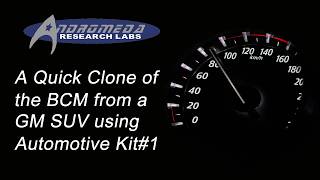
Used OEM Parts in Stock

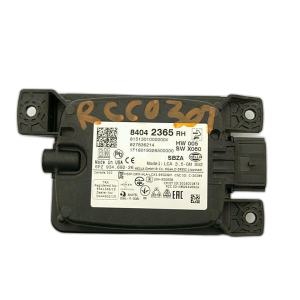



New Aftermarket Parts Available
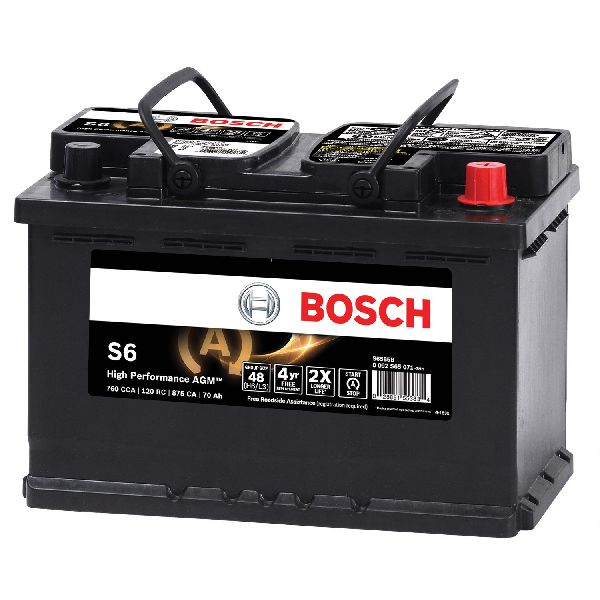

The information in this article is provided for general reference and educational purposes only. Vehicle specifications, procedures, and part compatibility can vary by production date, trim level, and region. Always consult your vehicle's factory service manual and verify part numbers before purchasing or performing repairs. Safety-critical components such as airbags, seat belts, and braking systems should be installed by a qualified professional.
- Chevrolet TRAVERSE:
- 🎬 Helpful Videos
- 🛍️ Shop This Part
- What's Unique About the 2018-2024 Chevrolet TRAVERSE
- Diagnostic Flowchart
- Symptoms You May Notice
- Most Likely Causes
- Diagnosis Steps
- Parts You'll Likely Need
- Related Codes That Often Appear With This One
- Technical Service Bulletins (TSBs) & Recalls
- Platform-Specific Known Issues
- Mechanic-Grade Diagnostic Values
- Hidden / Shadow Codes Worth Checking
- Scan Tool Commands That Help
- Wiring & Ground Locations
- Real Owner Repair Stories
- OEM Part Supersession History
- Model Year Variations Within This Range
- 🎟️ Get 5% Off