

OBD-II Code B3902: Incorrect Immobilizer Identifier Received
The Definitive Guide to Diagnosing and Fixing a B3902 Mismatch
- Code B3902 is an anti-theft lockout triggered almost exclusively on 2010+ General Motors vehicles when a control module's security identifier fails to match the Body Control Module (BCM).
- Installing an unprogrammed replacement module—especially a used junkyard part—causes 80% of B3902 faults because the module retains the donor vehicle's VIN.
- Standard $20 OBD-II scanners cannot clear this permanent code; resolving it requires a J2534 Pass-Thru device and a $45 GM Techline Connect subscription to reprogram the module.
- Depending on the locked module, symptoms range from a black infotainment screen (HMI module) to a hard no-start condition where the engine stalls after exactly 2 seconds (ECM/BCM).
What Does B3902 Mean?

B3902 indicates a security mismatch between one of your vehicle's control modules and the Body Control Module (BCM). Modern General Motors vehicles use a security architecture that electronically locks modules to a specific Vehicle Identification Number (VIN). When a module is replaced or its software corrupts, it fails to provide the correct security identifier to the BCM. The BCM rejects the 'foreign' module, triggering this code and disabling the affected system.
Technical definition: The SAE/ISO definition for B3902 is "Incorrect Immobilizer Identifier Received." It sets when a control module's unique environment identifier fails to match the master identifier stored in the Body Control Module (BCM). This is a core feature of GM's Global A and Global B security architectures (TSB PIP4670G). The BCM acts as the 'Immobilizer Master'; if a secured module responds with an incorrect environment ID, the BCM locks it out.
Can I Drive With B3902?
No — Do Not Drive. Driving is unsafe and often impossible. If triggered by a critical module like the ECM or BCM, the engine stalls after exactly two seconds. If triggered by the ABS or Airbag module, the vehicle runs, but critical safety systems are completely disabled, drastically increasing accident risk.
Common Causes

- Unprogrammed Replacement Module (New or Used) (Very Common) — This causes 80% of B3902 codes. Used modules retain the donor vehicle's VIN, and new OEM modules are completely blank. Installing either without performing a VIN-specific programming procedure guarantees a security lockout.
- Firmware Corruption from Voltage Drop (Common) — Voltage drops from a failing battery, jump-start, or faulty alternator corrupt sensitive module software. GM TSB 23-NA-163 specifically addresses BCM and HMI (infotainment) memory corruption caused by low-voltage events.
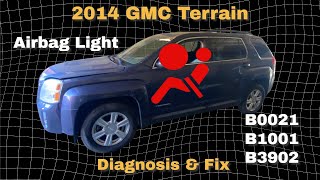
- Replaced Airbag Module (SDM) After Accident (Common) — The Sensing and Diagnostic Module (SDM) permanently stores crash data. Installing a used SDM from a salvage yard introduces a foreign VIN to the security network, immediately triggering B3902. 🎬 Watch: Fixing B3902 and B1001 after an airbag module swap.
- Failed Body Control Module (BCM) (Less Common) — The BCM stores the master security key. If the BCM hardware fails or its memory corrupts, it rejects valid identifiers from other modules, causing network-wide communication and security codes. 🎬 See how a professional technician programs a replacement BCM.
- CAN Bus Network Failure or Short (Uncommon) — A short circuit or broken wire in the Controller Area Network (CAN) prevents modules from transmitting their security credentials to the BCM, resulting in a lockout.
- Water Intrusion and Connector Corrosion (Uncommon) — Water leaks from clogged sunroof drains or bad seals corrode connector pins on modules like the BCM (passenger footwell) or HMI (center console), disrupting data transmission.
Symptoms

- Engine will not start, or stalls after 2 seconds — If the ECM, Steering Column Lock, or BCM sets the code, the immobilizer cuts fuel and ignition to prevent theft.
- Infotainment screen is black or unresponsive — When the HMI module sets this code, the center screen goes black (though audio chimes may still play). Extremely common on GM vehicles with CUE or MyLink systems. 🎬 Watch: Troubleshooting a black Cadillac CUE screen and power issues.
- ABS, Traction Control, or Stabilitrak lights are on — If an unprogrammed Electronic Brake Control Module (EBCM) is installed, the vehicle disables all anti-lock and stability functions.
- Security light or 'Service Theft Deterrent System' message — The dashboard displays a padlock symbol or a direct warning message indicating an anti-theft system fault.
- DTC cannot be cleared (scan-tool only — no driver-felt sign) — B3902 is a permanent, latching code. Standard OBD-II scanners cannot erase it until the module is successfully reprogrammed.
Diagnostic Flowchart
Tap your situation to follow the diagnostic path that matches what you're seeing on this code.
Common Fixes & Costs
- Reprogram Existing Module (for software corruption) — Parts: $0, Labor: $150-$350, ~1.5 hr book time (Professional)
- Install Pre-Programmed Aftermarket Module
— Parts: $250-$800, Labor: $100-$250, ~1.5 hr book time
(Intermediate)
Various GM Models HMI Module: OEM N/A (Alt: Pre-programmed units from vendors like MVI Inc. or Unlocked Audio (e.g., Part #23228496).) - Replace with New OEM Module and Program
— Parts: $300-$1200, Labor: $200-$500, ~2.5 hr book time
(Professional)
Chevrolet Silverado/Sierra (2014-2018) BCM: OEM 13587700, 13506713, 13510531 (Alt: Dorman 502-006)
Chevrolet Equinox/GMC Terrain (2014-2017) EBCM: OEM 84342062, 22754644 (Alt: Cardone Remanufactured) - Third-Party Module Cloning/Repair Service — Parts: $200-$500, Labor: $0, ~0.5 hr book time (DIY)
- Repair CAN Bus Wiring Fault — Parts: $10-$50, Labor: $250-$750, ~3.5 hr book time (Advanced)
Used vs. New Parts: Buying Guide

When a used part is worth it: A used module only makes sense if purchased from a vendor who pre-programs it to your VIN before shipping. Otherwise, a standard junkyard module guarantees a B3902 code.
Donor-vehicle mileage cap: roughly under 100000 miles for the part to have meaningful remaining life.
Donor quality checklist:
- Vendor offers a warranty and explicitly states 'VIN pre-programmed'.
- Part numbers match EXACTLY.
- No signs of water damage or corrosion on the pins.
Decision logic:
- If The part is a blank new OEM module → Buy it, but schedule professional programming immediately after installation.
- If The seller offers a 'VIN-matched' pre-programmed module → This is the best DIY option. Install it yourself for a plug-and-play fix.
- If You find a cheap used module at a junkyard → Avoid it unless you have a confirmed local shop willing to virginize and reprogram a used part.
Warranty tradeoff: Used parts carry 30-90 day warranties. Pre-programmed aftermarket units often offer 1-year warranties. Dealer-installed OEM parts carry 12-24 month warranties.
Worst-case if a used part fails: $300-$700 if an improperly programmed module bricks during flashing, requiring a second replacement.
What Happens If You Wait — Timeline
- Immediate: A critical function disables. ECM/BCM faults cause a no-start. HMI faults cause a black screen. EBCM/SDM faults disable ABS or airbags. (MPG impact: 0%% · Added cost: $100-$300 (Tow required for no-start))
- 0-4 weeks (if drivable): Driving with disabled ABS or airbags presents a severe, constant safety risk during emergency maneuvers. (MPG impact: 0%% · Added cost: Incalculable (risk to life and property))
- 1-6 months: A failed BCM causes intermittent CAN bus communication issues, triggering erratic behavior in other modules and complicating diagnosis. (MPG impact: 0-5%% · Added cost: $200-$500 (Increased diagnostic labor))
- Failed DIY Repair: Attempting to program a module with an unstable power supply permanently bricks the hardware. (MPG impact: 0%% · Added cost: $500-$1500 (Cost of a new module plus professional programming))
Cost of Not Fixing It
- Immediate: If the fault is in the ECM or BCM, the vehicle will not start, requiring an immediate tow. (Added cost: $100-$300 (towing) + repair cost)
- Ongoing: If the fault is in the HMI/Radio, you lose all infotainment, navigation, and backup camera functions. (Added cost: $0)
- Ongoing (Safety Risk): If the fault is in the ABS (EBCM) or Airbag (SDM) module, critical safety systems are disabled, drastically increasing accident risk. (Added cost: Incalculable (risk to life and property))
Diagnosis Steps
- Identify Faulting Module & Verify VIN
Use an advanced scanner to read Body (B) codes across all modules. Locate the specific module reporting B3902. View its live data to check the stored VIN. If it doesn't match the vehicle's dashboard VIN, the module is unprogrammed or swapped.
Tools: Advanced OBD-II Scan Tool (e.g., Autel, Launch) (Beginner) - Perform a Hard Reset
Disconnect the negative battery terminal for 30 minutes. This forces all modules to reboot. While it won't fix a VIN mismatch, it occasionally clears software glitches caused by recent battery changes or jump-starts.
Tools: 10mm wrench or socket (Beginner) - Inspect Module and Connectors
Physically locate the faulting module. Check for junkyard markings indicating a swapped part. Inspect the wiring harness and pins for green corrosion or water damage.
Tools: Basic hand tools, flashlight (Intermediate) - Attempt Module Reprogramming
This is the definitive repair for software corruption or a new module. Use a J2534 Pass-Thru device and a GM Techline Connect subscription to rewrite the firmware and sync the security identifier. Maintain a stable 12.5V-15.0V with a power supply during this process to prevent bricking the module.
Tools: J2534 Pass-Thru Tool, Laptop, GM Techline Connect, 50A+ Battery Maintainer (Professional) - Check CAN Bus Resistance
If multiple modules report U-codes alongside B3902, disconnect the battery and measure resistance between OBD-II Pin 6 (CAN High) and Pin 14 (CAN Low). A healthy network reads ~60 ohms. 120 ohms indicates a broken wire; 0 ohms indicates a short.
Tools: High-quality multimeter (Advanced) - Scope the CAN Bus Waveform
Connect an oscilloscope to Pins 6 and 14. With the ignition on, verify the mirror-image square wave pattern (CAN-H toggling 2.5V to 3.5V; CAN-L toggling 2.5V to 1.5V). Distortion points to a faulty module corrupting the network.
Tools: Dual-channel oscilloscope (Advanced)
When This Code Triggers (Freeze-Frame Conditions)
- Ignition Status: RUN or ACCESSORY (The code sets during the initial power-on sequence when modules perform their security handshake.)
- System Voltage: 10.5V - 14.5V (The code triggers during normal voltage, even if the root cause was a previous voltage spike or drop.)
- Engine State: Off or Cranking (The immobilizer check happens before the engine runs continuously. If it fails, the engine is prevented from starting or stalls immediately.)
- Odometer: Any (With a swapped module, the odometer in the instrument cluster might display dashes (- - -) instead of a mileage value.)
Related Codes
- B1001 — Option Configuration Error. Always accompanies B3902 on swapped modules. B3902 means 'wrong car' (VIN mismatch); B1001 means 'wrong options'.
- B389A — Environment Identification Mismatch. Functionally identical to B3902; often triggered by BCM memory corruption after a voltage drop (TSB 23-NA-163).
- U0140 — Lost Communication With BCM. Indicates a failed BCM or CAN bus wiring break, causing the B3902 security lockout.
- P0513 — Incorrect Immobilizer Key. Relates to the key transponder, but BCM corruption can trigger both P0513 and B3902 simultaneously.
Climate & Environmental Factors
- High Humidity / Water Intrusion: Moisture penetrates module housings and corrodes connector pins. BCMs in passenger footwells are highly vulnerable to leaks from clogged sunroof drains.
- Extreme Cold: Weakens aging batteries, leading to low-voltage cranks or jump-starts that corrupt module firmware and trigger the code.
- High Heat and Vibration: Degrades engine-bay-mounted modules (like the ECM) over time, weakening solder joints and causing internal hardware failures.
How to Talk to a Mechanic About This Code
Say this: "I have a GM vehicle with a B3902 code in the [HMI/BCM/SDM] module. I need a diagnosis and likely module programming. Do you have GM Techline Connect or equivalent J2534 programming capabilities?"
This filters out shops lacking the required software. It proves you understand this is a security programming issue, preventing wasted diagnostic fees at unqualified shops.
Avoid saying:
- 'My check engine light is on.' (This is a Body code, not an engine code)
- 'My radio screen is black, can you fix it?' (Leads to diagnosing the screen instead of the module)
- 'I installed a part from a junkyard and now it won't start.' (Lead with the code and symptoms first)
Questions to ask before authorizing the repair:
- Did you confirm which specific module is setting the B3902 code?
- Will you attempt to reprogram my existing module, or are you quoting a new OEM part?
- Is the programming fee included in the labor estimate?
- What is your procedure if the programming fails and the module bricks?
Where to Take It: Dealer vs Independent vs Chain
- Dealer:
The safest option. You pay a premium for the certainty that they have the exact proprietary tools required for this security lockout.
Best for: Guaranteed access to GM Techline Connect and MDI 2 tools., Complex cases requiring multiple module relearns after a BCM replacement.
Downsides: Highest labor rates., Dealers often refuse to reprogram existing or used modules, insisting on expensive new parts. (Typical cost: +50% vs. baseline) - Independent Shop:
A great alternative ONLY if you verify they have GM SPS/Techline Connect capabilities beforehand.
Best for: Shops explicitly advertising 'GM programming' or 'J2534 flash programming'.
Downsides: Most standard independent shops lack the expensive software subscriptions required. (Typical cost: +0% vs. baseline) - Chain Shop:
AVOID. They cannot fix the root cause of a B3902.
Best for: Tires, oil changes, and brakes.
Downsides: Never equipped for advanced module programming., High likelihood of misdiagnosis and wasted money. (Typical cost: -10% vs. baseline)
When to Walk Away From the Repair
If the total estimated repair cost exceeds 50% of your vehicle's private-party value, consider selling or scrapping the vehicle.
- Car worth $4000, fix is $1200: Fix it. The repair is 30% of the value and restores a critical function.
- Car worth $12000, fix is $1500: Fix it. A reasonable cost for a major electronic repair on a higher-value vehicle.
- Car worth $3000, fix is $1800: Walk away. The repair is 60% of the car's value.
What Scan Tool You Need for This Code

Minimum: A scanner capable of reading Body (B) and Undefined (U) codes from all vehicle modules, not just the engine PCM.
A basic $20 code reader only scans the engine. Because B3902 is a Body code, a basic reader will show 'No Codes Found,' leaving you blind to the actual problem.
Budget: Autel Diaglink / MUCAR BT200 Max (~$80-100) — Reads codes from all modules (ABS, SRS, BCM) to identify which module is locked out. Displays the stored VIN to confirm a mismatch.
Mid-range: Foxwell NT710 for GM (~$250-350) — Provides GM-specific diagnostics and bidirectional controls. Can perform basic 'setup' functions required after a module is programmed.
Professional: Autel MaxiCOM MK808 (~$500-900) — Offers full bidirectional control and advanced service functions necessary for post-programming calibrations.
Rent vs buy: You can rent a scanner from an auto parts store, but verify it is an 'all-system' scanner. Buying a budget all-system scanner is highly recommended for modern GM owners.
How to Clear the Code After You Fix It
- Reprogramming the module automatically clears the code.
- If the battery was disconnected, reconnect it securely.
- Perform a GM-specific drive cycle to reset emissions readiness monitors.
Drive cycle (~20 minutes): Cold start (coolant below 122°F). Idle 3 minutes with A/C and defroster on. Accelerate to 55 mph and hold for 5 minutes. Coast down to 20 mph without braking. Accelerate to 60 mph and hold for 5 minutes. Decelerate and idle.
Readiness monitors affected: Catalyst Monitor, EVAP System Monitor, O2 Sensor Monitor
Before emissions retest: drive at least 100 miles to fully set monitors.
Watch out for:
- Standard scanners cannot clear this permanent code.
- The code immediately returns if the module mismatch is not fixed via programming.
- Failing to complete a drive cycle results in a failed emissions test due to 'Not Ready' monitors.
Will This Fail Emissions / State Inspection?
Yes — this code typically fails an OBD-II emissions inspection.
- California: An active B3902 is an automatic failure. Because it is a permanent DTC (pDTC), the vehicle must complete approximately 15 warm-up cycles and 200 miles after repair before the code clears itself for inspection.
- New York: Any active code that illuminates a warning light, including the 'Service Theft Deterrent System' message, results in an automatic failure.
- Texas: An active code commanding the MIL on is an automatic failure. Even without a light, the code prevents readiness monitors from setting, causing a failure.
Most Commonly Affected Vehicles
- General Motors (All Brands) All Models on Global A / Global B Architecture (2010-Present) — This code is a direct result of GM's proprietary anti-theft security architecture.
- Cadillac SRX, ATS, CTS, XTS, Escalade (2013-2019) — Extremely common due to failures of the CUE infotainment system's HMI module, causing a black screen.
- Chevrolet Silverado, Sierra (2014-2020) — HMI module failures and BCM memory corruption are well-documented issues on these trucks.
- Chevrolet / Buick Cruze, LaCrosse, Regal (2010-2017) — Frequently appears after incorrect DIY replacement of the ECM, BCM, or EBCM.
- Chevrolet / GMC Equinox, Traverse, Terrain, Acadia (2010-2018) — Often seen after a used ABS (EBCM) or airbag (SDM) module is installed following an accident.
Manufacturer-Specific Notes
- General Motors: This code defines GM's 'Global A' security architecture. GM explicitly warns against swapping modules between vehicles. Repair always requires proprietary Service Programming System (SPS) software.
- General Motors: TSB 23-NA-163 addresses no-start conditions and black screens caused by BCM/HMI memory corruption after a battery change. The fix requires a specialized reprogramming procedure.
- General Motors: The SDM (airbag module) permanently stores crash data. Installing a used SDM triggers B3902 due to the VIN mismatch. The original module must be sent to a specialist for a reset, or a new module must be programmed.
- General Motors: After a repair, the BCM may enter a self-protection mode and refuse to clear DTCs. TSB 14-08-117-001 requires disconnecting the battery for 30 seconds to force the BCM out of this state.
Real Owner Stories
2014 GMC Terrain with Airbag Light
Vehicle purchased with an active airbag light. Scan showed B3902 and B1001 in the Sensing and Diagnostic Module (SDM).
Outcome: The vehicle had been in an undisclosed accident. A repair shop installed a used junkyard SDM without programming it. The owner had to purchase a new SDM and pay for dealer programming.
Lesson: B3902 combined with B1001 ('Option Configuration Error') is definitive proof of a swapped, unprogrammed module. Always verify the module's VIN before chasing wiring issues.
2017 Chevy Silverado with Black Screen
The infotainment screen went black and unresponsive. Audio was out, and the backup camera failed.
Outcome: The HMI module's firmware corrupted, triggering B3902. The owner purchased a pre-programmed HMI module online for $350 and installed it themselves, restoring all functions.
Lesson: A black screen on a modern GM vehicle is rarely a broken display. It is usually the HMI module locked out by the security system.
2014 Chevy Silverado with Multiple Lights After BCM Replacement
After a dealer replaced a failed BCM, the original electrical issues were fixed, but new 'Service Airbag' and 'Service TPMS' lights appeared with B3902 codes.
Outcome: The new BCM was programmed correctly, but the existing SDM and TPMS modules needed to be re-initialized to recognize the new master BCM. The dealer performed the setup procedures to clear the codes.
Lesson: Replacing a central module like the BCM has a domino effect. Other security-linked modules require a 're-learn' procedure to sync with the new hardware.
How to Prevent This Code From Triggering
- Use a 50A+ battery maintainer during programming (During any module flashing procedure) — Prevents voltage drops that corrupt firmware and brick modules. Standard trickle chargers cannot handle the power draw of a programming event.
- Keep sunroof and cowl drains clear (Twice a year) — Prevents water from leaking into the passenger footwell and corroding the BCM.
- Ensure battery terminals are clean and tight (Every oil change) — Prevents unstable voltage spikes during engine cranking that scramble sensitive module software.
- Never swap used electronic modules without programming (During any repair) — GM's Global A/B architecture guarantees a B3902 lockout if a foreign module is introduced to the network.
Frequently Asked Questions
Why can't I clear the B3902 code with my scanner?
B3902 is stored in a protected memory location as a permanent fault. The vehicle's computer will not allow it to be cleared until the security handshake succeeds, which requires proper VIN programming.
I replaced my battery and now my screen is black with a B3902 code. What happened?
Voltage fluctuations during a battery change often corrupt the software on the infotainment system's main computer (HMI module). The module's firmware scrambles, preventing it from proving its identity to the BCM. You must reprogram, repair, or replace the module.
Can I use a cheaper part from a junkyard to fix this?
Only if you have a guaranteed method for reprogramming it to your vehicle's VIN. Installing a used part without programming is the primary cause of this code. You must use a specialized service to 'virginize' and reprogram the used module.
What is the 'Global A' architecture?
Global A is GM's vehicle-wide electronic security system introduced around 2010. It permanently locks major computers to the original vehicle's VIN to prevent theft and parts swapping. Code B3902 triggers when this system detects a foreign, unprogrammed module.
What's the most common misdiagnosis with a B3902 code?
When the infotainment screen goes black, owners mistakenly replace the display screen itself. The black screen is actually a symptom of the HMI module being locked out by the security system, requiring module reprogramming, not a new screen.
Can a locksmith fix a B3902 code?
Generally, no. Locksmiths handle key programming (P0513), but B3902 is a module-to-module programming issue. This requires dealership-level software (GM SPS) and a J2534 interface, which most locksmiths lack.
My car was in an accident and now has a B3902 code in the airbag module. What do I do?
This occurs when a repair shop installs a used Sensing and Diagnostic Module (SDM) containing the donor car's VIN. You must install a brand new programmed SDM, or send your original SDM to a specialist to clear the crash data.
Key Takeaways
- Code B3902 is an anti-theft lockout triggered almost exclusively on 2010+ General Motors vehicles when a control module's security identifier fails to match the Body Control Module (BCM).
- Installing an unprogrammed replacement module—especially a used junkyard part—causes 80% of B3902 faults because the module retains the donor vehicle's VIN.
- Standard $20 OBD-II scanners cannot clear this permanent code; resolving it requires a J2534 Pass-Thru device and a $45 GM Techline Connect subscription to reprogram the module.
- Depending on the locked module, symptoms range from a black infotainment screen (HMI module) to a hard no-start condition where the engine stalls after exactly 2 seconds (ECM/BCM).
Helpful Videos
![[Cuescreens] Troubleshooting Cadillac CUE Screen Installation Issues | Black Screen | No power](https://img.youtube.com/vi/M5nqZwuCpfY/mqdefault.jpg)

The information in this article is provided for general reference and educational purposes only. Vehicle specifications, procedures, and part compatibility can vary by production date, trim level, and region. Always consult your vehicle's factory service manual and verify part numbers before purchasing or performing repairs. Safety-critical components such as airbags, seat belts, and braking systems should be installed by a qualified professional.
- 🎬 Helpful Videos
- What Does B3902 Mean?
- Can I Drive With B3902?
- Common Causes
- Symptoms
- Diagnostic Flowchart
- Common Fixes & Costs
- Used vs. New Parts: Buying Guide
- What Happens If You Wait — Timeline
- Cost of Not Fixing It
- Diagnosis Steps
- When This Code Triggers (Freeze-Frame Conditions)
- Related Codes
- Climate & Environmental Factors
- How to Talk to a Mechanic About This Code
- Where to Take It: Dealer vs Independent vs Chain
- When to Walk Away From the Repair
- What Scan Tool You Need for This Code
- How to Clear the Code After You Fix It
- Will This Fail Emissions / State Inspection?
- Most Commonly Affected Vehicles
- Manufacturer-Specific Notes
- Real Owner Stories
- 2014 GMC Terrain with Airbag Light
- 2017 Chevy Silverado with Black Screen
- 2014 Chevy Silverado with Multiple Lights After BCM Replacement
- How to Prevent This Code From Triggering
- Frequently Asked Questions
- Why can't I clear the B3902 code with my scanner?
- I replaced my battery and now my screen is black with a B3902 code. What happened?
- Can I use a cheaper part from a junkyard to fix this?
- What is the 'Global A' architecture?
- What's the most common misdiagnosis with a B3902 code?
- Can a locksmith fix a B3902 code?
- My car was in an accident and now has a B3902 code in the airbag module. What do I do?
- Key Takeaways
- 🎟️ Get 5% Off