

OBD-II Code B3205: Driver's Window Control Problem
What B3205 means, why it triggers, and how to fix it
- Code B3205 indicates a failure in the driver's side power window circuit, most commonly caused by a dead window motor, a faulty master switch, or broken wires in the door jamb.
- Before buying any parts, perform a 10-second window relearn procedure (holding the switch down, then up) to rule out a simple calibration glitch.
- Never replace the window motor without first using a multimeter to verify the motor is receiving 12 volts when the switch is pressed.
- On 2021 and newer GM trucks, replacing the window motor requires a dealer to reprogram the Body Control Module (BCM), or the B3205 code will return immediately.
What Does B3205 Mean?

B3205 means the Body Control Module (BCM) detected a problem in the driver's side power window electrical circuit. This indicates an issue with the window motor, the switch, the wiring, or the computer itself. The BCM shuts down the power window function to prevent further electrical damage.
Technical definition: The official SAE/OBD-II definition for code B3205 is "Driver Window Motor Circuit Malfunction." Depending on the vehicle manufacturer, this has more specific meanings indicated by a two-digit failure sub-code. Common examples include B3205 00 (Over Current Fault), B3205 39 (Internal Electronic Failure), or B3205 4B (Calibration Not Learned).
Can I Drive With B3205?

Yes. Yes. This code affects the driver's power window, which is an inconvenience but does not impact core drivability. However, a window stuck open exposes the interior to weather damage and theft. A window stuck closed is a serious safety hazard in an emergency where the window is the only escape route. Prompt repair is strongly recommended.
Common Causes

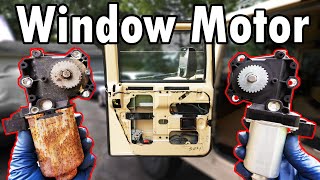
- Faulty Driver's Window Motor (Very Common) — The electric motor inside the door wears out over time, leading to a complete lack of movement or an over-current condition. This is the most frequent cause of a B3205 code.
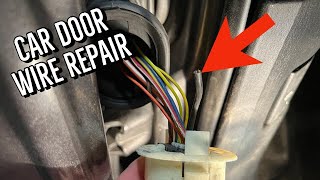
- Broken or Damaged Wiring (Very Common) — The wires inside the flexible rubber boot between the door and the car frame fatigue from repeated opening and closing. They break, chafe, or short-circuit, causing an immediate loss of power.
- Failed Master Power Window Switch (Common) — The switch panel on the driver's door fails internally. Contacts wear out from use or exposure to moisture, stopping the correct signal from reaching the motor or BCM.
- Binding Window Regulator or Track (Common) — The mechanical assembly (regulator) that lifts the glass bends, frays a cable, or gets obstructed by debris. This forces the motor to work too hard, causing an "over current" fault (like B3205 0B).
- Incorrect Part or Missing Calibration (Less Common) — Replacing the window motor on newer vehicles (especially GM) requires the new part to be calibrated to the BCM. Using an incompatible part or skipping this step causes a B3205 42 or B3205 4B code to set immediately.
- Poor Ground Connection (Less Common) — A corroded, loose, or broken ground wire for the door module or the BCM causes high resistance. The system interprets this resistance as a motor or switch fault.
- Blown Fuse or Faulty Relay (Rare) — A blown fuse stops the window from working, but it is a symptom of a larger problem, like a shorted wire or a seized motor drawing too much current. If a new fuse blows immediately, a deeper electrical issue is present.
- Faulty Body Control Module (BCM) (Rare) — The BCM itself fails. The internal circuits controlling the window function malfunction, leading to a false B3205 code even when the motor, switch, and wiring are functional. This is the last item to suspect.
Symptoms
- Driver's window is completely stuck — The window does not move up or down at all when you press the switch. This is the most common symptom.
- Window moves very slowly or struggles — The window hesitates or moves much slower than it used to, indicating a weak motor, binding mechanism, or high resistance in the circuit.
- Window goes up and then reverses on its own — The window travels all the way up, then immediately lowers a few inches. This 'bounce-back' is triggered by the system losing its calibration and not recognizing the top of the frame.
- Clicking sound from the door or switch — You hear a click when you press the switch, but the window doesn't move. The switch is sending a signal, but the motor is unable to respond due to an internal failure, jam, or open circuit.
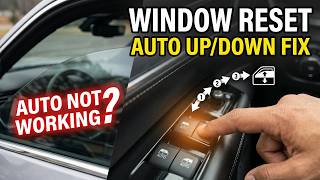
- Auto-up/down feature stops working 🎬 Watch: How to reset and recalibrate your car window (also visible on scanner) — The one-touch express function no longer works, but you can still move the window by holding the button. This indicates a loss of calibration (B3205 4B).
Common Fixes & Costs
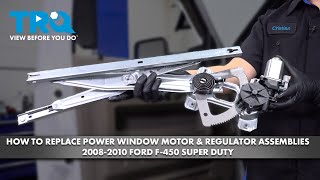
- Replace the Window Motor and Regulator Assembly — Parts: $75-$900, Labor: $150-$550, ~2.1 hr book time (Intermediate)
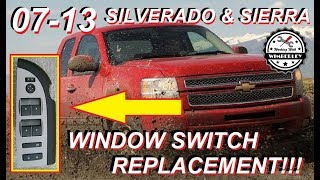
- Replace the Master Window Switch 🎬 Watch: How to replace the master switch on GM trucks — Parts: $15-$300, Labor: $50-$150, ~0.5 hr book time (DIY)
- Repair Broken Wires in Door Jamb 🎬 See this walkthrough for repairing broken wires in a door jamb — Parts: $5-$20, Labor: $125-$400, ~2.5 hr book time (Professional)
- Replace the Window Motor — Parts: $40-$500, Labor: $120-$450, ~2.1 hr book time (Intermediate)
- Perform BCM Reprogramming/Calibration — Parts: $0, Labor: $100-$250, ~1 hr book time (Professional)
Used vs. New Parts: Buying Guide
When a used part is worth it: For vehicles over 10 years old where budget is the primary concern, a used OEM window motor/regulator assembly from a reputable salvage yard is a cost-effective option.
Donor-vehicle mileage cap: roughly under 100000 miles for the part to have meaningful remaining life.
Donor quality checklist:
- Verify the part number matches exactly, as variations exist even within the same model year.
- Ask for the donor vehicle's mileage to gauge remaining life.
- Prefer parts from vehicles in dry climates to avoid corrosion issues.
Decision logic:
- If The fix is a simple master switch replacement → Buy a new aftermarket part; the cost is low and the warranty is better.
- If Vehicle is less than 10 years old → Favor a new OEM or high-quality aftermarket (e.g., Bosch, some Dorman) motor/regulator assembly for longevity.
- If Vehicle is over 10 years old and budget is tight → A used OEM assembly is acceptable, but understand it has a limited lifespan.
Warranty tradeoff: Used parts typically come with a 30-90 day part-only warranty, meaning you pay for labor again if it fails. New aftermarket parts often carry a 1-year to limited lifetime warranty, offering better peace of mind.
Worst-case if a used part fails: $200-$500 if a used part fails after the warranty period, as you'll have to pay for repeat labor and another part.
Cost of Not Fixing It
- Immediate: A window stuck open exposes the interior to theft and immediate weather damage. A window stuck closed traps occupants during an emergency. (Added cost: $200-$2000+)
- 1-3 months: Water ingress from a window stuck open damages interior components like door panels, electronics (speakers, switches), and carpets, leading to mold and costly repairs. (Added cost: $500-$3000)
- 3+ months: A shorted switch or motor drains the battery or creates a fire hazard even when the vehicle is off. Continued attempts to use a binding window causes the regulator to fail catastrophically, shattering the window glass. (Added cost: $400-$5000+)
Diagnosis Steps

- Try a Window Relearn/Initialization Procedure
A system's memory corrupts after a battery disconnect or voltage drop. With the car on, hold the window switch in the 'down' position for 5-10 seconds after the window is fully down. Then, hold it in the 'up' position for 5-10 seconds after it's fully closed. This restores functionality and clears calibration-related faults like B3205 4B.
Tools: None (Beginner) - Check the Fuses
Locate the fuse box and find the fuse(s) for the power windows. Pull it out and visually inspect if the metal strip inside is broken. If it is, replace it with a new fuse of the exact same amperage.
Tools: Fuse puller, new fuses (Beginner) - Inspect the Door Jamb Wiring
Open the driver's door fully and locate the rubber boot protecting the wires between the door and the car's frame. Gently pull back the boot and meticulously inspect for broken, cracked, or bare wires. Wiggle the harness while operating the switch to see if it works intermittently. A broken wire here is a primary cause.
Tools: Flashlight, trim tool (Intermediate) - Test the Window Switch with a Multimeter
Remove the master window switch and access its connector. Set a multimeter to DC Volts. Probe the main power feed wire and a known good ground. You should see battery voltage (~12.6V). While operating the switch, test the two output wires leading to the motor. One should show +12V on 'down' and the other +12V on 'up'. No voltage indicates a bad switch or power supply issue.
Tools: Trim removal tools, multimeter (DMM), vehicle-specific wiring diagram (Intermediate) - Test the Window Motor Directly
Access the window motor and disconnect its wiring harness. Using jumper wires from a 12V power source with a 25A inline fuse, briefly apply power and ground to the two terminals on the motor. If the motor doesn't move, it has failed. Reversing the polarity makes the motor spin in the opposite direction.
Tools: Trim removal tools, fused jumper wires, 12V power source (Advanced) - Measure Window Motor Resistance
Disconnect the window motor. Set a multimeter to the lowest Ohms (Ω) setting. Measure the resistance between the two terminals on the motor. A healthy motor shows under 5 ohms. A reading of 'OL' (Over Limit) indicates an open circuit, and 0.0 ohms indicates a direct short. In either case, the motor is faulty.
Tools: Multimeter (DMM) (Advanced) - Use a Scan Tool to Command the Motor
Navigate to the BCM functions on a bi-directional scanner and command the driver's window motor 'UP' and 'DOWN' directly. If the window works with the scan tool but not the switch, the master window switch has failed. If it fails to work with the scan tool, the problem lies in the BCM, wiring, or the motor.
Tools: Advanced bi-directional OBD-II scanner (Advanced) - Check for LIN Bus Communication Faults
If B3205 is paired with a U-code like U1534, focus on the LIN Bus network. Set a multimeter to DC Volts. Connect the black lead to a known good ground and the red lead to the LIN wire at the switch or motor. A healthy LIN bus shows a rapidly toggling voltage between 1V and 12V. A steady 12V indicates the bus is at rest or a component isn't communicating.
Tools: Advanced OBD-II scanner, multimeter, vehicle-specific wiring diagram (Advanced)
When This Code Triggers (Freeze-Frame Conditions)
- Battery Voltage: 11.5-14.5V (During window switch activation)
- Ignition Status: Run/On (Vehicle is on when the fault is detected)
- Command State: Driver Window Up/Down (BCM was actively trying to move the window)
- Fault Type: Over-current / Open Circuit / Calibration Not Learned (Specific electrical condition seen by the BCM)
Related Codes
- B3210 — The code for the Passenger Window Motor Circuit. If B3205 and B3210 appear together, the problem is a shared component like the master window switch, the BCM, or a common power/ground circuit.
- B3215 / B3220 — Codes for the left-rear and right-rear windows. Seeing them alongside B3205 points toward a central failure, like the BCM or a main power/ground issue affecting the entire system.
- U1534 — A LIN Bus communication error code. When paired with B3205, it specifically indicates a failure in data communication. Diagnosis must focus on checking the integrity of the LIN communication wire between the BCM, switch, and motor.
- B1325 — A general code indicating a 'Device Power Circuit Failure'. If seen with window symptoms, it points to a loss of voltage in the circuit, likely from a broken wire or blown fuse, preventing the window module from operating.
Climate & Environmental Factors
- Cold Weather: Sub-freezing temperatures freeze the window glass to the rubber seals, straining the motor. Cold also stiffens the rubber window tracks, increasing friction and triggering an over-current fault.
- High Humidity / Moisture: Moisture causes corrosion on the internal contacts of the master window switch, leading to failure. It also accelerates corrosion on chafed or broken wires in the door jamb.
- Road Salt (Regional): Salt-laden moisture enters the door jamb area and accelerates the corrosion of wiring and ground connections, leading to high resistance and electrical faults.
- Dust and Debris: Driving in dusty environments accumulates dirt and debris in the window tracks. This buildup increases resistance, forcing the motor to work harder and fail prematurely.
How to Talk to a Mechanic About This Code
Say this: "I have a B3205 code and my driver's window is not working. Please test the switch, motor, and door jamb wiring to pinpoint the failure before replacing any parts. I'd also like to know if a simple window re-learn procedure was attempted."
This signals you understand the common failure points. It directs the technician to perform a logical diagnosis instead of just replacing the motor, saving you money. Mentioning the 're-learn' procedure addresses common calibration glitches that require no parts.
Avoid saying:
- 'Just fix my broken window.'
- 'My window is stuck, I probably need a new motor.' (Don't diagnose it for them)
- 'Whatever you recommend is fine.' (This invites upselling without justification)
Questions to ask before authorizing the repair:
- Can you show me the test results? Did you test for 12V power at the motor connector when the switch was pressed?
- Did you inspect the wires in the door jamb boot for breaks?
- If the motor needs replacement on my GM vehicle, does your shop have the ability to perform the BCM reprogramming required by TSB 21-NA-171?
- What is the warranty on the recommended parts and labor?
Where to Take It: Dealer vs Independent vs Chain
- Dealer:
Recommended only if you have a newer GM vehicle requiring BCM programming or if the vehicle is under warranty. Otherwise, an independent shop is more cost-effective.
Best for: Vehicles under warranty., Repairs requiring manufacturer-specific software, like the BCM reprogramming needed for 2021+ GM trucks (TSB 21-NA-171)., Complex electrical issues paired with other communication (U-series) codes.
Downsides: Highest labor rates., Often replaces the entire assembly rather than performing a targeted wiring repair. (Typical cost: +50% vs. baseline) - Independent Shop:
Best fit for most B3205 repairs. A good independent shop handles motor, switch, and wiring issues effectively at a lower cost than a dealer. Ask if they are equipped for module programming if you have a late-model vehicle.
Best for: Out-of-warranty vehicles., Common fixes like window motor/regulator replacement, switch replacement, and wiring repairs., Getting a second opinion on a high dealership quote.
Downsides: Quality varies; ensure the shop specializes in electrical diagnostics., Lacks expensive subscriptions for the latest BCM programming on all makes. (Typical cost: +0% vs. baseline) - Chain Shop:
Not recommended. They are less likely to correctly diagnose a wiring or BCM issue, leading to unnecessary parts replacement.
Best for: Simple, unrelated services like oil changes or tires.
Downsides: Technician skill for diagnostics is inconsistent., Lacks specific tools or wiring diagrams for in-depth electrical repairs., Incentivized to replace parts rather than diagnose complex circuit faults. (Typical cost: -10% vs. baseline)
When to Walk Away From the Repair
If the repair cost exceeds 40-50% of the car's private-party value, sell the car as-is or trade it in.
- Car worth $4000, fix is $850: Fix it. The repair cost is well below the 50% threshold and restores a critical function.
- Car worth $2500, fix is $1300: Walk away. The repair cost is over 50% of the car's value. It is not a sound financial decision.
- Car worth $15000, fix is $1100: Fix it. The cost is a small fraction of the vehicle's value.
What Scan Tool You Need for This Code
Minimum: A scanner that reads 'B' (Body) codes. The cheapest scanners only read 'P' (Powertrain) codes and will not see B3205.
Basic code readers only show 'P' codes and cannot detect a B3205 fault. You need a tool that communicates with the Body Control Module (BCM) and offers bi-directional control to command the window motor directly, isolating it from the switch and wiring.
Budget: Launch CR529 (~$40) — This is a basic code reader. It lacks the bi-directional control needed for a definitive diagnosis and may not read B-codes depending on the vehicle.
Mid-range: XTOOL D7 / KINGBOLEN K7 (~$300-400) — The sweet spot for serious DIYers. Offers full system diagnostics (including B-codes) and crucial bi-directional controls to command the window up and down, confirming if the motor works independently of the switch.
Professional: Autel MaxiCOM MK808 / MK906BT (~$500-1200) — Provides full bi-directional control, reads all manufacturer-specific sub-codes (e.g., B3205 4B), and performs advanced functions like the BCM reprogramming required on newer GM vehicles after a motor replacement.
Rent vs buy: Auto parts stores offer free code scanning, but their tools are basic and rarely perform bi-directional tests. Buy a mid-range tool with bi-directional capability if you plan to do more than one DIY repair per year.
How to Clear the Code After You Fix It
- Use an OBD-II scan tool to clear the B-code from the Body Control Module.
- Perform the 'window relearn' or 'normalization' procedure to restore express functions.
- Operate the window fully up and down 5-10 times to confirm the repair is successful.
Drive cycle (~5 minutes): A specific drive cycle is not required for a B-code. The code clears and stays cleared if the underlying electrical fault is fixed. Verification involves turning the car on and testing the window's function, including the auto up/down feature.
Readiness monitors affected: None
Watch out for:
- Simply disconnecting the battery does not clear the code from the BCM's memory.
- The code returns immediately if the root cause (e.g., broken wire, faulty motor) is not fixed or if a required BCM reprogramming was skipped.
Will This Fail Emissions / State Inspection?
No — by itself this code doesn't fail OBD inspection (but it can keep readiness monitors from setting, which causes a separate fail).
- California: A B3205 code will not cause a failure in the emissions portion (smog check) of the inspection, as it does not illuminate the Malfunction Indicator Lamp (Check Engine Light).
- New York: This code will not fail the emissions inspection. However, during the separate safety inspection, an inspector could potentially fail the vehicle under a general safety clause if the window is inoperable, though this is unlikely.
- Texas: An inoperable power window is not listed as a specific failure item for the Texas safety inspection and will not cause a test failure. Starting in 2025, most non-commercial vehicles are exempt from the safety inspection entirely.
Most Commonly Affected Vehicles
- Chevrolet Silverado 1500 (2014-2022) — Extremely common failure item. A specific GM service bulletin (21-NA-171) exists for 2021-2022 models regarding part compatibility issues causing this code after a repair.
- GMC Sierra 1500 (2014-2022) — Mechanically identical to the Silverado, it suffers from the same high rate of window motor, switch, and wiring failures, and is covered under TSB 21-NA-171.
- Ford F-150 (2009-2021) — Failures are very common. On 2009-2014 models, check fuses 1, 3, 32, and 48 in the passenger kick panel fuse box. On 2021+ models, the 'smart' motor loses calibration, causing a 'bounce-back' issue.
- Chevrolet Tahoe / Suburban (2007-2014) — The master window switch, door jamb wiring, and window motors are known weak points, frequently causing a B3205 code for an over-current condition.
- Chevrolet Cruze (2011-2016) — Prone to failures of the master window switch and broken wires in the driver's door jamb.
- Buick LaCrosse (2010-2016) — Noted for specific calibration requirements. Part numbers for the window regulator assembly differ between 2010-2012 and 2013-2016 models.
- Kia Sorento (2020-2023) — Owners report window control glitches resolved by a window reset procedure. Uniquely, the reset must be performed using the driver's side master switch, even to fix the passenger window.
- Saab 9-4X (2011) — This GM-based SUV shares electronics with other prone models and has specific workshop instructions for diagnosing B3205, including codes for internal electronic failure (39) and calibration not learned (4B).
Manufacturer-Specific Notes
- General Motors (Chevrolet, GMC, Buick, Cadillac): Per TSB 21-NA-171, on some 2021-2022 trucks built after June 4, 2021, the factory installed 'Conti' brand window motors. If a Conti motor is replaced with a Bosch motor, the BCM MUST be reprogrammed by a dealer. Skipping this step causes code B3205 to set immediately.
- Ford: The system uses a 'bounce-back' feature to prevent pinching. If the battery is disconnected or the motor loses its position memory, the window goes up and then reverses on its own. A specific re-initialization procedure is required to relearn the stall points.
- Kia / Hyundai: The window reset logic is counterintuitive. To fix a non-responsive passenger or rear window, the reset procedure must be performed on the DRIVER'S window using the master switch panel. Performing the reset on the affected window's local switch fails.
- General Motors (Recall Info): GM issued multiple recalls (e.g., 14309, 18155) for millions of older SUVs and trucks (2006-2014) due to faulty driver's side master window switch modules. Moisture entered the switch, causing a short circuit that led to overheating and fire, even with the vehicle turned off.
Frequently Asked Questions
Can I just replace the fuse to fix B3205?
It's possible, but unlikely to be a permanent fix. A blown fuse is usually the result of a deeper problem, like a shorted motor or damaged wire causing an overcurrent condition. Replacing the fuse might work temporarily, but it will likely blow again until the root cause is repaired.
What are the most common mistakes when diagnosing a B3205 code?
The most common mistake is immediately replacing the window motor without testing the switch and wiring first. A simple test with a test light or multimeter confirms if power is reaching the motor. Another major pitfall on newer GM vehicles is replacing the motor without performing the necessary BCM programming, causing the code to return instantly.
My window goes up and then comes back down on its own. What's wrong?
This is a classic 'bounce-back' symptom indicating the anti-pinch safety feature is triggering incorrectly. It almost always means the system lost its calibration and does not know where the top of the window frame is. Performing a window 'relearn' or 'initialization' procedure usually fixes this.
My window is stuck down. Is there a way to raise it manually?
Yes, but you must remove the interior door panel to access the window glass. You can then manually push the glass up into the closed position and use strong tape or a rubber wedge to hold it in place. This secures your vehicle against weather and theft until you can perform the repair.
Why did my auto-up/down stop working?
The auto-up/down feature requires the system to be properly calibrated. A circuit fault, battery power loss, or part replacement causes the system to lose its memory, setting a B3205 4B code. A 'window relearn' or 'initialization' procedure restores this function.
Is it expensive to fix a B3205 code?
Repair costs range widely based on the root cause. A DIY switch replacement costs under $50, while a professional wire repair runs $150 to $400. A full window motor and regulator assembly replacement at a dealership ranges from $400 to over $1,300.
What does the 'B' in B3205 stand for?
The 'B' in a B-series diagnostic trouble code stands for 'Body'. These codes relate to functions inside the passenger compartment, such as climate controls, lighting, and power windows. The Body Control Module (BCM) manages all of these systems.
Key Takeaways
- Code B3205 indicates a failure in the driver's side power window circuit, most commonly caused by a dead window motor, a faulty master switch, or broken wires in the door jamb.
- Before buying any parts, perform a 10-second window relearn procedure (holding the switch down, then up) to rule out a simple calibration glitch.
- Never replace the window motor without first using a multimeter to verify the motor is receiving 12 volts when the switch is pressed.
- On 2021 and newer GM trucks, replacing the window motor requires a dealer to reprogram the Body Control Module (BCM), or the B3205 code will return immediately.
Helpful Videos

The information in this article is provided for general reference and educational purposes only. Vehicle specifications, procedures, and part compatibility can vary by production date, trim level, and region. Always consult your vehicle's factory service manual and verify part numbers before purchasing or performing repairs. Safety-critical components such as airbags, seat belts, and braking systems should be installed by a qualified professional.
- 🎬 Helpful Videos
- What Does B3205 Mean?
- Can I Drive With B3205?
- Common Causes
- Symptoms
- Common Fixes & Costs
- Used vs. New Parts: Buying Guide
- Cost of Not Fixing It
- Diagnosis Steps
- When This Code Triggers (Freeze-Frame Conditions)
- Related Codes
- Climate & Environmental Factors
- How to Talk to a Mechanic About This Code
- Where to Take It: Dealer vs Independent vs Chain
- When to Walk Away From the Repair
- What Scan Tool You Need for This Code
- How to Clear the Code After You Fix It
- Will This Fail Emissions / State Inspection?
- Most Commonly Affected Vehicles
- Manufacturer-Specific Notes
- Frequently Asked Questions
- Can I just replace the fuse to fix B3205?
- What are the most common mistakes when diagnosing a B3205 code?
- My window goes up and then comes back down on its own. What's wrong?
- My window is stuck down. Is there a way to raise it manually?
- Why did my auto-up/down stop working?
- Is it expensive to fix a B3205 code?
- What does the 'B' in B3205 stand for?
- Key Takeaways
- 🎟️ Get 5% Off