

OBD-II Code B1342: Control Module Internal Failure
What B1342 means, why it triggers, and how to fix it. Note: B3142 is not a valid automotive diagnostic trouble code. It is a common typo for B1342, a serious control module fault. Searches for B3142 consistently return results for industrial hardware, not vehicle faults.
- Code B1342 indicates a fatal internal failure of a control module, with the Anti-lock Brake System (ABS) module being the culprit in over 90% of cases.
- Ford, Lincoln, and Mazda vehicles manufactured between 2006 and 2013 experience this failure most frequently due to degrading solder joints.
- Driving with B1342 disables your ABS and traction control, increasing emergency stopping distances by up to 35% on wet or icy roads.
- Sending your original ABS module to a specialist for a $150–$300 rebuild is the most cost-effective fix because it bypasses the need for expensive dealership reprogramming.
What Does B3142 Mean?

A critical computer in your car—usually the Anti-lock Brake System (ABS) module—has failed its internal self-test. The computer diagnosed itself as faulty. It is identical to your laptop displaying a fatal motherboard error.
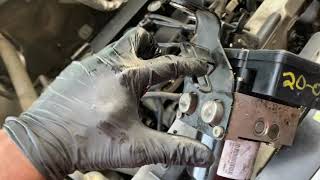
Technical definition: B1342 translates to "Control Module Internal Fault" or "ECU is Defective". The specific module—be it the ABS controller, Engine Control Unit (ECU), or Body Control Module (BCM)—detected an internal hardware, memory (RAM/ROM), or processing failure during its startup diagnostic routine. This is a 'hard code' that requires physical repair or replacement 🎬 Watch: How to save money by installing a newer ABS module. to clear.
Can I Drive With B3142?

Yes, But With Caution. Yes, but with extreme caution. Driving with an active B1342 code disables your Anti-lock Braking System (ABS) and traction/stability control. Standard hydraulic brakes still function, but emergency stops cause wheel lock-up, increasing stopping distance and skidding risk. In slippery conditions, the loss of traction control makes it easy to lose control of the vehicle. Have the vehicle diagnosed and repaired immediately.
Common Causes

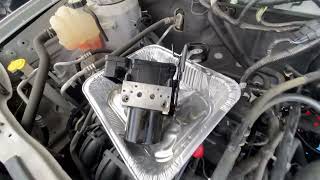
- Internal ABS Module Failure (Very Common) — This is the most frequent cause, especially on Ford, Lincoln, and Mazda vehicles. 🎬 Watch: How to remove a flashing ABS module on a Ford Escape. Electronic components or solder joints inside the ABS control module fail due to heat, vibration, or age, triggering the code.
- Poor Power or Ground Connection (Common) — Corroded connectors, loose battery terminals, faulty power relays, or damaged wiring harnesses interrupt the module's startup process, causing a self-check failure.
- Faulty Charging System or Weak Battery (Common) — Voltage drops below 12.0V from a dying battery or spikes above 15.0V from a faulty alternator stress and damage sensitive module electronics.
- Water Intrusion and Corrosion (Common) — Moisture leaking into the module connector short-circuits the circuit board or corrodes pins, triggering an internal fault.
- Internal Engine Control Unit (ECU) Failure (Less Common) — The main engine computer fails its internal self-test, setting B1342 and causing engine stalling or a no-start condition.
- Corrupted Software (Rare) — An interruption during a software update or a failed reprogramming attempt corrupts the module's firmware.
Symptoms
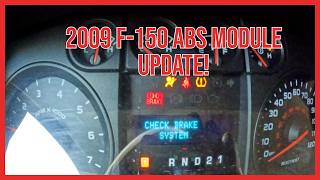
- ABS, Brake, and Traction Control Warning Lights On — The dashboard illuminates the ABS, traction control (TCS), and main brake warning lights simultaneously. 🎬 See how to diagnose and fix ABS brake warning lights.
- Loss of ABS and Traction Control — Anti-lock brakes do not function during hard braking (wheels lock up and skid), and traction control does not activate on slippery surfaces.
- Speedometer Not Working — On vehicles where the ABS module processes the vehicle speed signal (like Ford Escapes and Explorers), a failed module causes an inoperative speedometer.
- Check Engine Light On — If the fault is with the main Engine Control Unit (ECU), the 'Check Engine' light illuminates.
- Engine Performance Problems — If the ECU is the faulty module, you experience engine stalling, poor acceleration, or a crank-no-start condition.
Diagnostic Flowchart

Tap your situation to follow the diagnostic path that matches what you're seeing on this code.
Common Fixes & Costs
- Send Original ABS Module for Repair/Rebuilding — Parts: $150-$250, Labor: $150-$300 (for removal/reinstallation), ~1.5 hr book time (Intermediate)
- Replace and Program ABS Control Module (Used)
— Parts: $100-$300, Labor: $250-$400 (includes programming), ~2.5 hr book time
(Professional)
Ford Escape (2008-2012): OEM Match exact original part number (e.g., 8L8Z-2C219-D) (Alt: N/A)
Ford F-150 (2006-2010): OEM Match exact original part number (e.g., 7L1Z-2C219-A) (Alt: N/A) - Replace and Program ABS Control Module (New OEM)
— Parts: $600-$1200, Labor: $250-$400 (includes programming), ~2.5 hr book time
(Professional)
Ford Escape (2008-2012): OEM 8L8Z-2C219-D, 9L8Z-2C219-A (Alt: Cardone (12-17221), Dorman (599-787))
Ford F-150 (2006-2010): OEM 6L3Z-2C065-AA, 7L1Z-2C219-A (Alt: Cardone (12-12231)) - Repair Wiring/Connectors to the Module — Parts: $10-$50, Labor: $150-$400, ~2 hr book time (Intermediate)
DIY vs Professional
- Send Original ABS Module for Repair/Rebuilding — Beginner: No
Tools: Socket set, flare nut wrenches, Torx sockets, brake fluid, brake bleeding kit. - Replace and Program ABS Control Module (New or Used) — Beginner: No
Tools: Socket set, flare nut wrenches, Torx sockets, professional scan tool with programming capabilities (e.g., FORScan, dealer IDS). - Repair Wiring/Connectors to the Module — Beginner: Yes (for simple cleaning)
Tools: Multimeter, electronic contact cleaner, wire strippers, crimpers, heat shrink tubing, vehicle-specific wiring diagram.
Used vs. New Parts: Buying Guide
When a used part is worth it: A used ABS module makes sense for older, high-mileage vehicles where a new OEM part is cost-prohibitive or discontinued. It is a budget-conscious option only if you have access to a mechanic with programming tools.
Donor-vehicle mileage cap: roughly under 100000 miles for the part to have meaningful remaining life.
Donor quality checklist:
- Match the part number EXACTLY. Different part numbers for the same model exist based on drivetrain or trim level and are not interchangeable.
- Source from a reputable seller offering at least a 30-90 day warranty.
- Verify the donor vehicle's mileage; lower is always better.
Decision logic:
- If You want to avoid programming hassles → Send your original module for repair. This is the best balance of cost and convenience as it remains plug-and-play.
- If Budget is the primary concern and you have a trusted shop for programming → A used module is a viable option, but factor in the added $150-$300 cost for programming.
- If The vehicle is newer and the budget allows → Buy a new OEM part. This offers the longest lifespan and warranty but is the most expensive option.
Warranty tradeoff: Used parts typically have a 30-90 day warranty. Rebuilt modules often come with a one-year to lifetime warranty. New OEM parts carry a 12-month manufacturer's warranty.
Worst-case if a used part fails: $300-600 if a used part is dead on arrival or fails after the warranty period, covering repeat labor and programming fees.
What Happens If You Wait — Timeline
- Immediate: Code B1342 is set. ABS, traction control, and brake warning lights illuminate on the dashboard. ABS and stability/traction control systems are disabled. (MPG impact: 0%% · Added cost: $0)
- 0-3 months: The vehicle operates with conventional brakes only. The risk of skidding and losing control in a panic stop or on wet/icy roads is significantly increased. (MPG impact: 0%% · Added cost: $0 (unless an accident occurs))
- Ongoing: The vehicle automatically fails the safety inspection portion of state vehicle inspections in many jurisdictions due to the illuminated brake warning light. (MPG impact: 0%% · Added cost: $50-$200 in failed inspection fees and wasted time.)
- 3+ months (rare cases): In a small number of failure modes, the faulty module causes the ABS hydraulic pump to run continuously, draining the battery and burning out the pump motor. (MPG impact: 0%% · Added cost: $150-$250 for a new battery, plus $200-$500 if the ABS pump motor needs replacement.)
Cost of Not Fixing It
- Immediate: Loss of Anti-lock Braking System (ABS) and Traction/Stability Control. This significantly increases the risk of skidding and losing control during emergency braking or in slippery conditions. (Added cost: Potential cost of an accident, which could be thousands of dollars.)
- 0-6 months: Failure of state safety inspection. Many states automatically fail a vehicle's safety inspection if the ABS or Brake warning light is illuminated on the dashboard. (Added cost: $0 (beyond the cost of the eventual repair))
- 6+ months: In rare cases where the module failure causes the ABS pump to run constantly, the pump motor burns out, adding $200-$500 to the total repair cost. For most B1342 faults, driving with the code does not cause cascading damage to other components.
Diagnosis Steps
- Verify the Code and Check for Others
Use a professional-grade OBD-II scanner to confirm B1342 is present. Note which module stores the code (e.g., ABS, BCM, ECU). Check for accompanying codes like VIN mismatch (B2900) or communication faults (U-codes). Clear the codes; if B1342 returns immediately, the fault is persistent and internal.
Tools: OBD-II Scanner (professional level recommended) (Beginner) - Inspect Battery and Charging System
Verify battery terminals are clean and tight. Use a multimeter to test battery voltage (>12.4V with engine off) and alternator output (~13.5-14.5V with engine running). Unstable voltage triggers false module failures or causes permanent damage.
Tools: Multimeter, Battery Terminal Cleaner (Beginner) - Inspect Module Wiring and Connectors
Locate the suspect module. Disconnect the battery, unplug the module's electrical connector, and inspect for green/white corrosion, bent pins, or water intrusion.
Tools: Socket Set, Flashlight, Electronic Contact Cleaner (Intermediate) - Test Power and Ground at the Module (Pro Tip)
Identify the main power and ground pins on the module's connector using a wiring diagram. Use an incandescent test light to verify power and ground under load. A dim light indicates high resistance (>1 Ohm) in the circuit that a multimeter misses.
Tools: Incandescent Test Light, Multimeter, Vehicle-Specific Wiring Diagram (Advanced) - Check Communication with the Module
Use a professional scan tool to 'ping' the module. If the tool establishes communication and reads B1342, the wiring is intact but the module has an internal fault. If communication fails entirely, suspect a total module failure, wiring problem, or network issue (U0121).
Tools: Professional Scan Tool (Advanced) - Check CAN Bus Resistance
If communication codes are present, check CAN bus integrity. With the battery disconnected and vehicle asleep, measure resistance between CAN High and CAN Low pins at the DLC (Pins 6 and 14). A healthy network reads ~60 Ohms. 120 Ohms means a terminating resistor is offline; open/shorted readings indicate wiring faults.
Tools: Multimeter, Vehicle-Specific Wiring Diagram (Advanced) - Check CAN Bus Voltage
With the battery connected and ignition ON, measure CAN line voltages at the DLC. CAN High (Pin 6) should be ~2.6V to 3.5V. CAN Low (Pin 14) should be ~1.5V to 2.4V. Readings of 2.5V on both lines indicate shorted wires.
Tools: Multimeter, Vehicle-Specific Wiring Diagram (Advanced) - Confirm Module Failure
If the module has proper power (>12V), ground (<1 Ohm resistance), and stable CAN bus communication, and B1342 returns immediately after clearing, the module has a non-repairable internal fault. Replace or rebuild the module.
Tools: Professional Scan Tool, Multimeter (Professional)
When This Code Triggers (Freeze-Frame Conditions)
- Event: Key-On or Initial Drive (B1342 sets during the module's power-on self-test (POST) when the ignition turns on or the vehicle begins to move.)
- Vehicle Speed: 0 - 10 MPH (The internal fault is detected before the vehicle reaches significant speed, as the module performs its self-check immediately upon startup.)
- RPM: 0 or 600-800 RPM (The engine is typically off (key-on, engine-off) or at idle speed when the fault logs.)
- Battery Voltage: 11.5V - 14.5V (The code logs under normal operating voltage conditions if the module itself failed internally.)
Related Codes
- U0121 — 'Lost Communication With Anti-Lock Brake System (ABS) Control Module'. With U0121, your scan tool cannot communicate with the ABS module at all. With B1342, the scanner communicates, and the module reports it is defective.
- B2900 — 'VIN Mismatch' appears with B1342 after a used ABS module is installed without being reprogrammed. B2900 means the installed module must be configured to the vehicle.
- C1288 — 'Pressure Transducer Main/Primary Circuit Failure'. Common on Mazda vehicles, this code points to a failure of the internal brake fluid pressure sensor within the ABS module, reinforcing the diagnosis of a failed module.
- C1342 — The chassis code equivalent of B1342 used by some manufacturers. It translates to 'ECU Internal Fault' and points to the same internal failure of the ABS module.
Climate & Environmental Factors
- High Humidity and Rain: Increases water intrusion into module connectors, leading to corrosion and short circuits on the printed circuit board.
- Road Salt (Winter Climates): Acts as a catalyst for corrosion, aggressively attacking electrical connectors, ground points, and the aluminum housing of the ABS module.
- Extreme Heat (Hot Climates): Accelerates the aging of electronic components and causes solder joints on the module's circuit board to crack due to thermal stress.
- Extreme Cold: Causes marginal solder joints to lose connection, leading to an internal fault code on startup. Cold temperatures also reduce battery efficiency, triggering low-voltage faults.
How to Talk to a Mechanic About This Code
Say this: "I have an ABS light on and a B1342 code stored in the ABS module. I'd like to schedule a diagnostic. Please confirm the module has proper power and ground before recommending a full replacement."
This signals you understand the common causes. It directs the technician to perform a crucial, low-cost diagnostic step first, potentially saving you from an unnecessary module replacement if the fault is just a bad wire.
Avoid saying:
- 'Just fix whatever's wrong'
- 'My ABS light is on, can you look at it?' (too vague — invites an immediate quote for the most expensive fix)
- 'Whatever you recommend'
Questions to ask before authorizing the repair:
- Did you confirm the module has stable power and a good ground at the connector?
- If I replace the module, does your quote include programming the new module to my vehicle's VIN?
- Is the replacement part a new OEM, a used part, or are you sending my original module for a rebuild?
- What is the warranty on the replacement part and your labor?
Where to Take It: Dealer vs Independent vs Chain
- Dealer:
A safe but expensive choice. They are best equipped for the programming a new module requires, but you pay a premium for it.
Best for: Vehicles still under warranty, Complex programming issues that independent shops cannot handle, When you want a guaranteed fix with an OEM part and are not price-sensitive
Downsides: Highest labor rates and part costs, often 1.5-2x an independent shop., Defaults to replacing the entire ABS hydraulic unit and module, which is the most expensive option. (Typical cost: +50% vs. baseline) - Independent Shop:
Best fit for most owners. A good independent shop diagnoses the wiring, handles the removal/reinstallation for a rebuild, and programs used or new parts.
Best for: Out-of-warranty vehicles where cost is a factor., Diagnosing common failures like B1342., Facilitating a module rebuild, which is the most cost-effective solution.
Downsides: Quality and diagnostic skill vary widely; vet shops by reviews and ASE certifications., May lack manufacturer-specific tools for programming certain new modules, though many use tools like FORScan or Autel. (Typical cost: +0% vs. baseline) - Chain Shop:
AVOID. This repair is beyond the scope of most chain shops. They are likely to misdiagnose the issue or be unable to complete the critical programming step.
Best for: Simple, routine maintenance like oil changes, tires, and brake pad replacement.
Downsides: Technicians are often less experienced with complex electrical diagnostics., Unlikely to have the specialized tools or knowledge for module programming. (Typical cost: -10% vs. baseline)
When to Walk Away From the Repair
If the estimated repair cost exceeds 40-50% of the car's Kelley Blue Book (KBB) private-party value, pause and evaluate your options.
- Car worth $4000, fix is $1800: Walk away — the repair is nearly half the car's value.
- Car worth $12000, fix is $1800: Fix it — the repair cost is only 15% of the vehicle's value and restores a critical safety system.
- Car worth $7000, fix is $600: Fix it — if you choose the 'rebuild' option, the cost is low compared to the car's value.
What Scan Tool You Need for This Code
Minimum: An OBD-II scanner that reads manufacturer-specific codes from the Anti-lock Brake System (ABS) module.
A basic $20 engine code reader CANNOT see this code. It only communicates with the Engine Control Unit (ECU). The B1342 code is stored in the ABS module, so you get a 'No Codes Found' message while your ABS light is still on.
Budget: Innova 3040RS / Foxwell NT510 Elite (~$80) — Reads and clears ABS codes, allowing you to confirm B1342 is the issue and not a simpler wheel speed sensor code. It also views live data from wheel speed sensors.
Mid-range: FORScan with OBDLink EX adapter (for Ford) / Foxwell NT510 Elite (~$150) — The sweet spot for advanced DIY. FORScan (for Ford/Mazda) allows you to read ABS codes and perform module initialization and programming for a replacement module. The Foxwell offers bi-directional controls like activating the ABS pump for bleeding brakes.
Professional: Autel MaxiCOM MK808 / Launch X431 series (~$450-600) — Provides full, professional-level diagnostics. These tools offer comprehensive bi-directional control, advanced coding, and module programming functions for a wide variety of makes and models, including ABS module initialization.
Rent vs buy: For a one-time diagnosis, auto parts stores like AutoZone and O'Reilly Auto Parts have a loaner tool program. You pay a deposit for a scanner that reads ABS codes. This is a great way to confirm the code before committing to a repair.
How to Clear the Code After You Fix It
- Perform physical repair (replace/rebuild module, fix wiring).
- Reconnect the battery.
- Use a professional-grade OBD-II scanner to clear the B1342 code from the ABS module memory.
- If a new or used module was installed, perform VIN programming and calibration procedures.
- Perform a system self-test by cycling the ignition.
Drive cycle (~10 minutes): Because B1342 is an internal self-test code, a complex drive cycle is not required. After clearing the code, turn the ignition off and back on. The ABS light performs its normal bulb check and stays off. A short test drive over 15 MPH confirms the repair.
Readiness monitors affected: Not applicable for emissions readiness monitors.
Watch out for:
- Disconnecting the battery does not clear this 'hard fault' code from the module's memory.
- The code returns immediately upon the next key cycle if the internal fault is not fixed.
- Forgetting to program a replacement module causes the code to persist and introduces B2900 (VIN Mismatch).
Will This Fail Emissions / State Inspection?
No — by itself this code doesn't fail OBD inspection (but it can keep readiness monitors from setting, which causes a separate fail).
- California: An illuminated ABS light does NOT cause a failure of the emissions-only Smog Check. However, the light indicates a safety system failure.
- New York: An illuminated ABS warning light is grounds for failure of the annual state safety inspection.
- Texas: As of 2025, non-commercial vehicles are no longer subject to a safety inspection in Texas. The vehicle is only subject to an emissions test in certain counties, which an ABS light does not fail.
Most Commonly Affected Vehicles
- Ford Escape (2008-2012) — Extremely common for the ABS module to fail, causing B1342 along with ABS and traction control lights. The speedometer also stops working as it relies on the ABS module.
- Ford F-150 (2006-2010) — The ABS module is a known failure point. The 2009 model year has a specific, one-year-only module that does not use a brake booster vacuum sensor, complicating replacement.
- Ford Explorer (2007-2010) — Frequently indicates a defective ABS electronic module, sometimes accompanied by an 'RSC failure' (Roll Stability Control) message on the dash.
- Chevrolet / GMC Silverado / Sierra 1500 (2007-2013) — Known for ABS module failures setting B1342, caused by failed solder joints on the module's circuit board.
- Mazda 3, 6 (2007-2012) — Code B1342 indicates a failed ABS control module on these models, which share platform components with Ford vehicles. A C1288 code is often present.
- Lincoln Town Car (2008-2011) — B1342 is a very common code pointing directly to a bad ABS control module. It also points to the Body Control Module (BCM) on some models.
- Ford Crown Victoria (2008-2011) — Presents with an intermittent ABS light and B1342 stored in the ABS module, pointing to an internal fault or power interruption.
- Jaguar X-Type (2002-2008) — Points to an internal failure of the ABS control module, which shares design similarities with Ford/Mazda units of the era.
Manufacturer-Specific Notes
- Ford / Lincoln / Mercury: On most Ford products, B1342 almost always means the ABS module failed. Replacement modules, even used ones, MUST be reprogrammed to the vehicle or they will not function.
- Ford: Ford Safety Recall 19S54 (NHTSA ID 19V904000) covers code B1342 in the ABS module for certain 2006-2010 Fusion, Milan, and MKZ vehicles due to brake fluid reacting with the hydraulic unit's plating.
- Ford: TSB 11-3-3 notes that on some 2008-2011 models, B1342 stored in the Satellite Digital Audio Receiver System (SDARS) module causes a 'SAT FAULT' message. The fix is reprogramming the SDARS module.
- General: The code definition is generic ('ECU is defective'). If you are in the 'ABS' section of your scanner, the code refers to the ABS module. If in the 'BCM' section, it refers to the Body Control Module.
Real Owner Stories
2009 Ford Escape with 192K miles
ABS, Brake, and Traction lights came on after the previous owner was run off the road and bent a wheel. The lights remained after mechanical repairs.
What they tried:
- Repaired bent wheel, replaced strut and tie rod ends - lights stayed on.
- Scanned the vehicle, returning code B1342.
- Visually inspected module connections and fuses, which appeared normal.
Outcome: The B1342 code pointed to an internal failure of the ABS module itself. The recommended fix was to replace the module and program the new one to the vehicle.
Lesson: Even if the fault appears after physical damage, B1342 is specific to the module's internal self-test. Don't assume mechanical repairs fix it; the module itself is the culprit.
2008 Ford Crown Victoria (Police Model)
Intermittent ABS and Brake lights on the dashboard. No other symptoms were noticeable.
What they tried:
- Scanned the ABS system and found code B1342.
- Initial advice was to clean wheel speed sensors and connectors.
- A technician suggested the cause was an intermittent loss of power or ground to the ABS module.
Outcome: The owner disconnected the module, cleaned the connector with electronic contact cleaner, and slightly crimped the power/ground pins for a tighter fit, resolving the intermittent code.
Lesson: An intermittent B1342 is often a wiring or connection issue rather than a permanent module failure. Checking and cleaning power and ground connections is a crucial first step.
2009 Ford F-150 with B1342
ABS module failed with code B1342. Sent the original module for repair, but the repair was unsuccessful.
What they tried:
- Attempted to replace the failed '09 module with a used one from a 2010 F-150.
- After programming the 2010 module, a new code for 'no communication to vacuum sensor' appeared, as the 2009 model uses a sensor the 2010 module doesn't expect.
Outcome: The owner had to physically add the brake booster vacuum sensor and wire it into the 2010 module's connector to make the system work correctly.
Lesson: Be aware of one-year-only parts. The 2009 F-150 ABS module is unique. Always match part numbers exactly to avoid complex wiring and programming challenges.
2006 Ford F-150 with used ABS module
Owner replaced a faulty ABS module with a used one from a junkyard, causing the brake light to stay on constantly.
What they tried:
- A scan revealed two codes: B1342 (Internal Fault) and B2900 (VIN Mismatch).
- Using FORScan software, a technician reprogrammed the used module with the truck's correct VIN, clearing B2900.
Outcome: Even after programming, B1342 immediately returned, confirming the used junkyard module was also internally faulty. The owner needed another replacement module.
Lesson: A used part can have the exact same failure. The presence of B2900 is expected until programmed, but if B1342 persists after programming, the replacement part is bad.
How to Prevent This Code From Triggering
- Change brake fluid every 2-3 years (Every 24-36 months or 30,000 miles) — Brake fluid absorbs moisture from the air. This moisture corrodes the delicate internal valves and electronic components of the ABS module and hydraulic pump from the inside out.
- Maintain a healthy battery and charging system (Annual testing) — Voltage spikes from improper jump-starts or a failing alternator fry the sensitive microprocessors in the ABS module. Consistently low voltage causes errors during the module's startup self-test.
- Keep cowl and plenum drains clear (Annually, or after parking under trees) — Clogged drains under the windshield cause rainwater to overflow and run down the firewall, dripping directly onto the ABS module and leading to water intrusion.
- Inspect and secure wiring harnesses (During any under-hood maintenance) — Ensure the wiring harness leading to the ABS module is not rubbing against sharp edges. Vibration causes chafing over time, leading to shorts in the power, ground, or communication wires.
Frequently Asked Questions
My mechanic quoted me $1,400 to fix code B1342. Is that reasonable?
That price is within the typical range for a full replacement of the ABS module with a new part at a dealership or independent shop, including programming and a brake fluid flush. A more typical cost at an independent shop to replace just the electronic module is between $850 and $1300. Getting the original module repaired is often the most cost-effective option, typically costing $150-$400 for the repair service plus a few hours of labor for removal and reinstallation.
Can I just replace the ABS module with one from a junkyard?
You can, but it is not a simple plug-and-play swap. The replacement module must be professionally reprogrammed with your car's VIN and specific configuration using special tools like FORScan or dealer-level software. Without reprogramming, it will not work and sets a B2900 'VIN Mismatch' code.
I replaced my wheel speed sensor, but the B1342 code is still on. Why?
This is a common misdiagnosis. A bad wheel speed sensor sets its own specific 'C' code (e.g., C1155). The B1342 code means the module itself has an internal processing problem, so replacing external sensors will not fix it.
I have code B1342 and my speedometer stopped working. Are they related?
Yes, on many vehicles, especially Ford Escapes and Explorers, the ABS module processes the wheel speed sensor data to generate the vehicle speed signal. When the ABS module fails, it stops sending this signal, causing the speedometer to read zero.
Can a jump start cause the B1342 code?
Yes, an improper jump start or a significant voltage spike damages the sensitive electronics inside a control module, leading to a B1342 code. A very weak battery also causes the code by providing unstable power during the module's startup self-test.
I sent my module for repair, but after reinstalling it, the code came back. What now?
First, contact the repair company to verify their warranty, as the repair sometimes fails. Second, re-verify the module has a clean, tight power and ground connection, as a wiring issue mimics internal failure. Finally, if the damage was too extensive for repair, you must replace the module.
What is the difference between B1342 and B3142?
B1342 is a standardized Diagnostic Trouble Code (DTC) indicating a control module internal failure. B3142 is not a valid or recognized OBD-II code for automotive diagnostics. It most often appears as a typo when searching for information about B1342.
Key Takeaways
- Code B1342 indicates a fatal internal failure of a control module, with the Anti-lock Brake System (ABS) module being the culprit in over 90% of cases.
- Ford, Lincoln, and Mazda vehicles manufactured between 2006 and 2013 experience this failure most frequently due to degrading solder joints.
- Driving with B1342 disables your ABS and traction control, increasing emergency stopping distances by up to 35% on wet or icy roads.
- Sending your original ABS module to a specialist for a $150–$300 rebuild is the most cost-effective fix because it bypasses the need for expensive dealership reprogramming.
Helpful Videos


The information in this article is provided for general reference and educational purposes only. Vehicle specifications, procedures, and part compatibility can vary by production date, trim level, and region. Always consult your vehicle's factory service manual and verify part numbers before purchasing or performing repairs. Safety-critical components such as airbags, seat belts, and braking systems should be installed by a qualified professional.
- 🎬 Helpful Videos
- What Does B3142 Mean?
- Can I Drive With B3142?
- Common Causes
- Symptoms
- Diagnostic Flowchart
- Common Fixes & Costs
- DIY vs Professional
- Used vs. New Parts: Buying Guide
- What Happens If You Wait — Timeline
- Cost of Not Fixing It
- Diagnosis Steps
- When This Code Triggers (Freeze-Frame Conditions)
- Related Codes
- Climate & Environmental Factors
- How to Talk to a Mechanic About This Code
- Where to Take It: Dealer vs Independent vs Chain
- When to Walk Away From the Repair
- What Scan Tool You Need for This Code
- How to Clear the Code After You Fix It
- Will This Fail Emissions / State Inspection?
- Most Commonly Affected Vehicles
- Manufacturer-Specific Notes
- Real Owner Stories
- 2009 Ford Escape with 192K miles
- 2008 Ford Crown Victoria (Police Model)
- 2009 Ford F-150 with B1342
- 2006 Ford F-150 with used ABS module
- How to Prevent This Code From Triggering
- Frequently Asked Questions
- My mechanic quoted me $1,400 to fix code B1342. Is that reasonable?
- Can I just replace the ABS module with one from a junkyard?
- I replaced my wheel speed sensor, but the B1342 code is still on. Why?
- I have code B1342 and my speedometer stopped working. Are they related?
- Can a jump start cause the B1342 code?
- I sent my module for repair, but after reinstalling it, the code came back. What now?
- What is the difference between B1342 and B3142?
- Key Takeaways
- 🎟️ Get 5% Off