

B3060 on 2007-2010 Saturn OUTLOOK: Causes and Fixes for No-Start Security Fault
Code B3060 on a Saturn Outlook means the anti-theft system doesn't recognize your key, causing a no-start. The most common fixes are trying a spare key, removing RF-interfering devices from your keychain, or performing a 30-minute key relearn procedure. A worn ignition lock cylinder is also a frequent cause.
- B3060 means your car's anti-theft system is active and won't let the engine run because it doesn't recognize the key.
- Before spending any money, try the simple fixes: remove all other devices from your keychain and attempt the 30-minute key relearn procedure.
- This issue is extremely common on the Saturn Outlook and its siblings (Acadia, Enclave, Traverse) and is often caused by interference or a simple memory corruption, not necessarily a failed part.
- If a part has failed, the most likely culprits are the key itself or the ignition lock cylinder that reads it.
What's Unique About the 2007-2010 Saturn OUTLOOK
The Saturn Outlook and its GM Lambda platform siblings (GMC Acadia, Buick Enclave, Chevy Traverse) use a Pass-Key III+ (PK3+) transponder-based immobilizer system. While effective, this system is known for being sensitive. The primary issue, as highlighted in multiple revisions of GM Technical Service Bulletin PIC5650, is its susceptibility to Radio Frequency Interference (RFI) from other items on a keychain, such as other car keys, gate passes, or even certain cell phone chargers. This interference can 'jam' the 125 kHz signal between the key and the vehicle, leading to intermittent no-start conditions that can be difficult to diagnose.
Diagnostic Flowchart
Tap your situation to follow the diagnostic path that matches what you're seeing on this vehicle.
Symptoms You May Notice
- Engine will not crank (no sound when turning the key to 'START')
- Engine starts briefly and then immediately stalls (typically within 2 seconds)
- Security indicator light is on or flashing on the instrument cluster.
- No response from the starter motor
- A "Service Theft Deterrent System" message may appear on the Driver Information Center (DIC).
- Replacing the battery without addressing the security lockout. A new battery won't solve the problem if the theft system is active; a key relearn is still required.
- Replacing the starter motor when the security system is the actual cause of the no-crank. If the security light is on, the BCM is intentionally preventing the starter from engaging.
- Programming the remote key fob (for locks/panic) and assuming it also programs the immobilizer chip. These are two separate procedures. The fob programming for door locks does not affect the engine immobilizer.
Most Likely Causes
- Radio Frequency Interference (RFI) 🔴 High Probability The vehicle's immobilizer system operates at 125 kHz, a frequency that can be easily disrupted by other RFID devices like toll passes, building access cards, or even other vehicle keys on the same ring. This is a well-documented issue in GM TSB PIC5650M and other preliminary information bulletins.
How to confirm: Remove all other keys, fobs, toll passes, and access cards from the keychain. Try starting the vehicle with the ignition key completely isolated. If the vehicle starts, RFI was the cause.
Typical fix: Keep the ignition key on a separate ring from other RFID-emitting devices. No parts are needed.
Est. part cost: $0 - Worn or Faulty Ignition Key 🟡 Medium Probability The transponder chip (often a PK3+ type) embedded in the key head can be damaged from drops, wear, or simply fail with age, preventing it from transmitting its code correctly.
How to confirm: Attempt to start the vehicle with a known-good spare key. If the spare key works reliably, the original key is faulty.
Typical fix: Replace the faulty key. A new key blank must be cut to match and then programmed to the vehicle using the 30-minute relearn procedure.
Est. part cost: $25-$70 for a new transponder key blank - Corrupted Key Memory / Need for Relearn 🟡 Medium Probability A low battery event, jump-starting the vehicle, or an intermittent electrical issue can sometimes cause the security system to lose its memory of the programmed keys, requiring a system reset.
How to confirm: If a known-good key won't start the car and RFI is not the issue, a relearn is the next logical step before replacing parts. This is especially true after a battery replacement or dead battery event.
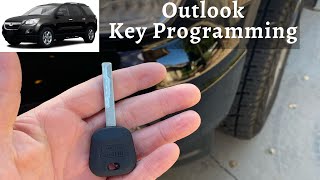
Typical fix: Perform the 30-minute security relearn procedure. 🎬 Watch: Step-by-step guide to programming a new transponder key No parts are needed for this.
Est. part cost: $0 - Worn or Faulty Ignition Lock Cylinder ⚪ Low Probability The lock cylinder houses the exciter coil that powers the key's transponder and reads its signal. Mechanical wear from years of use or internal failure of the coil can lead to a weak or failed connection, preventing the key from being read correctly.
How to confirm: After ruling out the key and RFI, this is a likely mechanical failure. Wiggling the key in the ignition may temporarily restore connection and allow the car to start. This points to a worn cylinder or coil.
Typical fix: Replace the ignition lock cylinder. The new cylinder must be coded to the existing key or come with new keys, and the 30-minute key relearn procedure must be performed afterward.
Est. part cost: $55-$130
Rare But Worth Checking
- Failing Body Control Module (BCM): This is the 'brain' of the security system. While not a common failure, it can be the root cause if all other components check out. Symptoms often include other erratic electrical behavior like flickering lights or malfunctioning power windows. Replacement requires professional programming with GM-specific tools, though some vendors sell pre-programmed units.
- Damaged Wiring: A break or short in the wiring between the ignition lock cylinder and the BCM can cause this code. This is rare but possible, especially if other electrical work has been performed recently or if there's a known wiring harness chafe point.
- Faulty Crank or Ignition Relay: In some cases on the Lambda platform, a faulty crank relay in the under-hood fuse box can cause a no-crank condition that may be misdiagnosed. While it doesn't typically set B3060 directly, it can present with similar symptoms. One owner of a platform-mate fixed a no-crank issue by replacing this relay (Part #1350-0114). 🎬 See how to troubleshoot a no-crank condition yourself
Diagnosis Steps
- Check Battery Voltage: Before diving into the theft system, ensure the vehicle battery has a full charge (12.4V or higher). A weak battery can cause various electronic modules, including the BCM, to malfunction and trigger security faults.
- Isolate for RFI: Remove the ignition key from your keychain. Ensure no other keys, fobs, or access cards are near the ignition when you try to start the vehicle. This is the primary diagnostic step recommended by GM TSB PIC5650M.
- Try a Spare Key: Attempt to start the vehicle with a known-good spare key. If it starts, the primary key is faulty and needs replacement.
- Perform the 30-Minute Security Relearn Procedure: This procedure is for a vehicle that won't start and has the security light on. It reprograms the vehicle to accept the key.
- a. Insert the key and turn it to the 'ON' position (do not try to start). The security light should be on/flashing.
- b. Leave the key 'ON' for approximately 10 minutes, or until the security light turns off.
- c. Turn the key 'OFF' for 5-10 seconds.
- d. Repeat steps a-c two more times for a total of 3 cycles (about 30 minutes).
- e. After the third cycle, turn the key off, then attempt to start the engine. It should now be programmed and start. If it fails, there is likely a hard part failure.
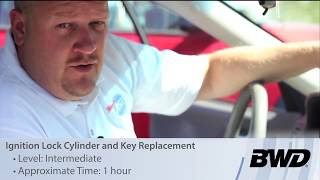
- Inspect Ignition Lock Cylinder: If the relearn procedure fails or the problem is intermittent, inspect the ignition lock cylinder. Wiggle the key while it's in the 'ON' position. If this causes the security light to flicker or allows the car to start intermittently, 🎬 Watch this video to see how to replace the ignition cylinder the lock cylinder/exciter coil assembly is likely worn and needs replacement.
- Advanced Diagnostics: If the above steps fail, a professional may need to use a scan tool to monitor data from the BCM/TDM to see if a valid key is being detected. This can help differentiate between a faulty BCM, a wiring issue, or a more complex problem.
Parts You'll Likely Need
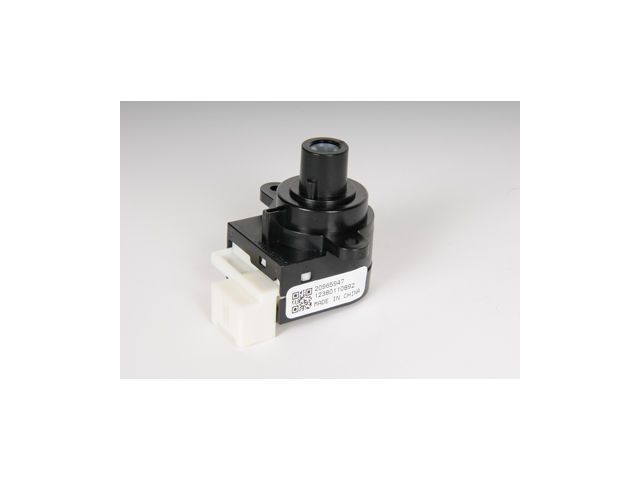
- Ignition Lock Cylinder
(OEM #15841209)— This housing contains the reader (exciter coil) for the key's security chip. It can wear out or fail electrically, causing an inability to read the key and triggering code B3060. RepairPal estimates the replacement cost for this part on an Outlook to be around $173.
Trusted brands: ACDelco (GM Original Equipment), Standard Motor Products, Dorman
OEM price range: $55-$70
Aftermarket price range: $60-$130 - Transponder Ignition Key (PK3+)
(OEM #B111-PT (blank))— The chip inside the key itself can fail. If a spare key works, the original key needs to be replaced. A new key must be cut and then programmed via the 30-minute relearn procedure.
Trusted brands: ACDelco
OEM price range: $40-$60
Aftermarket price range: $25-$40
Related Codes That Often Appear With This One
- B3055 — Relates to a problem with the key transponder signal not being received at all, often set alongside B3060 when there is an issue with the key, RFI, or ignition cylinder.
- B3935 — Another transponder-related code indicating an incorrect password from the key, often seen with B3060 during a security fault.
Technical Service Bulletins (TSBs) & Recalls
- PIC5650M: Mentions B3060 in relation to intermittent no crank, no start, or start stall concerns with the security light on. Lists numerous sources of RFI as the primary cause.
- PIC5650B, PIC5650C, PIC5650G, PIC5650K: Earlier revisions of the same TSB, all pointing to RFI as a major cause for B3060 and related security codes on a wide range of GM vehicles, including the Saturn Outlook.
Platform-Specific Known Issues
- A known issue documented in multiple versions of TSB PIC5650 (B, C, G, K, M) involves intermittent no-crank/no-start conditions with the security light on, specifically citing DTC B3060. The primary cause is often external radio frequency interference from devices on the keychain.
Mechanic-Grade Diagnostic Values
- Ignition Lock Cylinder Exciter Coil Resistance — expected: 5-20 Ohms. Failure: A reading of 0 Ohms indicates a short, while an infinite (OL) reading indicates an open circuit. Either will prevent the key's transponder from being energized.
Scan Tool Commands That Help
- Tech2 / GDS2: BCM Data Display -> Key Part Number / Key Status — After performing the initial key and RFI checks, use this to see if the BCM is recognizing the key at all. The parameter should change from 'No Key' to displaying a part number or 'Valid Key' status when a learned key is turned to ON. If it doesn't change, it points to a problem with the key, exciter coil, or wiring, rather than a BCM logic failure.
Wiring & Ground Locations
- G301 — Behind the left kick panel, near the floor.. This is a primary ground point for the Body Control Module (BCM). A loose or corroded G301 can cause intermittent and difficult-to-diagnose issues with the theft deterrent system, potentially leading to B3060.
- G303 — Near the base of the left 'B' pillar (the pillar behind the driver's door).. Another critical ground location in the cabin that can affect various body modules. Verifying this ground is tight and clean is a good practice when chasing elusive electrical faults like an intermittent B3060.
- BCM Location — Under the left side of the dashboard, typically above the driver's kick panel area.. The BCM is the control center for the Passkey III+ system. Knowing its location is essential for checking its connectors and nearby grounds (like G301) for integrity.
Real Owner Repair Stories
- acadiaforum.net user (2008 GMC Acadia (Lambda Platform Sibling)) — Intermittent no-start, security light on, code B3060 present. Sometimes would start after sitting for 10-15 minutes.
❌ Tried (didn't work) Performing the 30-minute key relearn procedure multiple times., Replacing the battery., Trying the spare key.
✅ What actually fixed it The owner discovered the ground wire to the Body Control Module (BCM) was loose. After tightening the BCM ground bolt, the no-start issue and B3060 code were permanently resolved.
OEM Part Supersession History
15841209→ACDelco D14A1F— Standard part lifecycle replacement and availability in the aftermarket.
Heads up: While Dorman and other aftermarket brands offer replacements, ACDelco is generally preferred for fit and electronic compatibility. Ensure the replacement part is specified for the Passkey III+ system.
Helpful Videos
Used OEM Parts in Stock


New Aftermarket Parts Available


The information in this article is provided for general reference and educational purposes only. Vehicle specifications, procedures, and part compatibility can vary by production date, trim level, and region. Always consult your vehicle's factory service manual and verify part numbers before purchasing or performing repairs. Safety-critical components such as airbags, seat belts, and braking systems should be installed by a qualified professional.
- Saturn OUTLOOK:
- 🎬 Helpful Videos
- 🛍️ Shop This Part
- What's Unique About the 2007-2010 Saturn OUTLOOK
- Diagnostic Flowchart
- Symptoms You May Notice
- Most Likely Causes
- Rare But Worth Checking
- Diagnosis Steps
- Parts You'll Likely Need
- Related Codes That Often Appear With This One
- Technical Service Bulletins (TSBs) & Recalls
- Platform-Specific Known Issues
- Mechanic-Grade Diagnostic Values
- Scan Tool Commands That Help
- Wiring & Ground Locations
- Real Owner Repair Stories
- OEM Part Supersession History
- 🎟️ Get 5% Off