

B3060 on 2007-2009 Saturn AURA: Uncoded Key, No-Start Causes and Fixes
Code B3060 on a 2007-2009 Saturn Aura means the car's security system doesn't recognize the key, causing a no-start and a security light. The most common fix is performing a 30-minute key relearn procedure or replacing a faulty ignition lock cylinder, which can cost between $180 and $300 at a shop. RF interference from other fobs on the keychain is a major, often overlooked, cause.
- Before any repairs, try starting the car with the ignition key completely isolated from any other keys, fobs, or access cards.
- Your second step should be to try a spare key, if you have one. This is the fastest way to determine if the problem is the key or the car.
- The 30-minute key relearn procedure is free and can often solve the problem without a trip to the mechanic.
- This code indicates a security problem, not a bad starter or battery. Don't replace those parts until the security system has been ruled out.
- If you need to replace the ignition lock cylinder, you will need to perform the key relearn procedure afterward.
What's Unique About the 2007-2009 Saturn AURA
The Saturn Aura is based on the GM Epsilon platform, sharing its security system (known as Passkey III+) with vehicles like the Chevrolet Malibu and Pontiac G6. This system is notoriously sensitive. A key platform-specific issue, documented extensively in multiple versions of GM Technical Service Bulletin PIC5650, is the system's susceptibility to Radio Frequency (RF) interference from other devices on the keychain. Items like aftermarket remote starters, other vehicle key fobs, office access cards, and even some USB phone chargers can 'jam' the signal from the key, mimicking a key failure and setting a B3060 code.
Diagnostic Flowchart
Tap your situation to follow the diagnostic path that matches what you're seeing on this vehicle.
Symptoms You May Notice
- Vehicle will not crank when the key is turned, or cranks but does not start.
- Engine starts briefly and then immediately stalls (typically within 2-3 seconds).
- The security light (an icon of a car with a lock) is illuminated or flashing on the dashboard.
- A single 'click' sound from the relays when turning the key to start, but the starter motor does not engage.
- Message on the Driver Information Center (DIC) like "SERVICE THEFT SYSTEM".
- Replacing the battery without diagnosing the charging and security systems first.
- Replacing the starter motor because the engine won't crank, when the security system is actually disabling the starter relay.
- Replacing the Engine Control Module (ECM) when the issue is a communication breakdown originating from the BCM/TDM or a bad key.
Most Likely Causes
- Radio Frequency (RF) Interference 🔴 High Probability The Passkey III+ system's reader has a weak signal that is easily overpowered. GM issued multiple TSBs (PIC5650 series) warning that items like other car keys, toll passes, office access cards, and even aftermarket LED lights or phone chargers can block the signal.
How to confirm: Remove all other keys and electronic devices from the keychain so only the Saturn key is present. Move any plugged-in chargers or devices away from the ignition area. Attempt to start the vehicle again. If it starts, RFI was the cause.
Typical fix: Keep the vehicle key on a separate ring from other RFID-enabled devices and unplug aftermarket accessories near the ignition.
Est. part cost: $0 - Key Has Lost Programming 🟡 Medium Probability A weak or recently replaced car battery, or an intermittent electrical issue can cause the key's learned value to be lost from the vehicle's memory. This can also happen after attempting to start the car with a dead battery.
How to confirm: Try starting the car with a known-good spare key. If the spare key works, the primary key is the issue. If neither works, the problem is likely with the car's reader or modules, but a relearn should still be attempted.
Typical fix: Perform the 30-minute key relearn procedure. This involves three 10-minute cycles of turning the key to 'ON' without starting the engine.
Est. part cost: $0 - Faulty Ignition Lock Cylinder / Reader 🟡 Medium Probability The exciter coil that reads the transponder chip is integrated with the ignition lock cylinder assembly. Physical wear from key insertion and rotation over many years, combined with heat cycles, can cause this component to fail, preventing it from energizing and reading any key, even a good one.
How to confirm: If neither the primary nor spare key works and the 30-minute relearn procedure fails repeatedly, the reader is the most likely culprit. A mechanic can test the signal from the reader, but failure is often confirmed by replacement.
Typical fix: Replace the ignition lock cylinder and perform a key relearn procedure.
Est. part cost: $80-$150 - Defective Transponder Key ⚪ Low Probability The internal glass transponder chip in the key can be damaged from being dropped, exposed to moisture, or from age. Sometimes the plastic key head separates, and the chip is lost entirely.
How to confirm: If a spare key works perfectly and the primary key consistently fails (even after a relearn attempt), the key itself is defective. A locksmith can also test the key's transponder directly.
Typical fix: Purchase a new key, have it cut to match, and program it to the vehicle using the 30-minute relearn procedure or a scan tool.
Est. part cost: $40-$80
Rare But Worth Checking
- Failing Body Control Module (BCM): The BCM is the brain for the security system. While not a common failure for this specific code, widespread and bizarre electrical issues occurring along with the B3060 code point towards a potential BCM failure. Symptoms include erratic lights, wipers, power locks, and parasitic battery drain that kills the battery overnight.
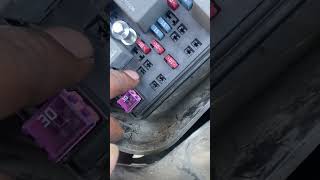
- Wiring Damage: Damage to the wiring between the ignition lock cylinder and the BCM can cause an intermittent loss of signal. This is often found in the steering column where wires can chafe or break from repeated movement of a tilt/telescoping wheel. A user on Saturn Forum reported an intermittent no-start that was traced to a disturbed connection at the ECM/BCM 🎬 See how to fix an intermittent no-start wiring issue. after other repairs.
Diagnosis Steps
- Scan the Body Control Module (BCM) for codes. Confirm B3060 is present, and check for companion codes like B3055, B3935, or U-codes.
- Isolate the Key: Remove all other keys, fobs, and RFID cards from the keychain. Unplug any aftermarket phone chargers or dash cams. Attempt to start the vehicle with only the isolated Saturn key. This is the most common and easiest fix.
- Try a Spare Key: Attempt to start the vehicle with a known-good spare key. If it starts, the issue is with the primary key's transponder chip.
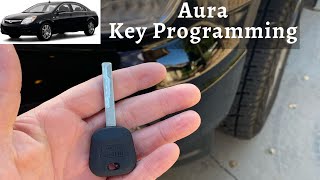
- Perform the 30-Minute Relearn Procedure: This procedure forces the BCM to learn the key's transponder value. 1. Insert the key and turn it to the 'ON' position (do not crank). The security light will illuminate. 2. Wait approximately 10-11 minutes for the security light to turn OFF. 3. Turn the key 'OFF' for 5-10 seconds. 4. Repeat steps 1-3 two more times for a total of three 10-minute cycles. 5. After the third cycle, turn the key off, then try to start the engine. The key should now be learned. 🎬 Watch: Step-by-step guide to programming your transponder key. A battery charger is recommended during this process.
- Inspect Wiring: If the relearn fails, visually inspect the wiring and connector at the back of the ignition lock cylinder inside the steering column shroud for any visible damage, looseness, or signs of chafing. Also inspect the main connectors at the BCM, particularly connector X2, for signs of looseness or corrosion.
- Test/Replace Ignition Lock Cylinder: If wiring appears okay and the relearn fails with multiple keys, the ignition lock cylinder/reader assembly is the most likely hardware failure. It must be replaced.
- Advanced Diagnostics: If a new lock cylinder does not resolve the issue, the problem may lie within the BCM or its wiring harness, which requires advanced diagnostics with a multimeter and wiring diagrams to trace signals between the BCM and the ignition switch.
Parts You'll Likely Need
- Ignition Lock Cylinder
(OEM #ACDelco D1493F (GM 25832354))— This assembly contains the transponder reader (exciter coil) which is a common failure point for this code on GM vehicles. Wear and tear causes it to fail to read the key's chip.
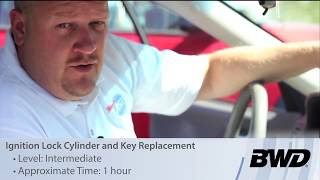
Trusted brands: ACDelco (OEM), Dorman (924-719), Standard Motor Products 🎬 Watch: How to replace the ignition lock cylinder yourself.
OEM price range: $120-$150
Aftermarket price range: $80-$120 - Transponder Ignition Key
(OEM #GM P/N: 15808223 (Key Blank, Strattec 5903893))— If the chip inside the key has failed or the key is lost, a new key is required. Must be a 'PK3' or 'Passkey III' compatible key.
Trusted brands: ACDelco, JMA, KeylessOption
OEM price range: $50-$70
Aftermarket price range: $20-$40
Related Codes That Often Appear With This One
- B3055 — This code means 'No Transponder Modulation or No Transponder Signal Received,' which is often set alongside B3060 when the key isn't read at all due to a bad reader, severe RF interference, or a dead key chip.
- B3935 — This code means 'Transponder Key Problem' and is another common companion code related to the Passkey III+ system failure, often cited in the same TSBs as B3060.
- U0100 — This code indicates 'Lost Communication With ECM/PCM'. It can appear if the BCM/TDM fails to send the correct password to the ECM, or if the BCM itself is failing and disrupting the vehicle's data bus network.
Technical Service Bulletins (TSBs) & Recalls
- PIC5650M: Addresses an intermittent no crank, no start, or start stall concern with the security light coming on, potentially setting DTCs B3055, B3060, and B3935. It strongly points to RFI from aftermarket devices.
- PIC5650B: An earlier version that highlights the difficulty in duplicating the concern and focuses on RFI from items on the customer's key ring as the likely cause.
- 01-00-89-010R: A general GM bulletin on how to diagnose intermittent issues, which references using PIC5650 for security-related no-starts caused by aftermarket devices.
Platform-Specific Known Issues
- A Technical Service Bulletin (TSB #PIC5650M) was issued by GM for the 2007-2009 Saturn Aura (among many other models) for an intermittent no crank, no start, or start/stall condition with the security light coming on, which can be associated with code B3060.
Mechanic-Grade Diagnostic Values
- Injector Pulse Signal — expected: A noid light connected to an injector harness connector should flash while cranking the engine.. Failure: If the noid light does not flash, it indicates the ECM is not commanding the injectors to fire, which can be a result of the anti-theft system being active.
- BCM Connector Pin Retention — expected: All pins in the BCM connectors, especially the large X2 connector, should be fully seated and provide firm contact.. Failure: A loose connector or poor pin fit can cause intermittent loss of communication on the CAN bus, leading to a no-start and multiple 'U' codes. Wiggling the connector may cause the fault to appear or disappear.
Scan Tool Commands That Help
- GM Tech2: ECM/Immobilizer Relearn — This function is used after replacing a key, the BCM, or the ECM to make the components recognize each other. The specific path is typically Body > Immobilizer > Special Functions.
Wiring & Ground Locations
- Body Control Module (BCM) — Located in the center console, accessible after removing the passenger side console trim panel or glove box area.. The BCM houses the Theft Deterrent Module (TDM) logic. A poor connection at its connectors (especially connector X2) can cause a no-start and set security codes or communication codes.
- G203 — A primary interior ground point located under the dash on the right side of the center console, near the floor.. The Body Control Module (BCM) and other interior modules rely on this ground. A loose or corroded G203 can cause erratic electrical behavior, including no-start and security system faults.
- G301 — A ground point located behind the top right of the rear seat back.. This ground serves several rear-body components, and while less directly tied to the TDM, ensuring all major grounds are clean and tight is a critical step when diagnosing intermittent electrical issues.
- BCM Connector X2 — The largest connector on the Body Control Module, often white in color.. This specific connector is a known weak point for pin retention issues. A slightly loose connection here can corrupt the high-speed CAN bus, causing a no-crank/no-start and loss of communication with the ECM and other modules, which can be misdiagnosed as a failed BCM or ECM.
Real Owner Repair Stories
- YouTube channel 'BL Automotive' (2008 Saturn Aura) — Intermittent no-crank, no-start. All dash lights come on, but turning the key does nothing. Multiple communication codes (U-codes) stored.
❌ Tried (didn't work) Initial diagnosis pointed towards a faulty module due to communication loss.
✅ What actually fixed it The issue was traced to poor pin retention in the BCM connector X2. Unplugging and firmly re-seating the connector restored CAN bus communication and allowed the vehicle to start. The mechanic noted that someone had previously put dielectric grease in the connector, suggesting prior issues. - YouTube channel 'Sarah' (2009 Saturn Aura) — Car would suddenly die at a stop. Would restart but immediately shut off after 1-2 seconds, mimicking a fuel cut-off from the security system. Full electrical power was present.
❌ Tried (didn't work) The owner initially suspected a fuel pump or fuel filter issue. Jump-starting the vehicle did not help.
✅ What actually fixed it The problem was a poor connection at the battery terminals. Thoroughly cleaning the battery posts and cable terminals resolved the start-and-stall issue completely. - Saturn Forum user 'kylerzinn' (2008 Saturn Aura 2.4L) — No crank, no start, not even a click from the starter. Code U0100 (Lost Communication with ECM) was present.
❌ Tried (didn't work) Testing the battery, starter, fuses, ignition switch, and grounds, all of which checked out good.
✅ What actually fixed it After confirming via pin-out testing that the ECM was the only module not communicating and that its wiring was intact, the Engine Control Unit (ECU/ECM) was replaced with a pre-programmed unit. A security key relearn and crankshaft position relearn were performed, which fixed the no-start condition.
When the Usual Fixes Don't Work
- While B3060 and related security symptoms strongly point to the Passkey III+ system (key, reader, BCM), basic electrical system integrity should not be overlooked. In one documented case on a 2009 Aura, symptoms of the engine starting and immediately stalling—a classic security system response—were ultimately caused by nothing more than corroded battery terminals. This created enough of a voltage drop or instability under load to disrupt module communication, mimicking a security fault. Before diving into complex diagnostics of the theft deterrent system, a thorough cleaning and tightening of the battery terminals is a crucial, zero-cost first step that can resolve the issue.
OEM Part Supersession History
12458191, 12533953, 15822350, 19168637→GM 25832354— Standard part consolidation and revision over time.
Heads up: GM 25832354 is the current service part number for the ignition lock cylinder for this application. The ACDelco equivalent is D1493F, and a common aftermarket cross-reference is Dorman 924-719.
Helpful Videos
Used OEM Parts in Stock

New Aftermarket Parts Available


The information in this article is provided for general reference and educational purposes only. Vehicle specifications, procedures, and part compatibility can vary by production date, trim level, and region. Always consult your vehicle's factory service manual and verify part numbers before purchasing or performing repairs. Safety-critical components such as airbags, seat belts, and braking systems should be installed by a qualified professional.
- Saturn AURA:
- 🎬 Helpful Videos
- 🛍️ Shop This Part
- What's Unique About the 2007-2009 Saturn AURA
- Diagnostic Flowchart
- Symptoms You May Notice
- Most Likely Causes
- Rare But Worth Checking
- Diagnosis Steps
- Parts You'll Likely Need
- Related Codes That Often Appear With This One
- Technical Service Bulletins (TSBs) & Recalls
- Platform-Specific Known Issues
- Mechanic-Grade Diagnostic Values
- Scan Tool Commands That Help
- Wiring & Ground Locations
- Real Owner Repair Stories
- When the Usual Fixes Don't Work
- OEM Part Supersession History
- 🎟️ Get 5% Off