

B3060 on 2007-2010 Pontiac G5: No-Start Causes and Security System Fixes
Code B3060 on a Pontiac G5 means the anti-theft system has failed, causing a no-start or start-and-stall. The most common cause is a faulty ignition lock housing containing the Passlock sensor. Before replacing parts, always perform the 30-minute security relearn procedure, which often fixes the issue for free, especially after a battery change or jump-start.
- B3060 means your G5's anti-theft system has been triggered, which is why it won't start.
- Before any repairs, ALWAYS perform the 30-minute security relearn procedure. It's free and often solves the problem.
- The most likely failed part is the ignition lock housing, which contains the Passlock sensor; this is a very common failure on this car.
- Do not waste money on a new starter, battery, or fuel pump until the B3060 code is properly diagnosed and resolved.
- Keep other keys and electronic fobs separate from your car key to prevent radio frequency interference, which can trigger this fault.
What's Unique About the 2007-2010 Pontiac G5

The Pontiac G5, along with its sibling the Chevrolet Cobalt, uses the GM Passlock anti-theft system. Unlike systems with a chip in the key (transponder keys), Passlock uses a sensor and magnet inside the ignition lock housing to verify the key turn. This specific design is known for the sensor failing over time, making the B3060 code a very common issue on this platform. The fix is almost always related to the ignition lock housing or a loss of system synchronization, not the key itself. The issue is so prevalent on the GM Delta platform that it's considered a well-known weakness.
Diagnostic Flowchart
Tap your situation to follow the diagnostic path that matches what you're seeing on this vehicle.
Symptoms You May Notice

- Engine will not crank or start
- Engine starts and then immediately stalls
- Security light is illuminated or flashing on the dashboard
- Driver Information Center (DIC) may display a message like "Service Theft Deterrent System"
- Replacing the starter motor. A bad starter will not cause the security light to illuminate.
- Replacing the fuel pump. While the symptom is 'start and stall', the security light and B3060 code point directly to the anti-theft system disabling the fuel, not a faulty pump.
- Replacing the battery. A weak battery can trigger the problem, but if the battery is healthy and the issue persists, the cause is the security system's loss of sync, not the battery itself.
Most Likely Causes

- Faulty Ignition Lock Housing / Passlock Sensor 🔴 High Probability The Passlock sensor is integrated into the ignition lock housing and is a very common failure point on the G5/Cobalt platform due to wear from key rotation and internal component fatigue. The sensor itself is not sold separately from the housing.
How to confirm: The 30-minute security relearn procedure provides a temporary fix, but the problem returns. Wiggling the key in the ignition may intermittently allow the car to start, which points to a worn component. The presence of code B3060 is the strongest indicator.
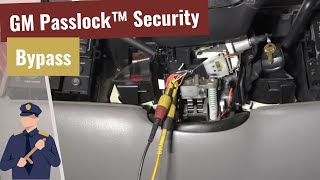
Typical fix: Replace the ignition lock housing assembly, which includes the new Passlock sensor. A security relearn procedure must be performed after replacement. Some owners opt for a permanent bypass by soldering a resistor with the correct value into the sensor's signal wire to send a constant correct signal to the BCM. 🎬 Watch: How to perform a permanent Passlock bypass with a resistor.
Est. part cost: $80-$160 - Loss of Security System Synchronization 🟡 Medium Probability The security system is sensitive to low voltage events, such as a weak or disconnected battery, or a jump-start, which can cause it to lose its programming and require a relearn.
How to confirm: The issue appears immediately after the battery has been replaced, disconnected, died, or was jump-started.
Typical fix: Perform the 30-minute, 3-cycle security relearn procedure. 🎬 Watch: How to reset the security light and anti-theft mode. This is often all that is needed to resynchronize the system.
Est. part cost: $0 - Radio Frequency Interference (RFI) ⚪ Low Probability As noted in GM TSB #PIC5650M, the security system can be sensitive to strong radio signals from other devices on the keychain, such as other vehicle fobs, building access cards, or toll passes.
How to confirm: The no-start issue is intermittent. Remove all other keys, fobs, and electronic devices from the keychain and unplug any aftermarket chargers from the car. If the car starts consistently with the key isolated, RFI is the likely cause.
Typical fix: Keep other electronic devices and key fobs away from the ignition key when starting the vehicle.
Est. part cost: $0 - Damaged Wiring ⚪ Low Probability The wires leading from the ignition lock housing down the steering column can chafe or break over time from use of the tilt-steering function or general vibration. The three small wires are typically yellow (signal), red/white or orange/black (power), and black (ground).
How to confirm: Visually inspect the wiring harness coming from the ignition lock cylinder for any signs of damage. A multimeter can be used to check for continuity between the sensor and the BCM. The yellow signal wire is the most critical.
Typical fix: Repair or replace the damaged section of the wiring harness.
Est. part cost: $5-$50
Rare But Worth Checking
- Faulty Body Control Module (BCM): This is rare and should only be considered after all other possibilities, especially the ignition lock housing and wiring, have been thoroughly ruled out. BCM replacement requires professional programming. On some GM platforms, water intrusion into the passenger footwell can damage the BCM.
Diagnosis Steps
- Scan the Body Control Module (BCM) with an advanced scanner to confirm code B3060 is present.
- Isolate the ignition key. Remove all other keys, fobs, and RFID cards from the keychain and attempt to start the vehicle to rule out Radio Frequency Interference (RFI).
- Perform the 30-Minute Security Relearn Procedure: Turn the key to 'ON' (do not start). The security light should be on. Wait about 10-11 minutes for the security light to turn off. Turn the key 'OFF' for 5-10 seconds. Repeat this process two more times for a total of three cycles (approx. 30 minutes). After the third cycle, turn the key off, then attempt to start the vehicle.
- If the relearn procedure works but the problem returns later (days or weeks), the ignition lock housing/Passlock sensor is very likely faulty and failing intermittently.
- If the relearn procedure does not work (the security light never turns off after 10 minutes), inspect the wiring between the ignition lock housing and the BCM for damage, paying close attention to the yellow, black, and orange/black wires in the steering column.
- If the wiring is intact and the relearn fails, the ignition lock housing/Passlock sensor is the most probable failed component and should be replaced.
- If replacing the ignition lock housing and performing the relearn procedure does not fix the issue, the Body Control Module (BCM) may be faulty and requires professional diagnosis.
Parts You'll Likely Need
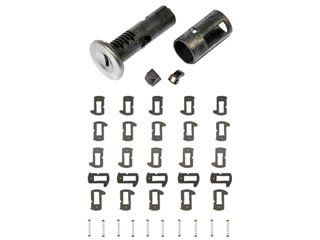
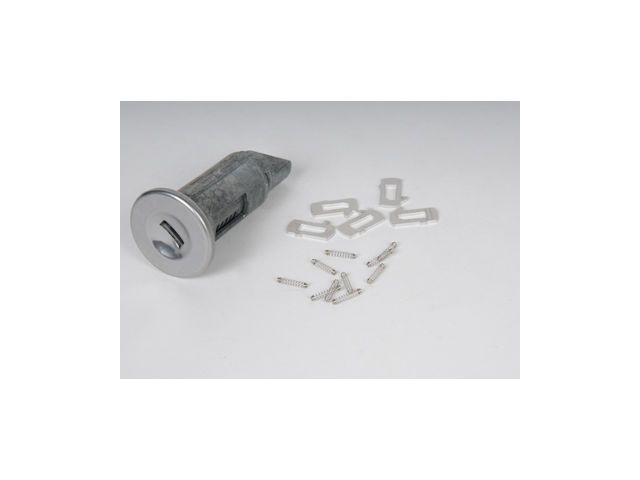
- Ignition Lock Housing with Passlock Sensor
(OEM #15896640)— This is the most common hardware failure for code B3060 on this platform. The integrated Passlock sensor wears out, causing the anti-theft system to trigger. The sensor is not available separately.
Trusted brands: Dorman (e.g., 924-702), ACDelco (GM Genuine Part), Standard Motor Products
OEM price range: $130-$160
Aftermarket price range: $80-$120 - Ignition Lock Cylinder
(OEM #15815961)— If the mechanical part of the lock cylinder is worn or damaged, it may be replaced along with the electronic housing. This part is coded to the key. A known issue on these cars is the key sticking or being difficult to remove, addressed by GM campaign #10256 and TSB #09-02-35-005C, which call for replacing the lock cylinder.
Trusted brands: ACDelco (GM Genuine Part)
OEM price range: $131-$145
Aftermarket price range: $60-$100
Related Codes That Often Appear With This One
- B3055 — This code means 'No Transponder Signal' and often appears with B3060, indicating a complete failure of the Passlock sensor to send any signal at all. It is mentioned in the same TSB (PIC5650M) as B3060.
- B3935 — This code indicates a 'Transponder Authentication Failed' and is part of the same family of security faults, often logged during a no-start event with B3060. It is also cited in TSB PIC5650M.
Technical Service Bulletins (TSBs) & Recalls
- PIC5650M: Addresses intermittent no-crank, no-start, or start-stall concerns with the security light on, citing DTCs B3055 and B3060. It points to potential Radio Frequency Interference (RFI) as a cause.
- #09-02-35-005C: Specifically addresses the physical problem of the ignition key being difficult to remove or sticking in the cylinder. The fix is to replace the ignition lock cylinder. This applies to the 2007-2009 G5.
Platform-Specific Known Issues
- The GM Passlock system used in the Pontiac G5 and Chevrolet Cobalt is widely known for the high failure rate of the sensor within the ignition lock housing, making this a very common repair for these vehicles.
- A separate but related issue is covered by GM Customer Satisfaction Program #10256 and TSB #09-02-35-005C, where the mechanical ignition lock cylinder can bind, making the key difficult to remove. This can sometimes be mistaken for or occur at the same time as the electronic Passlock failure.
Mechanic-Grade Diagnostic Values
- Passlock Sensor Signal Wire Voltage — expected: The BCM sends a 5V reference signal on the yellow wire. When the key is turned to ON/CRANK, the sensor connects an internal resistor, causing the voltage to drop to a specific value (e.g., 1.5V - 4.5V) that the BCM has learned.. Failure: Voltage stays at 5V, drops to 0V, or drops to a value that doesn't match what the BCM expects. An unstable or fluctuating voltage reading when wiggling the key points to a failing sensor or bad wire.
- Passlock Sensor Resistance (for bypass) — expected: Between 400 Ohms and 13,700 Ohms. This value is unique to each sensor and must be measured from a working unit before it fails completely.. Failure: This is not a failure test, but a measurement needed to perform a resistor bypass. A common value used in bypass guides is a 2.2K Ohm resistor, but the correct method is to measure the vehicle's specific required resistance.
- Passlock Sensor Power Supply — expected: The Orange/Black wire should have a steady 5V or greater reference voltage from the BCM with the key on.. Failure: No voltage or low voltage indicates a problem with the BCM or the wiring from the BCM, not necessarily the sensor itself.
Scan Tool Commands That Help
- GM Tech 2 / GDS2: VTD Re-Learn (Vehicle Theft Deterrent Relearn) — This function, found under the Body Control Module (BCM) or Service Programming (SPS) menu, initiates the security relearn procedure. It is the professional equivalent of the 30-minute manual method and is required after replacing the BCM or ignition lock housing to sync the components.
Wiring & Ground Locations

- Body Control Module (BCM) — Located in the passenger footwell, behind a removable trim panel on the right side of the center console.. The BCM is the module that reads the Passlock sensor signal and controls the fuel injectors. All diagnostic wiring tests for the Passlock system will originate or terminate at the BCM connectors.
- Ignition Switch Connector Wires — At the ignition lock cylinder housing inside the steering column.. These are the three critical wires for the Passlock system. Typically: Yellow is the Passlock Sensor Signal wire to the BCM, Orange/Black is the reference voltage from the BCM, and a Black or Yellow/Black wire is the low reference (ground). Damage to these wires is a common cause of the fault.
- G203 (Ground) — Behind the right side of the dashboard.. This is a primary ground point for several dash components, including the BCM. A poor ground at this location can cause a variety of bizarre electrical issues, including intermittent security system faults.
- BCM Connector C2, Pin E9 — At the Body Control Module.. This pin provides the 12-volt power to the Passlock sensor.
- BCM Connector C1, Pin B10 — At the Body Control Module.. This is the specific pin where the BCM receives the signal from the yellow wire of the Passlock sensor. It is the primary test point for diagnosing the signal.
Real Owner Repair Stories
- Cobalt SS Network Forum User (Chevrolet Cobalt (platform sibling)) — Car would not start, security light was on, code B3060 present.
❌ Tried (didn't work) Performing the 30-minute security relearn procedure multiple times., Replacing the entire ignition lock housing with a new Passlock sensor.
✅ What actually fixed it After the new part didn't work, the owner inspected the wiring harness in the steering column. They found the yellow signal wire was broken inside the insulation, about six inches from the ignition cylinder. Repairing the broken wire solved the problem permanently. - Cobalt SS Network Forum User (2007 Chevrolet Cobalt) — Multiple electrical issues including power steering warning, erratic gauges, hard shifting, and a no-start with security light. Shorting a wire near the shifter caused smoke and loss of power to windows and dome light.
❌ Tried (didn't work) Checking all fuses in the interior and underhood fuse boxes.
✅ What actually fixed it The root cause was a blown 50A in-line fuse located in the trunk near the battery. This single fuse supplies the Body Control Module (BCM), and when it blew, it caused widespread electrical failure that mimicked a faulty BCM.
OEM Part Supersession History
15896640→19434100— Standard part number update by GM for the Ignition Lock Housing.
Helpful Videos
Used OEM Parts in Stock

New Aftermarket Parts Available


The information in this article is provided for general reference and educational purposes only. Vehicle specifications, procedures, and part compatibility can vary by production date, trim level, and region. Always consult your vehicle's factory service manual and verify part numbers before purchasing or performing repairs. Safety-critical components such as airbags, seat belts, and braking systems should be installed by a qualified professional.
- Pontiac G5:
- 🎬 Helpful Videos
- 🛍️ Shop This Part
- What's Unique About the 2007-2010 Pontiac G5
- Diagnostic Flowchart
- Symptoms You May Notice
- Most Likely Causes
- Rare But Worth Checking
- Diagnosis Steps
- Parts You'll Likely Need
- Related Codes That Often Appear With This One
- Technical Service Bulletins (TSBs) & Recalls
- Platform-Specific Known Issues
- Mechanic-Grade Diagnostic Values
- Scan Tool Commands That Help
- Wiring & Ground Locations
- Real Owner Repair Stories
- OEM Part Supersession History
- 🎟️ Get 5% Off