

B3060 on 2007-2010 Hummer H3: Passlock Security Fault Causes and Fixes
On a 2007-2010 Hummer H3, code B3060 almost always points to a failure of the Passlock anti-theft sensor located in the ignition lock cylinder housing. This causes a no-start or start-and-stall condition, often with a flashing security light. Replacing the sensor and performing a 30-minute security relearn procedure is the most common fix, costing around $50-$70 for the part.
- B3060 on an H3 is a security system code, not a problem with the starter or fuel pump.
- The most likely culprit is the Passlock sensor located in the ignition lock cylinder housing, a known weak point.
- Symptoms are classic anti-theft issues: cranks but won't run, starts and dies, and a flashing security light.
- Replacing the sensor is a manageable DIY job, but you MUST perform the 30-minute security relearn procedure afterward for the vehicle to start.
- Before replacing parts, check the battery and inspect the sensor's wiring for obvious damage. Also consider potential interference from RFID devices as per TSB PIC5650M.
What's Unique About the 2007-2010 Hummer H3 🎬 Watch: Top 5 common problems for first generation Hummer H3s

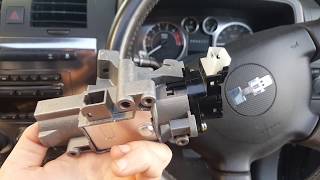
The Hummer H3, along with its GM GMT355 platform mates like the 2004-2012 Chevy Colorado and GMC Canyon, uses the Passlock II anti-theft system. Unlike systems with a transponder chip in the key, Passlock relies on a sensor (containing a small resistor and magnet) within the ignition lock housing to read the rotation of the lock cylinder. This specific system is notoriously prone to failure, leading to widespread complaints of intermittent no-start or start-and-stall issues. The problem is so common that many owners have developed workarounds, performed a permanent bypass, or have had to replace the sensor.
Diagnostic Flowchart

Tap your situation to follow the diagnostic path that matches what you're seeing on this vehicle.
Symptoms You May Notice

- Engine cranks but will not start
- Engine starts and immediately dies
- Security or padlock symbol is flashing on the instrument cluster
- Forced 10-minute wait period before the vehicle will allow another start attempt
- Radio display may show 'LOCKED'.
- Multiple unrelated warning lights (e.g., ABS Fault, Traction Control Failed) may appear simultaneously due to the electrical fault.
- Replacing the starter motor
- Replacing the fuel pump
- Replacing the battery or alternator without diagnosing the security light
- Replacing the ignition key cylinder (the mechanical part) instead of the electronic Passlock sensor/housing.
Most Likely Causes

- Faulty Ignition Lock Cylinder Housing / Passlock Sensor 🔴 High Probability The Passlock sensor, which is a small assembly containing a resistor, is known to crack or fail from age, heat cycles, and vibration from heavy keychains. This is a well-documented weak point on the GM GMT355 platform, affecting the H3, Colorado, and Canyon.
How to confirm: Diagnose by observing a flashing security light and confirming code B3060 with a scanner. A scan tool capable of reading BCM data can monitor the Passlock sensor data for erratic or missing values. A user on Hummer4x4Offroad.com confirmed the failure by disassembling the old sensor and finding a cracked internal resistor.
Typical fix: Replace the ignition lock cylinder housing which contains the new Passlock sensor. After replacement, a 30-minute security relearn procedure is mandatory. Some owners opt to replace only the sensor part, which can be separated from the lock cylinder housing it comes with.
Est. part cost: $45-$80 - Wiring or Connector Issues 🟡 Medium Probability The wiring harness from the ignition cylinder can chafe against steering column components, or the connector pins can become corroded or loose over time, interrupting the signal to the BCM. The GMT355 platform is known for various electrical issues, many stemming from wiring.
How to confirm: Visually inspect the wiring harness running down the steering column. Unplug the connector from the Passlock sensor and check for corrosion, damage, or loose pins. Use a multimeter to test for continuity between the sensor connector and the BCM. A user on a forum found a loose wire in the harness was the ultimate cause of a no-crank, no-start issue.
Typical fix: Repair the damaged section of wire or clean/replace the connector. In some cases, simply cleaning the connector contacts with electronic cleaner and ensuring a snug fit can restore function. Some owners have found success by shimming the connector to ensure a tight fit.
Est. part cost: $5-$25 - Failing Body Control Module (BCM) ⚪ Low Probability While less common for this specific code, the BCM itself can fail. The H3 platform is known for various electrical gremlins, some of which can be traced back to the BCM. A failing BCM can cause a wide array of erratic electronic behaviors, not just a Passlock fault.
How to confirm: This is a diagnosis of exclusion. If the Passlock sensor and wiring have been tested and confirmed to be good, the BCM becomes the primary suspect. This requires advanced diagnostics with a high-end scan tool to check for communication errors (like U-codes) and monitor BCM data streams.
Typical fix: Replace the Body Control Module. The new BCM will need to be programmed to the vehicle by a dealer or a qualified shop with the appropriate software (e.g., GM Tech 2 or SPS).
Est. part cost: $200-$400
Rare But Worth Checking
- Low Battery Voltage: Extremely low battery voltage can cause a variety of unpredictable electronic faults and codes, including security system errors. Always ensure the battery is fully charged (at least 12.4V) and the charging system is working before diagnosing other components.
- Radio Frequency Interference (RFI): TSB #PIC5650M and its successors note that external Radio Frequency Identification (RFID) devices can interfere with the Passlock system. This could include things like work ID badges or aftermarket devices near the ignition key when starting.
Diagnosis Steps
- Verify the symptom: Confirm the security light is flashing and the engine either won't start or starts and stalls.
- Scan for codes: Use an OBD-II scanner capable of reading Body Control Module (BCM) codes to confirm B3060 is present.
- Check Battery Health: Ensure the battery has a full charge (at least 12.4V) and that the alternator is functioning correctly. A battery charger is recommended during diagnosis and relearn procedures.
- Inspect Wiring: Remove the steering column shrouds and visually inspect the wiring and connector going to the ignition lock cylinder housing for any signs of damage, chafing, or corrosion.
- Test the Sensor (Advanced): Use a scan tool to monitor the Passlock sensor data in the BCM. If the data is erratic or absent when turning the key, the sensor is likely faulty.
- Replace the Passlock Sensor/Housing: If the sensor is deemed faulty, replace the ignition lock cylinder housing.
- Perform Security Relearn Procedure: After replacement, perform the 30-minute relearn procedure. This typically involves turning the key to 'ON' for 10-11 minutes until the security light stops flashing, turning it 'OFF' for 30 seconds, and repeating this process two more times for a total of three cycles.
Parts You'll Likely Need
- Ignition Lock Cylinder Housing with Passlock Sensor
(OEM #15795321)— This is the most common failure point for code B3060. The integrated Passlock sensor fails, triggering the anti-theft system.
Trusted brands: ACDelco (GM Original Equipment), Dorman (e.g., 924-719, though this may be for the lock cylinder itself, not the housing), Standard Motor Products
OEM price range: $60-$90
Aftermarket price range: $45-$70
Related Codes That Often Appear With This One
- B3055 — This code is for 'No Transponder or No Passlock Sensor'. It is often set alongside B3060 as part of the same security system fault, as noted in TSB #PIC5650M.
Technical Service Bulletins (TSBs) & Recalls
- PIC5650M: Addresses an intermittent no crank, no start, or start stall concern with the security light coming on, which can be associated with code B3060. It suggests investigating Radio Frequency Interference as a possible cause before replacing hardware.
Platform-Specific Known Issues
- The GM Passlock system used in the H3 is widely known for its high failure rate, causing intermittent no-start conditions that can be very frustrating for owners.
- TSB #PIC5650M and its subsequent revisions were issued by GM for an intermittent no-crank/no-start or stall condition associated with the security light and code B3060, among others. The bulletin advises checking for RFI from aftermarket devices before replacing parts.
- Some owners on forums for the H3 and its platform-mates have opted for a permanent bypass by cutting a specific wire at the BCM while the engine is running, or by having the VATS (Vehicle Anti-Theft System) programmed out of the PCM.
Mechanic-Grade Diagnostic Values
- Passlock Sensor Resistance — expected: 400 - 13,700 Ohms. Failure: A reading of 0 Ohms, infinite resistance (OL), or a value outside the expected range indicates a faulty sensor.
Scan Tool Commands That Help
- GM Tech2 / GDS2: View BCM Key Part Number Parameter — When diagnosing a no-start, this parameter shows if the BCM is successfully reading the transponder/Passlock value from the key or ignition cylinder. If the parameter is blank or shows an error, it points to a failure in the key, sensor, or wiring.
- GM Tech2 / GDS2: BCM Setup / Programming — This function is required after replacing the Body Control Module (BCM). It involves programming the new module with the vehicle's VIN, odometer reading, and other specific options (RPOs) to ensure it communicates correctly with other modules like the PCM and SDM (airbag).
- GM Tech2: Pass-Thru Programming with SPS/SPS2 — For updating module software or programming a replacement module, the Tech2 can be used as an interface (pass-thru device) between the vehicle and a PC running GM's Service Programming System (SPS). This is often necessary for BCM replacement to ensure the latest software and correct configuration are loaded.
Wiring & Ground Locations
- Body Control Module (BCM) — Behind the right front kick panel, in the passenger footwell.. The BCM is the module that receives the Passlock sensor signal, interprets it, and decides whether to allow the engine to run. All diagnostic paths for B3060 lead to or from the BCM.
- Passlock Sensor Signal Wire — At the BCM, this is typically a White/Black wire at Pin 3 of the light green 27-way connector (X1). At the ignition switch, it is one of the three wires (often yellow) in the small ribbon cable.. This is the specific wire that carries the resistance signal from the Passlock sensor to the BCM. Testing for continuity and voltage on this wire is a key diagnostic step.
- BCM Fuse — In the underhood fuse block, a 10A fuse located in the top row (closest to the firewall), second position from the engine side.. Corrosion on the terminals of this fuse or a blown fuse can cause a no-crank condition with the security light staying on, mimicking a Passlock sensor failure. This is a critical and easily missed check.
- G300 — Under the driver's seat carpet, on the floorboard.. This is a major interior ground point. A poor ground connection at G300 can cause a variety of erratic electrical issues, including problems with the BCM and instrument cluster, which could potentially trigger a false B3060 code.
Real Owner Repair Stories
- YouTube channel 'Spartan Autoworks' (Chevy Colorado / GMC Canyon / Hummer H3 (GMT355 Platform)) — Intermittent no-crank or no-start condition with the security light illuminated.
❌ Tried (didn't work) Owners often replace the Passlock sensor or BCM without checking other simple causes.
✅ What actually fixed it In some cases, the issue is not the Passlock sensor itself, but a corroded or blown 10A fuse for the BCM in the underhood fuse block. In other cases where the BCM is the confirmed culprit or the issue is persistent, the technician recommends a permanent fix by sending the Engine Control Module (ECM) to a specialist to have the VATS/Passlock system programmed out ('deleted'). This prevents the security system from ever disabling the vehicle again.
"I Checked Everything" — The Actual Cause
- A common scenario for a persistent B3060-related no-start is when a technician has already replaced the Passlock sensor and verified the wiring harness has continuity. In these cases, the root cause is often found to be corrosion on the terminals of the 10A BCM fuse in the underhood fuse block, which prevents the BCM from powering up correctly and recognizing the security signal.
OEM Part Supersession History
15216929, 19149940, 88964357→15795321— Standard part consolidation and potential minor revisions by the manufacturer.
Heads up: These part numbers are for the Ignition Lock Cylinder Housing which includes the Passlock sensor. They are considered interchangeable, with 15795321 being the latest service part number.
Model Year Variations Within This Range
- 2007-2010: There is a potential variation in the Body Control Module (BCM) design. A technician noted that older BCMs on this platform may have had an integrated antenna bar for the Remote Function Actuation (RFA) system soldered directly to the circuit board, whereas newer versions may use an external antenna connector. While not directly related to the Passlock sensor input, this difference is important for technicians diagnosing a faulty BCM that may present with multiple issues.
Helpful Videos


Used OEM Parts in Stock

New Aftermarket Parts Available


The information in this article is provided for general reference and educational purposes only. Vehicle specifications, procedures, and part compatibility can vary by production date, trim level, and region. Always consult your vehicle's factory service manual and verify part numbers before purchasing or performing repairs. Safety-critical components such as airbags, seat belts, and braking systems should be installed by a qualified professional.
- Hummer H3:
- 🎬 Helpful Videos
- 🛍️ Shop This Part
- What's Unique About the 2007-2010 Hummer H3
- Diagnostic Flowchart
- Symptoms You May Notice
- Most Likely Causes
- Rare But Worth Checking
- Diagnosis Steps
- Parts You'll Likely Need
- Related Codes That Often Appear With This One
- Technical Service Bulletins (TSBs) & Recalls
- Platform-Specific Known Issues
- Mechanic-Grade Diagnostic Values
- Scan Tool Commands That Help
- Wiring & Ground Locations
- Real Owner Repair Stories
- "I Checked Everything" — The Actual Cause
- OEM Part Supersession History
- Model Year Variations Within This Range
- 🎟️ Get 5% Off