

B3060 on 2007-2014 GMC Yukon XL: No-Start, Security Light Causes & Fixes
This code means your Yukon XL's security system doesn't recognize your key, causing a no-start. The most common fix is to try a spare key or perform the 10-minute key relearn procedure, which costs nothing. If that fails, the problem is likely a worn ignition key, a faulty ignition lock cylinder, or the attached ignition switch.
- B3060 means your truck's security system has disabled the engine because it doesn't recognize the key.
- Before spending any money, try starting with a spare key and remove all other fobs from your keychain.
- The 30-minute 'Key Relearn Procedure' is a free and highly effective troubleshooting step that you can do yourself.
- If simple fixes don't work, the problem is most likely a worn-out ignition lock cylinder, not the starter or battery.
- This is a well-documented issue on this platform, with GM issuing service bulletins to address the symptoms.
What's Unique About the 2007-2014 Gmc YUKON XL
The GM Passkey III (PK3) immobilizer system used in this generation of Yukon XL (and its GMT900 platform mates) is effective but known for being sensitive. Over time, the transponder chip in the key can weaken, or the components inside the ignition lock cylinder can wear out, leading to intermittent communication failures. This platform is also susceptible to radio frequency (RF) interference, where other devices on your keychain can block the key's 125 kHz signal, triggering this code without any part actually being broken. GM TSBs PIC5650C and PIC5650K specifically call out this RFI issue from items like other vehicle fobs, building access cards, and even aftermarket LED lights or phone chargers.
Diagnostic Flowchart
Tap your situation to follow the diagnostic path that matches what you're seeing on this vehicle.
Symptoms You May Notice
- Engine does not crank or turn over (no-crank, no-start).
- Engine starts but shuts off immediately (start-stall).
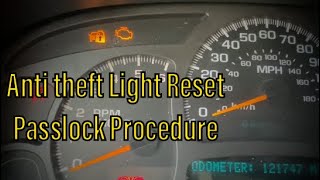
- The security indicator light (an icon of a car with a lock) is on solid or flashing on the dashboard.
- Message on Driver Information Center (DIC) may show "Service Theft Deterrent System".
- Replacing the starter motor. A starter failure typically won't cause the security light to illuminate. A user on TahoeYukonForum confirmed this when jumping the starter relay also failed to start the engine, pointing away from a Passlock issue and toward a starter/power delivery problem.
- Replacing the battery. While a low battery can cause various electrical issues, it won't specifically trigger a B3060 code. However, a fully charged battery is required to perform the key relearn procedure correctly.
Most Likely Causes
- Worn or Damaged Ignition Key 🔴 High Probability The transponder chip embedded in the key head can be damaged from drops or simply wear out over many years of use, causing its signal to become weak or unreadable. The key itself is a common point of failure.
How to confirm: Try starting the vehicle with a spare key. If the spare key works reliably, the original key is the problem. A scan tool can also show if the TDM sees a valid key.
Typical fix: Replace the faulty key and perform the key relearn procedure. A new key will need to be cut and programmed.
Est. part cost: $50-$150 - Radio Frequency (RF) Interference 🟡 Medium Probability The immobilizer system operates at a low frequency (125 kHz) that can be easily disrupted by other electronic devices. TSB PIC5650K lists numerous sources, including other key fobs, toll passes, building access cards, and even aftermarket phone chargers or LED lights inside the cabin.
How to confirm: Remove all other keys and electronic devices from your Yukon's keychain. Try starting the vehicle with the ignition key by itself. If it starts, RF interference was the cause.
Typical fix: Keep other electronic fobs and devices on a separate keychain from your ignition key. Remove aftermarket chargers and lighting if they are found to be the cause.
Est. part cost: $0 - Faulty Ignition Lock Cylinder and/or Ignition Switch 🟡 Medium Probability This is a two-part issue. The Ignition Lock Cylinder (GM Part #25832354) houses the exciter coil that reads the key. The separate, but connected, Ignition Switch (ACDelco D1462G / GM Part #15795321) contains the electrical contacts that can wear out. Wear and tear on either component can cause intermittent signal loss or failure to power the system, leading to a no-start condition.
How to confirm: If the key relearn procedure fails and multiple keys don't work, the issue often points to the hardware in the steering column. Wiggling the key in the ignition may temporarily restore connection, indicating a worn switch or cylinder. A forum user on TahoeYukonForum noted that even after replacing the ignition, their problem persisted until the BCM was addressed, but the ignition components are a far more common failure point.
Typical fix: Replace the ignition lock cylinder and/or the ignition starter switch. The lock cylinder replacement will require a key relearn procedure.
Est. part cost: $70-$200
Rare But Worth Checking
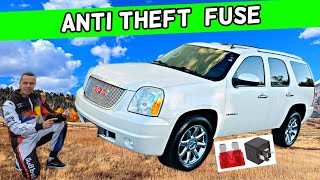
- Blown Immobilizer Fuse: A simple but often overlooked check. A YouTube guide for this vehicle generation identifies fuse #35 in the under-hood fuse box as being related to the alarm/immobilizer system.
- Failed Theft Deterrent Module (TDM) / Body Control Module (BCM): While rare, the module responsible for reading the key can fail. This is usually the last item to suspect after all other causes have been ruled out. One owner on a forum noted that after replacing the ignition, the issue was only resolved by reprogramming the BCM with a Tech2 tool. Replacement requires programming with a dealer-level scan tool.
- Corroded or Damaged Wiring/Grounds: Several owners on TahoeYukonForum report that erratic electrical issues, including no-start problems, were traced back to bad grounds. Specifically, check the main ground strap from the battery, grounds on the firewall, and the frame ground under the driver's side. Another owner found a chafed wiring harness behind the alternator rubbing on a stud, causing intermittent issues.
Diagnosis Steps
- Observe the security light on the dashboard. If it's on or flashing when you try to start the vehicle, the issue is almost certainly with the anti-theft system.
- Remove all other keys, fobs, and electronic devices from your ignition keychain to eliminate RF interference, as detailed in GM TSB PIC5650K.
- Try starting the vehicle with a known-good spare key. If it starts, the first key is faulty.
- Check fuse #35 in the under-hood fuse box. 🎬 Watch: Quick video showing the exact anti-theft fuse location.
- Perform the '10-Minute Key Relearn Procedure'. Ensure the battery is fully charged first. Insert a key, turn it to the 'ON' position (don't start), and leave it for about 10 minutes, or until the security light turns off. Turn the key off for 10 seconds, then repeat two more times for a total of 3 cycles and ~30 minutes. After the third cycle, the key should be relearned. Most trucks require all three cycles. 🎬 Watch: Step-by-step guide to the security lockout reset procedure. If the security light never turns off during this process, it may indicate a deeper hardware failure.
- If the relearn fails, inspect the wiring and connector at the ignition switch for any visible damage or loose connections. Check for chafed wires in the harness behind the alternator.
- Check for bad ground connections at the firewall, engine block, and frame.
- If the problem persists, the most likely remaining cause is a faulty ignition lock cylinder or ignition switch, which will need to be replaced.
Parts You'll Likely Need
- Ignition Lock Cylinder
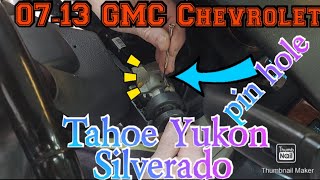
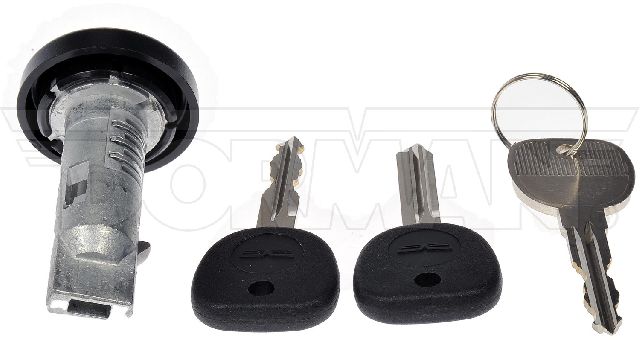
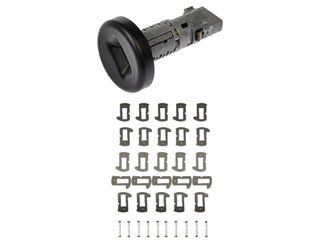
(OEM #25832354)— The lock cylinder housing contains the components that read the key's transponder. It's a common failure point for intermittent no-start issues related to the security system. This part is also sold as Dorman 924-719. 🎬 See how to remove and replace the ignition lock cylinder.
Trusted brands: ACDelco (OEM), Standard Motor Products, Dorman
OEM price range: $80-$160
Aftermarket price range: $50-$100 - Ignition Starter Switch
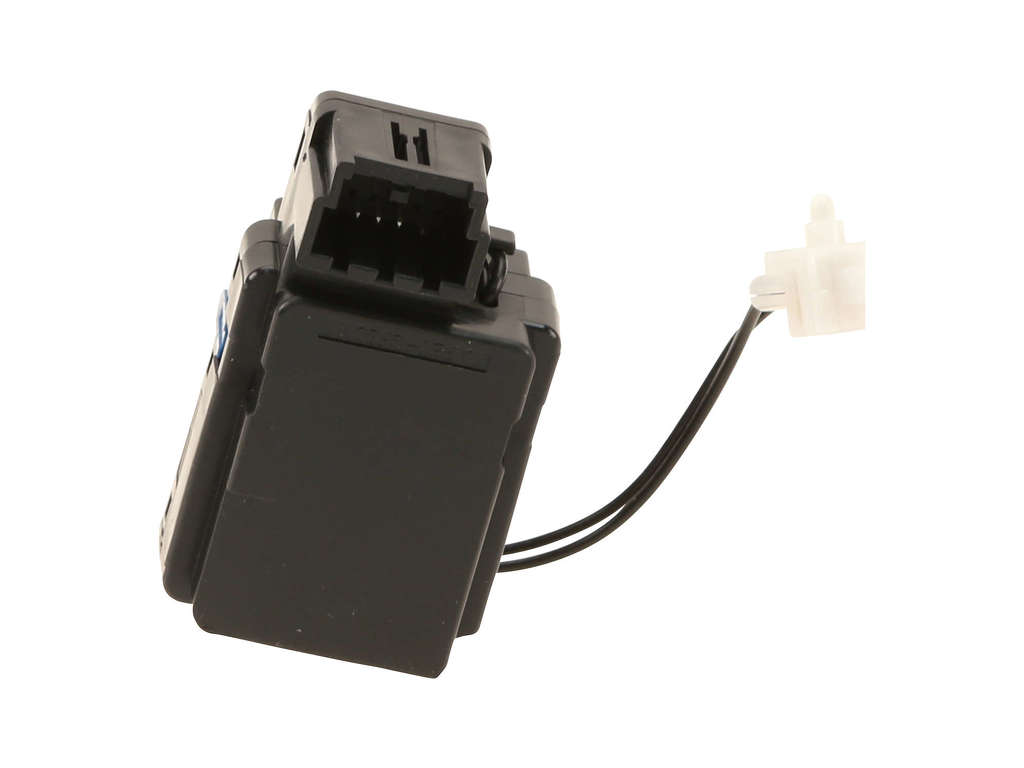
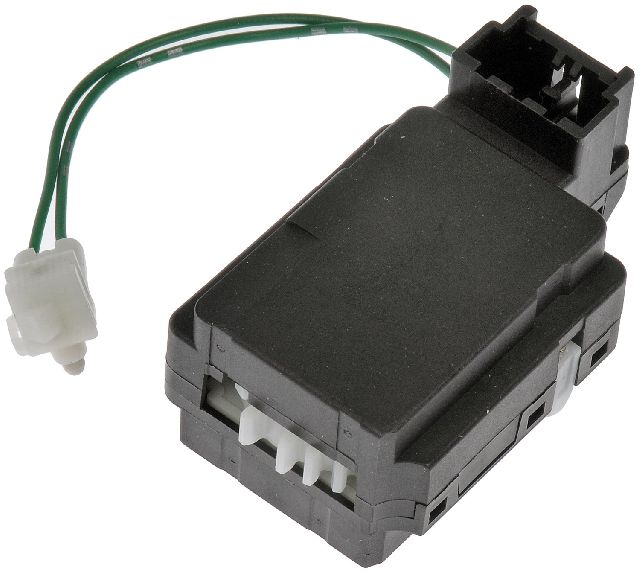
(OEM #15795321)— This electrical switch is attached to the lock cylinder and its internal contacts can wear out, causing a loss of power or signal. The ACDelco part number is D1462G. RepairPal estimates the part cost between $68 and $81.
Trusted brands: ACDelco (OEM), Standard Motor Products (SMP), Dorman
OEM price range: $60-$90
Aftermarket price range: $30-$60 - Ignition Key with Transponder — The transponder chip in the key itself can fail. This is the simplest part to replace, but it requires programming to the vehicle via the relearn procedure.
Trusted brands: ACDelco, KeylessOption
OEM price range: $40-$80
Aftermarket price range: $20-$50
Related Codes That Often Appear With This One
- B3055 — This code means 'No Transponder Modulation or No Transponder'. It often appears with B3060, indicating the security module is having trouble communicating with the key chip at all. Both are mentioned in the same TSBs, like PIC5650M.
- B3935 — This code for 'Transponder Authentication Error' can also be set alongside B3060, pointing to a failure in the security handshake process between the key and the vehicle. It is also cited in TSB PIC5650M.
Technical Service Bulletins (TSBs) & Recalls
- PIC5650M: Addresses intermittent no crank, no start, or start stall with security light on, listing B3060 as a possible code.
- PIE0232: Engineering investigation into no-crank/no-start conditions with security light on and DTC B3060, focusing on potential RF interference.
- PIC5650K: A later version of the TSB that provides an extensive list of aftermarket devices that can cause Radio Frequency Interference (RFI), such as phone chargers, LED lights, and toll passes, which can trigger security codes like B3060.
Platform-Specific Known Issues
- A GM Technical Service Bulletin (TSB #PIC5650M) directly acknowledges an intermittent no-crank, no-start, or start-stall concern with the security light on, listing B3060 as one of the primary diagnostic codes.
- Another GM document (PIE0232) was issued for 2013 models to investigate the root cause of B3060, specifically looking into RF interference from devices near the ignition cylinder.
- A thread on TahoeYukonForum titled 'No start issues again' details one user's multi-month battle with an intermittent no-start. After replacing the ignition and reprogramming, the issue persisted, highlighting how frustrating this problem can be and sometimes involves the BCM or wiring.
- A YouTube video by 'Wrench Sense wit
Mechanic-Grade Diagnostic Values
- High-Speed GMLAN Bus Resistance — expected: 60 ohms +/- 5 ohms. Failure: A reading of ~120 ohms indicates an open in the bus. A reading significantly less than 60 ohms indicates the two wires are shorted together.
Scan Tool Commands That Help
- GM Tech 2 / GDS2: View 'TDM Valid Key' Parameter — To definitively verify if the Theft Deterrent Module (TDM) is successfully reading and validating the transponder key currently in the ignition. The parameter should read 'Yes' for a known-good key. If it reads 'No' with a key that should work, it confirms a communication failure between the key, the exciter coil/lock cylinder, and the TDM.
Wiring & Ground Locations
- ECM Ground — On the front of the passenger side engine block, where the main negative battery cable also connects.. This is the primary ground for the Engine Control Module. A corroded or fractured wire at this terminal is a known failure point that causes intermittent no-start, limp mode, and random communication codes (like U0073) that can be mistaken for a BCM or security system failure.
- Main Body Grounds — On the vehicle frame, located under the driver's side door.. Corrosion at these two main grounding points is common and can cause a wide range of difficult-to-diagnose electrical issues, including security system messages, flickering dash lights, and other BCM-related symptoms.
- BCM Location — Inside the vehicle, behind the lower dashboard panel on the driver's side, near the interior fuse block.. This is the physical location of the Body Control Module, which incorporates the Theft Deterrent Module (TDM) functions. Access is required to inspect its 7 connectors (X1-X7) for corrosion or damage if a module or wiring fault is suspected.
- GMLAN Bus (at BCM) — BCM Connector X3, Pins 8 (TN/BK) & 9 (TN) and Pins 16 (TN/BK) & 17 (TN).. These are the High-Speed GMLAN serial data lines. Damage to these specific wires can disrupt communication between the BCM, ECM, and other modules, which can trigger security faults like B3060.
Real Owner Repair Stories
- Tahoe Yukon Forum user report (2008 Yukon Denali, 6.2L AWD) — Intermittent no-start and limp mode that became more frequent over time. Multiple random codes would appear, but P0700 (Transmission Control System Malfunction) and U0073 (Control Module Communication Bus Off) were consistent.
❌ Tried (didn't work) Upgrading the 'Big 3' wiring., Replacing the battery., Unplugging, cleaning, and reconnecting every control module., Cleaning the ground under the driver's seat.
✅ What actually fixed it The main ground wire for the ECM was found to be almost completely broken inside the crimped ring terminal. This ground attaches to the front passenger side of the engine block. Replacing this faulty ground wire resolved all issues.
OEM Part Supersession History
25832354 / Dorman 924-719→N/A— Part number correction
Heads up: Part 25832354 and its aftermarket equivalent Dorman 924-719 DO NOT FIT the 2007-2014 Yukon XL; they are for pre-2007 models. The correct OEM part for the 2007-2014 generation is 15794826. The correct Dorman aftermarket part is 924-796.
Helpful Videos
Used OEM Parts in Stock


New Aftermarket Parts Available


The information in this article is provided for general reference and educational purposes only. Vehicle specifications, procedures, and part compatibility can vary by production date, trim level, and region. Always consult your vehicle's factory service manual and verify part numbers before purchasing or performing repairs. Safety-critical components such as airbags, seat belts, and braking systems should be installed by a qualified professional.
- Gmc YUKON XL:
- 🎬 Helpful Videos
- 🛍️ Shop This Part
- What's Unique About the 2007-2014 Gmc YUKON XL
- Diagnostic Flowchart
- Symptoms You May Notice
- Most Likely Causes
- Rare But Worth Checking
- Diagnosis Steps
- Parts You'll Likely Need
- Related Codes That Often Appear With This One
- Technical Service Bulletins (TSBs) & Recalls
- Platform-Specific Known Issues
- Mechanic-Grade Diagnostic Values
- Scan Tool Commands That Help
- Wiring & Ground Locations
- Real Owner Repair Stories
- OEM Part Supersession History
- 🎟️ Get 5% Off