

B3060 on 2010-2017 GMC Terrain: Causes and Fixes for Unprogrammed Key Code
On a 2010-2017 GMC Terrain, code B3060 almost always means the vehicle's Pass-Key III+ anti-theft system doesn't recognize the key, preventing it from starting. The most common cause is a faulty ignition lock cylinder housing, which contains the reader coil, not the key itself. Expect a repair cost of $300-$600 at a shop, with the primary part costing between $80 and $250.
- B3060 on your GMC Terrain means the anti-theft system has been triggered and has disabled the engine.
- The most probable cause is a faulty ignition lock cylinder, a known issue for this vehicle, not a bad key.
- Do not immediately replace the starter or battery; the problem is almost certainly with the security system.
- You cannot drive the vehicle until this is fixed, as it will not start or will stall immediately.
- A professional repair is recommended because new parts, including keys or modules, require special programming tools.
What's Unique About the 2010-2017 Gmc TERRAIN
The second-generation GMC Terrain and its sibling, the Chevrolet Equinox, are known for issues with the Pass-Key III+ immobilizer system. The problem is so common that GM has issued multiple technical service bulletins (like PIC5650M) regarding intermittent no-start conditions related to this system. Unlike many vehicles where the key itself fails, on the Terrain, the ignition lock cylinder housing which contains the reader coil (exciter ring) is the more frequent point of failure. The wiring or contacts within this housing can degrade, leading to an intermittent or complete failure to read the key's transponder chip, triggering code B3060.
🎬 Watch: A quick explanation of the B3060 diagnostic trouble code.Diagnostic Flowchart
Tap your situation to follow the diagnostic path that matches what you're seeing on this vehicle.
Symptoms You May Notice
- Engine does not crank or start
- Engine starts and then immediately stalls
- Security or immobilizer warning light is illuminated or flashing on the dashboard
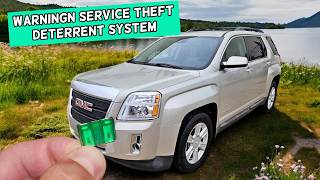
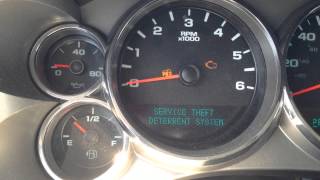
- "Service Theft Deterrent System" message on the driver information center
- Replacing the starter motor, when the immobilizer is simply preventing it from engaging.
- Replacing the vehicle's main battery, assuming a weak battery is the cause of the no-start condition. (Though a very low battery can cause module communication issues, it's often not the root cause for B3060).
- Replacing the ECM without first diagnosing the theft deterrent system components.
Most Likely Causes
- Faulty Ignition Lock Cylinder / Exciter Ring 🔴 High Probability The internal contacts or the exciter coil that reads the key's transponder chip are a known weak point on this platform, leading to intermittent or complete signal loss. This is the most cited cause in owner forums and TSBs.
How to confirm: Try wiggling the key while it is in the 'ON' position. If the security light flickers or the vehicle then starts, it points to a poor connection within the lock cylinder assembly. This is a widely reported diagnostic trick in owner forums.
Typical fix: Replace the ignition lock cylinder housing. After replacement, the existing keys must be relearned to the vehicle's Theft Deterrent Module using a specific 30-minute relearn procedure.
Est. part cost: $80-$250 - Unprogrammed or Damaged Key 🟡 Medium Probability
How to confirm: Try starting the vehicle with a known-good spare key. If the spare key works without issue, the original key's internal transponder chip is likely damaged or has lost its programming. A locksmith can also test the key's transponder signal.
Typical fix: The faulty key needs to be replaced. A new key must be cut and then programmed to the vehicle using a diagnostic scan tool or by performing the key relearn procedure after a working key is used.
Est. part cost: $50-$150 - Radio Frequency Interference (RFI) ⚪ Low Probability The Pass-Key system operates on a low-power 125 kHz frequency that can be disrupted by other electronic devices. GM TSBs PIC5650B through PIC5650M repeatedly emphasize checking for RFI sources.
How to confirm: Remove all other keys, fobs, and RFID-enabled cards (like office access cards, toll passes) from the keychain, so only the single vehicle key remains. Also check for aftermarket phone chargers or LED lights. Try to start the vehicle again. If it starts, one of the other items was causing interference.
Typical fix: Keep other RFID devices and key fobs separate from the vehicle's ignition key when driving. Remove low-quality aftermarket electronics.
Est. part cost: $0 - Faulty Body Control Module (BCM) ⚪ Low Probability
How to confirm: This is a diagnosis of exclusion. If the keys, ignition lock cylinder, and wiring have all been confirmed to be good, a professional will need to use an advanced scan tool to test the BCM's inputs and outputs related to the immobilizer system.
Typical fix: The BCM must be replaced and programmed by a dealership or a qualified shop with GM-specific software.
Est. part cost: $300-$600
Rare But Worth Checking
- Damaged Wiring: Damage to the wiring harness between the ignition lock cylinder and the Theft Deterrent Module or BCM can cause a loss of communication. This can happen due to previous improper installation of aftermarket alarms or remote starters.
- Aftermarket LED Lighting: Low-quality aftermarket LED bulbs (for dome lights, headlights, etc.) can emit significant radio frequency interference (RFI) that jams the 125 kHz signal between the key and the reader coil. TSB PIC5650K specifically calls this out as a potential cause.
Diagnosis Steps
- Scan all vehicle modules for Diagnostic Trouble Codes. Note any codes appearing alongside B3060, such as B3055 or B3935.
- Attempt to start the vehicle with a known-good spare key. If it starts, the primary key is the issue.
- If a spare key is not available or does not work, remove all other keys and electronic devices from the keychain to eliminate radio frequency interference (RFI).
- Insert the key and turn it to the 'ON' position. Observe the security light. Gently wiggle the key in the ignition; if the light goes out or the vehicle starts, the ignition lock cylinder housing is the likely fault.
- Verify the vehicle battery has a full charge and connect a battery charger to ensure low voltage is not causing communication errors during diagnosis or relearn procedures.
- If the above steps do not identify the issue, a professional technician will need to use a scan tool to monitor the data from the Theft Deterrent Module to see if it is receiving the key's signal.
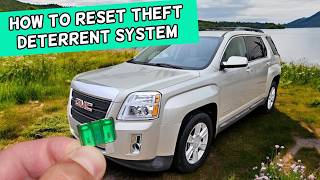
- Perform the 30-Minute Relearn Procedure: 1. Turn the key to ON (engine off). The security light will be on. 2. Wait approximately 10 minutes for the security light to turn off. 3. Turn the key OFF for 5 seconds. 4. Repeat steps 1-3 two more times for a total of 3 cycles (30 minutes). 5. After the third cycle, the vehicle has learned the key. Attempt to start the engine. Note: This erases all previously learned keys.
Parts You'll Likely Need
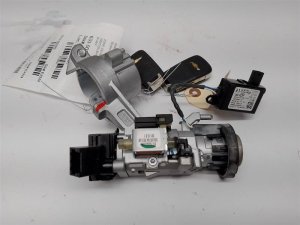
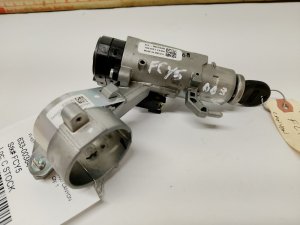
- Ignition Lock Housing
(OEM #23377523)— This is the most common failure point on the 2010-2017 Terrain that causes code B3060. The housing contains the exciter coil that reads the key's transponder chip.
Trusted brands: ACDelco (OEM), Dorman (926-046)
OEM price range: $150-$250
Aftermarket price range: $80-$150 - Transponder Key — Required if the original key is confirmed to be faulty or if all keys are lost. A new key must be cut and then programmed to the vehicle.
Trusted brands: ACDelco
OEM price range: $70-$120
Aftermarket price range: $40-$80
Related Codes That Often Appear With This One
- B3055 — This code for 'No Transponder Modulation' often appears with B3060 and relates to a problem with the key transponder itself or the system's ability to read it, reinforcing the diagnosis of a security system issue.
- B3935 — This code indicates a transponder mismatch and is frequently logged alongside B3055 and B3060 during a no-start event caused by the immobilizer system, as noted in TSB PIC5650.
Technical Service Bulletins (TSBs) & Recalls
- PIC5650M: Addresses an intermittent no crank, no start, or start stall concern with the security light coming on, with possible DTCs including B3060.
- PIC5650K: An earlier version of the TSB that specifically calls out aftermarket LED lighting and other electronics as a source of Radio Frequency Interference (RFI) that can cause this issue.
- PIC5650B/C: Predecessor bulletins that list the affected vehicles, including the 2010-2015+ Terrain/Equinox, and highlight RFI from devices on the keychain as a primary diagnostic step.
Platform-Specific Known Issues
- A known issue on this platform is an intermittent no-crank or start-and-stall condition accompanied by the security light, as documented in the long-running GM Technical Service Bulletin series PIC5650 (updated through versions B, C, K, and M).
- Owners on forums like terrainforum.net frequently discuss this exact problem, with many confirming that replacing the ignition lock housing (part #23377523 or Dorman 926-046) and performing the 30-minute relearn procedure resolves the B3060 code.
Hidden / Shadow Codes Worth Checking
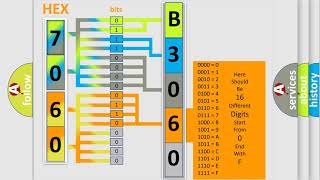
- B3060 00: The '00' is a symptom byte indicating 'No Sub Type Information'. This means the primary DTC description is the complete fault and no further breakdown is provided by the module. (see via GM GDS2 or equivalent professional scan tool.)
Scan Tool Commands That Help
- GDS2/Tech2: TDM/BCM Data Display -> Valid Key — While diagnosing, turn the ignition ON with each vehicle key and observe the 'Valid Key' parameter. It should read 'Yes' for all programmed keys. If it reads 'No' for a specific key, that key is faulty or unprogrammed.
- GDS2/Tech2: Immobilizer Learn -> Vehicle Key Relearn — This function is used after replacing the ignition lock housing, BCM, or a key. It initiates the automated 10-minute or 30-minute relearn procedure required to program keys to the module.
Wiring & Ground Locations
- BCM (Body Control Module) — Located under the driver's side of the dashboard.. The BCM manages the Pass-Key III+ theft deterrent functions on this vehicle. All wiring from the ignition lock cylinder's reader coil terminates here. Poor connections at the BCM connectors or a faulty BCM can cause B3060.
- BCM Connector C3 (Lt. Green 25-Pin Plug) — At the Body Control Module under the driver's dash.. Pin 6 (Pink wire) is Ignition 1 voltage and Pin 5 (Brown wire) is Accessory voltage. Incorrect or missing voltage on these pins during the key-on sequence can disrupt the theft deterrent handshake.
- BCM Connector C4 (Black 26-Pin Plug) — At the Body Control Module under the driver's dash.. Pin 26 (Black/White wire) is a ground connection for the BCM. A poor connection here can cause various BCM-related issues, including theft system malfunctions.
- G218 — On some GM platforms of this era, G218 is located under the dash, behind the driver's side kick panel.. This is a common instrument panel ground point. While not explicitly for the TDM on all models, a loose or corroded G218 ground is a known cause of bizarre electrical issues on GM vehicles and should be checked as part of an advanced diagnosis.
Real Owner Repair Stories
- 2CarPros Forum User (Chevrolet Tahoe (similar Passkey 3 system)) — Anti-theft system activated, vehicle would not start.
❌ Tried (didn't work) Owner spent 3 days inspecting parts and wires.
✅ What actually fixed it The vehicle was towed to a dealer. The final diagnosis was a failed Theft Deterrent Module (the part located on the ignition switch/column), which was replaced to fix the problem.
OEM Part Supersession History
Unknown→ACDelco 23377523— Part revision and consolidation over the vehicle's lifespan.
Heads up: This is the currently specified OEM replacement ignition lock housing for the 2010-2017 Terrain. Ensure any aftermarket cross-reference (like Dorman 926-046) explicitly states compatibility with this part number.
Model Year Variations Within This Range
- 2010-2017: For this generation of Terrain, the theft deterrent system (Pass-Key III+) and the common failure points remained consistent. The BCM handles the key validation across all model years in this range.
Helpful Videos
Used OEM Parts in Stock


New Aftermarket Parts Available



The information in this article is provided for general reference and educational purposes only. Vehicle specifications, procedures, and part compatibility can vary by production date, trim level, and region. Always consult your vehicle's factory service manual and verify part numbers before purchasing or performing repairs. Safety-critical components such as airbags, seat belts, and braking systems should be installed by a qualified professional.
- Gmc TERRAIN:
- 🎬 Helpful Videos
- 🛍️ Shop This Part
- What's Unique About the 2010-2017 Gmc TERRAIN
- Diagnostic Flowchart
- Symptoms You May Notice
- Most Likely Causes
- Rare But Worth Checking
- Diagnosis Steps
- Parts You'll Likely Need
- Related Codes That Often Appear With This One
- Technical Service Bulletins (TSBs) & Recalls
- Platform-Specific Known Issues
- Hidden / Shadow Codes Worth Checking
- Scan Tool Commands That Help
- Wiring & Ground Locations
- Real Owner Repair Stories
- OEM Part Supersession History
- Model Year Variations Within This Range
- 🎟️ Get 5% Off