

B3060 on 2007-2010 GMC Sierra 2500: Security System Fault Causes and Fixes
This code means your truck's security system doesn't recognize the transponder chip in your key. The most common fix is to try a spare key. If that fails, you may need to replace the ignition lock cylinder (which contains the reader) and perform a 30-minute key relearn procedure. Expect to pay $75-$250 for parts.
- B3060 means your truck's anti-theft system doesn't recognize your key.
- The first and easiest diagnostic step is to try a spare key.
- A common DIY fix is the 30-minute key relearn procedure, which can re-sync your key to the truck without any tools.
- If keys and relearn procedures fail, the most probable faulty part is the ignition lock cylinder, not an expensive computer module.
- Always check for interference from other electronic fobs or cards on your keychain before starting complex repairs.
What's Unique About the 2007-2010 Gmc SIERRA 2500
The 2007-2010 GMC Sierra 2500, part of the GMT900 platform, uses the Passkey III+ (PK3+) immobilizer system. This system is known for issues where the ignition lock cylinder, which contains the reader coil for the key's transponder chip, can fail over time. This failure is a common source of the B3060 code on these trucks, often leading owners to believe they have a bad key when the problem is actually with the reader in the steering column. The entire assembly is the common point of failure, not just the mechanical lock. The Passkey III+ system uses a radio frequency transponder in the key head, which is an evolution from older Passlock systems that used magnets or resistors.
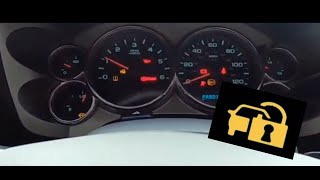
🎬 Watch: Troubleshooting and bypassing the Passkey III+ security system.Diagnostic Flowchart
Tap your situation to follow the diagnostic path that matches what you're seeing on this vehicle.
Symptoms You May Notice
- Engine will not crank or start.
- Engine starts and then immediately stalls.
- Security light on the dashboard is illuminated or flashing.
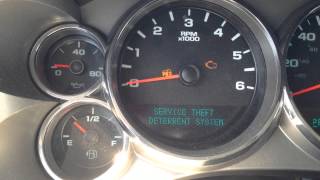
- "Service Theft Deterrent System" message on the driver information center.
- Replacing the battery without attempting a key relearn procedure first.
- Replacing the fuel pump, as the 'start and stall' symptom can mimic a fuel delivery problem.
- Replacing the starter, when the no-crank condition is actually caused by the security system disabling the starter relay.
Most Likely Causes
- Using an Unprogrammed or Cloned Key 🔴 High Probability A common user error, especially with new or replacement keys that haven't been properly introduced to the vehicle's security system.
How to confirm: Try starting the vehicle with a different, known-good original key. If the truck starts and runs normally with the other key, the first key is the problem. Service manuals stress that having a second key is critical for diagnosis.
Typical fix: The unprogrammed key needs to be properly programmed to the vehicle using a key relearn procedure or by a locksmith/dealership with the correct tools.
Est. part cost: $0 if relearn works, $50-$150 for a new key and programming. - Faulty Ignition Lock Cylinder / Transponder Antenna 🟡 Medium Probability The reader coil (exciter coil) that surrounds the ignition cylinder can fail, preventing it from reading the transponder chip in the key. This is a well-documented weak point in the GM Passkey III+ system on the GMT900 platform. The cylinder and reader are often replaced as one assembly.
How to confirm: If multiple known-good keys fail to start the vehicle and the B3060 code persists after a relearn attempt, the issue is almost certainly with the reading mechanism in the steering column, not the keys themselves.
Typical fix: Replace the ignition lock cylinder, which includes the transponder antenna. After replacement, the 30-minute key relearn procedure is mandatory.
Est. part cost: $60-$200 - Damaged Key Transponder Chip 🟡 Medium Probability The electronic chip embedded in the key head can be damaged from being dropped, exposed to moisture, or from normal wear and tear.
How to confirm: The key will fail to start the vehicle, while a spare key works perfectly. The key may show physical signs of damage.
Typical fix: The damaged key must be replaced with a new one, which then must be programmed to the vehicle.
Est. part cost: $50-$150 - Radio Frequency Interference (RFI) ⚪ Low Probability As noted in multiple GM Technical Service Bulletins (PIC5650 series), other electronic devices can 'jam' the 125 kHz signal between the key and the vehicle. This includes aftermarket LED lights (dome, headlights), USB phone chargers, other key fobs or RFID cards on the keychain, and even decorative 'Bedazzle Trim Rings' around the ignition cylinder.
How to confirm: Remove all other keys, fobs, and RFID cards from the keychain. Unplug any aftermarket chargers or accessories. Try starting the vehicle with only the single GMC key. If it starts, RFI was the cause.
Typical fix: Keep other RFID-emitting devices separate from the vehicle key when starting the engine. Remove problematic aftermarket electronics.
Est. part cost: $0
Rare But Worth Checking
- Wiring issue between Ignition Cylinder and Theft Deterrent Module (TDM): The wires running down the steering column can become chafed or damaged, causing an intermittent connection. This can be difficult to diagnose but should be considered if the lock cylinder has been replaced and the problem persists.
- Faulty Theft Deterrent Module (TDM) or Body Control Module (BCM): While possible, module failure is the least likely cause. All other possibilities, especially keys and the ignition cylinder, should be thoroughly ruled out before condemning a control module.
- Corroded or Loose Main Battery Cables: A corroded positive or negative battery cable can cause a no-crank or intermittent start condition that can be mistaken for a security issue. One owner found a corroded positive cable under the fuse box cover was the root cause of their no-start. Always inspect main power and ground connections for tightness and corrosion.
Diagnosis Steps
- Check for the 'Security' light on the instrument cluster. Note if it is solid or flashing.
- Per GM TSB PIC5650, remove ALL other keys, fobs, and electronic devices from the keychain. Unplug any aftermarket accessories like phone chargers or LED lights to eliminate Radio Frequency Interference (RFI).
- Try to start the vehicle with a known-good spare key. If it starts, the problem is with the first key.
- If the spare key also fails, attempt the 30-minute key relearn procedure. Ensure the battery is fully charged (connect a battery charger). Turn the key to the 'ON' position (do not start) and wait about 10 minutes until the security light turns off. Turn the key 'OFF' for 15 seconds. Repeat this process a total of three times. On the third cycle, after the light goes out, turn the key off, then try to start the engine.
- If the relearn procedure fails and multiple keys do not work, inspect the wiring harness at the base of the steering column for any visible damage or loose connections.
- If wiring is intact, the most likely remaining cause is a faulty ignition lock cylinder/transponder antenna. Replacement is the next logical step.
- If all else fails, the issue may be with the Theft Deterrent Module (TDM) or Body Control Module (BCM), which requires advanced diagnostics with a professional scan tool.
Parts You'll Likely Need
- Ignition Lock Cylinder with Keys
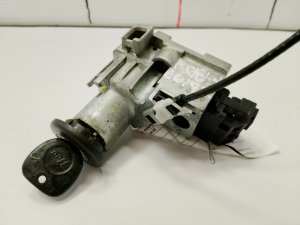
(OEM #ACDelco 15794826)— This is the most common failure point. The assembly contains the mechanical lock and the electronic transponder antenna (exciter coil) that reads the key chip. Electronic failure of the coil is common, preventing the vehicle from authenticating the key. A mandatory 30-minute relearn procedure is required after replacement.
Trusted brands: ACDelco, Dorman (p/n 924-796), Standard Motor Products (p/n US618L)
OEM price range: $80-$150
Aftermarket price range: $60-$100 - Transponder Key — Required if the original key's internal chip is damaged or if all keys are lost. A new key must be cut and then programmed to the vehicle via the relearn procedure.
Trusted brands: ACDelco, Strattec
OEM price range: $40-$80
Aftermarket price range: $20-$50
Related Codes That Often Appear With This One
- B3055 — This code indicates a problem with the key transponder itself (No Transponder Key Detected). It often appears with B3060 as the system may first fail to detect a key (B3055) and then, if it gets a partial read, determine it's not the correct one (B3060).
- B3935 — This is another transponder-related code (Transponder Circuit Malfunction) that can be set alongside B3060 during a security system fault event.
Technical Service Bulletins (TSBs) & Recalls
- PIC5650M: Mentions intermittent no crank/no start/start stall with security light on, listing B3060 as a potential DTC.
- PIC5650B/C/K: Later versions of the TSB that expand the list of affected vehicles and heavily emphasize diagnosing Radio Frequency Interference (RFI) from devices like aftermarket LED lights, USB chargers, and other fobs on the keychain as a primary diagnostic step before part replacement.
Platform-Specific Known Issues
- The provided NHTSA Technical Service Bulletin #PIC5650M directly links intermittent no-crank, no-start, or start-stall conditions with the security light and code B3060 on this platform. The TSB series strongly advises checking for Radio Frequency Interference from aftermarket electronics before replacing any parts.
Hidden / Shadow Codes Worth Checking
- B3060 00: The '00' is a standard GM symptom byte indicating 'No Sub Type Information'. It means the primary code B3060 provides the full description of the fault (Unprogrammed Transponder). (see via A professional scan tool like a GM Tech2 or equivalent will display the code with its symptom byte.)
Scan Tool Commands That Help
- GM Tech2: Body > Theft Deterrent > Module ID Information — To view part numbers and identifying information for the installed Theft Deterrent Module (TDM) to ensure compatibility if replacement is considered.
- GM Tech2: Body > Theft Deterrent > Module Setup — This function is used to program a new Theft Deterrent Module (TDM) to the vehicle. It is required if the TDM itself is replaced.
- GM Tech2 / Professional Scan Tool: TDM Data Display > Valid Key — To check if the TDM recognizes each available key as valid ('Yes' or 'No'). This is a crucial step to confirm if a specific key is the problem or if the fault lies with the reader/module.
Wiring & Ground Locations
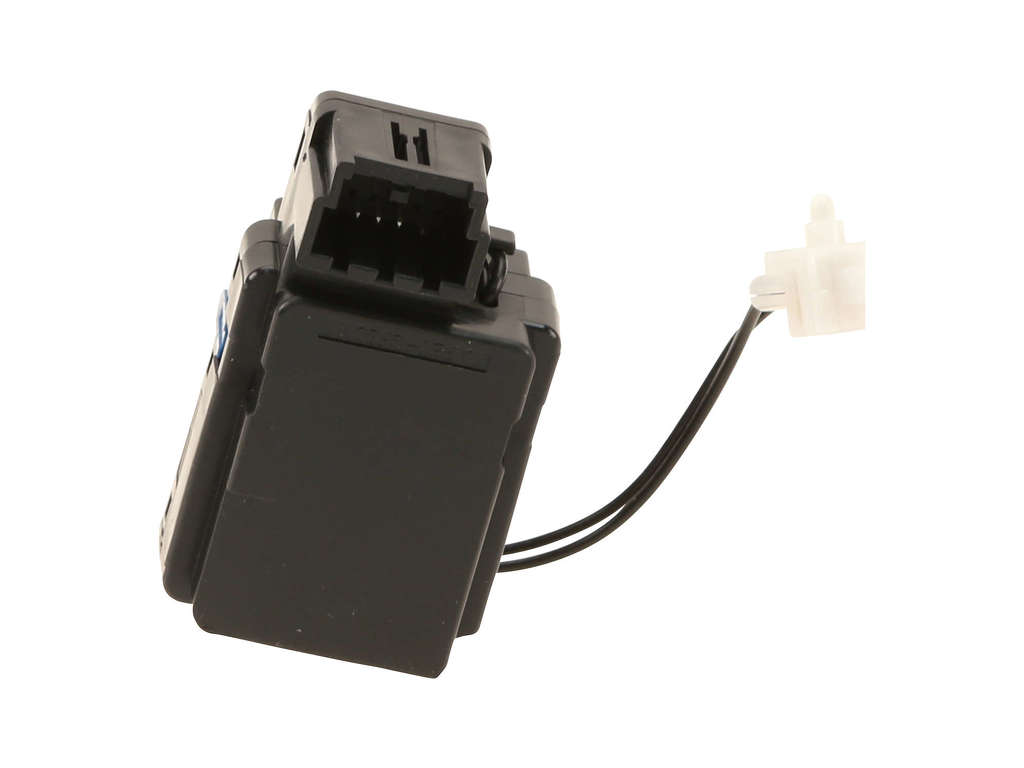
- Theft Deterrent Module (TDM) — Located on the steering column, typically as a ring-like module around the ignition lock cylinder housing.. This module contains the exciter coil (antenna) that reads the key's transponder chip. It is the primary hardware component responsible for setting code B3060 if it cannot read or validate the key.
- Anti-Theft System Fuse — In the under-hood fuse box, identified as fuse #35 in some layouts for this generation.. While a blown fuse is not a common cause for this specific code (as the module needs power to set the code), checking it is a basic step to ensure the system is receiving power, especially if there is no communication with the TDM.
- G303 / G304 — G303 is located on the lower left 'B' pillar, and G304 is on the lower right 'B' pillar on extended/crew cab models.. These are major body ground points. While not directly for the TDM, a poor body ground can cause a variety of difficult-to-diagnose electrical issues in related modules like the BCM, which communicates with the TDM. Verifying ground integrity is a key step in advanced diagnostics.
Real Owner Repair Stories
- O'Reilly Auto Parts Reviewer (Unknown GM Truck) — No-start condition after installing a new ignition lock cylinder.
❌ Tried (didn't work) Following the key programming instructions which said to hold the new key next to the lock cylinder.
✅ What actually fixed it The key programming procedure only worked when the new key was held directly next to the transponder module located on the bottom of the steering column, not next to the key slot itself.
OEM Part Supersession History
15919460, 19120038, 25756079→15794826— Part consolidation and revision by GM.
Heads up: The replacement part 15794826 requires programming and/or special setup procedures after installation.
Helpful Videos

Used OEM Parts in Stock



New Aftermarket Parts Available


The information in this article is provided for general reference and educational purposes only. Vehicle specifications, procedures, and part compatibility can vary by production date, trim level, and region. Always consult your vehicle's factory service manual and verify part numbers before purchasing or performing repairs. Safety-critical components such as airbags, seat belts, and braking systems should be installed by a qualified professional.
- Gmc SIERRA 2500:
- 🎬 Helpful Videos
- 🛍️ Shop This Part
- What's Unique About the 2007-2010 Gmc SIERRA 2500
- Diagnostic Flowchart
- Symptoms You May Notice
- Most Likely Causes
- Rare But Worth Checking
- Diagnosis Steps
- Parts You'll Likely Need
- Related Codes That Often Appear With This One
- Technical Service Bulletins (TSBs) & Recalls
- Platform-Specific Known Issues
- Hidden / Shadow Codes Worth Checking
- Scan Tool Commands That Help
- Wiring & Ground Locations
- Real Owner Repair Stories
- OEM Part Supersession History
- 🎟️ Get 5% Off