

B3060 on 2007-2014 GMC Savana 3500: Security Fault, No-Start Causes and Fixes
On a 2007-2014 GMC Savana, code B3060 means the anti-theft system doesn't recognize the key, causing a no-start. The most common fix is trying a spare key or performing a 30-minute security relearn procedure. If that fails, the ignition lock cylinder which contains the key reader is the most likely failed part.
- B3060 means your Savana's anti-theft system has immobilized the engine due to an unrecognized key.
- Before any repairs, try your spare key and perform the 30-minute security relearn procedure; these steps are free and often fix the issue.
- Remove all other electronic fobs, chargers, and accessories from the keychain and vehicle to rule out radio frequency interference.
- If simple fixes fail, the most likely failed part is the ignition lock cylinder assembly, not an expensive computer module.
- Do not replace the starter or fuel pump; the security light is the definitive clue that this is an anti-theft system problem.
What's Unique About the 2007-2014 Gmc SAVANA 3500
The GMC Savana and its sibling, the Chevrolet Express, use the GM Passkey III+ system, which is known for being sensitive and causing intermittent no-start issues. These work vans often see heavy use, leading to wear on keys and ignition components. GM has issued multiple technical service bulletins, like PIC5650M, that cover this exact code and symptom across a wide range of their vehicles. The bulletin often points to intermittent causes like radio frequency interference (RFI) from accessories plugged into the van (e.g., phone chargers, dash cams) or even other RFID cards on the keychain, a known sensitivity of this system.
Diagnostic Flowchart
Tap your situation to follow the diagnostic path that matches what you're seeing on this vehicle.
Symptoms You May Notice
- Engine will not crank or start
- Engine starts and immediately stalls
- Security light is on or flashing on the dashboard.
- A 'Service Theft Deterrent System' message may appear on the driver information center
- Replacing the starter motor. A no-crank condition caused by the security system is often misdiagnosed as a bad starter. However, the presence of the security light is the key indicator that the anti-theft system is the root cause.
- Replacing the fuel pump. When the engine starts and stalls, it's because the security system has disabled fuel. This can be mistaken for a weak fuel pump, but again, the security light points to the true problem.
- Replacing the battery. While a low battery can cause the system to lose sync, simply replacing the battery will not fix a faulty key, lock cylinder, or BCM. A fully charged battery is required for proper diagnosis and for the relearn procedure to work.
Most Likely Causes
- Key Has Lost Programming / System Glitch 🔴 High Probability The Passkey III+ system can lose synchronization due to a weak vehicle battery, jump-starting, a dead battery in the key fob, or random electronic glitches.
How to confirm: Attempt the 30-minute security relearn procedure. If the vehicle starts and runs correctly afterward, the issue was a programming glitch.
Typical fix: Perform the 30-minute security relearn procedure. This involves turning the key to 'ON' for 10 minutes until the security light stops flashing and turns off or goes solid, then turning the key 'OFF' for 10-20 seconds, and repeating this cycle three times. The vehicle should start on the fourth attempt.
Est. part cost: $0 - Faulty or Worn Ignition Key 🟡 Medium Probability The transponder chip in the key can fail over time, or the key itself can become worn from heavy use, a common scenario for work vans. The chip is a Philips 46 type.
How to confirm: Try starting the vehicle with a known-good spare key. If the spare key works consistently, the original key is faulty.
Typical fix: Replace the faulty key. A new key must be cut and then programmed to the vehicle using the 30-minute relearn procedure.
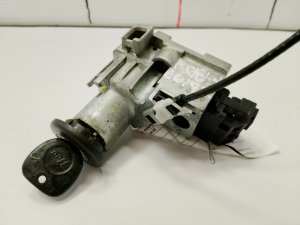
Est. part cost: $50-$150 - Faulty Ignition Lock Cylinder / Exciter Coil 🟡 Medium Probability The ignition lock cylinder housing contains the exciter coil that reads the key's transponder. This component is a frequent failure point on many GM vehicles of this era due to wear and tear or broken internal wiring.
How to confirm: If a relearn procedure and a spare key both fail to resolve the issue, the lock cylinder assembly is the next most likely culprit. A technician can test the circuit for proper resistance and signal at the BCM connector.
Typical fix: Replace the ignition lock cylinder housing and perform the 30-minute security relearn procedure to sync the new component with the vehicle's security module.
Est. part cost: $80-$250 - Radio Frequency Interference (RFI) ⚪ Low Probability The Passkey system is sensitive to RFI, as documented in TSB PIC5650M. Aftermarket accessories like phone chargers, dash cams, LED lights, or even other RFID cards (office key cards, gas station fobs) on the keychain can interfere with the 125kHz signal between the key and the exciter coil.
How to confirm: Remove all other keys, fobs, and electronic devices from the keychain. Unplug all aftermarket accessories from power outlets. If the vehicle starts, RFI was the cause.
Typical fix: Isolate the source of the interference by plugging devices back in one by one. Replace the offending low-quality accessory with a higher-quality, better-shielded one. Keep the ignition key on its own ring.
Est. part cost: $0-$50
Rare But Worth Checking
- Faulty Body Control Module (BCM): While less common, a failing BCM can cause a host of electrical issues, including setting a B3060. This is an expensive last resort and should only be considered after all other causes are eliminated. A failing BCM often presents with other strange electrical symptoms like erratic lights, wipers, or door locks. In one documented case for a 2014 Savana, replacing the BCM was the ultimate fix after a new ignition cylinder failed to solve the problem.
- Damaged Wiring: The wiring between the ignition lock cylinder and the BCM can get chafed, damaged, or develop high resistance in a connector, especially in the steering column. This should be suspected if the problem is intermittent, occurs when turning the steering wheel, or if a relearn procedure consistently fails even with new parts. A user on a Chevy forum traced a relearn failure to high resistance from butt splice connectors used in a previous repair attempt.
Diagnosis Steps
- Check for and document any other active trouble codes. A standard OBD-II reader may not see B-codes; a more advanced scanner is needed.
- Inspect the keychain. Remove all other keys, fobs, RFID cards, and unplug any aftermarket chargers or accessories to eliminate Radio Frequency Interference (RFI), as per TSB PIC5650M.
- Try a spare key. If a different programmed key works, the original key is defective.
- Ensure the vehicle battery is fully charged (above 12.4V). A weak battery can cause the relearn procedure to fail. Connect a battery charger if unsure.
- Attempt the 30-minute security relearn procedure. This is free and often resolves programming glitches.
- If the relearn fails, inspect the wiring and connector at the ignition lock cylinder for any visible damage or looseness.
- Using an advanced scan tool, monitor the security data parameters from the Body Control Module (BCM) while attempting to start the vehicle to see if the key data is being received and validated.
- If no key data is received (often accompanied by B3055) and a spare key didn't work, test the ignition lock cylinder/exciter coil circuit. If the circuit is faulty, replace the ignition lock cylinder assembly.
- If all other components and wiring test correctly, the Body Control Module (BCM) may be faulty, though this is the least likely cause.
Parts You'll Likely Need
- Ignition Lock Cylinder Housing
(OEM #ACDelco D1462G)— This housing contains the exciter coil that reads the key's transponder chip. It is a common wear item and the most frequent hardware failure causing B3060 when a key relearn or spare key does not work.
Trusted brands: ACDelco (GM Genuine), Dorman (e.g., 924-796), Standard Motor Products (SMP)
OEM price range: $100-$180
Aftermarket price range: $60-$120 - Transponder Ignition Key
(OEM #B111-PT (Key Blank, Strattec 5903089))— The transponder chip inside the key can fail, or the key can lose its programming. Trying a spare key is the easiest way to diagnose this.
Trusted brands: ACDelco, Strattec, Ilco
OEM price range: $70-$120
Aftermarket price range: $40-$80
Related Codes That Often Appear With This One
- B3055 — This code means 'No Transponder Modulation or No Transponder,' indicating the system received no signal at all. It often appears with B3060 and points strongly to a bad key, a faulty exciter coil in the ignition cylinder, or severe RFI.
- B3935 — This code means 'Transponder Authentication Failed.' It indicates a signal was received, but the data was incorrect or couldn't be validated. It is frequently set alongside B3060 as part of the same security event and is mentioned in TSB PIC5650M.
- P1631 — This is a powertrain code for 'Theft Deterrent Start Enable Signal Not Correct'. It indicates the Engine Control Module (ECM) did not receive the correct 'go' signal from the BCM/TDM, which is a direct result of the B3060 fault.
Technical Service Bulletins (TSBs) & Recalls
- PIC5650M: Addresses intermittent no crank, no start, or start/stall with security light on, often due to RFI. Lists codes B3055, B3060, B3935.
- PIE0232: An earlier GM engineering bulletin requesting information on this exact issue (no-start with B3055/B3060/B3935), showing it was a known problem under investigation.
Platform-Specific Known Issues
- GM Technical Service Bulletin (TSB) #PIC5650M directly addresses intermittent no crank, no start, or start/stall concerns with the security light on, specifically mentioning B3060 as a possible code.
Hidden / Shadow Codes Worth Checking
- B3060 00: The '00' is a GM symptom byte for 'No Sub Type Information'. It indicates the primary code B3060 contains the full description of the fault ('Unprogrammed Transponder Identification Code Received') and no more specific details are available from the code alone. (see via A professional scan tool like the GM Tech2 or GDS2, or a high-end aftermarket scanner, will display the DTC along with its two-digit symptom byte.)
- B3060 5A: The '5A' symptom byte indicates a 'Plausibility Failure'. This means the BCM received a signal, but it was illogical or inconsistent with what was expected, which can point towards intermittent wiring issues or severe RFI. (see via Visible on a dealer-level scanner like a GM Tech2 or GDS2.)
Scan Tool Commands That Help
- GM Tech2 / GDS2: Immobilizer Data Display / TDM Data Display — Use this function to monitor the 'TDM Valid Key' parameter. While turning the ignition with a key, this parameter should change to 'Yes'. If it remains 'No' with all available keys, it confirms the BCM is not validating any key, pointing towards a faulty exciter coil, wiring, or BCM.
- GM Tech2 / GDS2: Add/Replace Keys — This is the professional-level function used to program new keys to the vehicle's BCM. It is required after replacing a key and is an alternative to the 30-minute manual relearn procedure.
- GM Tech2 / GDS2: BCM/TDM Module Replacement — This service function is mandatory after replacing the Body Control Module. It programs the new module to the vehicle's VIN and syncs it with the other modules (like the ECM) and the existing keys. Failure to perform this will result in a no-start condition.
Wiring & Ground Locations
- BCM (Body Control Module) — Located under the passenger side of the dashboard, typically to the right of the glove box or behind the passenger knee bolster.. The BCM contains the theft deterrent logic. All signals from the ignition key's transponder are sent here to be validated. A poor connection at one of its seven connectors or an internal BCM failure will cause security codes like B3060.
- BCM Connector C3 (Brown) / Passkey Wires — This is one of the connectors on the BCM. The wires from the ignition lock cylinder's exciter coil terminate here.. Specifically, the Yellow wire at pin A6 is the signal wire from the Passkey system. Probing this wire for a signal during a start attempt can confirm if the key and exciter coil are sending data to the BCM, helping to isolate the fault between the ignition cylinder and the BCM itself.
- G302 — Located behind the left (driver's side) lower kick panel.. This is a major body ground point. A loose or corroded G302 ground can cause intermittent electrical problems for multiple systems, including the Body Control Module and the anti-theft system it controls.
- Ignition Lock Cylinder Connector — Found at the ignition lock cylinder housing, accessible after removing the steering column shrouds.. This connector contains the wires for the Passkey exciter coil. The wires are often small gauge and can break or chafe from the tilt/telescope functions of the steering wheel, leading to an open circuit (often setting B3055) or an intermittent signal (setting B3060).
Real Owner Repair Stories
- YouTube channel 'Car Lab' (2014 GMC Savana) — Crank but no start, security light flashing, code B3060 present.
❌ Tried (didn't work) Diagnosis of the key and ignition lock cylinder showed they were likely not the cause.
✅ What actually fixed it The Body Control Module (BCM) was diagnosed as faulty. The issue was resolved by replacing the BCM and programming the new module to the vehicle using GM's SPS2 software. - YouTube channel 'Joshyoden' (GM Truck (Silverado/Sierra platform, similar Passkey system)) — No start, security light on.
❌ Tried (didn't work) Standard starting procedures.
✅ What actually fixed it A bypass was performed by cutting the three wires (typically yellow, black, red/orange) leading from the ignition lock cylinder and connecting the yellow and black wires together. This bypasses the Passkey sensor in the ignition cylinder. A 30-minute relearn procedure was required after splicing the wires to make the BCM accept the new static signal. Note: This is an unconventional fix that permanently leaves the security light on.
When the Usual Fixes Don't Work
- In a documented case for a 2014 GMC Savana, the common fixes of replacing the ignition lock cylinder and performing the relearn procedure did not solve the persistent B3060 code. The ultimate resolution required replacing and reprogramming the Body Control Module (BCM), highlighting that while the lock cylinder is the most common point of failure, it is not the only one, and a faulty BCM can produce the exact same symptoms.
OEM Part Supersession History
GM 15795321→ACDelco D1462G— Standard part number update and transition to the ACDelco branding.
Heads up: The ACDelco D1462G is often just the housing with the sensor/exciter coil. The original lock cylinder (with tumblers) must be removed from the old housing and installed into the new one. In contrast, some aftermarket kits like the Dorman 924-796 come as a complete assembly with a new lock cylinder and new keys.
Helpful Videos
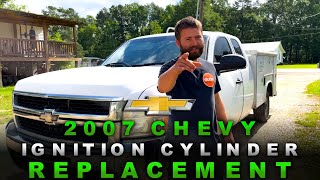
We Have This Part in Stock


The information in this article is provided for general reference and educational purposes only. Vehicle specifications, procedures, and part compatibility can vary by production date, trim level, and region. Always consult your vehicle's factory service manual and verify part numbers before purchasing or performing repairs. Safety-critical components such as airbags, seat belts, and braking systems should be installed by a qualified professional.
- Gmc SAVANA 3500:
- 🎬 Helpful Videos
- 🛍️ Shop This Part
- What's Unique About the 2007-2014 Gmc SAVANA 3500
- Diagnostic Flowchart
- Symptoms You May Notice
- Most Likely Causes
- Rare But Worth Checking
- Diagnosis Steps
- Parts You'll Likely Need
- Related Codes That Often Appear With This One
- Technical Service Bulletins (TSBs) & Recalls
- Platform-Specific Known Issues
- Hidden / Shadow Codes Worth Checking
- Scan Tool Commands That Help
- Wiring & Ground Locations
- Real Owner Repair Stories
- When the Usual Fixes Don't Work
- OEM Part Supersession History
- 🎟️ Get 5% Off