

B3060 on 2007-2014 GMC Savana 2500: Security System No-Start Causes and Fixes
On a 2007-2014 GMC Savana, code B3060 means the anti-theft system doesn't recognize the key, causing a no-start or start-and-stall condition. The most common fix is performing a 30-minute security relearn procedure. If that fails, the ignition lock cylinder assembly, which contains the reader coil, is the next most likely culprit. In some cases, a faulty Body Control Module (BCM) can be the cause when all other fixes fail.
- B3060 means your Savana's anti-theft system has locked the engine due to an unrecognized key, causing a no-start or start-and-stall condition.
- Before any repairs, try the 30-minute security relearn procedure; it costs nothing and often fixes the problem.
- Remove all other keys and RFID cards from your keychain to rule out signal interference, a known issue cited in GM service bulletins.
- If a relearn doesn't work, the most likely failed part is the ignition lock cylinder assembly, not an expensive computer module.
- Do not replace the starter or battery for this issue until the security system has been ruled out.
What's Unique About the 2007-2014 Gmc SAVANA 2500
The GMC Savana and its Chevrolet Express counterpart from this era use the GM Passkey III or III+ system, which is notoriously sensitive to voltage drops and radio frequency interference. These work vans often see heavy use, leading to high cycles on the ignition switch and its internal wiring, which are common failure points. GM has issued multiple Technical Service Bulletins (like PIC5650 in its various revisions) acknowledging intermittent no-start conditions related to this system across many of its trucks and vans, pointing to a common design sensitivity rather than a problem unique to just the Savana.
Diagnostic Flowchart
Tap your situation to follow the diagnostic path that matches what you're seeing on this vehicle.
Symptoms You May Notice
- Vehicle will not crank or start.
- Engine starts and then immediately stalls.
- Security light on the instrument cluster is solid or flashing.
- Message on the driver information center like "Service Theft Deterrent System".
- Replacing the starter motor when the vehicle won't crank. The security light is the key indicator that the BCM is intentionally preventing the starter from engaging.
- Replacing the battery without addressing the underlying security system lockout. A new battery is necessary for diagnosis but won't fix a key recognition problem on its own.
- Replacing the fuel pump when the vehicle starts and stalls. The start-and-stall symptom is a direct result of the security system disabling the fuel enable signal to the PCM.
Most Likely Causes
- System Glitch / Loss of Key Synchronization 🔴 High Probability The Passkey system can lose synchronization after a battery replacement, a low voltage event, or from radio frequency interference. This is a very common first-time occurrence for this code.
How to confirm: Perform the 30-minute security relearn procedure. If the vehicle starts and operates correctly afterward, a temporary glitch was the cause. A user on Chevrolet Forum confirmed this started their van but the issue returned, indicating a more permanent fix was needed.
Typical fix: Perform the 30-minute security relearn procedure. This involves three 10-minute key-on/key-off cycles to resynchronize the key with the vehicle's security module. It is critical to use a battery charger during this process to prevent the battery from dying.
Est. part cost: $0 - Faulty Ignition Lock Cylinder / Exciter Coil 🟡 Medium Probability As a high-use work van, the ignition cylinder and its internal wiring see significant wear. The thin wires for the exciter coil (the sensor that reads the key) can break over time, leading to a B3055 (no signal) or B3060.
How to confirm: If the relearn procedure fails to resolve the issue, and the problem persists with a spare key, the lock cylinder assembly is the prime suspect. A technician can test the resistance of the sensor wires or use a scan tool to see if a valid key signal is being received by the BCM.
Typical fix: Replace the ignition lock cylinder assembly, which contains the exciter coil/sensor, and then perform the 30-minute security relearn procedure to program the new part to the vehicle.
Est. part cost: $80-$250 - Radio Frequency Interference (RFI) 🟡 Medium Probability As noted in TSB PIC5650M and its predecessors, the Passkey system is sensitive to interference from other RFID devices on the keychain, such as other car keys, access cards, or even aftermarket electronics inside the van like phone chargers and LED lights.
How to confirm: Remove all other keys, fobs, and cards from the keychain. Unplug any aftermarket chargers or accessories. Try starting the vehicle with only the single Savana key. If it starts, RFI was the issue.
Typical fix: Keep the vehicle key on a separate ring from other RFID-enabled devices.
Est. part cost: $0 - Faulty or Unprogrammed Key ⚪ Low Probability
How to confirm: Attempt to start the vehicle with a known-good spare key. If the spare key works, the original key's internal transponder has failed.
Typical fix: Replace the faulty key. A new key will need to be cut and programmed to the vehicle by a locksmith or dealer, followed by a relearn procedure.
Est. part cost: $50-$150
Rare But Worth Checking
- Failing Body Control Module (BCM): While less common, a faulty BCM can cause this code. If replacing the ignition lock cylinder and performing a relearn doesn't fix the issue, the BCM should be professionally diagnosed. This can manifest as intermittent electrical glitches affecting other systems as well.
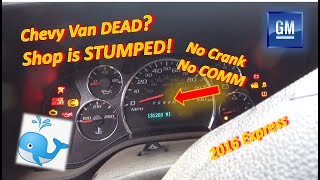
- Damaged Wiring Harness: The wiring between the ignition lock cylinder and the BCM can become chafed or damaged, especially around the tilt-steering column. A broken Red/White wire under the dash near the brake pedal has been documented as a specific cause on a Chevy Express. 🎬 See how a pro diagnoses a tricky no-crank condition.
- Low Battery Voltage: A weak or dying battery can cause a multitude of electronic issues, including triggering security system faults by causing modules to lose synchronization. Always ensure the battery is fully charged (above 12.4V) before diagnosing this code.
Diagnosis Steps
- Verify the complaint: Confirm the no-start/start-stall condition and check for an illuminated or flashing security light.
- Scan the Body Control Module (BCM) for codes using a capable scanner. Confirm B3060 and note any other codes like B3055 or B3935.
- Isolate the key. Remove all other keys, fobs, and RFID cards from the keychain to eliminate Radio Frequency Interference (RFI), as recommended by TSB PIC5650M.
- Try a spare key. If a known-good spare key starts the vehicle, the primary key is faulty.
- Check battery voltage. Ensure the vehicle's battery is healthy and fully charged (above 12.4V). Connect a battery charger before proceeding to the next step.
- Attempt the 30-minute security relearn procedure. Turn the key to 'ON' (run), wait ~10 minutes for the security light to turn off, turn the key 'OFF' for 5-10 seconds. Repeat this for a total of three cycles. On the third successful cycle, turn the key off, then attempt to start the vehicle.
- If the relearn fails, inspect the wiring harness from the ignition lock cylinder down the steering column for any visible damage, chafing, or loose connectors, particularly where the column tilts.
- If wiring appears okay and the relearn fails with multiple keys, the most likely cause is a faulty ignition lock cylinder assembly.
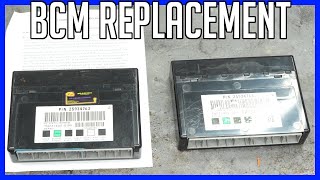
- If replacing the lock cylinder and performing the relearn still does not resolve the issue, the Body Control Module (BCM) may be faulty and requires professional diagnosis with a GM-specific scan tool. 🎬 Watch: What is involved in replacing a Body Control Module.
Parts You'll Likely Need
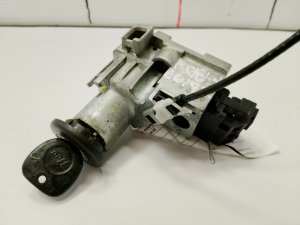
- Ignition Lock Cylinder Housing with Switch
(OEM #ACDelco D1462G)— This assembly contains the exciter coil (Passkey sensor) that reads the key's transponder. It is the most common hardware failure point for this code on this vehicle due to wear and tear. The D1414B part number from Pass 1 is for older GM vehicles.
Trusted brands: ACDelco, Standard Motor Products, Dorman
OEM price range: $100-$180
Aftermarket price range: $80-$150 - Transponder Ignition Key
(OEM #B111-PT (Key Blank))— If a spare key works, the original key's internal transponder chip has failed. A new key must be cut and programmed.
Trusted brands: ACDelco, Strattec
OEM price range: $50-$150
Aftermarket price range: $30-$70
Related Codes That Often Appear With This One
- B3055 — This code means 'No Transponder Modulation or No Transponder', indicating the system received no signal at all. It often appears with B3060 as part of the same fault event (bad key, bad reader coil) and is mentioned in TSBs PIC5650M and PIE0232.
- B3935 — This code means 'Transponder Authentication Failed' and indicates a failure in the security handshake. It is also cited in TSBs alongside B3060 as part of the same group of security faults.
Technical Service Bulletins (TSBs) & Recalls
- PIC5650M: Intermittent no crank, no start, or start stall concern with the security light coming on, potentially caused by Radio Frequency Interference. Mentions codes B3055, B3060, and B3935.
- PIE0232: A GM engineering request for information on 2013 model year trucks with no-start conditions and DTCs B3055, B3060, or B3935, indicating a known issue being investigated.
- 07-08-47-004D: Warns technicians that the BCM can be damaged if its ground path is removed while battery power is connected and identifies the ground path location on 2008-2012 models.
Platform-Specific Known Issues
- TSB PIC5650M - Intermittent No-Start: TSB #PIC5650M (and its revisions) directly addresses an intermittent no crank, no start, or start stall concern with the security light on, where DTC B3060 may be found. It points to potential Radio Frequency Interference as a cause that can be difficult to duplicate and advises checking for aftermarket electronics.
- BCM Failure as Ultimate Cause: In a well-documented case on a 2014 GMC Savana, after replacing the ignition cylinder did not fix the B3060 code, the root cause was found to be a faulty Body Control Module (BCM). This highlights that if standard fixes fail, the BCM itself should be professionally diagnosed.
Mechanic-Grade Diagnostic Values
- Immobilizer Antenna (Exciter) Coil Resistance — expected: ~6 Ω. Failure: An open circuit (infinite resistance) or a reading significantly different from the specification indicates a failed coil.
- BCM Low Reference (Ground) Circuit Resistance — expected: Less than 2.0 Ω. Failure: A reading of 2.0 Ω or greater indicates a poor ground connection, which can cause erratic module behavior and security faults.
- Ignition Voltage Circuit at BCM — expected: Greater than 9.0 V with key ON. Failure: Voltage below 9.0V can cause the BCM to malfunction and set various codes, including B3060.
Hidden / Shadow Codes Worth Checking
- B3060 00: No Sub Type Information. This is the most common variant and simply means the BCM received a signal from a key transponder that is not programmed to the vehicle. (see via GM GDS2 or other professional scan tools capable of reading manufacturer-specific symptom bytes.)
- B3060 5A: Incorrect Transponder Identification Code Received. This more specific variant confirms the BCM received a complete code, but it does not match any authorized keys in memory, helping to rule out a no-signal fault (B3055). (see via GM GDS2 (Global Diagnostic System 2) software.)
Scan Tool Commands That Help
- GDS2 / Tech2: TDM Data Display (Theft Deterrent Module) — To diagnose the fault, a technician can monitor the 'Valid Key' parameter. When a known-good key is turned in the ignition, this should read 'Yes'. If it reads 'No' or is intermittent, it confirms a failure in the key, exciter coil, or wiring.
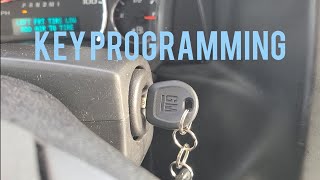
- GDS2 / Tech2: Immobilizer Learn / Key Programming — This function is required after replacing the BCM, ignition lock cylinder, or when adding new keys to program them to the vehicle's security system.
Wiring & Ground Locations
- Body Control Module (BCM) — Located behind the lower right side of the dashboard on a 2009 model.. The BCM is the module that receives the key signal and enables or disables the engine. All related wiring for the Passkey system terminates here.
- G302 — Located behind the left kick panel.. This is a major interior ground point. A poor connection here can cause a variety of electrical issues, including intermittent BCM operation and security faults.
- Ignition Switch Connector — At the ignition switch on the steering column.. The wiring from the exciter coil (Passkey reader) runs through this connector to the BCM. It is a common point for inspection for damaged or loose pins.
Real Owner Repair Stories
- Go-Parts.com research / YouTube (2014 GMC Savana) — Persistent crank no-start condition with security light flashing and code B3060.
❌ Tried (didn't work) Replacing the ignition switch/lock cylinder., Performing the 30-minute relearn procedure multiple times.
✅ What actually fixed it The Body Control Module (BCM) was found to be faulty. Replacing the BCM and programming it with GM's SPS2 software resolved the no-start condition and cleared the B3060 code.
When the Usual Fixes Don't Work
- In at least one documented case on a 2014 Savana, the common fixes of replacing the ignition lock cylinder and performing multiple relearn procedures did not resolve the B3060 code. The ultimate cause was a failed Body Control Module (BCM), which required professional replacement and programming to fix the vehicle. This serves as a counterpoint to the idea that the ignition cylinder is always the root hardware cause.
OEM Part Supersession History
15795321→ACDelco D1462G— Part number update and branding change over time. Functionally equivalent.
Heads up: The part is listed as an alternate name or number for D1462G, indicating direct compatibility.
Model Year Variations Within This Range
- 2007+: Early models in this range use the Passkey III system, which is a 40-bit fixed code system. Later models (around 2007.5 and newer) transitioned to Passkey III+, which uses a more secure rolling code (32/84-bit crypt) system. While the diagnostic steps for a technician are nearly identical (relearn, check coil, etc.), the underlying technology is different, making the later systems more difficult to bypass.
Helpful Videos
We Have This Part in Stock


The information in this article is provided for general reference and educational purposes only. Vehicle specifications, procedures, and part compatibility can vary by production date, trim level, and region. Always consult your vehicle's factory service manual and verify part numbers before purchasing or performing repairs. Safety-critical components such as airbags, seat belts, and braking systems should be installed by a qualified professional.
- Gmc SAVANA 2500:
- 🎬 Helpful Videos
- 🛍️ Shop This Part
- What's Unique About the 2007-2014 Gmc SAVANA 2500
- Diagnostic Flowchart
- Symptoms You May Notice
- Most Likely Causes
- Rare But Worth Checking
- Diagnosis Steps
- Parts You'll Likely Need
- Related Codes That Often Appear With This One
- Technical Service Bulletins (TSBs) & Recalls
- Platform-Specific Known Issues
- Mechanic-Grade Diagnostic Values
- Hidden / Shadow Codes Worth Checking
- Scan Tool Commands That Help
- Wiring & Ground Locations
- Real Owner Repair Stories
- When the Usual Fixes Don't Work
- OEM Part Supersession History
- Model Year Variations Within This Range
- 🎟️ Get 5% Off