

B3060 on 2007-2011 GMC Savana: Security System No-Start Causes and Fixes
Code B3060 on a 2007-2011 GMC Savana means the anti-theft system received a signal from an unprogrammed key, causing a no-start. This is often due to a failing ignition lock cylinder or a communication glitch. A security relearn procedure often provides a temporary or permanent fix.
- B3060 means your van's security system is preventing it from starting because it doesn't recognize the key.
- Before spending any money, try using a spare key and perform the 30-minute security relearn procedure.
- A weak or dying battery can cause this code to appear; always ensure your battery is fully charged and healthy before diagnosing further.
- If a relearn doesn't work, the most likely part to have failed is the ignition lock cylinder housing, which contains the sensor that reads the key.
- Replacing components like the BCM or ignition cylinder will require a relearn procedure to sync the new parts with the vehicle's security system.
What's Unique About the 2007-2011 Gmc SAVANA
The GMC Savana from this era uses GM's Passkey III (PK3) transponder-based immobilizer system. Unlike the older Passlock systems that used a magnet or resistor in the lock cylinder itself, this system relies on a radio-frequency transponder chip embedded in the key. While generally more reliable, these systems can be sensitive to low battery voltage or intermittent wiring connections, leading to the B3060 code 🎬 Watch: A quick explanation of the B3060 diagnostic code. and a frustrating no-start condition. The issue is common enough that a specific Technical Service Bulletin (TSB PIC5650) was repeatedly updated to address intermittent no-start problems related to RF interference and security codes like B3060.
Diagnostic Flowchart
Tap your situation to follow the diagnostic path that matches what you're seeing on this vehicle.
Symptoms You May Notice
- Engine will not crank or start.
- Engine starts briefly and then immediately shuts off.
- The security indicator light on the instrument cluster is illuminated solid or is flashing.
- A 'Service Theft Deterrent System' message may appear on the driver information center.
- Replacing the starter without checking for security codes first.
- Replacing the battery without addressing the underlying security system fault that may have been triggered by the initial low voltage.
- Replacing the ECM/PCM when the issue is with the TDM, key, or ignition cylinder. The ECM is usually just following the 'no start' command from the security system.
Most Likely Causes
- Using a Non-Programmed or Faulty Key 🔴 High Probability Keys can be damaged internally, or new, uncut keys may be used by mistake. Aftermarket keys may have poor quality transponder chips that fail to communicate properly.
How to confirm: Try using a different, known-good key for the vehicle. If the vehicle starts with the other key, the first key is the problem. Also, check for other RF devices on the keychain which can cause interference, as noted in TSB PIC5650.
Typical fix: Use a known-good key. If a new key is needed, it must be cut and programmed to the vehicle. This can be done via the 30-minute relearn procedure after the first key is learned.
Est. part cost: $50-$150 for a new key and programming. - System Communication Glitch / Need for Relearn 🟡 Medium Probability Low battery voltage during cranking or intermittent connection issues can cause the Theft Deterrent Module to lose sync with the key, requiring a reset. This is a very common GM issue, and the relearn procedure is often the first and most successful fix attempted by owners.
How to confirm: Perform the 30-minute security relearn procedure. If the procedure works and the vehicle starts, it confirms a communication issue was the cause.
Typical fix: Perform the 30-minute security relearn procedure. This involves cycling the key in the ignition for three consecutive 10-minute intervals. A fully charged battery is critical for this procedure to succeed.
Est. part cost: $0 - Faulty Ignition Lock Cylinder or Housing 🟡 Medium Probability The exciter coil that energizes the key's transponder is built into the ignition lock cylinder housing. The thin wires leading to this coil can break from repeated key turns over many years, or the coil itself can fail, leading to an inability to read the key.
How to confirm: This is a process of elimination. If different keys don't work and the relearn procedure fails repeatedly, the problem is likely in the hardware. A technician can test the wiring and components at the steering column. Wiggling the key or the connector at the base of the column may temporarily restore connection.
Typical fix: Replace the ignition lock cylinder housing (which contains the exciter coil) and then perform the security relearn procedure.
Est. part cost: $100-$250 - Failing Theft Deterrent Module (TDM) or Body Control Module (BCM) ⚪ Low Probability Like any electronic module, the TDM/BCM can fail internally, though it's less common than key or lock cylinder issues. Water intrusion or voltage spikes can damage the module. In some cases, a failing BCM can cause this issue due to poor grounding.
How to confirm: This is typically diagnosed by a professional after all other possibilities (key, wiring, lock cylinder) have been ruled out. A scan tool that can communicate with the BCM is required to check for communication errors.
Typical fix: Replace the faulty module. This requires programming the new module to the vehicle using specialized tools like a GM Tech2.
Est. part cost: $200-$500
Rare But Worth Checking
- Wiring Harness Damage: The wiring between the ignition lock cylinder and the TDM/BCM can become chafed or damaged, especially within the steering column or at the module connector. In some cases, the pins in the connectors themselves can become loose, causing intermittent contact.
- Radio Frequency (RF) Interference: As detailed in GM TSB PIC5650J, other electronic devices can 'jam' the signal from the key's transponder. This includes other car keys, building access fobs, and even aftermarket phone chargers or LED lights. Try starting the vehicle with all other devices removed from the key ring and the cabin.
Diagnosis Steps
- Check for a lit or flashing security light on the dashboard. This is the primary indicator of an anti-theft issue.
- Try starting the vehicle with a second, known-good key. If it starts, the first key is faulty.
- Remove any other keys or RF devices from the keychain and cabin to rule out interference, per TSB PIC5650.
- Ensure the vehicle's battery is fully charged and connections are clean and tight. A weak battery is a common cause of electronic glitches and will cause the relearn procedure to fail.
- If the vehicle does not start, attempt the 30-minute security relearn procedure: Turn the key to 'ON' (run position) and attempt to start. The engine will not start. Leave the key in the 'ON' position. Wait about 10 minutes until the security light stops flashing and turns off or stays solid. Turn the key off for 5-10 seconds. Repeat this process two more times for a total of three 10-minute cycles. On the fourth attempt after the third cycle, the vehicle should start.
- If the relearn procedure fails (e.g., the security light never turns off), inspect the wiring at the ignition lock cylinder and the TDM for any visible damage or loose connections.
- If all else fails, the issue likely lies with a faulty ignition lock cylinder housing (exciter coil) or the Theft Deterrent Module, requiring professional diagnosis with a capable scan tool to monitor key status data.
Parts You'll Likely Need
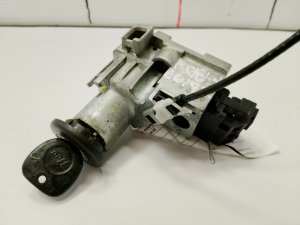
- Ignition Lock Cylinder Housing
(OEM #ACDelco D14A2D (Often part of a kit))— This housing contains the exciter coil that reads the key's transponder. The coil or its delicate wiring is a common failure point for security system issues, preventing the key from being read.
Trusted brands: ACDelco, Dorman, Standard Motor Products
OEM price range: $150-$250
Aftermarket price range: $80-$150 - Transponder Key
(OEM #ACDelco B111-P, Strattec 5903101 (Check VIN for exact match))— The transponder chip in the key can fail, or the key can be physically damaged, preventing the security system from recognizing it. Keys with the 'PK3' stamp are required.
Trusted brands: ACDelco, Strattec
OEM price range: $60-$100
Aftermarket price range: $25-$50
Related Codes That Often Appear With This One
- B3055 — Relates to a problem with the key transponder itself (No Transponder Key Identification Code Received). Often appears with B3060 when the key is the root cause or cannot be read.
- B2960 — A similar security code indicating 'Security System Sensor Data Incorrect but Valid'. This can point towards intermittent wiring or sensor issues within the Passkey system.
Technical Service Bulletins (TSBs) & Recalls
- PIC5650M: Addresses intermittent no crank, no start, or start stall concerns with the security light on, and lists B3060 as a potential related DTC.
- PIC5650C / PIC5650J: Later revisions of the same TSB, which strongly emphasize diagnosing Radio Frequency Interference (RFI) from aftermarket accessories as a primary cause for these intermittent security system issues before replacing any components.
- PIE0232: An engineering information bulletin asking for data on low-mileage 2013 models with B3060, showing GM's ongoing investigation into the root cause of these security system faults.
Platform-Specific Known Issues
- GM issued Technical Service Bulletin #PIC5650M for various models including the 2011 Savana, which notes that an intermittent no-crank or start-stall condition with the security light on can be associated with DTC B3060, among others. The bulletin was revised multiple times (e.g., PIC5650C, PIC5650J) and primarily points to Radio Frequency Interference (RFI) from aftermarket devices as a cause that should be investigated before replacing parts.
Hidden / Shadow Codes Worth Checking
- B3060 00: The '00' is a symptom byte indicating 'No Sub Type Information'. This means the primary code description ('Unprogrammed Transponder Identification Code Received') is the complete description of the failure, without further specific detail from the module. (see via A professional scan tool like a GM Tech2 or equivalent that can read manufacturer-specific codes and their symptom bytes.)
Scan Tool Commands That Help
- GM Tech2 or equivalent: TDM Data Display: 'Valid Key' parameter — After a relearn attempt or when testing multiple keys. A technician can view the 'Valid Key' parameter on the scan tool while trying each key. The parameter should switch to 'Yes' for a known good, programmed key, and 'No' for an unprogrammed or faulty key. This provides a definitive confirmation of whether the module is recognizing the key's transponder.
- GM Tech2 or equivalent: TDM Data Display: 'Passkey Data' — When diagnosing a communication issue between the key and the TDM. This parameter shows the state of the data being received from the key's transponder. If the data is nonsensical or absent while a key is in the ignition and turned to ON, it points to a problem with the key itself or the exciter coil in the ignition lock cylinder housing.
Wiring & Ground Locations
- G103 — Located at the left rear of the engine compartment on the cowl, often above the brake booster.. This is a critical ground point for several interior modules, including the Body Control Module (BCM), Instrument Panel Cluster (IPC), and the ignition key alarm switch. A poor connection at G103 can cause intermittent and difficult-to-diagnose electrical issues, including security system faults.
- G201 — Located in the upper left corner of the instrument panel, near the driver-side A-pillar. Access typically requires removing dash panels.. This ground serves the instrument panel cluster and the Data Link Connector (DLC). A fault here can cause the security light to malfunction or prevent proper communication between a scan tool and the vehicle's modules during diagnosis.
- Ignition Switch Connector — A multi-pin connector that attaches to the ignition switch, which is mounted on the steering column, not at the key lock cylinder itself.. The wiring from the transponder exciter coil (at the lock cylinder) runs down the column and integrates with harnesses that connect here and to the BCM/TDM. Damage or loose pins in this area from tilt steering adjustments or previous repairs can interrupt the signal from the key.
Real Owner Repair Stories
- CarParts.com user feedback on a related GM vehicle (2008 Chevy Impala) — No start condition with security light on after changing the ignition. DTC B3055 was present, which is functionally very similar to B3060.
❌ Tried (didn't work) Simply replacing the ignition components without performing a relearn.
✅ What actually fixed it The issue was resolved by performing the 30-minute security relearn procedure. The user turned the key to 'On' for 10-15 minutes, then off, repeating the cycle until the security light stopped flashing, which allowed the car to start.
Helpful Videos

We Have This Part in Stock


The information in this article is provided for general reference and educational purposes only. Vehicle specifications, procedures, and part compatibility can vary by production date, trim level, and region. Always consult your vehicle's factory service manual and verify part numbers before purchasing or performing repairs. Safety-critical components such as airbags, seat belts, and braking systems should be installed by a qualified professional.
- Gmc SAVANA:
- 🎬 Helpful Videos
- 🛍️ Shop This Part
- What's Unique About the 2007-2011 Gmc SAVANA
- Diagnostic Flowchart
- Symptoms You May Notice
- Most Likely Causes
- Rare But Worth Checking
- Diagnosis Steps
- Parts You'll Likely Need
- Related Codes That Often Appear With This One
- Technical Service Bulletins (TSBs) & Recalls
- Platform-Specific Known Issues
- Hidden / Shadow Codes Worth Checking
- Scan Tool Commands That Help
- Wiring & Ground Locations
- Real Owner Repair Stories
- 🎟️ Get 5% Off