

B3060 on 2007-2012 GMC Canyon: Security Light, No-Start Causes and Fixes
Code B3060 on a GMC Canyon means the anti-theft system doesn't recognize your key, usually causing a no-start and a security light. The most common cause is a failed Passlock sensor inside the ignition lock cylinder housing. Replacing the housing and performing a security relearn procedure is the standard fix. This is a very common issue on this platform and its siblings, the Chevy Colorado and Hummer H3.
- B3060 means your truck's anti-theft system has locked you out, usually due to a hardware failure.
- The most likely culprit is the Passlock sensor inside the ignition lock housing, a known weak point on this platform.
- Before replacing parts, try a spare key and remove all other fobs from your keychain to rule out simple issues.
- A 30-minute 'security relearn' procedure is required after replacing the sensor and is a good first step in diagnosis.
- This issue is shared with the 2004-2012 Chevy Colorado and 2006-2010 Hummer H3/H3T.
What's Unique About the 2007-2012 Gmc CANYON

The first-generation GMC Canyon and its platform mates, the Chevrolet Colorado and Hummer H3, use GM's Passlock II anti-theft system. This system is notorious for failures of the Hall effect sensor and its delicate wiring within the ignition lock housing and steering column. As a result, code B3060 is a very common and well-documented issue for these trucks, often leading to frustrating intermittent no-start conditions that leave drivers stranded, frequently requiring a 10-minute wait before a restart is possible.
Diagnostic Flowchart
Tap your situation to follow the diagnostic path that matches what you're seeing on this vehicle.
Symptoms You May Notice
- Engine does not crank or start.
- Engine starts and immediately stalls.
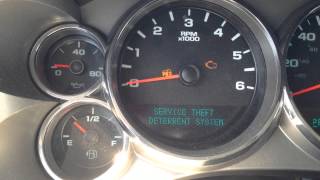
- Security light on the dashboard is solid or flashing.
- A "10-minute wait" is required before the truck will start (Passlock lockout).
- Engine cranks but will not fire.
- Intermittent starting problems that seem to happen randomly.
- Replacing the starter motor or battery when the issue is a no-crank. The security system prevents the BCM from sending the signal to crank the engine.
- Replacing the fuel pump when the issue is a start-and-stall. The security system disables the fuel injectors, which mimics a fuel delivery problem.
- Replacing the ignition switch when the actual fault is in the Passlock sensor, which is part of the ignition lock *housing*, not the electrical switch portion.
Most Likely Causes

- Faulty Passlock Sensor (in Ignition Lock Housing) 🔴 High Probability The sensor and its thin wires inside the ignition housing are a known weak point on this platform, failing from wear and tear over time. This is the most widely reported failure leading to B3060.
How to confirm: After ruling out key and wiring issues, if the security relearn procedure fails to resolve the problem, the sensor is the most likely culprit. A scan tool may show erratic data from the sensor. This is often diagnosed by exclusion after checking wiring.
Typical fix: Replace the entire ignition lock cylinder housing, which includes the new Passlock sensor. The OEM part is ACDelco D1462G. This must be followed by a 30-minute security relearn procedure.
Est. part cost: $150-$300 - Damaged or Chafed Wiring 🟡 Medium Probability The wires for the Passlock sensor run down the steering column and can become chafed or broken from the tilt-steering mechanism or simple vibration over time. The key wires are typically a small three-wire harness with yellow, black, and sometimes orange or red wires.
How to confirm: Visually inspect the small-gauge wires (often a yellow signal wire, a power wire, and a ground wire) coming from the back of the ignition cylinder down the steering column for any signs of damage, pinching, or poor connections at the connector.
Typical fix: Repair the broken or chafed section of the wire. In some cases, a new connector pigtail is needed. Some owners opt to perform a 'resistor bypass' by cutting the yellow signal wire and soldering in a resistor that matches the vehicle's required value (often around 2.2k Ohms) to permanently bypass the sensor. 🎬 See this guide on how to perform a permanent resistor bypass.
Est. part cost: $5-$25 - Unprogrammed or Defective Key ⚪ Low Probability This is a misnomer for this platform. The Passlock II system does not use a transponder chip in the key. This cause is only relevant if the physical key is so worn it can no longer properly turn the lock cylinder to the correct position for the sensor to read.
How to confirm: Try a spare, known-good key. If the spare key works consistently, the problem may be wear on the primary key. However, if both fail, the problem is with the vehicle's Passlock sensor or wiring.
Typical fix: Have a new key cut by a locksmith or dealership. No programming is needed for the key itself, but a security relearn may be required for the vehicle.
Est. part cost: $20-$70
Rare But Worth Checking
- Radio Frequency Interference (RFI): Other RFID-enabled items on your keychain (like office key cards, gas station payment fobs, or even keys from other vehicles) can sometimes interfere with the signal from the ignition system. Before performing costly repairs, try starting the vehicle with the ignition key completely isolated from all other keys and fobs. TSBs PIC5650B and PIC5650M specifically call this out as a potential cause.
- Failing Body Control Module (BCM): While rare, the BCM itself can fail. This should only be considered after all other possibilities (sensor, wiring, keys) have been exhaustively ruled out, as it is an expensive and complex repair requiring programming by a dealer or specialized shop.
Diagnosis Steps
- Verify the complaint. Note if the security light is on or flashing and if the engine cranks or not.
- Scan the Body Control Module (BCM) for DTCs. Confirm B3060 and any other related codes like B3055 or B3935.
- Test all available keys. Remove any other RFID fobs from the keychain and re-test to rule out Radio Frequency Interference (RFI).
- Attempt the 30-minute security relearn procedure. Turn the key to 'ON' (not start) and wait for the security light to turn off (approx. 10-11 minutes). Turn the key off for 30 seconds. Repeat this sequence two more times for a total of three cycles (about 30-35 minutes total). 🎬 Watch: A step-by-step walkthrough of the 30-minute security relearn procedure.
- If the relearn fails, remove the steering column shrouds and visually inspect the 3-wire harness coming from the ignition lock cylinder (typically with a yellow wire) for any signs of chafing, breaks, or loose connections.
- If wiring appears intact, the most probable cause is a faulty Passlock sensor within the ignition lock housing.
- Replace the ignition lock housing (ACDelco P/N: D1462G). After replacement, you MUST perform the 30-minute relearn procedure again to sync the new sensor with the BCM.
Parts You'll Likely Need

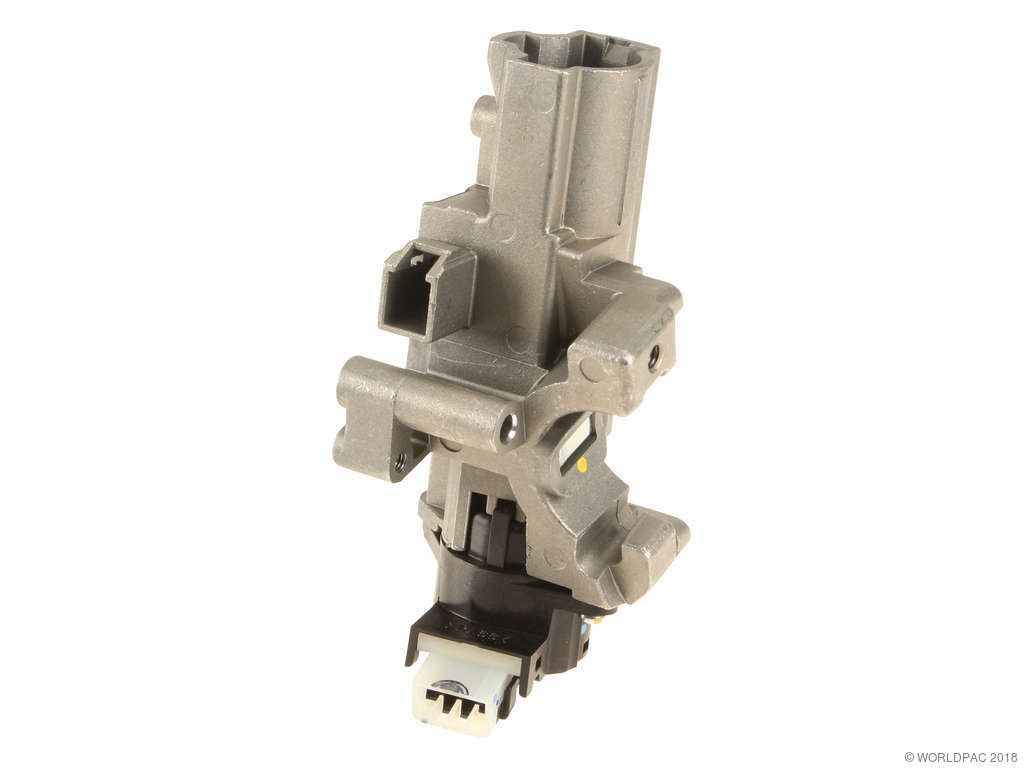
- Ignition Lock Cylinder Housing with Passlock Sensor
(OEM #ACDelco D1462G (GM 15795321))— This is the most common failure point for the Passlock system that triggers code B3060. The sensor is integrated into this housing and is not sold separately from the housing by GM.
Trusted brands: ACDelco (OEM), Standard Motor Products (SMP), Dorman 924-702
OEM price range: $200-$300
Aftermarket price range: $150-$220
Related Codes That Often Appear With This One
- B3055 — This code means 'No Transponder Modulation or No Transponder Signal Received' and is often set alongside B3060, indicating a total failure of the key to communicate with the vehicle's security module. It is cited in multiple TSBs for this issue.
- B3935 — This code relates to 'Transponder Authentication Failed' and is another common partner to B3060, as cited in GM technical service bulletins PIC5650M and PIE0232.
Technical Service Bulletins (TSBs) & Recalls
- PIC5650M: Addresses intermittent no crank, no start, or start stall concerns with the security light coming on, and lists B3060 as a potential DTC.
- PIE0232 / PIC5650B: Confirmed that B3060 is related to no-start/security light issues and mentioned RFI from devices on the keychain as a possible cause.
Platform-Specific Known Issues
- A GM Technical Service Bulletin (TSB #PIC5650M) acknowledges an intermittent no-crank, no-start, or start-stall concern with the security light on, which can set DTC B3060, B3055, and others.
- Owners on forums like 355nation.net and Reddit frequently discuss the '10-minute wait' and the ultimate need to either replace the ignition lock housing or perform a resistor bypass.
- A common temporary workaround shared by owners is to turn the key to the 'ON' position for 3-4 seconds before attempting to crank, giving the sluggish system time to recognize the sensor reading.
Mechanic-Grade Diagnostic Values
- Passlock Sensor Signal Wire Voltage (Yellow Wire) - Key OFF — expected: ~5.1V DC. Failure: No voltage or significantly lower voltage indicates a wiring or BCM issue.
- Passlock Sensor Signal Wire Voltage (Yellow Wire) - Key ON/RUN — expected: A stable DC voltage lower than the 5V reference (e.g., 1.0V to 4.0V). The exact value is learned by the BCM and is vehicle-specific.. Failure: Voltage that is erratic, does not drop, or drops to 0V indicates a faulty sensor or wiring.
- Passlock Sensor Power Supply Voltage — expected: Greater than 10V DC. Failure: Low or no voltage indicates a problem with the BCM power supply or the wiring to the sensor.
- Bypass Resistor Value — expected: Varies by vehicle (typically 1k-14k Ohms). A common value sold in kits is 2.2k Ohms (2200 Ohms).. Failure: N/A. This is a repair value, not a diagnostic one. The value must be measured from the original working sensor or a new value must be learned via the 30-minute relearn procedure.
Hidden / Shadow Codes Worth Checking
- B3060 00: The '00' is a 2-digit symptom byte indicating 'No Sub Type Information'. It means the base code B3060 provides the full description of the failure. Some generic tools may incorrectly define this. (see via A professional scan tool like the GM Tech 2 or equivalent that can read GM-specific symptom bytes.)
Scan Tool Commands That Help
- GM Tech 2: VTD Re-Learn / Theft Module Re-Learn — This function, found under 'Service Programming', is used to initiate the security relearn procedure after replacing the Passlock sensor, BCM, or PCM. It is a guided process that is often more reliable than the manual 30-minute key cycle method.
- Professional Scan Tool: Live Data: TDM Valid Key Parameter — To verify if the Theft Deterrent Module (TDM) is successfully recognizing a given key. The parameter should read 'Yes' for a known good key, helping to rule out issues with the key itself.
Wiring & Ground Locations

- Passlock Sensor Connector — At the ignition lock cylinder housing, inside the steering column shrouds.. This 3-wire connector contains the critical yellow signal wire, power, and ground for the Passlock sensor. It is a primary point for voltage testing and inspection for chafing or damage.
- Body Control Module (BCM) — Located behind the passenger side kick panel, under the glove box.. The BCM receives and interprets the signal from the Passlock sensor. All sensor wiring terminates here, making its connectors a key inspection point for corrosion or loose pins.
- Ground Splice Pack SP106 — Under the hood on the passenger side, typically located behind the engine airbox.. This splice pack is the main grounding point for the BCM. Corrosion or failure of this ground can cause intermittent BCM faults, including erroneous security system activation, mimicking a sensor failure.
Real Owner Repair Stories
- Chevrolet Forum User (2002 Chevrolet Impala (with similar Passlock system)) — Intermittent no-start with security light on, requiring a 10-minute wait.
❌ Tried (didn't work) Initial diagnosis pointed towards replacing the Passlock sensor or BCM.
✅ What actually fixed it The owner disassembled the electrical ignition switch (not the lock cylinder) and found burnt internal contacts. Cleaning the contacts with fine sandpaper to restore a clean connection resolved the voltage drop and fixed the Passlock issue without replacing any parts. - YouTube User 'You're a GOOF' (1999-2007 Chevrolet Silverado (with similar Passlock system)) — Intermittent crank-no-start that was initially misdiagnosed.
❌ Tried (didn't work) Replaced the fuel filter., Replaced the fuel pump.
✅ What actually fixed it Performed a permanent bypass by cutting the yellow Passlock signal wire and splicing it to the black ground wire. This was followed by a 30-minute (3x10 min) security relearn procedure. The truck started reliably afterward, although the security light remained on.
OEM Part Supersession History
88964357, 15216929, 19149940→15795321— Part consolidation and potential design revisions by the manufacturer over the vehicle's lifespan.
Helpful Videos
Used OEM Parts in Stock

New Aftermarket Parts Available


The information in this article is provided for general reference and educational purposes only. Vehicle specifications, procedures, and part compatibility can vary by production date, trim level, and region. Always consult your vehicle's factory service manual and verify part numbers before purchasing or performing repairs. Safety-critical components such as airbags, seat belts, and braking systems should be installed by a qualified professional.
- Gmc CANYON:
- 🎬 Helpful Videos
- 🛍️ Shop This Part
- What's Unique About the 2007-2012 Gmc CANYON
- Diagnostic Flowchart
- Symptoms You May Notice
- Most Likely Causes
- Rare But Worth Checking
- Diagnosis Steps
- Parts You'll Likely Need
- Related Codes That Often Appear With This One
- Technical Service Bulletins (TSBs) & Recalls
- Platform-Specific Known Issues
- Mechanic-Grade Diagnostic Values
- Hidden / Shadow Codes Worth Checking
- Scan Tool Commands That Help
- Wiring & Ground Locations
- Real Owner Repair Stories
- OEM Part Supersession History
- 🎟️ Get 5% Off