

B3060 on 2007-2009 Chevrolet Uplander: No-Start Causes and Fixes
Code B3060 on a Chevy Uplander means the anti-theft system doesn't recognize the key, causing a no-start and security light. The first step is to try a key relearn procedure. If that fails, the ignition lock cylinder which contains the security sensor is the most likely part to have failed.
- B3060 means your Uplander's anti-theft system has been activated, preventing the engine from starting.
- Before any repairs, always attempt the security relearn procedure, as it's a free and very common fix, especially after battery issues.
- Try your spare key to quickly rule out a faulty primary key.
- If a relearn doesn't work, the most probable failed part is the ignition lock cylinder assembly, which contains the security sensor.
- Do not mistake this security issue for a bad starter or fuel pump; the security light is the key indicator.
What's Unique About the 2007-2009 Chevrolet UPLANDER
The Chevrolet Uplander uses GM's Passkey III (PK3) immobilizer system. This system is known for being sensitive to voltage drops, such as from a weak battery or a jump-start, which can cause it to lose synchronization with the key and trigger a B3060 code. Furthermore, a GM Technical Service Bulletin (TSB) confirms that these vehicles can experience intermittent no-start conditions related to this code, sometimes caused by radio frequency interference from aftermarket accessories near the ignition.
Diagnostic Flowchart
Tap your situation to follow the diagnostic path that matches what you're seeing on this vehicle.
Symptoms You May Notice
- Engine will not crank or start
- Engine starts briefly then immediately stalls
- Security light is illuminated or flashing on the dashboard.
- Intermittent no-start condition. [⭐ MANUFACTURER TSB — highest authority] Bulletin #PIC5650M
- "Service Theft System" or "Starting Disabled" message on the Driver Information Center (DIC).
- Replacing the starter motor. A bad starter will not typically cause a security light to come on.
- Replacing the fuel pump. While a start-and-stall symptom is similar to a fuel delivery problem, the presence of code B3060 and a security light points to the anti-theft system.
- Replacing the battery without performing a key relearn. A weak battery can trigger the problem, but replacing it won't solve the B3060 code until the keys are relearned by the system.
Most Likely Causes
- Loss of Key Synchronization 🔴 High Probability The security system is sensitive to battery voltage changes. Disconnecting the battery, a jump-start, or a weak battery can cause the system to lose its memory of the programmed keys.
How to confirm: Perform the security relearn procedure. If the vehicle starts and runs correctly afterward, the issue was a loss of synchronization.
Typical fix: Perform the 30-minute security relearn procedure. This involves turning the key to the 'ON' position for 10-15 minutes until the security light turns off, then repeating the cycle two more times before starting.
Est. part cost: $0 - Faulty or Worn Ignition Lock Cylinder 🟡 Medium Probability The ignition lock cylinder housing contains the exciter coil (sensor) that reads the key's transponder chip. Over time, wear and tear on the cylinder or the internal wiring can lead to an intermittent or failed signal.
How to confirm: If the key relearn procedure fails to resolve the issue, and the key itself is known to be good, the lock cylinder is the next most likely culprit. A technician can test the signal from the sensor with an appropriate scan tool.
Typical fix: Replace the ignition lock cylinder assembly and perform the key relearn procedure.
Est. part cost: $50-$150 - Faulty or Damaged Ignition Key 🟡 Medium Probability The transponder chip inside the key head can be damaged if the key is dropped or exposed to strong magnetic fields. Normal wear can also degrade the key's ability to be read correctly.
How to confirm: Try starting the vehicle with a spare, known-good key. If the vehicle starts with the spare key, the original key is faulty.
Typical fix: Replace the faulty key. A new key must be cut and programmed to the vehicle by a dealer or automotive locksmith.
Est. part cost: $40-$100 - Radio Frequency Interference (RFI) ⚪ Low Probability As noted in TSB PIC5650M, the security system can be sensitive to RFI from aftermarket devices like phone chargers, dash cams, or even other RFID cards on the keychain.
How to confirm: Remove all other keys, fobs, and aftermarket electronic devices from the keychain and from near the ignition column. Attempt to start the vehicle again.
Typical fix: Relocate or remove the source of the interference.
Est. part cost: $0
Rare But Worth Checking
- Damaged Wiring Harness: The wiring between the ignition lock cylinder and the Body Control Module (BCM) can become chafed or damaged, causing an intermittent connection. This should be inspected if other, more common causes have been ruled out.
- Faulty Body Control Module (BCM): While rare, the BCM itself can fail. The BCM is the computer that manages the theft deterrent system. This is typically the last part to suspect, as it is expensive and requires programming by a dealer or qualified shop.
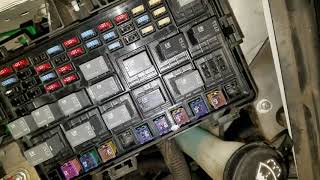
- Poor Connection at Underhood Fuse Block: In some cases, the main underhood fuse block can become partially disconnected from its base, causing a loss of power or signal to critical systems, including the starter relay control circuit. This can mimic a security system failure but won't typically set a B3060 code on its own, though it can be a confounding factor in a no-start condition.
Diagnosis Steps
- Check for other stored DTCs to see if other modules are reporting errors.
- Attempt to start the vehicle with a known-good spare key. If it starts, the primary key is the issue.
- Remove any potential sources of Radio Frequency Interference (RFI) from near the ignition switch, such as aftermarket chargers or other key fobs.
- Perform the security relearn procedure (often called the '30-minute' relearn). This frequently resolves synchronization issues.
- If the relearn fails, inspect the wiring and connector at the ignition lock cylinder for any visible damage or looseness.
- Inspect the main underhood fuse block to ensure it is fully seated and making a good connection. 🎬 Check this guide to locate critical fuses and relays.
- If wiring is intact, the next logical step is to replace the ignition lock cylinder assembly, as the internal sensor is a common failure point.
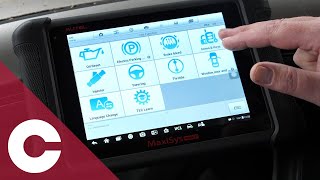
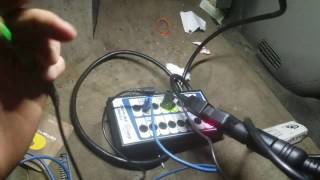
- If the problem persists after replacing the lock cylinder and performing a relearn, the Body Control Module (BCM) or its wiring may be at fault, 🎬 See how to diagnose complex no-start and communication issues. which requires professional diagnosis.
Parts You'll Likely Need
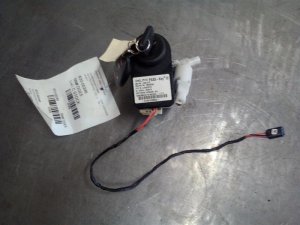
- Ignition Lock Cylinder with Passkey Sensor
(OEM #15795321)— This assembly contains the sensor (exciter coil) that reads the key's transponder. It is the most common hardware failure point for code B3060 after simple key relearn procedures fail.
Trusted brands: ACDelco (D1462G), GM Genuine, Dorman, Standard Motor Products
OEM price range: $80-$150
Aftermarket price range: $50-$100 - Transponder Ignition Key — If a key's internal transponder chip fails, it will no longer be recognized by the vehicle, triggering B3060. This is confirmed by testing a spare key.
Trusted brands: ACDelco, Strattec
OEM price range: $40-$80
Aftermarket price range: $25-$50
Related Codes That Often Appear With This One
- B3055 — This code relates to 'No Transponder Modulation or No Transponder,' indicating a problem with the key itself. It often appears with B3060 when the key is the root cause. [⭐ MANUFACTURER TSB — highest authority] Bulletin #PIC5650M
- B3935 — This code, 'Transponder Authentication Failed,' is another security system code that can be logged during the same fault event. [⭐ MANUFACTURER TSB — highest authority] Bulletin #PIC5650M
Technical Service Bulletins (TSBs) & Recalls
- PIC5650M: Addresses intermittent no-crank, no-start, or start-stall concerns with the security light on, potentially logging DTCs B3055 and B3060. It advises checking for RFI before replacing parts. [⭐ MANUFACTURER TSB — highest authority] Bulletin #PIC5650M
Platform-Specific Known Issues
- A known issue documented in TSB PIC5650M describes an intermittent no-crank, no-start, or start-and-stall condition with the security light on, which can log DTC B3060. [⭐ MANUFACTURER TSB — highest authority] Bulletin #PIC5650M
Scan Tool Commands That Help
- Tech2/GDS2: Theft Deterrent Relearn — Used to program new keys or modules (BCM, ECM) to the vehicle. This is a more direct method than the manual 30-minute relearn and is required when replacing the BCM.
- Tech2/GDS2: Read Theft Deterrent Data — Allows a technician to view the status of the Passkey system, see which keys are programmed, and check the communication status between the BCM and ECM, which helps diagnose if the fault is with the key, antenna, BCM, or ECM.
Wiring & Ground Locations
- BCM (Body Control Module) — Located to the left of the steering column, below the left side of the dash.. The BCM is the central module for the Passkey III anti-theft system. It receives the key data from the ignition cylinder and communicates the 'fuel enable' status to the ECM.
- BCM Connectors C1, C2, C3 — At the BCM. C1 and C2 are black 52-pin connectors, and C3 is a black 18-pin connector.. These are the main interface points for the BCM. Testing for power, ground, and data signals related to the theft system occurs at these connectors.
- Class 2 Serial Data Wire — Tan wire located at the BCM, connector C1, pin 37 (for 2008 models). This wire also runs to the Data Link Connector (DLC).. This is the communication line between the BCM and the ECM. A fault on this circuit will prevent the BCM from sending the 'fuel enable' password, causing a no-start condition even if the key is read correctly.
- G200 — On the right side of the dash support beam, above the dash compartment.. This is a primary instrument panel ground. A poor connection at G200 can cause erratic behavior in multiple modules, including the BCM and Instrument Panel Cluster, potentially leading to security system faults.
- BCM Ground Path Warning — General. Per GM bulletin 07-08-47-004D, the negative battery cable MUST be disconnected before removing any BCM ground connections (like G200 or grounds passing through junction blocks). Failure to do so can cause internal damage to the BCM.
Real Owner Repair Stories
- Chevrolet Forum user (2008 Chevrolet Uplander) — No crank, no start. Dash lights came on, but turning the key did nothing. No click from starter.
❌ Tried (didn't work) Replacing crank and ignition relays., Removing and testing the starter (it worked when jumped directly)., Trying a spare key., Inspecting the ignition switch.
✅ What actually fixed it The main underhood fuse box tray was not fully seated on its base connectors. After finding instructions online on how to reset the connector locks in the base, the user was able to fully snap the fuse box tray back into place, which resolved the no-start condition. - YouTube video by 'pro auto repair' (2007 Chevrolet Uplander) — No start condition. Vehicle had a brand new starter installed. All lights and horn worked, but no power was getting to the starter.
❌ Tried (didn't work) Replacing the starter., Checking wiring, ignition switch, and neutral safety switch.
✅ What actually fixed it The main battery ground terminal was corroded and not providing sufficient ground for the engine to start, despite appearing tight and allowing other accessories to function. Replacing the ground terminal and cleaning the connection points restored the ground to the starter relay circuit and fixed the no-start issue.
OEM Part Supersession History
15795321→ACDelco D1462G— This is the service part number designation for the GM Genuine part.
Heads up: ACDelco D1462G is the direct replacement for GM part number 15795321. No known incompatibilities exist.
Helpful Videos
Used OEM Parts in Stock
New Aftermarket Parts Available


The information in this article is provided for general reference and educational purposes only. Vehicle specifications, procedures, and part compatibility can vary by production date, trim level, and region. Always consult your vehicle's factory service manual and verify part numbers before purchasing or performing repairs. Safety-critical components such as airbags, seat belts, and braking systems should be installed by a qualified professional.
- Chevrolet UPLANDER:
- 🎬 Helpful Videos
- 🛍️ Shop This Part
- What's Unique About the 2007-2009 Chevrolet UPLANDER
- Diagnostic Flowchart
- Symptoms You May Notice
- Most Likely Causes
- Rare But Worth Checking
- Diagnosis Steps
- Parts You'll Likely Need
- Related Codes That Often Appear With This One
- Technical Service Bulletins (TSBs) & Recalls
- Platform-Specific Known Issues
- Scan Tool Commands That Help
- Wiring & Ground Locations
- Real Owner Repair Stories
- OEM Part Supersession History
- 🎟️ Get 5% Off