

B3060 on 2017-2024 Chevrolet Traverse: Security System Fault, Causes and Fixes
Code B3060 on a Chevrolet Traverse means the vehicle's security system does not recognize the ignition key. This results in a no-start or start-and-stall condition with the security light on. The most common fix is addressing a faulty key or radio frequency interference, but sometimes a key relearn procedure is required.
- B3060 means your Traverse's security system doesn't recognize your key, preventing the engine from starting.
- Before spending any money, remove all other keys, fobs, and access cards from your keychain and try again. This is a very common cause.
- If you have a spare key, try it. If the spare works, your primary key needs to be replaced and programmed.
- Fixing this code almost always requires programming, either through a DIY relearn procedure or with professional scan tools. Do not simply replace parts without a plan for programming them.
What's Unique About the 2017-2024 Chevrolet TRAVERSE
The 2017-2024 Traverse, part of the GM C1XX platform, uses a sophisticated immobilizer system that is highly susceptible to Radio Frequency Interference (RFI). GM has released multiple versions of Technical Service Bulletin PIC5650 (up to version M) that explicitly name the Traverse and its platform mates, warning that a huge variety of RF-emitting devices can 'jam' the 125 kHz signal used by the immobilizer system. These can include other vehicle keys, building access cards, aftermarket LED lights, and even certain USB chargers or phone accessories. This interference can cause an intermittent B3060 code and a no-start condition that is notoriously difficult for technicians to replicate, as the owner may unknowingly remove the interfering device before service.
Diagnostic Flowchart
Tap your situation to follow the diagnostic path that matches what you're seeing on this vehicle.
Generation note: The 2017-2024 range covers the end of the first generation (through 2017) and the entire second generation (2018-2024). While the underlying immobilizer logic is similar, the specific components, key types (keyed vs. keyless access), and relearn procedures differ significantly. The issue of RF interference is particularly noted across all modern GM models, as documented in TSB PIC5650M. 🎬 Watch this full guide on how the anti-theft system works The first generation shares its architecture with the original GMC Acadia and Buick Enclave, while the second generation is on the C1XX platform with newer versions of those vehicles plus the Cadillac XT5 and XT6.
Symptoms You May Notice
- Engine will not crank (no-crank).
- Engine starts and immediately stalls.
- Security indicator light is on solid or flashing. 🎬 See how to reset the theft deterrent system
- Message on dash like 'Service Theft Deterrent System'.
- For keyless start models, a 'No Remote Detected' or 'Place Transmitter in Pocket to Start' message may appear on the Driver Information Center (DIC).
- Replacing the starter without checking for security codes first.
- Replacing the battery when the no-start is caused by the immobilizer, not a lack of power.
- Replacing the ECM/TCM when a poor ground or relay issue is the actual cause of the no-communication problem.
Most Likely Causes
- Radio Frequency (RF) Interference 🔴 High Probability As detailed in GM TSB PIC5650M, the immobilizer system operates at 125 kHz and can be disrupted by other RFID devices like gas station payment fobs, office key cards, other car keys, and even aftermarket electronics like LED lights or USB chargers.
How to confirm: Remove all other fobs, cards, and electronic devices from the keychain and from inside the vehicle. Try starting the vehicle with only the Traverse key present. If it starts consistently, interference was the cause.
Typical fix: Keep other RFID devices separate from the vehicle key. Advise the customer of the sensitivity per the TSB.
Est. part cost: $0 - Faulty or Unprogrammed Ignition Key 🟡 Medium Probability The transponder chip inside the key can fail, or a newly cut key may not have been programmed correctly. Using a non-GM key can also lead to programming issues. A weak battery in a keyless-start fob can also cause intermittent issues.
How to confirm: Try starting the vehicle with a known-good spare key. If the spare key works reliably, the primary key is faulty. A scan tool can also show if the key's value is being read as valid by the TDM.
Typical fix: The faulty key must be replaced and programmed to the vehicle. This often requires a locksmith or dealer with specialized tools. In some cases, all existing keys must be reprogrammed at the same time as the new one.
Est. part cost: $75-$250 - Corrupted Key Data / Need for Relearn 🟡 Medium Probability
How to confirm: If both keys fail, the issue is intermittent, or it occurred after a battery replacement, a key relearn procedure may be needed to resynchronize the keys with the vehicle's security system. This is often the first step a technician will take after ruling out interference.
Typical fix: Perform the appropriate key relearn procedure. For keyed ignitions, this is often a '10-Minute' or '30-Minute' procedure involving cycles of turning the key to 'ON'. For keyless start, it may involve using the physical key blade in the door lock and placing fobs in the transmitter pocket.
Est. part cost: $0 - Faulty Theft Deterrent Module (TDM) or Antenna ⚪ Low Probability
How to confirm: If no keys can be programmed or read, and there is no RF interference, the TDM or the antenna ring around the ignition switch (or in the center console for keyless) may be faulty. This requires professional diagnosis with a scan tool to check for communication with the TDM/BCM.
Typical fix: Replace the Theft Deterrent Module and/or antenna, followed by programming the new module and all keys to the vehicle. This requires dealer-level tools.
Est. part cost: $150-$400
Rare But Worth Checking
- Low Vehicle Battery Voltage: A weak or failing main vehicle battery can cause a multitude of seemingly unrelated electronic issues, including setting security codes like B3060 and other communication faults. This is especially true on vehicles with start-stop systems.
- Faulty Body Control Module (BCM): The BCM is a central computer in the vehicle and on some models, it handles the immobilizer functions directly. While rare, an internal BCM failure can cause a host of issues, including setting security codes like B3060.
- Poor Ground Connection: A poor ground for the BCM or related modules can cause intermittent communication issues that mimic a component failure, leading to a no-start and various codes. One owner of a similar platform vehicle traced a no-start to a bad ground on the control side of the ignition relay.
Diagnosis Steps
- Check for and remove any Radio Frequency (RF) devices from the keychain and vehicle interior (e.g., Speedpass, other key fobs, access cards, aftermarket chargers, LED lights).
- Try starting the vehicle with a known-good spare key. If it starts, the other key is faulty.
- If the vehicle has a keyless start system and displays 'No Remote Detected', try placing the fob in the designated transmitter pocket in the center console and starting the engine.
- Check the main vehicle battery. A low voltage can cause various electronic module errors.
- Scan the Theft Deterrent Module (TDM) and Body Control Module (BCM) for codes. Note if B3055 or B3935 are also present.
- If you have access to a capable scan tool, monitor the 'TDM Valid Key' parameter to see if the module recognizes the key.
- Attempt the appropriate Key Relearn procedure for your model year and ignition type (keyed vs. keyless). This can range from a 10-minute key-on cycle to a 30-minute, multi-step process.
- Inspect the wiring and connectors for the immobilizer antenna (around the ignition lock cylinder or in the center console) and the TDM/BCM.
- If keys cannot be learned and wiring is okay, further diagnostics on the Theft Deterrent Module (TDM) and Body Control Module (BCM) are required, which should be performed by a professional.
Parts You'll Likely Need
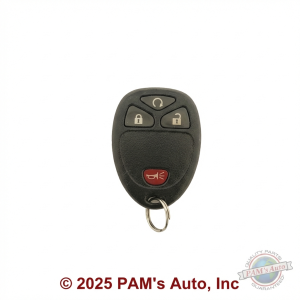
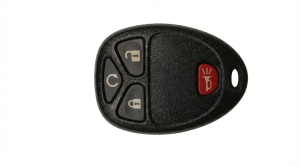
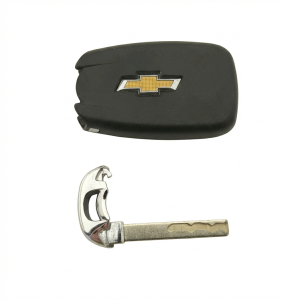
- Ignition Key / Key Fob
(OEM #13599249, 13579248 (example part numbers, verify by VIN))— The transponder chip in the key is a common point of failure, or the fob battery may be dead. A new key/fob is the only fix for a damaged internal chip.
Trusted brands: ACDelco, GM Genuine Parts
OEM price range: $100-$200
Aftermarket price range: $50-$120 - Theft Deterrent Module (Immobilizer Module)
(OEM #13540633, 23349780, 84209962 (example part numbers, verify by VIN))— If the module itself fails, it will be unable to read any key, new or old, requiring replacement and programming.
Trusted brands: ACDelco, GM Genuine Parts
OEM price range: $150-$300
Aftermarket price range: $100-$200
Related Codes That Often Appear With This One
- B3055 — Relates to a problem with the key transponder itself (No Transponder Modulation or No Transponder). It is often set alongside B3060 when the key is the root cause or there is significant interference.
- B3935 — Another transponder-related code (Transponder Authentication Failed) that can be triggered by RF interference or key issues, and is frequently mentioned in the same TSBs as B3060.
Technical Service Bulletins (TSBs) & Recalls
- PIC5650M: Addresses intermittent no-crank, no-start, or start-stall concerns with the security light on, potentially with DTCs B3055, B3060, and others. It provides an extensive list of potential RFI sources, from other keys to aftermarket LED lights and USB chargers, as the primary diagnostic path before replacing parts.
- PIE0232: An older engineering information bulletin for other GM trucks that shows GM has been actively investigating the root cause of B3055/B3060/B3935 codes on low-mileage vehicles, highlighting the focus on RFI.
- TSB_1065 (Dixie Electric): An aftermarket TSB that summarizes the GM findings, confirming that B3055, B3060, and B3935 are linked to intermittent no-start/stall conditions caused by RF interference from devices on the keychain.
Platform-Specific Known Issues
- An intermittent no-crank or start-stall condition with the security
Hidden / Shadow Codes Worth Checking
- B3060 00: The '00' is a symptom byte indicating 'No Sub Type Information'. This means the primary code description ('Unprogrammed Transponder Identification Code Received') contains the full diagnostic information needed, without requiring a more specific subtype. (see via A professional scan tool like GM GDS2 will display the code with its symptom byte.)
Scan Tool Commands That Help
- GM GDS2: Immobilizer Learn — This function is used to program new keys or re-program existing keys to the vehicle's Theft Deterrent Module or BCM. It is required after replacing a key or the module itself.
- GM GDS2: Add or Replace Key Fobs — Found under the 'Remote Control Door Lock Receiver' module diagnostics, this function is used to add new key fobs to the vehicle's memory.
- GM GDS2: Data Display > TDM Valid Key — When diagnosing, a technician can monitor this parameter to see in real-time if the Theft Deterrent Module is recognizing the inserted key as 'Yes' (valid) or 'No' (invalid). This helps confirm if the key's transponder is the issue.
- GM GDS2: Module Diagnostics > Body Control Module > Control Functions — Allows a technician to access and test various subsystems controlled by the BCM, which can help verify BCM communication and functionality before condemning the module.
Wiring & Ground Locations
- Body Control Module (BCM) — On 2018-2023 Traverse models, the BCM is located in the center console, next to the passenger side fuse box, but requires removal of the side console panel to access.. The BCM is the central hub for the immobilizer system on these models. All related wiring for the key, antenna, and security indicator light ultimately communicates with the BCM. A poor connection or ground at the BCM can cause B3060.
- BCM Connector X1, Pin 21 — On the main X1 connector of the Body Control Module.. Based on wiring diagrams for similar GM platforms, this pin (wire color typically Gray) is often the 'Security Indicator Control' circuit. A fault on this circuit could cause the security light to malfunction, though it wouldn't directly cause a no-start.
- Transponder Key Coil — This is the antenna. For keyed ignition, it's a ring around the ignition lock cylinder. For push-to-start models, it's typically located in the center console area, often near the designated key fob pocket.. This coil energizes the transponder chip in the key. If the coil is faulty or its wiring is damaged, the key will not be read, leading directly to a B3060 or B3055 code.
Real Owner Repair Stories
- YouTube video by Car Operation Center (2018 Chevrolet Silverado (similar GM platform)) — All keys lost, no-start condition, B3060 code present in the BCM ('Unprogrammed Transponder').
❌ Tried (didn't work) Clearing the code with a scanner did not work; the code would immediately return because no valid key was programmed.
✅ What actually fixed it Using a professional key programmer (KM100), the technician performed an 'All Keys Lost' procedure. This involved reading the vehicle's PIN code via the OBD-II port, then programming a new transponder key to the BCM. The process required following specific on-screen prompts, including turning the ignition off and on, and opening and closing the driver's door to complete the security handshake.
OEM Part Supersession History
13507599, 13523277→13540633— Standard part evolution, integrating design updates or new materials.
Heads up: Part 13540633 is listed as the replacement for the earlier numbers and is specified for a wide range of GM vehicles from 2016-2025. It is often noted as being included with the center console assembly.
Model Year Variations Within This Range
- 2017: The 2017 model year is the last of the first generation. While it uses a similar PassKey III+ transponder system, its BCM, wiring harnesses, and component locations are different from the 2018+ second-generation models.
- 2018-2023: These second-generation models are built on the C1XX platform and share BCM locations and many electrical components. They are fully supported by the GDS2 diagnostic software.
- 2024+: These vehicles use GM's new Vehicle Intelligence Platform (VIP), also known as Global B. This architecture has enhanced security and requires mandatory online programming (SPS2) for BCM replacement. A used BCM from another vehicle cannot be reprogrammed and will not work.
Helpful Videos


We Have This Part in Stock



The information in this article is provided for general reference and educational purposes only. Vehicle specifications, procedures, and part compatibility can vary by production date, trim level, and region. Always consult your vehicle's factory service manual and verify part numbers before purchasing or performing repairs. Safety-critical components such as airbags, seat belts, and braking systems should be installed by a qualified professional.
- Chevrolet TRAVERSE:
- 🎬 Helpful Videos
- 🛍️ Shop This Part
- What's Unique About the 2017-2024 Chevrolet TRAVERSE
- Diagnostic Flowchart
- Symptoms You May Notice
- Most Likely Causes
- Rare But Worth Checking
- Diagnosis Steps
- Parts You'll Likely Need
- Related Codes That Often Appear With This One
- Technical Service Bulletins (TSBs) & Recalls
- Platform-Specific Known Issues
- Hidden / Shadow Codes Worth Checking
- Scan Tool Commands That Help
- Wiring & Ground Locations
- Real Owner Repair Stories
- OEM Part Supersession History
- Model Year Variations Within This Range
- 🎟️ Get 5% Off