

B3060 on 2015-2022 Chevrolet Tahoe: Security System Fault Causes & Fixes
Code B3060 on a 2015-2022 Tahoe means the vehicle's security system doesn't recognize the key. This often causes a no-start or start-and-stall condition with the security light on. The most common fixes are replacing a weak key fob battery, removing sources of radio frequency interference (RFI), or reprogramming the key.
- B3060 means your Tahoe's security system has locked you out because it doesn't recognize your key.
- Before calling a mechanic, try the simple fixes: use your spare key, replace the key fob battery, and remove any aftermarket electronics from your keychain and car.
- The vehicle will not be drivable until the security issue is resolved.
- If simple fixes don't work, the key will need to be reprogrammed by a professional locksmith or a dealership.
- This issue is officially recognized by GM, and the cause is often interference from other electronic devices.
What's Unique About the 2015-2022 Chevrolet TAHOE
For the 2015-2022 Tahoe, which spans the K2XX (2015-2020) and T1XX (2021-2022) platforms, this code is frequently linked to intermittent electrical issues rather than just a bad key. A comprehensive GM Technical Service Bulletin (TSB) #PIC5650M directly addresses an intermittent no-crank, no-start, or start-stall concern with the security light on, where B3060 is a primary code. This TSB strongly suggests the problem is often caused by Radio Frequency Interference (RFI) from aftermarket electronics, which can "jam" the signal between the key and the Remote Control Door Lock Receiver (RCDLR). Another TSB, #16-NA-061, points to poor or disconnected antenna connections for the RCDLR as a cause for similar symptoms, including "No Fob Detected" messages.
Diagnostic Flowchart
Tap your situation to follow the diagnostic path that matches what you're seeing on this vehicle.
Generation note: This range covers the end of the fourth generation (2015-2020, K2XX platform) and the beginning of the fifth generation (2021-2022, T1XX platform). Both generations use sophisticated anti-theft systems and share the RCDLR architecture that makes them susceptible to RFI. TSBs mentioning code B3060 cover models from both generations, indicating the underlying causes and diagnostic principles are very similar.
Symptoms You May Notice
- Engine will not crank or start
- Engine starts and immediately stalls
- Security indicator light is on or flashing on the dashboard.
- "Service Theft Deterrent System" message on the Driver Information Center (DIC).
- "No Remote/Fob Detected" message (on models with push-button start).
- Remote Keyless Entry (RKE) functions (lock/unlock) work poorly or not at all.
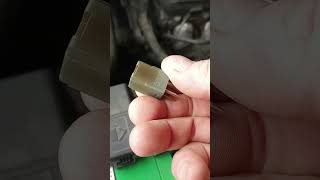
- Replacing the starter motor when a no-crank condition is present. The security system will prevent the starter from engaging, but the starter itself is not the root cause. 🎬 Check this video if you suspect a faulty starter relay instead.
- Replacing the vehicle battery without addressing the key programming. While a weak battery can trigger the problem, the key may need to be relearned to the vehicle afterward.
- Replacing the BCM or RCDLR before thoroughly investigating RFI and antenna connections. GM explicitly warns technicians not to replace parts for this concern until RFI is ruled out.
Most Likely Causes
- Weak or Dead Key Fob Battery 🔴 High Probability Key fobs for this generation use CR2032 batteries that have a finite life. A low battery can send a weak or corrupt signal that the vehicle's receiver misinterprets as an unprogrammed key.
How to confirm: Try using the spare key fob. If the vehicle starts, the battery in the primary fob is the likely culprit. For push-to-start models, place the non-working fob in the designated transmitter pocket (usually inside the center console storage area) and try to start the vehicle; this often works even with a dead battery as it uses a low-frequency transmitter in the pocket.
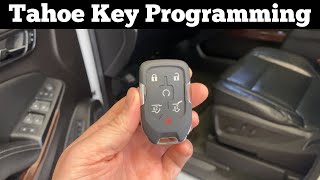
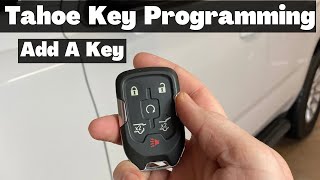
Typical fix: Replace the CR2032 battery inside the key fob. This is a simple DIY task. 🎬 Watch: How to program a new smart key fob yourself.
Est. part cost: $2-$10 - Radio Frequency Interference (RFI) 🟡 Medium Probability GM has issued multiple versions of TSB PIC5650 warning that aftermarket devices can interfere with the 315/434 MHz frequency used by the key fob and TPMS systems. Common sources include aftermarket LED lighting (especially interior dome lights), cheap USB phone chargers, dash cams, toll passes, or even other vehicle keys on the same keychain.
How to confirm: Remove all other keys, fobs, and electronic devices from the keychain and from inside the vehicle. Unplug any aftermarket chargers or accessories. Try starting the vehicle with only the Tahoe key present. If it starts, one of the removed items was causing interference. This is a primary diagnostic step recommended by GM.
Typical fix: Identify and permanently remove the source of the RFI from the vicinity of the key or ignition. Replace low-quality aftermarket electronics with higher-quality, properly shielded versions.
Est. part cost: $0 - Key Has Lost Programming 🟡 Medium Probability A significant voltage drop, such as from a dying or disconnected vehicle battery, can sometimes cause the Body Control Module (BCM) to lose its memory of programmed keys. This is a common complaint on forums after a battery replacement.
How to confirm: If a new fob battery doesn't solve the issue and RFI is not present, the key's programming is suspect. A scan tool is needed to check if the BCM recognizes the key ID.
Typical fix: The key must be reprogrammed to the vehicle. A 30-minute key relearn procedure can be attempted without a scan tool. If that fails, a dealer or locksmith with a compatible scan tool is required.
Est. part cost: $0 if relearn works, otherwise labor cost applies ($100-$200). - Faulty Key Fob ⚪ Low Probability Key fobs can be damaged by being dropped or exposed to water, causing the internal transponder or circuit board to fail.
How to confirm: If the spare key works perfectly and the primary key does not, even after a battery change and ruling out RFI, the key fob itself is likely faulty.
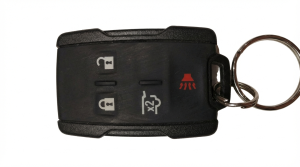
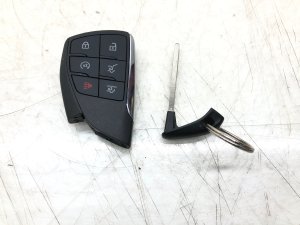
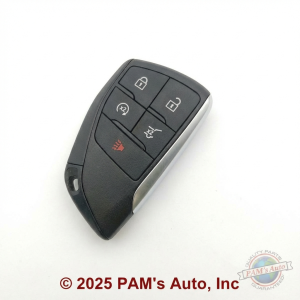
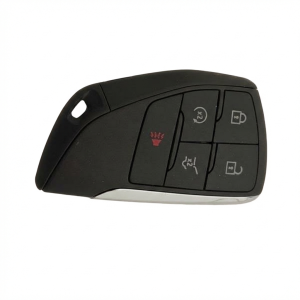
Typical fix: Replace the key fob and have the new one professionally programmed to the vehicle. OEM part numbers vary by options, but common ones for the 2015-2020 models include 13580081, 13577762, and 22859390.
Est. part cost: $75-$250
Rare But Worth Checking
- Faulty Body Control Module (BCM) or Remote Control Door Lock Receiver (RCDLR): While less common, the modules responsible for reading the key signal can fail. The RCDLR is often located in the rear of the vehicle, near the D-pillar trim. A failure here can also cause TPMS warnings, as they share the receiver. A failing BCM can cause a wide array of bizarre electrical issues beyond just the no-start. Diagnosis requires advanced tools to check for communication errors between modules.
- Poor RCDLR Antenna Connection: TSB #16-NA-061 highlights that the coax cable connecting the RCDLR to its antenna (often in the right rear glass) can become disconnected at the module, at the antenna amplifier, or at the glass itself. This creates symptoms identical to RFI or a bad key, such as "No Fob Detected" and poor remote range, because the signal is too weak to be read.
Diagnosis Steps
- Check for a security light or "Service Theft Deterrent System" message on the dash.
- Try the spare key. If it works, the issue is with the primary key fob.
- Replace the battery (typically a CR2032) in the non-working key fob.
- If push-to-start, place the fob in the transmitter pocket (located in the center console storage bin) and attempt to start the engine.
- Crucial Step: Remove ALL aftermarket electronics from the vehicle. This includes phone chargers, dash cams, aftermarket LED bulbs, and any devices plugged into the OBD-II port. Also remove all other keys, fobs, and access cards from the keychain. This is to eliminate Radio Frequency Interference (RFI) as per TSB PIC5650M.
- Check the vehicle's main battery to ensure it has a full charge (12.4V+ engine off) and clean, tight connections. Low voltage can cause module glitches.
- If the vehicle still won't start, attempt the 30-minute key relearn procedure. Turn the key to 'ON' (or press start button without brake) for 10-15 mins until the security light goes off, turn off for 5 seconds, and repeat the cycle two more times for a total of three cycles. After the third cycle, the key should be relearned. 🎬 See this walkthrough of the anti-theft system reset procedure.
- If the relearn fails, use a professional scan tool to read codes from the BCM and TDM to confirm B3060 is present and attempt to reprogram the key(s).
- If reprogramming fails, inspect the RCDLR antenna connections in the right rear of the vehicle, per TSB 16-NA-061.
- As a final step, diagnose the Remote Control Door Lock Receiver (RCDLR) and Body Control Module (BCM) circuits for faults, which may require a professional technician.
Parts You'll Likely Need
- Key Fob Battery
(OEM #CR2032)— This is the most common and cheapest fix for a weak key signal triggering the code.
Trusted brands: Energizer, Duracell, Panasonic
OEM price range: $5-$10
Aftermarket price range: $2-$5 - Key Fob / Transmitter
(OEM #13580081, 13577762, 22859390 (2015-2020 models, verify by VIN))— Required if the key fob's internal transponder has failed. Part number is specific to VIN and options (e.g., 5-button vs 6-button).
Trusted brands: ACDelco, GM Genuine Parts
OEM price range: $150-$250
Aftermarket price range: $50-$120 - Remote Control Door Lock Receiver (RCDLR) — A rare but possible failure point. If the module fails, it cannot receive signals from the key fob or TPMS sensors. Requires professional programming after installation.
Trusted brands: ACDelco
OEM price range: $100-$200
Aftermarket price range: $70-$150
Related Codes That Often Appear With This One
- B3055 — Relates to a problem with the key transponder. Often set alongside B3060 when there's a key recognition issue.
- B3935 — Transponder Authentication Failed. This code indicates a failure in the security handshake between the key and the vehicle, often due to RFI or a bad key.
- C0750, C0755, C0760, C0765, C0775 — These are tire pressure monitor sensor codes. TSB PIC5650M groups them with the security codes because the systems share the same Remote Control Door Lock Receiver (RCDLR), and RFI can affect both simultaneously.
- U0140 — Lost Communication With Body Control Module. This may appear if the BCM is failing or experiencing intermittent power/ground issues, which can also trigger security faults.
Technical Service Bulletins (TSBs) & Recalls
- PIC5650M: Addresses intermittent no crank, no start, or start/stall with security light on and DTCs B3055, B3060, B3935. Points towards investigating RFI as a primary cause before replacing any parts.
- 16-NA-061: Details issues caused by a poor or disconnected antenna for the Remote Control Door Lock Receiver (RCDLR), leading to TPMS warnings and key detection problems.
Platform-Specific Known Issues
- GM has issued multiple versions of Technical Service Bulletin PIC5650 (up to PIC5650M) regarding intermittent no-start conditions with security codes B3060, B3055, and B3935. The primary cause identified is often Radio Frequency Interference (RFI) from aftermarket devices like LED lights or phone chargers.
- TSB 16-NA-061 describes how a disconnected RCDLR antenna can cause identical symptoms, including 'No Fob Detected' messages and TPMS warnings, and should be investigated before replacing modules.
Mechanic-Grade Diagnostic Values
- Radio Frequency Interference (RFI) Scan — expected: No significant signal emissions on or around the key operating frequencies.. Failure: A strong, persistent signal detected by an RF meter, especially when an aftermarket device is turned on.
- Keyless System Operating Frequencies — expected: 315 MHz or 433 MHz for RKE and TPMS; 125 kHz for Passive Entry/Start antennas.. Failure: Interference on these specific frequencies is the most likely to cause the issue.
Hidden / Shadow Codes Worth Checking
- Freeze Frame / Inhibit Data: For intermittent faults that are only in history, GDS2 can display freeze frame data, showing vehicle parameters at the moment the code was set. This can provide clues (e.g., low system voltage) that are not present during diagnosis. (see via GM GDS2 Scan Tool)
Scan Tool Commands That Help
- GDS2: Module Diagnostics > Remote Control Door Lock Receiver > Configuration/Reset Functions > Add or Replace Key Fobs — This is the specific path used to put the vehicle in learn mode to program a new or existing key fob to the RCDLR module after confirming the fob is the issue.
- GDS2: Data Bus Diagnostic Tool — If multiple 'U' codes (communication codes) are present with B3060, this tool can be used to analyze the vehicle's data networks, identify which modules are not communicating, and help pinpoint a wiring or module fault.
- GDS2: BCM > Output Controls (Bidirectional) — Before condemning a BCM, a technician can use bidirectional controls to command functions like door locks, lights, and wipers. If the commands work, it confirms the BCM can control outputs, making an internal BCM failure less likely.
Wiring & Ground Locations
- RCDLR (Remote Control Door Lock Receiver) — Located in the rear of the vehicle, typically behind the D-pillar trim panel on the driver's or passenger's side.. This module is the primary receiver for the key fob's transponder signal. A fault in the module, its wiring, or its antenna connection is a direct cause of B3060.
- RCDLR Antenna Amplifier — Attached to the passenger side rear quarter glass, under the interior trim.. This module boosts the signal received by the antenna in the glass before sending it to the RCDLR. A loose coax cable connection here is a common failure point noted in TSB 16-NA-061.
- BCM (Body Control Module) — Inside the passenger cabin, mounted behind the lower dashboard panel on the driver's side, near the interior fuse block.. The BCM processes the signal from the RCDLR and makes the final decision to enable or disable starting. It is the central hub for the anti-theft system.
- BCM Ground — A critical ground is located inside the cab near the front left speaker, accessible after removing the driver's A-pillar trim and dash trim. Other grounds are on the firewall and chassis.. A poor ground connection to the BCM can cause intermittent voltage drops, leading to a wide range of electrical issues, including erroneous security faults like B3060.
- BCM Fuses (K2XX Platform) — Multiple fuses exist in two interior fuse boxes. Driver's side box: Fuses F10, F11, F19. Passenger's side box: Fuses F13, F19, F38, F46, F47.. Loss of power to the BCM from a blown fuse will cause a no-start and can trigger various communication and security codes.
Real Owner Repair Stories
- Tahoe Yukon Forum thread (2007 NNBS Tahoe (Note: Older model, but demonstrates a relevant software pattern)) — Keyless entry and TPMS system both stopped working simultaneously.
❌ Tried (didn't work) Initial confusion, suspecting module failure.
✅ What actually fixed it A temporary fix was pulling the fuse labeled "DSM" in the interior fuse box, which resets the RCDLR. The user found a TSB indicating the RCDLR can go into a 'sleep' mode and not wake up. The permanent fix mentioned in the TSB was a vehicle software update from the dealer to prevent the module from failing to wake.
"I Checked Everything" — The Actual Cause
- The most common scenario fitting this pattern for code B3060 is when all standard checks (key fob battery, spare key, vehicle battery) are normal, but the vehicle still intermittently fails to start. The root cause, as detailed in GM TSB PIC5650, is often Radio Frequency Interference (RFI) from an aftermarket electronic device like a phone charger or LED bulb. The interference 'jams' the key's signal, but since the interference source is often removed by the owner or tow truck driver before it gets to the shop, the problem cannot be duplicated by the technician, leading to a 'no problem found' diagnosis.
Model Year Variations Within This Range
- 2021-2022: Models from 2021 onward use GM's new Vehicle Intelligence Platform (VIP), also known as Global B architecture. This is a complete electrical system overhaul from the Global A architecture used in 2015-2020 models. While the symptoms of B3060 may be similar, diagnosing and programming modules on VIP vehicles is more complex, requires the latest GDS2 software, and may involve different procedures or module locations than the K2XX platform.
Helpful Videos
Used OEM Parts in Stock


New Aftermarket Parts Available



The information in this article is provided for general reference and educational purposes only. Vehicle specifications, procedures, and part compatibility can vary by production date, trim level, and region. Always consult your vehicle's factory service manual and verify part numbers before purchasing or performing repairs. Safety-critical components such as airbags, seat belts, and braking systems should be installed by a qualified professional.
- Chevrolet TAHOE:
- 🎬 Helpful Videos
- 🛍️ Shop This Part
- What's Unique About the 2015-2022 Chevrolet TAHOE
- Diagnostic Flowchart
- Symptoms You May Notice
- Most Likely Causes
- Rare But Worth Checking
- Diagnosis Steps
- Parts You'll Likely Need
- Related Codes That Often Appear With This One
- Technical Service Bulletins (TSBs) & Recalls
- Platform-Specific Known Issues
- Mechanic-Grade Diagnostic Values
- Hidden / Shadow Codes Worth Checking
- Scan Tool Commands That Help
- Wiring & Ground Locations
- Real Owner Repair Stories
- "I Checked Everything" — The Actual Cause
- Model Year Variations Within This Range
- 🎟️ Get 5% Off