

B3060 on 2014-2017 Chevrolet Spark EV: No-Start Security Fault Causes and Fixes
Code B3060 on a 2014-2017 Spark EV means the anti-theft system doesn't recognize the key, causing a no-start and a security light. The most likely cause is a faulty key or radio frequency interference. A fix often requires professional key programming.
- B3060 means your Spark EV's anti-theft system has been activated because it doesn't recognize the key, and it will not allow the vehicle to start.
- Before spending any money, try your spare key to rule out a bad primary key.
- Remove all aftermarket chargers and other fobs from your keychain to eliminate Radio Frequency Interference (RFI), a known issue for this vehicle documented in a GM TSB.
- Do not mistakenly assume a 'dead' vehicle is due to the main high-voltage battery pack; the security light and B3060 code point directly to the anti-theft system.
- Fixing this code, whether it's a new key or another component, will almost always require professional programming with specialized tools like the GM MDI/GDS2.
What's Unique About the 2014-2017 Chevrolet SPARK EV
While the B3060 code is common across many GM vehicles, its manifestation on the Spark EV is tied to its specific electronics. As an all-electric vehicle, there is no traditional engine 'crank', but the immobilizer logic is similar, preventing the car from entering the 'Ready to Drive' state. A GM Technical Service Bulletin (TSB) for the Spark EV and its platform mates acknowledges intermittent no-start conditions with this code, and strongly points to Radio Frequency Interference (RFI) from aftermarket accessories as a potential cause before any parts are replaced.
Diagnostic Flowchart
Tap your situation to follow the diagnostic path that matches what you're seeing on this vehicle.
Symptoms You May Notice
- Vehicle will not start ('no-crank' or 'no-ready' state)
- Security indicator light is illuminated or flashing on the dashboard.
- Starts and immediately stalls (less common on EV, more on ICE platform mates).
- Intermittent starting problems.
- Message on Driver Information Center (DIC) like "Service Theft Deterrent System".
- Replacing the 12V battery without checking for RFI or trying a spare key first.
- Assuming a 'dead' vehicle is due to the main high-voltage battery pack when it's actually the immobilizer system preventing startup.
- Replacing the BCM when the actual fault lies with a much cheaper component like the key or antenna ring.
Most Likely Causes
- Faulty or Unprogrammed Ignition Key 🔴 High Probability The transponder chip inside the key fob can be damaged from being dropped, getting wet, or from internal failure over time. The key's battery is for the remote functions, but the transponder chip itself is passive; however, a failing key can still cause this issue.
How to confirm: The simplest test is to try starting the vehicle with a known-good spare key. If the spare key works, the original key is faulty. A locksmith or dealer can also test the key's transponder signal.
Typical fix: Replace the faulty key and have the new one professionally programmed to the vehicle. The key contains a Philips ID 46 GM EXT transponder chip.
Est. part cost: $50-$150 - Radio Frequency Interference (RFI) 🟡 Medium Probability As noted in GM TSB PIC5650M, the immobilizer system's 125 kHz signal can be easily disrupted by other electronic devices. Common sources include aftermarket phone chargers, other key fobs, building access cards, or gas station payment fobs on the same keychain.
How to confirm: Remove all other electronic devices and keys from the keychain. Unplug any aftermarket accessories (like USB chargers or dash cams) from the vehicle's power outlets. Hold only the Spark EV key near the ignition and attempt to start the vehicle again.
Typical fix: Isolate and remove the source of the interference. This is a no-cost fix.
Est. part cost: $0 - Defective Immobilizer Antenna Ring ⚪ Low Probability The antenna ring (also called an exciter coil or transceiver) around the ignition lock cylinder powers and reads the key's transponder. It can fail electronically, preventing communication with a known-good key.
How to confirm: This requires a professional scan tool to monitor the live data from the immobilizer system to see if it is receiving any signal from the key. If no signal is detected with a good key, the antenna is suspect. A technician can also test the resistance of the coil; while not specified for the Spark, similar GM coils have a resistance of around 8.5 Ω.
Typical fix: Replace the immobilizer antenna ring. This part often requires programming or a security relearn procedure after installation.
Est. part cost: $70-$150
Rare But Worth Checking
- Failing Body Control Module (BCM): While rare, the BCM itself, which manages the theft deterrent system, can fail internally. Symptoms often include multiple, unrelated electrical issues like erratic lights, window/lock problems, and communication errors with scan tools, in addition to the B3060 code. This is usually the last resort after all other components (key, antenna, wiring) have been verified as working.
- Low 12V Battery Voltage: Although not a direct cause, a weak or failing 12V AGM battery can cause a variety of unpredictable electronic issues on the Spark EV, including communication errors within the security system that can trigger a B3060. Owners on forums report various electrical gremlins that were resolved by replacing the 12V battery.
Diagnosis Steps
- Verify the complaint: Confirm the no-start condition and check for a solid or flashing security light on the instrument cluster.
- Scan for Codes: Use an OBD-II scanner capable of reading Body (B) codes to confirm B3060 and any related codes like B3055 or B3935. Note if the code appears as B3060 00, which is common and simply confirms the base fault.
- Isolate the Key & Eliminate RFI: Remove all other keys, fobs, and electronic cards from the keychain. Unplug any aftermarket accessories (USB chargers, dashcams) from power outlets. Re-test with the isolated key.
- Test with Spare Key: Attempt to start the vehicle with a known-good spare key. This is the fastest way to isolate a faulty primary key.
- Check 12V Battery Health: Test the 12V AGM battery. A voltage below 12.4V at rest can cause myriad electronic issues on an EV. Many forum users report strange electrical behavior being solved with a new 12V battery.
- Check Wiring: Visually inspect the wiring and connector at the immobilizer antenna ring (around the ignition cylinder) for any signs of damage or looseness. Check the main BCM ground at G201 (base of left 'A' pillar) for corrosion or looseness.
- Professional Diagnosis: If the issue persists, professional service is needed. A technician will use a scan tool (like GM GDS2) to monitor live data from the BCM's Theft Deterrent System parameters to determine if the key, antenna, or BCM is the point of failure.
Parts You'll Likely Need
- Transponder Ignition Key
(OEM #13584825 (Supersedes 13500224))— This is the most common failure point. The internal transponder chip can fail, preventing the car from recognizing it.
Trusted brands: ACDelco, GM Genuine Parts
OEM price range: $70-$150
Aftermarket price range: $40-$90 - Immobilizer Antenna / Exciter Ring
(OEM #13539917)— This part reads the key chip. If it fails, it cannot communicate with a known-good key. It is shared with the Chevy Trax.
Trusted brands: ACDelco, GM Genuine Parts
OEM price range: $70-$150
Aftermarket price range: $50-$100
Related Codes That Often Appear With This One
- B3055 — Indicates 'No Transponder Modulation or No Transponder,' meaning the BCM isn't receiving any signal from the key at all. This code is listed alongside B3060 in TSB PIC5650M and often points to a completely dead key, a failed antenna, or severe RFI.
- B3935 — Means 'Transponder Authentication Error,' indicating a failure in the key verification 'handshake' process. Also listed in TSB PIC5650M, it suggests the key was detected but could not be validated.
Technical Service Bulletins (TSBs) & Recalls
- PIC5650M: Addresses an intermittent no crank, no start, or start/stall concern with the security light on, listing B3060, B3055, and B3935 as possible codes. It advises checking for Radio Frequency Interference (RFI) from devices like other key fobs, access cards, or aftermarket chargers before replacing any parts.
Platform-Specific Known Issues
- The platform is known to be highly sensitive to Radio Frequency Interference, as documented in TSB PIC5650M, which can cause intermittent no-start conditions with code B3060. This is the most critical vehicle-specific issue to check before replacing parts.
- Electrical gremlins caused by a failing 12V AGM battery are frequently reported on Spark EV forums, sometimes mimicking immobilizer issues.
Mechanic-Grade Diagnostic Values
- Immobilizer Antenna Coil Resistance — expected: ~8.5 Ω. Failure: An open circuit (infinite resistance) or a reading significantly different from the expected value indicates a faulty coil.
- BCM Ground Circuit Resistance — expected: Less than 2.0 Ω. Failure: Resistance of 2.0 Ω or greater indicates high resistance or an open in the ground circuit (e.g., at G201) which can cause module malfunction.
Hidden / Shadow Codes Worth Checking
- B3060 00: The '00' is a GM symptom byte for 'No Sub Type Information'. It confirms the fault is exactly what the base code implies: the BCM received a valid signal from a key transponder that is not programmed into its memory. It rules out more nuanced issues like low signal strength or data corruption. (see via A professional scan tool capable of reading GM-specific codes, such as the GM GDS2 (Global Diagnostic System 2).)
Scan Tool Commands That Help
- GM GDS2: Module Diagnostics > Body Control Module (BCM) > Immobilizer Learn — This function is required to program new or existing keys to the vehicle after a key replacement, BCM replacement, or if a key has lost its programming. It guides the technician through the security relearn process.
- GM GDS2: Module Diagnostics > K61 Theft Deterrent Module > Data Display > TDM Valid Key — To monitor the live status of the key being presented to the ignition. A technician can see if the system recognizes the key as 'Valid' or 'Invalid' in real-time, which helps differentiate between a bad key and a bad antenna or BCM.
- GM GDS2: Delete Session History — Per TSB PIC5896, if you are unable to perform BCM setup or configuration after programming or adding accessories, deleting the vehicle's session history in GDS2 may be required to resolve a software communication glitch.
Wiring & Ground Locations
- Body Control Module (BCM) — Located on the left side of the passenger compartment, typically accessible by removing the glove box or side dash panels.. The BCM is the central module that stores the learned key data and makes the decision to enable or disable the vehicle. All immobilizer communication routes through it.
- Immobilizer Control Module / Antenna — The module and its antenna ring are located near or around the top of the steering column, surrounding the ignition lock cylinder where the key is inserted.. This is the component responsible for energizing and reading the transponder chip in the key. A failure here means no key data can be sent to the BCM.
- G201 — A primary chassis ground point located at the base of the left 'A' pillar, inside the cabin.. This ground is listed in wiring diagrams for the Body Control Module and Instrument Cluster. A poor connection here can cause intermittent BCM faults and communication errors, mimicking a component failure.
- G213 — A chassis ground point located above the steering column.. Its proximity to the immobilizer module and BCM makes it a critical ground to check for looseness or corrosion that could affect the anti-theft system's stability.
Real Owner Repair Stories
- Reddit user on r/SparkEV (2014 Chevrolet Spark EV) — Vehicle was completely dead and would not start after sitting for an extended period.
❌ Tried (didn't work) Initially assumed a major issue, had to manually put the car in neutral to move it.
✅ What actually fixed it Replacing the dead 12V AGM 'starter' battery. After replacement, the car started up immediately as if nothing had happened. This highlights that a dead 12V battery can present as a total vehicle failure, preventing the immobilizer and other critical systems from operating.
Model Year Variations Within This Range
- 2014-2016: While there were changes between model years (e.g., 2014 used an A123 battery pack and a different final drive ratio than the 2015-2016 LG-based models), there is no evidence of any changes to the Pass-Key III+ immobilizer system, BCM, or key type that would affect the diagnosis or repair of code B3060.
Helpful Videos
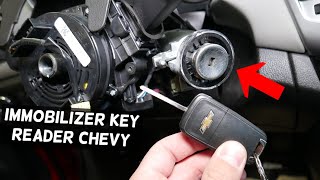
We Have This Part in Stock

The information in this article is provided for general reference and educational purposes only. Vehicle specifications, procedures, and part compatibility can vary by production date, trim level, and region. Always consult your vehicle's factory service manual and verify part numbers before purchasing or performing repairs. Safety-critical components such as airbags, seat belts, and braking systems should be installed by a qualified professional.
- Chevrolet SPARK EV:
- 🎬 Helpful Videos
- 🛍️ Shop This Part
- What's Unique About the 2014-2017 Chevrolet SPARK EV
- Diagnostic Flowchart
- Symptoms You May Notice
- Most Likely Causes
- Rare But Worth Checking
- Diagnosis Steps
- Parts You'll Likely Need
- Related Codes That Often Appear With This One
- Technical Service Bulletins (TSBs) & Recalls
- Platform-Specific Known Issues
- Mechanic-Grade Diagnostic Values
- Hidden / Shadow Codes Worth Checking
- Scan Tool Commands That Help
- Wiring & Ground Locations
- Real Owner Repair Stories
- Model Year Variations Within This Range
- 🎟️ Get 5% Off