

B3060 on 2022-2026 Chevrolet Express: Security Fault, No-Start Causes and Fixes
On a 2022-2026 Chevy Express, code B3060 means the van's anti-theft system doesn't recognize the key, causing a no-start or start-and-stall condition with the security light on. The most common fix is performing a 30-minute key relearn procedure. If that fails, the ignition lock cylinder, which contains the key reader, or its wiring likely needs replacement.
- B3060 is a security code indicating a key recognition failure; it is not a problem with the starter, fuel pump, or battery.
- The first and easiest things to try are using a spare key and performing the 30-minute key relearn procedure, which costs nothing and often fixes the problem.
- A flashing or solid security light on the dash is the primary symptom of this fault.
- If a relearn doesn't work, the most likely failed part is the ignition lock cylinder assembly, which contains the sensor that reads the key.
- Before replacing any parts, remove potential sources of radio frequency interference (like phone chargers) as advised by GM's own service bulletin.
What's Unique About the 2022-2026 Chevrolet EXPRESS
The Chevrolet Express and its twin, the GMC Savana, have used a similar GM Passkey immobilizer system for many years. This system is known to be sensitive to wear, electrical interference, and wiring issues within the steering column. A key document, Technical Service Bulletin (TSB) #PIC5650M, directly addresses an intermittent no-crank or start-stall condition with the security light on for this platform, which is directly related to code B3060. The bulletin highlights that issues can stem from simple things like Radio Frequency Interference (RFI) from aftermarket chargers or even other RFID cards on the keychain, emphasizing the need to check for simple causes before replacing expensive parts.
Diagnostic Flowchart
Tap your situation to follow the diagnostic path that matches what you're seeing on this vehicle.
Symptoms You May Notice
- Engine will not crank or turns over but won't start.
- Engine starts and immediately stalls.
- Security light is illuminated or flashing on the dashboard.
- Remote start function is inoperative.
- Replacing the starter motor. A no-crank condition might point to the starter, but the security light indicates the BCM is intentionally preventing the starter from engaging.
- Replacing the battery. While a low battery can cause issues, it's not the root cause of a B3060 code. A healthy battery is needed for diagnosis, but a new one won't fix a key recognition problem if the key or reader is faulty.
Most Likely Causes
- Key Has Lost Programming 🔴 High Probability This can happen after a battery replacement, a significant voltage drop, a jump start, or sometimes for no apparent reason. The GM security system can lose its memory of the learned key, requiring a reset.
How to confirm: Attempt the 30-minute key relearn procedure. If the procedure completes successfully and the vehicle starts, this was the issue. This is a very common first step that resolves many instances of this code.
Typical fix: Perform the GM 30-minute key relearn procedure. This involves turning the key to 'ON' for 10-11 minutes until the security light goes out, then 'OFF' for 10-30 seconds, and repeating this two more times for a total of 3 cycles (about 30-35 minutes). A battery charger is recommended during this process.
Est. part cost: $0 - Faulty Ignition Lock Cylinder / Passkey Sensor 🟡 Medium Probability The Passkey sensor (exciter coil) is integrated into the ignition lock cylinder housing. This component is a very common failure point on GM vans due to wear from key use and failure of the internal electronics or wiring, leading to an inability to read the key's transponder.
How to confirm: If a key relearn fails and a spare key also doesn't work, the issue is likely with the reader. A mechanic can use a scan tool to monitor the key data from the BCM; if no valid signal is seen from a good key, the lock cylinder is the culprit.
Typical fix: Replace the ignition lock cylinder assembly and perform the 30-minute key relearn procedure.
Est. part cost: $80-$180 - Damaged or Faulty Ignition Key 🟡 Medium Probability
How to confirm: Try to start the vehicle with a known-good spare key. If the spare key works without issue, the original key's internal transponder chip is faulty.
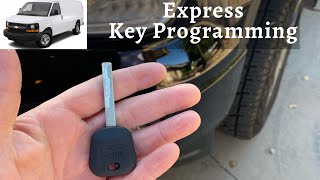
Typical fix: Replace the faulty key. A new key (a common blank is the B111-PT) must be cut and then programmed to the vehicle using either the 30-minute relearn procedure or a specialized scan tool.
Est. part cost: $50-$150 - Radio Frequency Interference (RFI) ⚪ Low Probability As noted in GM TSB PIC5650M, the 125 kHz frequency of the immobilizer system can be disrupted by aftermarket electronic devices like phone chargers, dash cams, aftermarket LED lights, or even other RFID cards and transponder keys on the same keychain.
How to confirm: Remove all other keys, fobs, and electronic devices from the keychain and from the vicinity of the ignition switch. Attempt to start the vehicle with the bare key. If it starts, RFI was the cause.
Typical fix: Isolate the key from sources of RFI. If a specific device is identified as the cause, remove it.
Est. part cost: $0
Rare But Worth Checking
- Failing Body Control Module (BCM): While rare, the BCM is the brain of the security system. If all other components (key, lock cylinder, wiring) check out and the relearn procedure fails, the BCM itself may have failed. This is an expensive last resort that requires dealer-level programming.
- Wiring or Connector Issues: Damaged wires or a loose connection between the ignition lock cylinder and the BCM can cause an intermittent signal loss, triggering the code. This often happens within the steering column due to chafing from tilting the wheel or from previous repairs.
- Low Vehicle Battery Voltage: A weak or failing battery (below 12.4V) can cause a multitude of electronic glitches. If the BCM doesn't receive stable voltage, it can fail to properly read the key, logging B3060 as a secondary symptom of the power issue. Always ensure the battery is fully charged before diagnosis.
Diagnosis Steps
- Verify the complaint and check for the security light (flashing or solid).
- Scan for all DTCs in the BCM and other modules. Note any codes that appear with B3060, such as B3055, B3935, or P1631.
- Try to start the vehicle with a known-good spare key. If it starts, the primary key is faulty.
- Remove all other keys, fobs, and aftermarket electronics from the keychain and vehicle cabin to rule out Radio Frequency Interference (RFI), as per TSB PIC5650M.
- Ensure the vehicle battery is fully charged (above 12.4V). Connect a battery charger if unsure.
- Attempt the 30-minute key relearn procedure. This is a free and very common fix.
- If the relearn fails, inspect the wiring and connector at the base of the steering column leading to the ignition lock cylinder. Look for chafed or broken wires.
- Using a professional scan tool, monitor the BCM data for 'Valid Key Signal' while attempting to start. If the signal is 'No' or erratic with a good key, the ignition lock cylinder/reader coil is the most likely culprit.
- If all other components are verified as good and the relearn fails with a new lock cylinder, the Body Control Module (BCM) may be faulty, but this should be the last step in diagnosis.
Parts You'll Likely Need
- Ignition Lock Cylinder Housing
(OEM #D1462G)— This housing contains the Passkey sensor (reader coil) which is the most common hardware failure point for this system on GM vans. Note: Fitment for D1462G is listed for older models (e.g., Colorado up to 2012), not the 2022+ Express. The part number for the newest models may differ, but the component function is the same.
Trusted brands: ACDelco, Standard Motor Products
OEM price range: $100-$180
Aftermarket price range: $60-$120 - Transponder Ignition Key
(OEM #B111-PT (Strattec 5903089))— The transponder chip inside the key can fail, preventing it from sending the correct security code. This is confirmed if a spare key works perfectly. The B111-PT is a widely used GM key blank with the correct Passkey III+ (ID46) chip.
Trusted brands: ACDelco, Strattec
OEM price range: $70-$120
Aftermarket price range: $40-$80
Related Codes That Often Appear With This One
- B3055 — This code means 'No Transponder Modulation or No Transponder,' indicating the system received no signal from the key at all. It often appears with B3060 and points strongly to a bad key or a faulty reader coil in the ignition cylinder.
- B3935 — Meaning 'Transponder Authentication Failed,' this code indicates the module read the key but could not authenticate it. It is frequently set alongside B3060 as part of the same security fault event.
- P1631 — This is a powertrain code for 'Theft Deterrent Start Enable Signal Not Correct'. It confirms that the BCM has told the PCM to disable the engine due to a security failure, often logged alongside the B-codes.
Technical Service Bulletins (TSBs) & Recalls
- PIC5650M: Addresses an intermittent no crank, no start, or start stall concern with the security light coming on, which may set DTC B3060 among others. It strongly advises checking for RFI from aftermarket electronics.
Platform-Specific Known Issues
- A GM Technical Service Bulletin (TSB #PIC5650M) exists for an intermittent no crank, no start, or start/stall concern where the security light comes on. It lists B3060 as a potential code and advises checking for Radio Frequency Interference (RFI) from aftermarket accessories before replacing parts.
Mechanic-Grade Diagnostic Values
- Immobilizer Antenna (Exciter) Coil Resistance — expected: ~6 Ω. Failure: An open circuit (infinite resistance) or a reading significantly different from the specification.
- BCM Low Reference (Ground) Circuit Resistance — expected: Less than 2.0 Ω. Failure: A reading of 2.0 Ω or greater indicates a poor ground connection, which can cause erratic module behavior.
- Ignition Voltage Circuit at BCM — expected: Greater than 9.0 V with key on. Failure: Voltage below 9.0 V suggests a problem in the power supply wiring or ignition switch, preventing the BCM from operating correctly.
Scan Tool Commands That Help
- GM GDS2 (Global Diagnostic System 2): Module Diagnostics -> Body Control Module -> Immobilizer Learn — This function is required to program new keys, relearn existing keys after a system glitch, or set up a new BCM. It is the dealer-level method for all key programming functions.
- GM GDS2 (Global Diagnostic System 2): Module Diagnostics -> BCM -> Data Display -> 'Valid Key' status — To perform live monitoring to see if the BCM is recognizing the key's transponder signal as valid when the key is turned. A 'No' or 'Invalid' status with a known-good key points to a faulty reader coil or wiring.
- GM SPS2 (Service Programming System 2) via Techline Connect: BCM Programming and Setup — This software is required after physically replacing the Body Control Module. It flashes the new module with the vehicle's specific VIN, RPO codes (options), and security credentials. A blank BCM will not function without this step.
Wiring & Ground Locations
- G302 / G303 — Likely located behind the left kick panel, near the driver's feet.. These are primary body ground points. A poor ground connection here can cause the Body Control Module (BCM) to malfunction, leading to a variety of errors including security faults like B3060.
- G201 — In the upper left corner of the instrument panel, near the A-pillar, typically requiring dash trim removal to access.. This is a critical instrument panel ground. Since the BCM and instrument cluster are closely linked for security functions (like the security light), a bad ground at G201 can cause communication errors that trigger anti-theft codes.
- Ignition Lock Cylinder Connector — At the base of the ignition lock cylinder housing, inside the steering column covers.. This connector carries the power and data signals from the Passkey exciter coil to the BCM. It is a common point of failure due to chafed wires from steering column tilt adjustments or loose pins, causing an intermittent loss of key signal.
Real Owner Repair Stories
- Go-Parts.com research on a similar platform (2014 GMC Savana) — Persistent no-start condition with security light and code B3060.
❌ Tried (didn't work) Replacing the ignition lock cylinder., Performing the 30-minute key relearn procedure multiple times.
✅ What actually fixed it The Body Control Module (BCM) had failed internally. Replacing and reprogramming the BCM resolved the code and allowed the vehicle to start. - Reddit user in r/MechanicAdvice (2003 Chevy Express) — Cranks but no start, solid security light on the dash, B3060 present.
❌ Tried (didn't work) 30-minute relearn procedure (security light never turned off)., Replacing the ignition lock housing (ACDelco 88964342).
✅ What actually fixed it The issue was not the Passlock system itself. The vehicle had a more complex, underlying electrical system fault that required dealer diagnosis. The security light was a misleading symptom, not the root cause. - ACDelco Technical Assistance Tip on a similar GM system (2008 Chevrolet Aveo) — Crank but no start, immobilizer light on.
❌ Tried (didn't work) Replacing the immobilizer module., Reprogramming the keys (this successfully turned the security light off, but the no-start condition remained)., Testing continuity on the communication wire between the immobilizer module and ECM (tested good at <5 Ohms).
✅ What actually fixed it The Engine Control Module (ECM) was faulty. It was not correctly processing the 'fuel enable' password from the security system, even though the security system itself was working correctly after the initial repairs. Replacing the ECM fixed the no-start issue.
"I Checked Everything" — The Actual Cause
- In a documented case on a similar GM platform, all standard security system diagnostics passed, yet the vehicle would not start. The immobilizer module was replaced, keys were reprogrammed, and the communication wire to the ECM tested for good continuity. The security light went out, indicating the theft system was happy. However, the root cause was a failed Engine Control Module (ECM) that was unable to properly receive and act on the 'fuel enable' signal from the BCM. This is a classic example where focusing only on the module setting the code (BCM) can lead to a misdiagnosis.
When the Usual Fixes Don't Work
- While a faulty key or ignition lock cylinder are the most common causes, there are documented cases where these repairs do not solve the problem. In one instance on a 2014 Savana, the final repair was a new Body Control Module (BCM) after replacing the lock cylinder had no effect. In another, more extreme case on a similar GM system, the security system was repaired and the security light was off, but the vehicle still wouldn't start until the Engine Control Module (ECM) was replaced because it was failing to process the security signal from the BCM. These cases highlight that if the common fixes fail, the problem may lie further downstream in the control modules themselves.
OEM Part Supersession History
Varies→Varies— Standard part lifecycle updates and minor revisions.
Heads up: The ignition lock cylinder housing is highly specific to model year ranges. The part for a 2012 model may not be correct for a 2022 model, even if it looks similar. Always verify the correct OEM part number using the vehicle's VIN before ordering to avoid incompatibility issues with the BCM and security system.
Model Year Variations Within This Range
- 2022-2026: The primary difference for technicians is the diagnostic software required. While older models used the Tech 2 scan tool, modern versions require the GM GDS2 (Global Diagnostic System 2) software platform running on a laptop with a J2534 interface, used in conjunction with the online SPS2 (Service Programming System 2) via Techline Connect for any module programming.
Helpful Videos

We Have This Part in Stock


The information in this article is provided for general reference and educational purposes only. Vehicle specifications, procedures, and part compatibility can vary by production date, trim level, and region. Always consult your vehicle's factory service manual and verify part numbers before purchasing or performing repairs. Safety-critical components such as airbags, seat belts, and braking systems should be installed by a qualified professional.
- Chevrolet EXPRESS:
- 🎬 Helpful Videos
- 🛍️ Shop This Part
- What's Unique About the 2022-2026 Chevrolet EXPRESS
- Diagnostic Flowchart
- Symptoms You May Notice
- Most Likely Causes
- Rare But Worth Checking
- Diagnosis Steps
- Parts You'll Likely Need
- Related Codes That Often Appear With This One
- Technical Service Bulletins (TSBs) & Recalls
- Platform-Specific Known Issues
- Mechanic-Grade Diagnostic Values
- Scan Tool Commands That Help
- Wiring & Ground Locations
- Real Owner Repair Stories
- "I Checked Everything" — The Actual Cause
- When the Usual Fixes Don't Work
- OEM Part Supersession History
- Model Year Variations Within This Range
- 🎟️ Get 5% Off