

B3060 on 2007-2014 Chevrolet Express 1500: Security Fault, No-Start Causes and Fixes
On a 2007-2014 Chevy Express, code B3060 means the anti-theft system doesn't recognize the key, causing a no-start or start-and-stall condition. The most common cause is a faulty Passlock sensor inside the ignition lock cylinder housing. The fix is to replace the housing and perform a 30-minute key relearn procedure.
- B3060 on your Express van means the anti-theft system has been triggered, which is why it won't start.
- Before buying parts, always try the 30-minute security relearn procedure, as a simple loss of synchronization is a common cause.
- Do not immediately suspect the starter or fuel pump; the problem is almost always electronic and related to the security system.
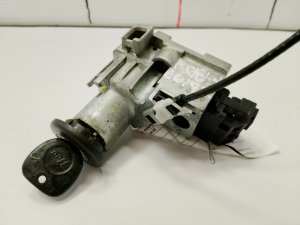
- The most common failed part is the ignition lock cylinder housing, which contains the security sensor.
- Radio frequency interference from aftermarket chargers or other fobs can trigger this code, so remove them as a first diagnostic step.
What's Unique About the 2007-2014 Chevrolet EXPRESS 1500
The 2007-2014 Express van uses GM's Passkey III+ (PK3+) transponder system, a known weak point across many GM vehicles of this era. As a high-use commercial vehicle, the ignition system sees frequent key cycles, leading to accelerated wear on the Passlock sensor (exciter coil) and its delicate internal wiring within the ignition lock cylinder housing. This makes the Express and its direct platform mate, the GMC Savana, particularly prone to this failure compared to a passenger car with less usage.
Diagnostic Flowchart
Tap your situation to follow the diagnostic path that matches what you're seeing on this vehicle.
Symptoms You May Notice
- Engine will not crank or start.
- Engine starts and then immediately stalls.
- Security light is on solid or flashing on the instrument cluster.
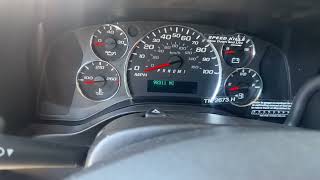
- "Service Theft Deterrent System" message may appear on the Driver Information Center (DIC).
- Replacing the starter motor because the engine won't crank.
- Replacing the fuel pump because the engine starts and stalls.
- Replacing the battery without diagnosing the security system first. A weak battery can trigger the code, but the underlying issue is often the security system losing synchronization.
Most Likely Causes
- Faulty Ignition Lock Cylinder Housing / Passlock Sensor 🔴 High Probability The Passlock sensor, also called the exciter coil or reader, is integrated into the ignition lock cylinder housing. It is the most common failure point on GM's Passkey III+ system due to wear from high key cycles, especially in commercial vans.
How to confirm: If trying a spare key and performing the 30-minute relearn procedure fails to resolve the issue, the lock cylinder housing is the most likely culprit. Sometimes, wiggling the key in the ignition while trying to start can temporarily make a connection and allow the vehicle to start, pointing to a worn sensor or wiring. A professional scan tool can monitor the TDM data to see if any key signal is being detected at all.
Typical fix: Replace the ignition lock cylinder housing assembly. After replacement, a 30-minute security relearn procedure must be performed.
Est. part cost: $100-$180 - Worn or Damaged Ignition Key 🟡 Medium Probability The transponder chip embedded in the key can be damaged from drops, moisture, or simple electronic failure over time, preventing it from sending a valid signal.
How to confirm: Attempt to start the vehicle with a known-good spare key. If the vehicle starts and runs normally with the spare, the original key is faulty.
Typical fix: Replace the faulty key. A new key must be cut and then programmed to the vehicle using the 30-minute relearn procedure.
Est. part cost: $60-$120 - Loss of Key Synchronization 🟡 Medium Probability The security system on these vehicles is sensitive to low voltage. A weak battery, jump-starting, or disconnecting the battery can cause the BCM/TDM to lose its programming and 'forget' the learned keys.
How to confirm: This is often the cause if the problem appeared immediately after a battery-related event. The 30-minute relearn procedure is the primary diagnostic step.
Typical fix: Perform the 30-minute security relearn procedure. This often resolves the issue without needing to replace any parts.
Est. part cost: $0 - Wiring or Connector Issue ⚪ Low Probability The wires leading from the ignition lock cylinder (typically a 3-wire ribbon) to the BCM can fray or break inside the steering column from tilt-wheel adjustments, or the connector pins can become loose.
How to confirm: Visually inspect the wiring harness and connector at the base of the steering column for any visible damage. Use a multimeter to check for continuity on the sensor wires (typically a power, ground, and signal wire).
Typical fix: Repair the damaged wire or secure the loose connector. Some owners have successfully performed a 'resistor bypass' on older Passlock systems by soldering a resistor with a specific value into this circuit, but this is less common and more complex for the Passkey III+ system.
Est. part cost: $5-$20
Rare But Worth Checking
- Faulty Body Control Module (BCM): If a new ignition lock cylinder and key relearn procedure do not fix the problem, the BCM itself may have an internal fault. This is an expensive last resort and requires professional diagnosis and programming. A documented case on a 2014 GMC Savana confirmed a BCM failure as the root cause after other parts were replaced.
- Radio Frequency Interference (RFI): GM TSB #PIC5650M and its successors specifically mention that aftermarket devices like phone chargers, dash cams, LED lights, or even other RFID cards on the keychain can interfere with the key's signal. Before replacing parts, remove all such devices and try starting again.
Diagnosis Steps
- Scan for all Diagnostic Trouble Codes (DTCs) using a scanner capable of reading Body (B) codes. Note any other codes like B3055 or B3935.
- Remove any aftermarket electronic devices (phone chargers, dash cams, LED lights, etc.) from the vehicle and remove all other keys/fobs from the keychain to eliminate Radio Frequency Interference (RFI), as recommended by GM TSB PIC5650.
- Attempt to start the vehicle with a known-good spare key. If it works, the primary key is the problem.
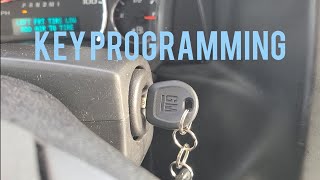
- Perform the 30-Minute Security Relearn Procedure: Turn the key to 'ON' (do not start). The security light will be on or flashing. Wait approximately 10 minutes for the light to turn off. Turn the ignition 'OFF' for 5-20 seconds. Repeat this process two more times for a total of three 10-minute cycles. After the third cycle, turn the key off, then attempt to start the engine.
- If the relearn fails, inspect the wiring and connector for the ignition lock cylinder at the base of the steering column for damage. This often requires removing the steering column shrouds.
- If wiring is intact and the relearn fails with multiple keys, the most likely cause is a failed ignition lock cylinder housing (Passlock sensor/exciter coil). Replace this component.
- After replacing the lock cylinder, perform the 30-minute relearn procedure again.
- If the problem persists after replacing the lock cylinder and performing the relearn, the Body Control Module (BCM) may be faulty and requires professional diagnosis and programming.
Parts You'll Likely Need
- Ignition Lock Cylinder Housing
(OEM #ACDelco D1462G)— This assembly contains the Passkey III+ exciter coil (sensor), which is the most common component to fail and trigger code B3060 due to wear. Note that while this part number is widely cited for GM trucks, its application for the Express specifically should be verified by VIN.
Trusted brands: ACDelco, Standard Motor Products (SMP), Dorman
OEM price range: $100-$180
Aftermarket price range: $60-$120 - Transponder Ignition Key
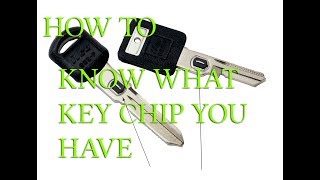
(OEM #B111-PT (Strattec 5903089))— If the original key's internal transponder chip is damaged, a new key is required. This is diagnosed by successfully starting the vehicle with a spare key.
Trusted brands: ACDelco, Strattec
OEM price range: $60-$120
Aftermarket price range: $40-$80
Related Codes That Often Appear With This One
- B3055 — This code for 'No Transponder Modulation' often appears with B3060, indicating a complete failure to communicate with the key chip. Both are mentioned together in TSB #PIC5650M and its revisions.
- B3935 — This code for 'Transponder Authentication Error' is also part of the same security validation process and is cited alongside B3060 in GM service bulletins as part of the same fault event.
- B2960 — On some related GM platforms, this code for 'Security System Sensor Data Incorrect but Valid' can appear, pointing to intermittent wiring or sensor issues within the Passkey system.
Technical Service Bulletins (TSBs) & Recalls
- Bulletin #PIC5650M (and subsequent versions like PIC5650K): Acknowledges an intermittent no-crank, no-start, or start-stall concern with the security light on, associated with DTCs including B3060, B3055, and B3935. It strongly advises checking for Radio Frequency Interference (RFI) from aftermarket devices as a primary diagnostic step. [⭐ MANUFACTURER TSB — highest authority]
- Bulletin #PIE0232: An engineering investigation into no-crank/no-start with these codes, specifically advising to check for RFI on low-mileage 2013 models.
Platform-Specific Known Issues
- A GM Technical Service Bulletin (TSB), #PIC5650M, directly addresses an intermittent no-crank, no-start, or start-stall condition with the security light on, specifically mentioning code B3060. [⭐ MANUFACTURER TSB — highest authority]
- The commercial-use nature of the Express van leads to a higher number of ignition cycles, accelerating the wear and failure of the Passkey III+ components.
Mechanic-Grade Diagnostic Values
- Passlock/Passkey III+ Sensor Signal Voltage — expected: The BCM supplies a 5V reference on the signal wire. When the key is turned to CRANK, the sensor's internal resistor drops this voltage to a specific, learned value (e.g., 1.76V, but this varies by vehicle).. Failure: No voltage drop, an unstable voltage reading, or a drop to 0V during the crank attempt points to a failed Passlock sensor in the ignition lock housing.
- Passlock Sensor Power Supply — expected: 12 volts from the BCM to power the sensor circuit.. Failure: Lack of 12V power indicates a wiring issue or a fault within the BCM itself.
Hidden / Shadow Codes Worth Checking
- B3060 00: The '00' is a standard GM symptom byte for 'No Sub Type Information'. It signifies that the base code B3060 contains the complete fault description (Unprogrammed Transponder) and no further specific sub-fault is identified. (see via A professional GM-specific scan tool, such as a Tech 2 or GDS2, is required to view symptom bytes.)
Scan Tool Commands That Help
- GM Tech2 / GDS2: Body > Theft Deterrent > Data Display — Use this path to monitor live data from the theft deterrent system. Look for parameters like 'TDM Valid Key' or the Passlock sensor voltage to see if the BCM is receiving a signal from the key/ignition cylinder at all. A blank or error value here points directly to a key, sensor, or wiring failure.
- GM Tech2 / GDS2: Immobilizer Learn / Add or Replace Keys — This function is used after replacing a key, BCM, or TDM. It is the dealer-level method for programming keys to the vehicle, which may be necessary if the standard 30-minute relearn procedure fails.
Wiring & Ground Locations
- BCM (Body Control Module) — Under the passenger side of the dashboard, behind the knee bolster.. The BCM contains the Theft Deterrent Module (TDM) logic for the Passkey III+ system. It receives the signal from the ignition lock cylinder and sends the fuel enable/disable password to the ECM. All wiring from the ignition cylinder sensor terminates here.
- G302 — Behind the left lower kick panel, near the driver's side footwell.. This is a major body ground point. A corroded or loose G302 ground can cause a host of electrical issues, including intermittent problems with the Body Control Module (BCM) and the anti-theft system it manages.
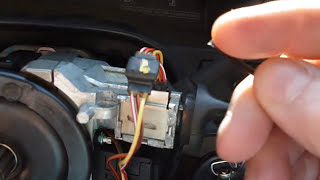
- Ignition Lock Cylinder Connector — At the ignition lock cylinder housing, inside the steering column shrouds.. This connector contains the three critical wires for the Passkey sensor: a 12V power feed from the BCM, a ground, and a 5V reference/signal wire. Damage or poor connection at this point will cause a B3055 or B3060 code.
Real Owner Repair Stories
- YouTube video regarding a 2013 GMC Savana (2013 GMC Savana (direct platform-mate to the Express)) — Vehicle would not start, displaying a "Service Theft Deterrent System" message on the dash.
❌ Tried (didn't work) The video focuses on the successful procedure, which was needed after all keys were lost.
✅ What actually fixed it A new key was cut, and the 30-minute, 3-cycle relearn procedure was performed successfully. The procedure involved turning the key to 'ON', waiting for the security light to go out (approx. 10 mins), turning 'OFF' for 5 seconds, and repeating two more times. The van started normally on the first attempt after the third cycle. - Go-Parts research on a 2014 GMC Savana (2014 GMC Savana) — Persistent no-start condition with code B3060.
❌ Tried (didn't work) Replacement of the ignition lock cylinder., Performing the 30-minute relearn procedure multiple times.
✅ What actually fixed it The ultimate fix was the replacement and reprogramming of the Body Control Module (BCM), which had an internal fault. This was treated as a last-resort diagnosis after all more common components failed to resolve the issue.
OEM Part Supersession History
15795321→ACDelco D1462G— Standard part number update and branding alignment.
Heads up: While D1462G is widely associated with GM trucks and Passlock systems, it primarily fits the Colorado, Canyon, and Hummer H3. Its inclusion for the Express/Savana in many catalogs appears to be an error. Always verify the correct part number by VIN, as the Express/Savana may use a different housing.
Model Year Variations Within This Range
- 2003-2007 vs 2008+: Early models (2003-2007) of the Express/Savana platform used the Passlock II system, which operates slightly differently (magnet in cylinder, no chip in key). The 2008+ models transitioned fully to the Passkey III+ (PK3+) system, which uses a transponder chip in the key itself. While symptoms are similar, the diagnostic focus for 2007 and earlier models is solely on the ignition cylinder, whereas for 2008+ the key itself is also a primary suspect.
Helpful Videos
We Have This Part in Stock


The information in this article is provided for general reference and educational purposes only. Vehicle specifications, procedures, and part compatibility can vary by production date, trim level, and region. Always consult your vehicle's factory service manual and verify part numbers before purchasing or performing repairs. Safety-critical components such as airbags, seat belts, and braking systems should be installed by a qualified professional.
- Chevrolet EXPRESS 1500:
- 🎬 Helpful Videos
- 🛍️ Shop This Part
- What's Unique About the 2007-2014 Chevrolet EXPRESS 1500
- Diagnostic Flowchart
- Symptoms You May Notice
- Most Likely Causes
- Rare But Worth Checking
- Diagnosis Steps
- Parts You'll Likely Need
- Related Codes That Often Appear With This One
- Technical Service Bulletins (TSBs) & Recalls
- Platform-Specific Known Issues
- Mechanic-Grade Diagnostic Values
- Hidden / Shadow Codes Worth Checking
- Scan Tool Commands That Help
- Wiring & Ground Locations
- Real Owner Repair Stories
- OEM Part Supersession History
- Model Year Variations Within This Range
- 🎟️ Get 5% Off