

B3060 on 2013-2020 Chevrolet Corvette: Causes for 'No Fob Detected' & Fixes
Code B3060 on a 2013-2020 Corvette means the car's security system doesn't recognize the key fob, causing a no-start. The most common fix is replacing the key fob's CR2032 battery. If that fails, the Remote Control Door Lock Receiver (RCDLR) module is the next likely culprit, a known failure point that requires professional replacement and programming. A weak main car battery can also cause these symptoms.
- B3060 means your Corvette doesn't recognize your key. The car will not start.
- First, replace the CR2032 battery in your key fob. This solves the problem most of the time.
- If a new fob battery doesn't work, try placing the fob in the emergency slot (glove box for 2013, steering column for 2014-2020) to start the car.
- If the car only starts with the fob in the slot, the Remote Control Door Lock Receiver (RCDLR) is likely faulty and needs professional replacement and programming.
What's Unique About the 2013-2020 Chevrolet CORVETTE

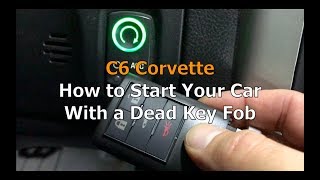
The 2013-2020 Corvette range spans the end of the C6, all of the C7, and the start of the C8 generation. While the cause is the same (key fob communication failure), the emergency procedure differs. The C6 (2013) has a fob slot inside the glove box for low-battery starts, 🎬 Watch: How to start a C6 with a dead fob. while the C7 (2014-2019) and C8 (2020) have the slot on the steering column. A well-documented failure point on these platforms, especially the C6 and its platform-mate the Cadillac XLR, is the Remote Control Door Lock Receiver (RCDLR) module. This module can fail due to a bad internal transistor or cold solder joints, preventing key recognition even with a good fob battery.
Diagnostic Flowchart
Tap your situation to follow the diagnostic path that matches what you're seeing on this vehicle.
Generation note: The 2013 model is the final year of the C6 generation. The 2014-2019 models are the C7 generation. The 2020 model is the first year of the C8 generation. The primary difference for this issue is the location of the emergency key fob slot: it's in the glove box for the C6 and on the right side of the steering column for the C7 and C8. Part numbers for the RCDLR module are different for each generation and even between model year groups within the C6, making them not interchangeable. The diagnostic tool also changes from the Tech 2 for the 2013 C6 to the GDS2 software for 2014+ models.
Symptoms You May Notice

- Engine will not crank or start.
- "No Fob Detected" message on the Driver Information Center (DIC).
- Security indicator light is illuminated or flashing.
- Engine may start but immediately stalls. [Bulletin #PIC5650M]
- Passive entry (keyless door unlock) may not work.
- Tire Pressure Monitoring System (TPMS) warning light, as the RCDLR also processes TPMS signals.
- Replacing the starter motor. A no-crank condition caused by the security system will not be fixed by a new starter. The computer is intentionally preventing the starter from engaging.
- Replacing the main car battery without testing it first. While a low battery can be a cause, it's often overlooked in favor of more complex theories. Always start with the simplest checks.
- Reprogramming fobs unnecessarily. If the car starts with the fob in the emergency slot, the fob is already correctly programmed. Attempting to reprogram it can introduce new problems.
Most Likely Causes

- Weak or Dead Key Fob Battery 🔴 High Probability Key fobs constantly transmit a low-power signal, and batteries (typically CR2032) have a finite life. Forum users report that C7 fobs are particularly sensitive, sometimes failing when the battery drops to 3.0V, while a new battery should measure over 3.25V. Intermittent no-start issues can occur when a fob battery is marginal, as a colder battery may produce less voltage and fail to be detected overnight.
How to confirm: Try using the spare key fob. If the car starts, the battery in the primary fob is the issue. You can also test the battery with a multimeter; it should read above 3.0 volts. If placing the non-working fob in the emergency slot allows the car to start, it strongly points to a weak fob battery.
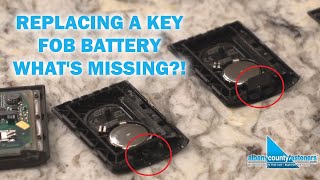
Typical fix: Replace the CR2032 battery inside the key fob. Pry the fob case open carefully, swap the battery, and snap it back together.
Est. part cost: $2-$10 - Faulty Remote Control Door Lock Receiver (RCDLR) 🟡 Medium Probability A specific internal transistor in the RCDLR module is a known failure point, as noted in GM technical documents for the C6 and Cadillac XLR. Owners on CorvetteForum also report that cold solder joints on the module's main connector pins can cause intermittent connection loss, which can sometimes be fixed by reflowing the solder. Corrosion on the connector pins has also been identified as a cause of failure.
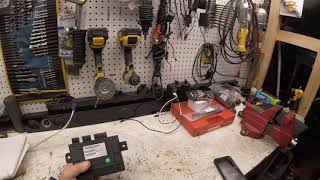
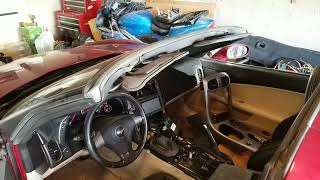
How to confirm: With a known good fob and car battery, press the start button. A series of rapid clicks from the RCDLR (located behind the center dash vents on C6) is normal. 🎬 See this walkthrough on replacing the C6 RCDLR module. If you only hear a single click or silence, it strongly indicates a failed RCDLR module. Also, since the RCDLR processes TPMS signals, a simultaneous TPMS warning light is a strong indicator that the RCDLR has failed.
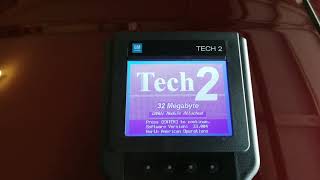
Typical fix: The RCDLR module must be replaced and then programmed to the vehicle's VIN using a GM-specific scan tool (like a Tech 2 for C6 or GDS2 for C7). This is not a DIY job for most owners. Some advanced users have successfully repaired the board by re-soldering connections or cleaning connector pins.
Est. part cost: $75-$300 - Radio Frequency (RF) Interference ⚪ Low Probability The immobilizer system can be disrupted by other electronic devices. TSB #PIC5650M specifically calls out aftermarket LED lights, cell phone chargers, USB power banks, and even toll passes as potential sources of RFI that can 'jam' the fob signal. The system operates at 125 kHz, so devices operating near this frequency are most likely to cause issues.
How to confirm: Remove all other electronic devices from the vehicle and from your pockets, including aftermarket chargers and other key fobs. If the car starts, one of the removed items was the source. Try to isolate the culprit by reintroducing items one by one.
Typical fix: Avoid placing cell phones or unshielded electronics near the center console or ignition button when starting the car. Remove problematic aftermarket accessories. [Bulletin #PIC5650M]
Est. part cost: $0 - Low Main Vehicle Battery ⚪ Low Probability Corvettes have numerous electronic modules that are highly sensitive to voltage. A weak main battery (reading below 12.4V at rest) can cause communication errors across various systems, including the theft deterrent system, leading to B3060 and other codes. Forum members have reported that a battery reading as high as 12.2V can still cause a 'No Fob Detected' message, especially after the car has been sitting.
How to confirm: Test the vehicle's main battery voltage. It should be above 12.4 volts at rest. If it's low, or if the car has been sitting for a long time, this is a likely cause. In some cases, a bad battery can cause these issues even if it has enough power to start the car.
Typical fix: Charge or replace the main vehicle battery. Ensure all battery cable connections, including the small ground wire on the negative terminal 🎬 Watch: How to enter a C7 with a dead battery. (a known issue on C7s), are clean and tight.
Est. part cost: $150-$350
Rare But Worth Checking
- Faulty Body Control Module (BCM): While less common than an RCDLR failure, the BCM is the central computer for the security system. If the RCDLR and fobs are confirmed good, the BCM may be the issue. This requires advanced diagnostics, often involving checking for voltage drops at the BCM connectors. On C5-generation cars, water intrusion in the passenger footwell was a common cause of BCM failure, a pattern that can still occur.
- Damaged Key Fob: Physical damage from being dropped or exposure to water can damage the transponder inside the fob itself, even with a new battery. In one documented case, a previous owner supplied two bad fobs, leading to a misdiagnosis of the RCDLR.
Diagnosis Steps
- Replace the battery in the key fob (typically a CR2032). Use a quality brand and verify its voltage with a multimeter (>3.2V is ideal). This is the most common fix.
- Attempt to start the vehicle with your spare key fob to rule out a faulty primary fob.
- Remove all cell phones, chargers, aftermarket LED lights, and other electronic devices from the car to eliminate potential Radio Frequency (RF) interference, as detailed in TSB PIC5650M.
- If the car still won't start, place the key fob directly into the emergency transmitter slot. For 2013 (C6) models, this is in the glove box. For 2014-2020 (C7/C8) models, it's on the right side of the steering column. Try starting the car. If it starts, it confirms a signal strength issue, likely a weak fob battery or a failing RCDLR.
- Check the main vehicle battery to ensure it is fully charged (above 12.4V) and that all terminals, including the small black ground wire on the C7, are clean and tight. A low vehicle battery is a common cause of intermittent electronic faults on these cars.
- Listen for clicks from the Remote Control Door Lock Receiver (RCDLR) when pressing the start button with a known good fob. A series of clicks is normal; a single click suggests the RCDLR has failed, according to GM service documents.
- If the problem persists, use a professional scan tool (Tech 2 for C6, GDS2 for C7/C8) to read codes from the Body Control Module (BCM) and Remote Control Door Lock Receiver (RCDLR). Look for B3055, B3935, and TPMS codes in addition to B3060.
- Using the scan tool, check the RCDLR module voltage. One technician noted a reading of 11.89V on a faulty C6 system, which was lower than the ~12.4V measured directly at the connector, indicating a potential voltage drop issue.
- If the RCDLR is suspected, professional service is required for replacement and programming, as a Tech 2 or GDS2 is needed to sync the new module to the car's VIN and fobs.
Parts You'll Likely Need

- Key Fob Battery
(OEM #CR2032 (C6/C7), CR2450 (C8))— This is the most frequent cause of key fob communication failure, leading to the B3060 code. C8 models use a larger CR2450 battery.
Trusted brands: Energizer, Duracell, Panasonic
OEM price range: $5-$10
Aftermarket price range: $2-$8 - Remote Control Door Lock Receiver (RCDLR) - C6
(OEM #10372535 (superseded by 15815693, 25786622, 25940664))— This module is a known failure point on C6 Corvettes and the related Cadillac XLR. An internal component fails, preventing it from detecting the fob's signal. Part is often discontinued and may require sourcing a used unit with a matching part number.
Trusted brands: ACDelco (OEM)
OEM price range: $150-$300 (if found)
Aftermarket price range: $100-$200 (Used) - Remote Control Door Lock Receiver (RCDLR) - C7
(OEM #13587438)— The C7 generation uses a different RCDLR module than the C6. While seemingly more reliable, it can still fail and cause the same 'No Fob Detected' symptoms.
Trusted brands: ACDelco (OEM)
OEM price range: $100-$200
Aftermarket price range: $75-$150 - Key Fob (Transmitter)
(OEM #C7: 23465955, C8: 13538852)— If the fob itself is damaged internally, it will not communicate with the car even with a new battery. A replacement fob must be purchased and programmed by a dealer or locksmith.
Trusted brands: ACDelco (OEM)
OEM price range: $150-$350
Aftermarket price range: $50-$150
Related Codes That Often Appear With This One
- B3055 — This code relates to a problem with the key transponder itself. It often appears with B3060 when the security module cannot properly read or authenticate the key. [Bulletin #PIC5650M, 48]
- B3935 — This code indicates a transponder incorrect status. It's part of the same family of security codes and points to a communication breakdown between the key and the vehicle. [Bulletin #PIC5650M, 48]
- C0750, C0755, C0760, C0765, C0775 — These are TPMS sensor codes. Since the RCDLR module processes signals from both the key fobs and the tire pressure sensors, a failing RCDLR will often cause TPMS faults at the same time as the 'No Fob Detected' issue.
Technical Service Bulletins (TSBs) & Recalls
- Bulletin #PIC5650M: Mentions intermittent no crank, no start, or start stall concerns with the security light on, associated with DTC B3060 among others.
Platform-Specific Known Issues
- A GM Technical Service Bulletin (TSB #PIC5650M) directly addresses an intermittent no-crank or start-stall condition with the security light on, specifically citing code B3060. It strongly suggests that Radio Frequency Interference (RFI) from aftermarket devices (like phone chargers, LED lights) or even other keys on the keychain is a primary cause to investigate before replacing any parts.
Mechanic-Grade Diagnostic Values
- C6 RCDLR Battery Positive Voltage — expected: Should be equal to battery voltage (~12.4V or higher).. Failure: A scan tool reporting a lower voltage (e.g., 11.89V) than what is measured at the connector pin points to a voltage drop or faulty module. A voltage drop of more than ~0.3V between the battery and the module is significant.
- C6 RCDLR Ignition 1 Voltage — expected: Should be hot (~12V) when ignition is in Accessory or Run mode.. Failure: Reading near 0V when the ignition is on indicates a problem with the feed from the BCM.
- Key Fob CR2032 Battery Voltage — expected: A new battery should measure over 3.25V.. Failure: Function can become unreliable when voltage drops below 3.08V.
Hidden / Shadow Codes Worth Checking
- B3060 00: The '00' is a symptom byte. For this DTC, it indicates the base fault 'Unprogrammed Transponder Identification Code Received' without further specification. This is the most common variant of the code. (see via A professional GM scan tool like a Tech 2 or GDS2 will display the code with its symptom byte.)
Scan Tool Commands That Help

- Tech 2 (for C6): Module Setup: Program Key Fobs / Invalidate All Fobs — Used after replacing the RCDLR. The 'Invalidate' function erases all existing fobs, and 'Program' puts the new module into learn mode to accept new fobs. This is required to make a new RCDLR functional.
- GDS2 (for C7/C8): Data Display: TDM Valid Key — When diagnosing, view this parameter while trying each key. It should display 'Yes' for a key that is properly programmed and read by the system. If it shows 'No' with a known good fob battery, it points to a deeper system issue.
- GDS2 / Tech 2: Read RCDLR Module Voltage — Use this to check for voltage discrepancies. If the scan tool reports a significantly lower voltage than the main battery voltage, it suggests a voltage drop in the power supply circuit to the RCDLR, which can cause intermittent operation.
Wiring & Ground Locations
- RCDLR (C6) — Located in the dashboard, above the radio head unit.. This is the module that receives the key fob signal. Failure of this part or its wiring is a primary cause of B3060.
- BCM (C7) — Located in the passenger footwell, under the carpet, attached to a silver metal plate.. The BCM is the master controller for the security system. On a C6, it provides the 'Ignition 1' voltage signal to the RCDLR.
- RCDLR Connector (C6) — The main electrical connector on the RCDLR module.. Pin H (Circuit 2440, often a red or pink wire) is the main battery positive voltage feed from Fuse 11. Pin C is the Ignition 1 voltage feed from the BCM. Pin S is the ground. Testing voltage at these pins is critical for diagnosis.
- G104 / G202 (C6) — These are chassis ground points. While exact locations vary, common problematic grounds are under the battery tray and behind the kick panels.. A user with a persistent B3060-related issue specifically cleaned ground G104 (related to RCDLR) and G202 (related to BCM) as part of their advanced diagnosis. Poor grounds cause voltage drops and erratic module behavior.
- Small Negative Battery Wire (C7) — A small black wire that attaches to the main negative battery cable terminal in the rear compartment.. This wire is a ground path for several modules. It is notoriously easy to damage or leave loose when changing the main battery, which can cause numerous electrical faults, including setting a B1517 (Battery Voltage) code that can accompany security system issues.
Real Owner Repair Stories
- CorvetteForum user (2019 Corvette Grand Sport) — Could unlock the car but not remote start. Intermittent 'No Fob Detected' message when trying to start. Had to hold fob right next to the steering column to get it to work.
❌ Tried (didn't work) Replacing the batteries in both key fobs.
✅ What actually fixed it The main car battery was failing a load test, even though it held enough charge to start the car. Replacing the main vehicle battery resolved all key fob detection issues. - CorvetteForum user (2005 Corvette C6 M6 Coupe) — Intermittent 'No Fob Detected'. Fobs would sometimes work after a battery disconnect/reconnect, but then fail again after a few hours or days. Car would always start with the fob in the glovebox slot.
❌ Tried (didn't work) Multiple new fob batteries., New main car battery., Reflowing solder on the RCDLR header pins., Cleaning grounds G104 and G202.
✅ What actually fixed it The diagnosis pointed to a voltage drop issue. The Tech 2 scan tool showed the RCDLR voltage at 11.89V, while direct probing at the connector showed 12.4V. The problem was most severe when the main battery voltage dropped to 12.2V after sitting. The final fix involved tracing the voltage drop from the BCM (Connector C4) which supplies the ignition feed to the RCDLR.
OEM Part Supersession History
Multiple (e.g., 10372535, 15815693, 25940664)→Varies by year— Module revisions by GM over the production run.
Heads up: This group of RCDLR modules is for 2005-2007 C6 models only and is not compatible with later years.25821056, 25882862→25938511— Part consolidation and revision.
Heads up: This group of RCDLR modules is for 2008-2009 C6 models only.25971235→N/A (Final part for C6)— Final design for the generation.
Heads up: This RCDLR module is for 2010-2013 C6 models only.22816266→23465955— Part revision for C7 key fobs.
Heads up: These are C7 key fob part numbers. C7 fobs operate on 434 MHz and are incompatible with C6 systems which use 315 MHz in North America.
Model Year Variations Within This Range
- 2013 (C6) vs 2014+ (C7/C8): The diagnostic tool changes from Tech 2 for the 2013 C6 to GDS2 software for all 2014 and newer models.
- 2013 (C6) vs 2014+ (C7/C8): The key fob and RCDLR operating frequency is different. C6 models in North America use 315 MHz, while C7 models use 434 MHz. The parts are not interchangeable.
- 2013 (C6 only): The RCDLR modules for C6 Corvettes are specific to year groupings (2005-07, 2008-09, 2010-13) and are not interchangeable. A 2013 model requires part number 25971235.
Helpful Videos






We Have This Part in Stock



The information in this article is provided for general reference and educational purposes only. Vehicle specifications, procedures, and part compatibility can vary by production date, trim level, and region. Always consult your vehicle's factory service manual and verify part numbers before purchasing or performing repairs. Safety-critical components such as airbags, seat belts, and braking systems should be installed by a qualified professional.
- Chevrolet CORVETTE:
- 🎬 Helpful Videos
- 🛍️ Shop This Part
- What's Unique About the 2013-2020 Chevrolet CORVETTE
- Diagnostic Flowchart
- Symptoms You May Notice
- Most Likely Causes
- Rare But Worth Checking
- Diagnosis Steps
- Parts You'll Likely Need
- Related Codes That Often Appear With This One
- Technical Service Bulletins (TSBs) & Recalls
- Platform-Specific Known Issues
- Mechanic-Grade Diagnostic Values
- Hidden / Shadow Codes Worth Checking
- Scan Tool Commands That Help
- Wiring & Ground Locations
- Real Owner Repair Stories
- OEM Part Supersession History
- Model Year Variations Within This Range
- 🎟️ Get 5% Off