

B3060 on 2007-2012 Chevrolet Colorado: Passlock Security Fault Causes & Fixes
Code B3060 on a 2007-2012 Chevy Colorado almost always means the Passlock sensor in the ignition lock cylinder has failed, causing a no-start and a flashing security light. The most common fix is to replace the ignition lock cylinder assembly, which costs about $60-$100 for the part. After replacement, a 30-minute relearn procedure is mandatory.
- B3060 on a 2007-2012 Colorado points directly to a fault in the Passlock anti-theft system.
- The most common symptom is the engine cranking but not starting, or starting and dying, with the security light flashing.
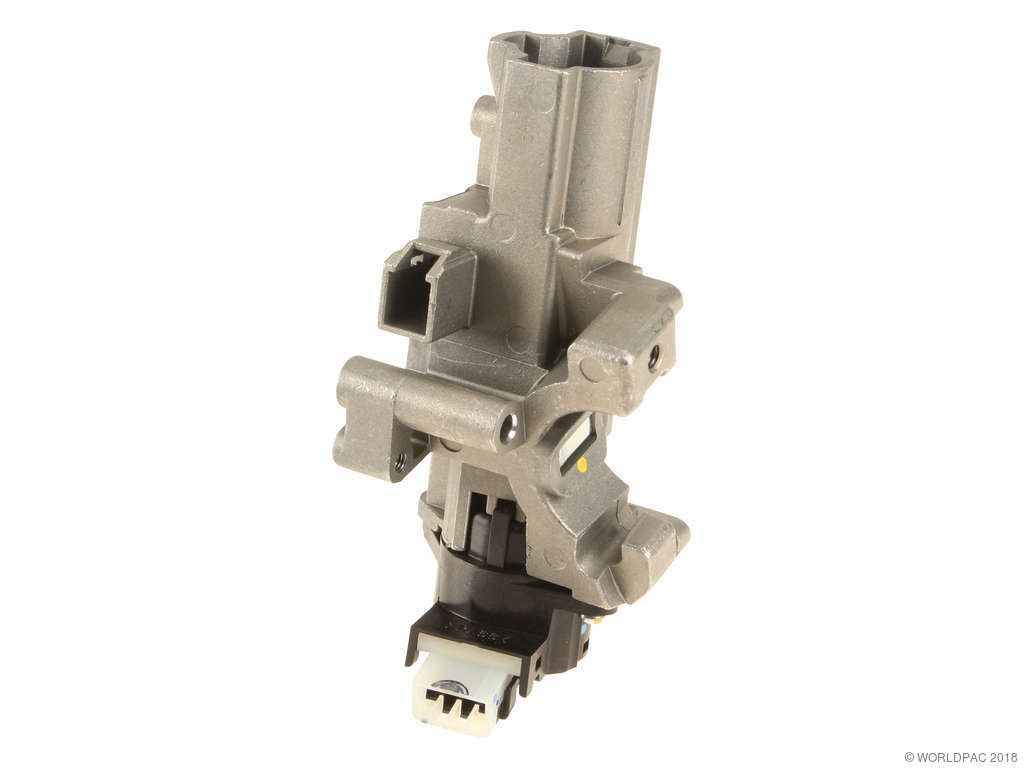
- The most likely failed part is the Passlock sensor, which is sold as part of the ignition lock cylinder housing (e.g., ACDelco D1493G).
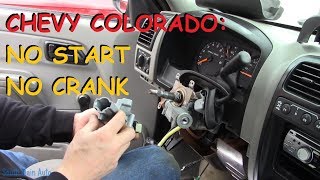
- Replacing the ignition lock cylinder is a DIY-friendly job, but you must perform a 30-minute, 3-cycle key relearn procedure afterward for the truck to start.
What's Unique About the 2007-2012 Chevrolet COLORADO

The first-generation Chevrolet Colorado and its platform mates use the GM Passlock II anti-theft system. Unlike many systems that use a transponder chip in the key head, Passlock uses a sensor within the ignition lock cylinder housing to read the key's rotation via a magnet. This system is notoriously prone to failure, with the sensor or its wiring wearing out over time, leading to intermittent no-start conditions that frustrate many owners. The failure is so common on the GMT355 platform (Colorado, Canyon, H3) that it's one of its most well-known issues.
Diagnostic Flowchart
Tap your situation to follow the diagnostic path that matches what you're seeing on this vehicle.
Symptoms You May Notice

- Engine cranks but will not start.
- Engine starts and immediately stalls.
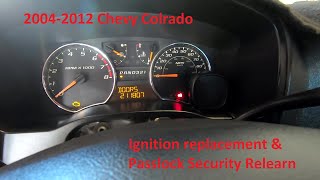
- Flashing or solid 'Security' light (padlock symbol) on the instrument cluster.
- Complete no-crank, no-start condition in some cases.
- The vehicle may start after a mandatory 10-minute wait period, during which the security light flashes and then turns off.
- Replacing the starter motor
- Replacing the fuel pump without confirming it's disabled by the security system
- Replacing the battery when it is still in good condition
- Replacing the Engine Control Module (ECM) unnecessarily
Most Likely Causes

- Faulty Ignition Lock Cylinder / Passlock Sensor 🔴 High Probability The Passlock sensor is integrated into the ignition lock housing and is a very common failure point on this platform due to wear and tear of the internal contacts and magnet assembly.
How to confirm: The presence of code B3060 combined with a flashing security light and a crank/no-start symptom is a strong indicator. The issue is often intermittent and may worsen in cold or humid weather. If the 30-minute relearn procedure fails to work or only works temporarily, the sensor is almost certainly bad.
Typical fix: Replace the entire ignition lock cylinder housing assembly. The sensor itself is not sold separately. After replacement, a 30-minute key relearn procedure is required for the vehicle to recognize the new sensor.
Est. part cost: $60 - $110 - Damaged Wiring in Steering Column ⚪ Low Probability The three small wires (typically yellow, orange/black, and black/white) from the Passlock sensor can chafe, break, or develop loose connections where they enter the main harness. This is more common on vehicles with frequently used tilt steering.
How to confirm: Remove the steering column covers and visually inspect the small wires coming from the ignition lock cylinder for any signs of damage, pinching, or breaks. Wiggle the wires while trying to start the vehicle to see if the symptom changes.
Typical fix: Repair the damaged section of the wire harness. Some owners choose to permanently bypass the system by cutting the yellow wire and installing a resistor of a specific value, but this is a complex fix that disables the security system. 🎬 See how to perform a permanent Passlock bypass repair.
Est. part cost: $5 - $20 - Worn or Damaged Ignition Key ⚪ Low Probability While the key itself doesn't have a chip, a very worn key can cause inconsistent rotation in the lock cylinder, which the Passlock sensor may interpret as a fault. This is less common than sensor failure.
How to confirm: Try starting the vehicle with a different, less-worn key. If the problem disappears, the original key is the likely culprit.
Typical fix: Have a new key cut from the vehicle's key code, not by duplicating the worn key.
Est. part cost: $10 - $25
Rare But Worth Checking
- Failing Body Control Module (BCM): The BCM is the module that interprets the Passlock sensor signal. While it can fail, it is much less common than the sensor itself. All other causes should be ruled out before condemning the BCM. A BCM failure often presents with other electrical issues.
- Radio Frequency (RF) Interference: As noted in GM TSB PIC5650M, other electronic devices on the keychain (other car fobs, gate cards, toll passes) can sometimes interfere with the Passlock system. Try starting the vehicle with only the Colorado key in the ignition to rule this out.
- Poor Under-Hood Grounds: The first-generation Colorado is known for having poor ground splice packs (SP-105 and SP-106) in the engine bay that corrode and cause erratic electrical behavior, which can include anti-theft system malfunctions.
Diagnosis Steps
- Scan for diagnostic trouble codes. Note if B3060 is present, along with B3055, B3935, or B2960.
- Attempt to start the vehicle. Observe the security light on the dashboard. A flashing light during a crank/no-start condition points directly to a Passlock system fault.
- Remove any other electronic fobs or devices from the keychain and attempt to start again to rule out RF interference.
- Try a spare key if available to rule out a worn key.
- If the vehicle won't start, perform the 30-minute security relearn procedure. The steps are: 1. Turn the key to 'ON' (RUN) and attempt to start. The engine will crank but not run. 2. Leave the key in the 'ON' position. The security light will be flashing. 3. Wait for approximately 10-11 minutes until the security light stops flashing and turns off. 4. Turn the key to 'OFF' for 10-30 seconds. 5. Repeat steps 1-4 two more times for a total of three 10-minute cycles. 6. After the third cycle, turn the key off, then attempt to start the engine. It should now start. 🎬 Watch: Step-by-step walkthrough of the 30-minute relearn procedure.
- If the relearn procedure does not work (the security light never turns off) or the problem returns quickly, the Passlock sensor has failed.
- Inspect the wiring at the base of the ignition lock cylinder for damage before ordering parts.
- If wiring is intact, the most probable cause is a faulty Passlock sensor, which requires replacing the ignition lock cylinder housing.
Parts You'll Likely Need
- Ignition Lock Cylinder Housing
(OEM #ACDelco D1493G (or D1462G))— This assembly contains the Passlock sensor, which is the most common point of failure for code B3060 on this vehicle. The sensor itself is not typically sold separately from the housing.
Trusted brands: ACDelco (OEM), Standard Motor Products (US589), Dorman (924-719)
OEM price range: $80-$110
Aftermarket price range: $60-$90
Related Codes That Often Appear With This One
- B3055 — This code also relates to a key transponder or Passlock sensor issue and is frequently stored alongside B3060, as noted in GM technical service bulletin PIC5650M.
- B3935 — Another code related to the transponder system, often appearing with B3055 and B3060 in cases of intermittent no-start conditions, per TSB PIC5650M.
- B2960 — This code for 'Valid But Different Code Value Than Previously Learned' can also appear, indicating the Passlock sensor is sending a signal that is plausible but doesn't match the BCM's stored value.
Technical Service Bulletins (TSBs) & Recalls
- PIC5650M / PIC5650K: Addresses intermittent no crank, no start, or start stall with security light on, potentially caused by DTC B3060, B3055, or B3935. It advises checking for Radio Frequency Interference (RFI) from aftermarket devices before replacing parts.
Platform-Specific Known Issues
- The GM Passlock II system used in this generation is widely known for causing intermittent crank-no-start conditions as the vehicle ages.
- Technical Service Bulletin PIC5650M (and later revisions) directly addresses intermittent no-crank or start-stall concerns with the security light on, listing B3060 as one of the primary related trouble codes.
- Some owners on forums report that simply pausing for a few seconds with the key in the 'ON' position before cranking can sometimes prevent the issue from occurring, suggesting a computer lag issue, though this is not a reliable fix.
Mechanic-Grade Diagnostic Values
- Passlock Sensor Supply Voltage — expected: 9.0 Volts or higher. Failure: Voltage below 9.0V indicates a power supply issue to the sensor, potentially from the BCM or wiring.
- Passlock Sensor Signal Voltage (Pre-Crank) — expected: 4.7 - 5.0 Volts. Failure: No voltage or low voltage before cranking indicates a faulty BCM or an open/short in the yellow signal wire.
- Passlock Sensor Signal Voltage (During Crank) — expected: A specific, stable voltage drop from the 5V reference (e.g., to 1.76V, but varies by vehicle).. Failure: No voltage drop, an unstable voltage, or a drop to 0V indicates a failed Passlock sensor.
- Passlock Sensor Internal Resistance (for bypass) — expected: 400 Ohms to 13,700 Ohms (Varies per vehicle). Failure: An open circuit (infinite resistance) or a reading outside this range indicates a failed sensor. This measurement is used to select a resistor for a permanent bypass.
Scan Tool Commands That Help
- Tech2 / GDS2 or equivalent professional scan tool: View TDM/BCM Data List (e.g., 'Valid Key' parameter, 'Passlock Data Voltage') — To confirm if the BCM is receiving a valid or invalid signal from the key/sensor without manual electrical testing. The 'Valid Key' parameter should read 'Yes' with a good key.
- Tech2 / GDS2: Service Programming System (SPS) > 'VTD Re-Learn' or 'Theft Module Re-Learn' — After replacing the BCM or ignition lock cylinder, this function can initiate the security relearn procedure, which is often faster than the manual 30-minute method.
Wiring & Ground Locations

- Body Control Module (BCM) — Located behind the kick panel on the passenger side of the vehicle.. The BCM is the module that receives and interprets the voltage signal from the Passlock sensor. All wiring from the sensor ultimately runs to this module.
- Passlock Sensor Connector — At the ignition lock cylinder housing, inside the steering column covers.. This is the primary point for testing the sensor's voltage and resistance. It typically has three wires: Yellow (Signal), Red/White or Orange/Black (Power), and Black (Ground).
- Ground Splice Pack SP-105 — In the engine compartment on the driver's side, near the battery.. This ground point serves many critical components, including the fuel pump and run/crank relay. Corrosion here can cause intermittent no-start or stalling issues that can be mistaken for a Passlock fault.
- Ground Splice Pack SP-106 — In the engine compartment on the passenger side, behind the engine airbox.. This ground serves the HVAC controls, Data Link Connector, and other interior electronics. A poor ground here can cause a wide range of bizarre electrical problems, potentially affecting BCM stability.
Real Owner Repair Stories
- Common narrative from ColoradoFans.com and 355nation.net forums (2007-2012 Chevrolet Colorado, various engines) — Intermittent crank-but-no-start. Security light flashes for 10 minutes, then truck might start. Problem becomes more frequent over time.
❌ Tried (didn't work) Performing the 30-minute relearn procedure (only works temporarily), Replacing the battery, Checking fuses
✅ What actually fixed it Replacing the entire ignition lock cylinder housing (ACDelco D1493G or Dorman 924-719) and then performing the 30-minute security relearn procedure one final time. - DIY tutorials and forum posts (GM vehicles with Passlock II, including 2007-2012 Colorado) — Chronic, recurring B3060 code and no-start condition where replacing the ignition lock cylinder housing did not provide a permanent fix or the owner wanted to disable the system.
❌ Tried (didn't work) Multiple ignition lock cylinder replacements, Repeated relearn procedures
✅ What actually fixed it Performing a permanent bypass of the Passlock sensor. This involves measuring the resistance of the working (or a new) sensor, then cutting the yellow signal wire and soldering a resistor of the same value between the BCM-side of the yellow wire and the ground wire. This provides a constant, correct signal to the BCM, effectively disabling the sensor part of the security system. A relearn is not needed if the correct resistance is matched.
When the Usual Fixes Don't Work
- While the vast majority of B3060 codes are fixed by replacing the ignition lock cylinder, a small number of owners have found the root cause to be elsewhere after the common fix fails. In some cases, the problem was a corroded under-hood ground splice pack (SP-105 or SP-106), which caused unstable voltage to the BCM or other critical modules, mimicking a Passlock failure. In other rare cases, a failing BCM itself was the culprit, though this usually presents with multiple other unrelated electrical issues.
Helpful Videos
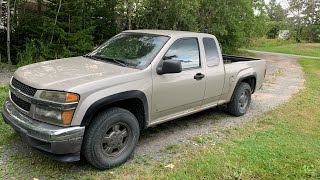
Used OEM Parts in Stock

New Aftermarket Parts Available


The information in this article is provided for general reference and educational purposes only. Vehicle specifications, procedures, and part compatibility can vary by production date, trim level, and region. Always consult your vehicle's factory service manual and verify part numbers before purchasing or performing repairs. Safety-critical components such as airbags, seat belts, and braking systems should be installed by a qualified professional.
- Chevrolet COLORADO:
- 🎬 Helpful Videos
- 🛍️ Shop This Part
- What's Unique About the 2007-2012 Chevrolet COLORADO
- Diagnostic Flowchart
- Symptoms You May Notice
- Most Likely Causes
- Rare But Worth Checking
- Diagnosis Steps
- Parts You'll Likely Need
- Related Codes That Often Appear With This One
- Technical Service Bulletins (TSBs) & Recalls
- Platform-Specific Known Issues
- Mechanic-Grade Diagnostic Values
- Scan Tool Commands That Help
- Wiring & Ground Locations
- Real Owner Repair Stories
- When the Usual Fixes Don't Work
- 🎟️ Get 5% Off