

B3060 on 2013-2017 Chevrolet Captiva: Security Fault, No-Start Causes and Fixes
Code B3060 on a Chevrolet Captiva means the anti-theft system doesn't recognize the key, causing a no-start or start-and-stall condition with the security light on. The most common causes are a faulty key, radio frequency interference near the key, or a bad immobilizer antenna around the ignition cylinder. Before major repairs, always try a spare key and perform the 30-minute relearn procedure.
- B3060 means your Captiva's anti-theft system has locked the engine because it doesn't recognize the key.
- Before any repairs, try your spare key. If it works, your primary key is bad.
- Remove all other electronic fobs, cards, and chargers from your keychain and near the ignition to rule out radio frequency interference, a known issue for this system.
- Do not immediately suspect the starter or battery; the security light is the key indicator that this is an immobilizer issue.
- If a new key or immobilizer part is needed, it will require professional programming to work with your vehicle.
What's Unique About the 2013-2017 Chevrolet CAPTIVA

The Chevrolet Captiva (sold in North America as the Captiva Sport) is based on the GM Theta platform and uses the PASS-Key III+ (PK3+) immobilizer system. A key characteristic of this system is its sensitivity to intermittent communication failures, as documented in multiple versions of GM Technical Service Bulletin #PIC5650. This TSB highlights that a no-crank or start-and-stall condition with code B3060 is a known issue across many GM models and often points to external factors like Radio Frequency Interference (RFI) rather than a definitively broken part, which can make diagnosis tricky. The system is designed to be difficult to bypass, making it effective against theft but sensitive to component failure or interference.
Diagnostic Flowchart
Tap your situation to follow the diagnostic path that matches what you're seeing on this vehicle.
Symptoms You May Notice

- Engine will not crank or start.
- Engine starts and then immediately stalls.
- Security warning light is illuminated or flashing on the instrument cluster.
- Key may be difficult to remove from the ignition.
- A single click from the starter relay with no crank.
- Replacing the starter motor. A no-crank condition might point to the starter, but the presence of code B3060 and a security light confirms the issue is with the anti-theft system, which is disabling the starter relay.
- Replacing the vehicle's 12V battery. While a weak battery can cause numerous electrical problems and should be tested first, it is not a direct cause of B3060, which is specific to key recognition. A relearn procedure is often required after a battery replacement, which can be mistaken for a battery fault.
- Replacing only the ignition lock cylinder without the immobilizer antenna. The antenna (reader coil) is the electronic component that fails, not typically the mechanical lock itself.
Most Likely Causes

- Faulty or Unprogrammed Ignition Key 🔴 High Probability The transponder chip inside the key head can be damaged from being dropped, getting wet, or simply failing over time. Using a new, unprogrammed key will also set this code. The key for the Captiva Sport uses a Philips ID 46 transponder chip.
How to confirm: Try starting the vehicle with a spare key. If the spare key works reliably, the original key is faulty. This is the most important first step.
Typical fix: Replace the faulty key. A new key must be cut and then programmed to the vehicle using either a manual relearn procedure or a diagnostic tool.
Est. part cost: $40-$100 - Radio Frequency Interference (RFI) 🟡 Medium Probability As noted in GM TSB PIC5650M, the immobilizer system is sensitive to interference from other electronic devices operating on 125 kHz, 315 MHz, or 433 MHz. This can include other key fobs, building access cards, aftermarket USB chargers, LED lights, or even cell phones on the same keychain or near the ignition.
How to confirm: Remove all other keys, fobs, and electronic devices from the keychain. Unplug any aftermarket devices from the power outlets or OBD-II port. Try starting the vehicle with only the single Captiva key. If it starts, RFI was the cause.
Typical fix: Isolate and remove the source of interference from the keychain or vehicle cabin. No parts are typically required.
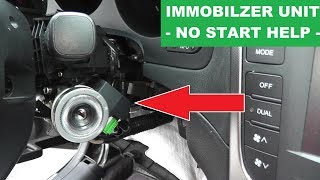
Est. part cost: $0 - Faulty Immobilizer Antenna/Reader Coil 🟡 Medium Probability The antenna is a coil of wire around the ignition lock cylinder that energizes and reads the key's transponder chip. Over time, the wiring for this coil can fatigue or develop a loose connection, leading to an intermittent failure to read the key. It is often sold as part of the ignition lock cylinder assembly.
How to confirm: A technician can use a scan tool to monitor the key data. If no key data is received (often setting a B3055 code as well) and multiple known-good keys fail to work, the antenna is the likely suspect. The part's resistance can also be checked with a multimeter.
Typical fix: Replace the immobilizer antenna/reader coil, which is typically located around the ignition lock cylinder. A common part number for similar GM vehicles is 13580789.
Est. part cost: $50-$150
Rare But Worth Checking
- Failing Body Control Module (BCM): While less common, the BCM is the module that manages the theft deterrent system. An internal failure can cause it to lose communication with the key system. This is usually a last resort after all other causes have been ruled out. In some cases on related platforms, replacing the BCM was the ultimate fix after a new ignition switch and relearn failed.
- Wiring Harness Damage: Damage to the wires connecting the immobilizer antenna to the Theft Deterrent Module or BCM can cause a loss of communication and trigger this code. This is rare but can be caused by previous under-dash repairs or chafing over time.
- Failed Underhood Fuse Box: In a documented case for a 2014 Captiva with a no-crank condition, the ultimate cause was a failed underhood fuse box that prevented the starter relay from getting a proper ground, even after the interior fuse box was replaced. While this may not directly set a B3060, it can be part of a complex electrical issue presenting with similar symptoms.
Diagnosis Steps
- Verify the complaint: Confirm the no-start/start-stall condition and check for an illuminated security light.
- Scan for Codes: Use an OBD-II scanner capable of reading Body ('B') codes to confirm B3060 and check for related codes like B3055 or B3935.
- Test the Spare Key: This is the simplest and most crucial first step. If a spare key works, the primary key is the problem.
- Check for Interference: Remove all other keys, fobs, and electronic devices from the keychain and from near the ignition switch. Unplug any aftermarket chargers or devices. Retest with the original key.
- Attempt Security Relearn Procedure (30-Minute): Insert a key and turn to the 'ON' position (do not start). The security light should be on. Wait for approximately 10-11 minutes until the security light turns OFF. Turn the ignition OFF for 30 seconds. Repeat this cycle two more times for a total of three 10-minute cycles. After the third cycle, turn the key off, then attempt to start the engine.
- Inspect Wiring: Visually inspect the wiring and connector at the ignition lock cylinder for any signs of damage or looseness.
- Advanced Diagnostics: If the above steps fail, a technician will need to use a professional scan tool (like GM GDS2) to monitor the transponder data within the BCM/TDM to determine if the fault lies with the antenna, module, or wiring.
Parts You'll Likely Need

- Transponder Ignition Key
(OEM #96624219, 96464220)— The transponder chip in the key is the most common failure point, either through damage or electronic failure. The key blank is often cross-referenced as Strattec 7011685 or Ilco B114R-PT.
Trusted brands: ACDelco, Strattec
OEM price range: $60-$120
Aftermarket price range: $20-$80 - Immobilizer Antenna / Transponder Reader
(OEM #13580789 (common GM part, verify fitment))— This part reads the key chip. A failure in its coil or wiring prevents the car from recognizing a valid key. It is sometimes called an 'Ignition Lock Key Transmitter Antenna'.
Trusted brands: ACDelco, GM Genuine Parts
OEM price range: $70-$150
Aftermarket price range: $50-$100
Related Codes That Often Appear With This One
- B3055 — This code means 'No Transponder Signal Received'. It often appears with B3060 because the system either can't hear the key at all (B3055) or hears it but doesn't recognize the code (B3060). Both are cited together in GM service bulletins PIC5650M and PIE0232.
- B3935 — This code for 'Transponder Authentication Error' is also part of the same security handshake process and is frequently mentioned alongside B3060 in TSBs PIC5650M and PIE0232, indicating a failure in the key's authentication.
Technical Service Bulletins (TSBs) & Recalls
- PIC5650M: Addresses intermittent no-crank, no-start, or start-stall with security light on and DTCs B3055, B3060, or B3935, often caused by RFI from aftermarket devices, other keys, or access cards.
- PIE0232: An engineering information bulletin requesting data on low-mileage vehicles with no-start conditions and codes like B3060, indicating early manufacturer awareness of the issue.
Platform-Specific Known Issues
- A known issue documented in TSB #PIC5650M describes an intermittent no crank, no start, or start-stall concern with the security light on, which can set code B3060. The bulletin advises checking for Radio Frequency Interference (RFI) before replacing parts.
- On ChevroletForum.com, a user with a 2012 Captiva experiencing repeated no-start issues, after replacing the starter multiple times, eventually traced the problem to defective battery cables, highlighting the need to check the entire starting and charging system for complex electrical faults.
Mechanic-Grade Diagnostic Values
- Immobilizer Antenna/Reader Coil Resistance — expected: Approximately 19.0 Ohms. Failure: A reading that is significantly higher (open circuit) or lower (short circuit) indicates a faulty coil.
Scan Tool Commands That Help

- GM GDS2/Tech2: Immobilizer Learn / Key Programming — This function is required after replacing a key, the BCM, or the immobilizer antenna. It guides the technician through either the 10-minute or 30-minute relearn procedure to program new component data into the vehicle's security system.
- GM GDS2/Tech2: Service Programming System (SPS) — Used to update the BCM software or program a brand new BCM. This is a more involved process that requires a connection to GM's online server and is necessary when a simple key relearn is not sufficient.
Wiring & Ground Locations
- G103 — Located at the left rear of the engine compartment on the cowl, above the brake booster.. This is a primary ground point for the Body Control Module (BCM), Instrument Panel Cluster (IPC), and the Data Link Connector (DLC). A loose or corroded G103 can cause intermittent communication errors with the immobilizer system, leading to B3060 and other seemingly unrelated electrical faults.
- G201 — In the upper left corner of the instrument panel, near the A-pillar. Requires dash disassembly to access.. This is another critical ground for the BCM and various instrument panel components. A fault at this location can interrupt power or signal to the BCM, triggering security codes.
- BCM Connectors (JST HIT Series) — The Body Control Module is located inside the vehicle, often in the center console or behind the instrument panel.. The immobilizer antenna wiring connects to the BCM. Specific connectors (often color-coded) house the pins for the immobilizer system. Verifying pin integrity and voltage at these connectors is a key diagnostic step. For 2014 models, these are JST HIT series connectors.
Real Owner Repair Stories
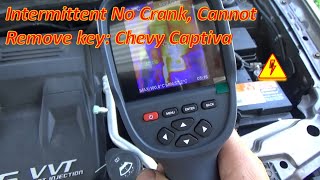
- YouTube channel 'Real World Diagnostics' (2014 Chevrolet Captiva) — No-crank, no-start condition. The customer had already replaced the interior fuse box with no change.
❌ Tried (didn't work) Replacing the interior fuse box.
✅ What actually fixed it The underhood fuse box had failed and was not providing a proper ground to the starter relay. Replacing the underhood fuse box resolved the no-crank condition.
Helpful Videos

We Have This Part in Stock



The information in this article is provided for general reference and educational purposes only. Vehicle specifications, procedures, and part compatibility can vary by production date, trim level, and region. Always consult your vehicle's factory service manual and verify part numbers before purchasing or performing repairs. Safety-critical components such as airbags, seat belts, and braking systems should be installed by a qualified professional.
- Chevrolet CAPTIVA:
- 🎬 Helpful Videos
- 🛍️ Shop This Part
- What's Unique About the 2013-2017 Chevrolet CAPTIVA
- Diagnostic Flowchart
- Symptoms You May Notice
- Most Likely Causes
- Rare But Worth Checking
- Diagnosis Steps
- Parts You'll Likely Need
- Related Codes That Often Appear With This One
- Technical Service Bulletins (TSBs) & Recalls
- Platform-Specific Known Issues
- Mechanic-Grade Diagnostic Values
- Scan Tool Commands That Help
- Wiring & Ground Locations
- Real Owner Repair Stories
- 🎟️ Get 5% Off