

B3060 on 2011-2015 Chevrolet Caprice: Security System Fault, No-Start Causes and Fixes
On a 2011-2015 Chevrolet Caprice, code B3060 indicates the anti-theft system doesn't recognize the key, causing a no-start and security light. The most common causes are a faulty key or radio frequency interference (RFI) from other devices. Trying a spare key and removing other fobs from the keychain are the first steps. If those fail, the ignition lock cylinder containing the reader coil is the next most likely culprit.
- B3060 means your Caprice's anti-theft system has locked the engine because it doesn't recognize the key.
- Before any repairs, remove ALL other keys, fobs, and aftermarket electronics (especially phone chargers) from the keychain and car interior to rule out Radio Frequency Interference (RFI), a known issue for this vehicle.
- If RFI is not the cause, try starting the car with a spare key to determine if your primary key has failed.
- Fixing this code almost always requires professional service for key or module programming; DIY repairs are very limited.
What's Unique About the 2011-2015 Chevrolet CAPRICE
The 2011-2015 Caprice PPV (Police Patrol Vehicle) is based on the Australian Holden Caprice (WM/WN series) and shares its 'Zeta' platform and security architecture with the 2008-2009 Pontiac G8 and the Chevrolet SS. A key issue, documented in GM Technical Service Bulletin PIC5650M, is the system's sensitivity to Radio Frequency Interference (RFI). This means that before suspecting a failed part, it's critical to check for aftermarket electronics like phone chargers, LED lights, or even other key fobs that can 'jam' the signal between the key and the car, causing this intermittent code.
Diagnostic Flowchart
Tap your situation to follow the diagnostic path that matches what you're seeing on this vehicle.
Symptoms You May Notice
- Engine will not crank or start.
- Engine starts and immediately stalls.
- Security light is illuminated or flashing on the dashboard.
- Message on Driver Information Center (DIC) like "Service Theft Deterrent System".
- Replacing the starter motor. A no-crank symptom might point to the starter, but the presence of a security light and code B3060 confirms the anti-theft system is disabling the starter relay electronically.
- Replacing the battery. While a very low battery can cause various electrical issues, it is not the direct cause of B3060, which is a specific key recognition error. However, a dead battery can sometimes cause the system to lose synchronization, requiring a relearn procedure.
- Replacing the fuel pump. The security system can disable fuel delivery, mimicking a fuel pump failure. The presence of B3060 should point the diagnosis away from the pump itself.
Most Likely Causes
- Radio Frequency Interference (RFI) 🔴 High Probability As highlighted in GM TSB PIC5650M, the security system is sensitive to external radio signals. Common sources include aftermarket phone chargers, LED interior lights, other vehicle key fobs, building access cards, or toll passes on the same keychain. The TSB specifically notes that even aftermarket LED dome lights can cause enough RFI to interfere with key fob button presses after the first one.
How to confirm: Remove all other keys, fobs, and electronic devices from the keychain and from inside the vehicle. Try starting the car with only the single Caprice key present. If the car starts, RFI was the issue.
Typical fix: Isolate and remove the source of the interference from the vehicle or keychain. Advise the owner to keep the Caprice key separate from other fobs.
Est. part cost: $0 - Faulty or Unprogrammed Ignition Key 🟡 Medium Probability The transponder chip inside the key head can fail over time due to being dropped or from normal wear and tear. Using a non-genuine or improperly cloned key will also set this code.
How to confirm: Try starting the vehicle with a known-good spare key. If the spare key works consistently, the original key is faulty.
Typical fix: Replace the faulty key. A new key must be cut and then programmed to the vehicle by a dealership or a qualified automotive locksmith using a scan tool.
Est. part cost: $40-$150 - Faulty Ignition Lock Cylinder / Reader Coil ⚪ Low Probability The exciter coil that reads the key's transponder is part of the ignition lock cylinder assembly. The wiring in this assembly can fatigue and break from the repeated twisting of the key, leading to an intermittent or total failure to read the key. This is a very common failure on other GM platforms from the same era.
How to confirm: If RFI is ruled out and multiple known-good keys fail to start the vehicle, the lock cylinder assembly is the next likely suspect. A technician can test the continuity and signal from the reader coil. Often, wiggling the key in the ignition can cause an intermittent connection, temporarily allowing a start.
Typical fix: Replace the ignition lock cylinder assembly (also called ignition switch housing) and perform a security relearn procedure.
Est. part cost: $80-$250
Rare But Worth Checking
- Failing Body Control Module (BCM): While less common, the BCM is the brain of the anti-theft system. If all other components (key, reader coil, wiring) test good, the BCM itself may have an internal fault. This is typically a last resort diagnosis and requires professional programming for replacement. A solid (non-flashing) security light that won't turn off after 10 minutes can indicate a hard BCM or wiring fault where a relearn procedure will not work.
- Poor BCM Ground Connection: The Body Control Module relies on a clean ground to function. On related GM platforms, the primary BCM ground is G103, located on the cowl above the brake booster. On the Caprice, forum members have also identified a critical ground point for the ECM/TCM/ABS on the front passenger side cylinder head (G107) that can become corroded and cause widespread communication errors, potentially mimicking a security fault. Checking and cleaning these grounds is a crucial, low-cost diagnostic step before replacing an expensive module.
Diagnosis Steps
- Check for other DTCs. Note any other security codes like B3055 or B3935.
- Remove all potential sources of Radio Frequency Interference (RFI) from the keychain and vehicle interior (e.g., other fobs, phone chargers, toll passes, aftermarket LED lights).
- Attempt to start the vehicle with a known-good spare key. If it starts, the primary key is the issue.
- If the spare key also fails, attempt the 30-minute security relearn procedure. Turn the key to the 'ON' position (do not start) and wait approximately 10 minutes for the security light to turn off. Turn the key off for 5-10 seconds. Repeat this sequence two more times for a total of three cycles. After the third cycle, attempt to start the engine.
- If the relearn procedure fails, inspect the wiring and connector at the ignition lock cylinder for any visible damage or looseness.
- Using a scan tool (like a GM GDS2), monitor the live data from the Theft Deterrent Module (TDM) or BCM to see if it recognizes a valid key state. The parameter 'TDM Valid Key' should read 'Yes'.
- If the key is not being read at all (B3055 may also be present), test the ignition lock cylinder's reader coil. The resistance should be between 18 and 24 Ohms on similar GM platforms.
- Inspect and clean critical ground connections. The BCM ground is typically located in the driver's side footwell or on the cowl. Also check engine block grounds, particularly G107 on the front passenger cylinder head, as corrosion here is known to cause module communication faults.
- If all other components are verified to be working, the Body Control Module (BCM) should be professionally diagnosed.
Parts You'll Likely Need
- Transponder Ignition Key
(OEM #ACDelco B111-PT (Key Blank))— The chip in the original key is the most common hardware failure point after RFI is ruled out.
Trusted brands: ACDelco, Strattec
OEM price range: $70-$150
Aftermarket price range: $40-$80 - Ignition Lock Cylinder
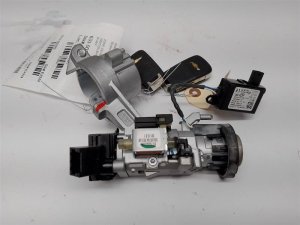
(OEM #ACDelco D1462G (GM 15795321))— This assembly contains the reader coil that communicates with the key. It is a common point of failure due to mechanical and electrical wear, as seen on many related GM platforms.
Trusted brands: ACDelco, Dorman, Standard Motor Products
OEM price range: $150-$250
Aftermarket price range: $80-$180
Related Codes That Often Appear With This One
- B3055 — This code means 'No Transponder Identification Code Received,' indicating the system got no signal at all. It often appears with B3060 during intermittent faults with the key, reader coil, or RFI, and is explicitly mentioned in TSB PIC5650M.
- B3935 — This code for 'Transponder Authentication Failed' can also be set with B3060, pointing to a failure in the security handshake process between the key and the vehicle. It is also listed in TSB PIC5650M.
Technical Service Bulletins (TSBs) & Recalls
- PIC5650M: Addresses intermittent no-crank, no-start, or start-stall with security light on and DTCs B3055, B3060, B3935. It strongly points to checking for Radio Frequency Interference (RFI) as a primary diagnostic step before parts replacement. It lists numerous sources of RFI including aftermarket LED lights, phone chargers, and other key fobs.
Platform-Specific Known Issues
- A GM Technical Service Bulletin (PIC5650M) directly addresses an intermittent no-crank, no-start, or start-stall condition with the security light on, which sets code B3060. The bulletin strongly advises checking for Radio Frequency Interference (RFI) from aftermarket devices before replacing any parts.
- Owners on forums like newcaprice.com frequently discuss no-start issues, though many are related to starter, battery, or ground problems rather than the security system specifically. However, the troubleshooting steps for a no-crank condition often overlap, starting with checking battery voltage and grounds before suspecting more complex modules.
Mechanic-Grade Diagnostic Values
- Ignition Lock Cylinder Transponder Reader Coil Resistance — expected: 18 to 24 Ohms. Failure: A reading outside this range, or an open circuit (OL), indicates a faulty coil. This value is based on similar contemporary GM platforms.
- BCM Low Reference (Ground) Circuit Resistance — expected: Less than 2 ohms. Failure: A reading of 2 ohms or greater points to a bad or corroded ground connection for the Body Control Module.
- Scan Tool Live Data: 'TDM Valid Key' Parameter — expected: Should read 'Yes' when a known good, programmed key is in the ignition and turned to ON.. Failure: If the parameter reads 'No' or 'Not Detected' with a key that should be programmed, it points to a problem with the key's transponder, the reader coil, or the BCM's ability to process the signal.
Scan Tool Commands That Help
- GM GDS2: Immobilizer Data / TDM Data — Use this function to view live data parameters related to the theft deterrent system, such as 'TDM Valid Key', 'Number of Learned Keys', and 'Key Status' to determine if the BCM is recognizing the key being used.
- GM GDS2: Module Replacement and Setup > BCM — This function is required after installing a new Body Control Module. It allows the technician to program the vehicle's VIN, configure RPO options, and perform the security relearn process to link the new BCM to the other modules in the vehicle.
- GM GDS2: Add/Replace Keys — This function is used to program new or additional keys to the vehicle's immobilizer system after a key has been replaced.
Wiring & Ground Locations
- Body Control Module (BCM) — Under the steering column, in the driver's side footwell. You may need to remove an HVAC duct to access it.. The BCM is the central computer for the Pass-Key III+ immobilizer system on this vehicle. All key data is stored here, and it makes the decision to enable or disable the engine start.
- G103 (BCM Ground) — On related GM platforms, this ground is located at the left rear of the engine compartment on the cowl, above the brake booster.. This is a primary ground point for the BCM, Instrument Panel Cluster (IPC), and Data Link Connector (DLC). A poor connection here can cause the BCM to malfunction and set false security codes.
- G107 (Engine/Module Ground) — On the front of the passenger's side cylinder head.. This is a critical grounding point for the ECM, TCM, and ABS module. On the Caprice PPV, corrosion at this point is known to cause CAN bus errors across multiple modules, which can lead to limp mode and symptoms that mimic a security system failure.
- Passenger Compartment Fuse Box — In the left-hand side kick panel in the driver's footwell.. Contains fuses relevant to the Body Control Module and other interior electronics that are part of the security system.
Real Owner Repair Stories
- newcaprice.com forum user (2014 Chevrolet Caprice PPV 6.0L with 114k miles and high idle hours (6100+)) — Vehicle would randomly enter limp mode, displaying CAN BUS error codes from every module.
❌ Tried (didn't work) Initial diagnosis pointed towards module failure.
✅ What actually fixed it The user found the ground terminal at the front passenger's side cylinder head (G107) was severely corroded. The factory open-ended ground terminal was replaced with a closed-end terminal, and the wires were repaired. This single fix resolved 90% of the voltage issues and stopped the car from entering limp mode.
OEM Part Supersession History
15795321→ACDelco D1462G— Standard part lifecycle replacement and branding update.
Heads up: While listed for other GM trucks like the Colorado/Canyon, this part is commonly referenced for Zeta platform vehicles as well. Always verify fitment with VIN before ordering.
Model Year Variations Within This Range
- 2011-2013 (WM Series): These earlier models are based on the Holden WM Caprice. They have a unique interior dashboard and console design compared to the later WN models.
- 2014-2015 (WN Series): The 2014 refresh introduced the WN Caprice, which gained the all-new interior, dashboard, and MyLink infotainment system from the Chevrolet SS (VF Commodore). The suspension was also updated with more aluminum components and a wider front knuckle, changing strut compatibility. While the core security system logic remained the same, the BCM and other interior modules are different from the WM series.
Helpful Videos

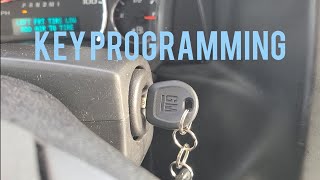
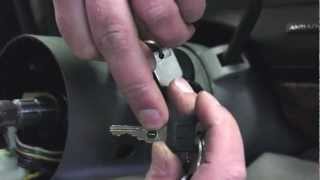
We Have This Part in Stock


The information in this article is provided for general reference and educational purposes only. Vehicle specifications, procedures, and part compatibility can vary by production date, trim level, and region. Always consult your vehicle's factory service manual and verify part numbers before purchasing or performing repairs. Safety-critical components such as airbags, seat belts, and braking systems should be installed by a qualified professional.
- Chevrolet CAPRICE:
- 🎬 Helpful Videos
- 🛍️ Shop This Part
- What's Unique About the 2011-2015 Chevrolet CAPRICE
- Diagnostic Flowchart
- Symptoms You May Notice
- Most Likely Causes
- Rare But Worth Checking
- Diagnosis Steps
- Parts You'll Likely Need
- Related Codes That Often Appear With This One
- Technical Service Bulletins (TSBs) & Recalls
- Platform-Specific Known Issues
- Mechanic-Grade Diagnostic Values
- Scan Tool Commands That Help
- Wiring & Ground Locations
- Real Owner Repair Stories
- OEM Part Supersession History
- Model Year Variations Within This Range
- 🎟️ Get 5% Off