

B3060 on 2007-2009 Cadillac XLR: Security System Fault Causes and Fixes
On a 2007-2009 Cadillac XLR, code B3060 means the car's security system has detected an ignition key that isn't programmed to the vehicle. This results in a no-start or start-and-stall condition. The most common fixes involve addressing issues with the key, the ignition lock cylinder's sensor, performing a security relearn procedure, or checking for radio frequency interference.
- B3060 means your Cadillac XLR doesn't recognize your key, triggering the anti-theft system and preventing the car from starting.
- Before spending any money, try your spare key and remove all other electronic fobs or cards from your keychain to rule out simple causes.
- A 30-minute 'Security Relearn Procedure' can sometimes fix the problem after a battery disconnect or random glitch, and can be performed without tools.
- If a simple fix doesn't work, the problem is likely the key itself or the sensor in the ignition lock cylinder. Repair will require professional programming.
What's Unique About the 2007-2009 Cadillac XLR
The 2007-2009 Cadillac XLR uses a GM Passkey III+ (PK3+) transponder-based immobilizer system. Unlike older Passlock systems that used a resistor in the key, this system relies on a radio-frequency (RF) chip in the key itself. A common issue across GM platforms from this era, including the XLR and its platform-mate C6 Corvette, is interference from other RF-emitting devices on the keychain, which can disrupt the signal between the key and the car, triggering this code. Additionally, the XLR, being a low-production, high-tech convertible, has complex electronics where modules are highly sensitive to voltage, and a weak battery can sometimes cause security system glitches that may be misidentified.
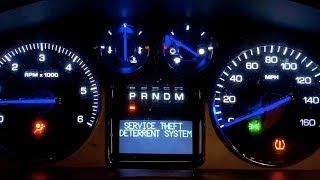
🎬 Watch: Understanding the Service Theft Deterrent message on GM vehicles.Diagnostic Flowchart
Tap your situation to follow the diagnostic path that matches what you're seeing on this vehicle.
Symptoms You May Notice
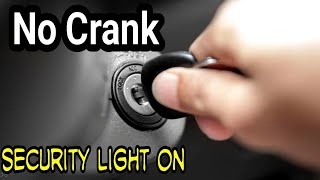
- Engine will not crank or start
- Engine starts and immediately stalls
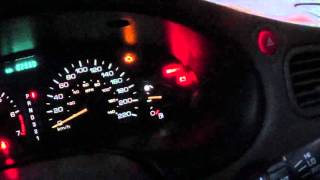
- Security warning light is illuminated or flashing on the dashboard
- "Service Theft Deterrent System" message on the driver information center (DIC)
- Replacing the starter motor. A bad starter typically results in a single click or no sound, whereas a B3060 fault usually allows the dash lights to turn on but actively disables the crank or fuel via the ECM.
- Replacing the battery without addressing the underlying security handshake. While a low battery can cause this issue, simply replacing it may not clear the fault. The security system may remain in a locked state, requiring a relearn procedure to recognize the valid key again.
Most Likely Causes
- Using an Unprogrammed or Faulty Key 🔴 High Probability Keys can be damaged internally, batteries in key fobs can die (though the transponder chip itself is passive), or a newly cut key may not have been properly programmed. The transponder chip can fail even if the remote functions work.
How to confirm: Try starting the vehicle with a different, known-good key. If the vehicle starts with the other key, the first key is the problem. A scan tool can also be used to see if a valid key is being read.
Typical fix: The faulty key needs to be replaced and programmed to the vehicle using a diagnostic scan tool or by a locksmith/dealership. A new key for a 2008-2009 XLR can be part number 25926473.
Est. part cost: $70-$250 for a new key and programming. - Radio Frequency (RF) Interference 🟡 Medium Probability As noted in GM Technical Service Bulletin #PIC5650M and its successors, other RFID devices on the keychain can interfere with the 125 kHz signal. This includes other car keys, office key cards, gas station payment fobs, and even some aftermarket LED lighting or phone chargers inside the car.
How to confirm: Remove all other keys and electronic devices from the keychain. Try starting the car with only the single vehicle key. If it starts, interference was the cause. This is the first step recommended by GM in their service bulletins for this issue.
Typical fix: Keep other RFID-enabled cards and devices separate from the ignition key when starting the vehicle. Advise the customer to not keep multiple transponder keys on the same ring.
Est. part cost: $0 - Faulty Immobilizer Exciter Antenna / Ignition Lock Cylinder Sensor 🟡 Medium Probability The antenna ring (exciter coil) around the ignition lock cylinder energizes and reads the key's transponder. This component or its wiring can fail over time, preventing the key from being read correctly, even if the key is good.
How to confirm: This requires advanced diagnostics with a scan tool to monitor the data from the Theft Deterrent Module (TDM) to see if it's receiving any signal from the key. If multiple known-good keys fail to be read, the antenna is a prime suspect.
Typical fix: Replacement of the ignition lock cylinder or the separate antenna ring. A security relearn procedure is required after replacement. An example part is GM #25888495 (Ignition Lock Key Transmitter Antenna).
Est. part cost: $50-$300 - Failing Theft Deterrent Module (TDM) or Body Control Module (BCM) ⚪ Low Probability While less common, the module responsible for storing key data and controlling the immobilizer system can fail internally. On the XLR, this function is integrated into the Body Control Module (BCM). These modules are complex and sensitive to voltage spikes or water intrusion.
How to confirm: This is a diagnosis of exclusion. If the keys and antenna are confirmed to be good but the system still fails, the module itself is suspect. A scan tool will likely show communication errors with the TDM/BCM or fail to communicate with it at all.
Typical fix: The module must be replaced and programmed by a dealer or a qualified shop with GM programming capabilities. Services exist to clone the data from the old BCM to a new or used one. A BCM for the XLR can carry part number 10348799 or 20934684 depending on the year.
Est. part cost: $300-$800
Rare But Worth Checking
- Weak Vehicle Battery:
Diagnosis Steps
- Scan for Codes: Use an OBD-II scanner capable of reading Body (B) codes to confirm B3060 and any other related security codes like B3055 or B3935.
- Check the Key: Try a spare key if available. If it works, the primary key is faulty. This is the simplest and most effective first step.
- Isolate the Key (Rule out RF Interference): Per GM service information, remove all other keys, fobs, and cards from the keychain. Try starting the vehicle with only the single XLR key to rule out RF interference from devices operating in the 120-135 kHz range.
- Check Vehicle Battery: Before proceeding, ensure the vehicle battery is fully charged and load-tested. Low voltage is a known cause of security system issues on this platform.
- Attempt Security Relearn Procedure: A 30-minute manual relearn procedure can resolve software glitches. Turn the key to 'ON' (without starting) for 10-11 minutes until the security light goes from flashing to off or solid. Turn the key off for 10 seconds. Repeat this process two more times for a total of three cycles (approx. 30-35 minutes). After the third cycle, turn the key off, then try to start the engine.
- Inspect Ignition Lock Cylinder and Wiring: Visually inspect the area around the ignition for damage. A professional will need to test the continuity and signal from the immobilizer antenna ring.
- Professional Diagnosis: If the above steps fail, the vehicle needs to be diagnosed by a professional with a GM-specific scan tool (e.g., Tech 2). This tool can monitor live data from the TDM/BCM, determine if the key signal is being received, and perform forced key programming or module setup.
Parts You'll Likely Need
- Transponder Ignition Key Fob
(OEM #25926473)— The chip inside the key can fail, or a new key may be needed if the original is lost or damaged. This part number is for the 4-button remote for 2008-2009 models.
Trusted brands: ACDelco, GM Genuine
OEM price range: $70-$150
Aftermarket price range: $30-$80 - Ignition Lock Key Transmitter Antenna
(OEM #25888495)— The sensor (antenna) that reads the key is a common failure point for no-start security issues. It's the coil that energizes the transponder chip.
Trusted brands: ACDelco, GM Genuine
OEM price range: $15-$40
Aftermarket price range: $20-$50
Related Codes That Often Appear With This One
- B3055 — Often set alongside B3060, B3055 indicates 'No Transponder Modulation or No Transponder Signal Received'. This points directly to a problem with the key or the antenna reading the key, reinforcing the diagnosis.
- B3935 — This code relates to 'Transponder Authentication Error' and is part of the same family of security codes, indicating the challenge-response process between the key and module failed. It is frequently mentioned in the same TSBs as B3060.
Technical Service Bulletins (TSBs) & Recalls
- PIC5650M: Addresses intermittent no crank/no start/stall with security light on, pointing to DTCs B3055, B3060, and B3935, and suggests investigating RF interference as a primary and crucial diagnostic step before replacing parts.
- PIE0232: An engineering information bulletin where GM was actively seeking information on low-mileage 2013 trucks with codes B3055, B3060, or B3935 to determine the root cause, highlighting how persistent this issue is across GM platforms.
Platform-Specific Known Issues
- As cited in TSB #PIC5650M, these vehicles can experience intermittent no-crank or start-stall conditions with the security light on, with B3060 being one of the potential codes stored. The bulletin strongly suggests checking for RF interference from devices on the customer's keychain as a primary diagnostic step.
- The Cadillac XLR shares its Y-body platform and many electronic modules with the C6 Chevrolet Corvette. Corvette forums are a rich source of information for similar issues, often manifesting as a "Service Column Lock" message which can also be tied to the immobilizer system and low battery voltage.
- Owners on Cadillac XLR Forums frequently discuss the car's sensitivity to battery voltage, which can cause a cascade of electronic issues, including security system faults. Using a battery tender is a commonly recommended practice for these vehicles.
Mechanic-Grade Diagnostic Values
- BCM Power and Ground Check — expected: With the ignition ON, greater than 9V should be present between the BCM B+ circuit pin and a known good ground. Resistance between the BCM low reference circuit pin and ground should be less than 2 Ω.. Failure: Voltage below 9V or resistance above 2 Ω indicates a problem with the power or ground supply to the BCM, which can cause various faults including B3060.
Hidden / Shadow Codes Worth Checking
- B3060 00: The '00' is a symptom byte indicating 'Unprogrammed Transponder Identification Code Received'. This confirms the TDM/BCM read a transponder signal but did not recognize its value as a learned key. (see via A professional scan tool like a GM Tech 2 or equivalent that can read GM-specific body codes and their associated symptom bytes.)
Scan Tool Commands That Help
- GM Tech 2 / GDS2: TDM Data Display: 'Valid Key' parameter — Use this to confirm if the Theft Deterrent Module (TDM) is successfully reading and validating the key currently in the ignition. The parameter should change to 'Yes' when a known good, programmed key is used.
- GM Tech 2 / GDS2: Service Programming System (SPS): 'Theft Module Re-Learn' or 'VTD Re-Learn' — This function is used to force the vehicle into a learning mode after replacing a key, the BCM, or the ECM. It is a guided procedure that takes approximately 10-12 minutes and is required to synchronize the security components.
Wiring & Ground Locations
- BCM (Body Control Module) — Located in the passenger footwell, integrated into the fuse/relay block, under the carpet.. The BCM contains the Theft Deterrent Module (TDM) logic for the Passkey III+ system. All key validation signals are processed here. Poor connections or corrosion at the BCM can cause this code.
- BCM Connectors — On the BCM in the passenger footwell. Key connectors are C1 (72-Pin Gray), C2 (72-Pin Gray), C3 (41-Pin Red), and C4 (68-Pin Gray).. Technicians may need to test for power, ground, and data signals at specific pins on these connectors to diagnose a faulty BCM or wiring issue. For example, the horn signal is on C2 Pin 14, and a constant 12V is on C3 Pin D1.
- G103 — Located on the cowl at the left rear of the engine compartment, above the brake booster.. This is a primary ground point for the Body Control Module (BCM), Instrument Panel Cluster (IPC), and the Data Link Connector (DLC). A loose or corroded G103 can cause a wide range of communication issues, including theft system faults.
- G302 — Located under the center console at the rear, below the rear fuse block.. This ground serves the radio amplifier. While not directly tied to the theft system, electrical noise from a poor ground on a nearby high-power component can sometimes interfere with sensitive module communications.
Real Owner Repair Stories
- Reatta Owners Journal Forum (1991 Buick Reatta (Uses older GM Passkey system, but illustrates a relevant failure mode)) — Intermittent no crank, no start. Security light would remain on. Would start fine when cold, but after driving and shutting off, it would not restart for 20-30 minutes.
❌ Tried (didn't work) Replacing the starter/theft deterrent relay did not fix the issue.
✅ What actually fixed it The mechanic performed a 'pass-key by-pass' by replacing the ignition key tumbler (lock cylinder) and the associated column wiring that connects to the security system. This indicates a physical failure of the wiring or contacts within the steering column, a common issue that is often overlooked in favor of module programming.
OEM Part Supersession History
10348799, 15286124→25879086, 20934684— Standard part evolution, potential internal component updates by GM.
Heads up: BCM for 2008-2009 models is typically 20934684. While some vendors list earlier numbers as compatible, it is critical to match the replacement BCM to the vehicle's model year and options. Cloning services require the part numbers to match exactly.N/A→Pre-Programmed BCMs— Aftermarket solution to simplify repairs.
Heads up: Several companies offer new or remanufactured BCMs that are pre-programmed to the vehicle's VIN. This allows for installation without needing a dealer's SPS access. However, a 30-minute security key relearn procedure is still required after physical installation.
Model Year Variations Within This Range
- 2007 vs 2008-2009: The Body Control Module (BCM) part number changed. Earlier models (up to 2007) may use part numbers like 10348799, while 2008-2009 models use 20934684. While functionality is similar, using the wrong hardware version can lead to programming failures or inoperable features.
Helpful Videos


We Have This Part in Stock


The information in this article is provided for general reference and educational purposes only. Vehicle specifications, procedures, and part compatibility can vary by production date, trim level, and region. Always consult your vehicle's factory service manual and verify part numbers before purchasing or performing repairs. Safety-critical components such as airbags, seat belts, and braking systems should be installed by a qualified professional.
- Cadillac XLR:
- 🎬 Helpful Videos
- 🛍️ Shop This Part
- What's Unique About the 2007-2009 Cadillac XLR
- Diagnostic Flowchart
- Symptoms You May Notice
- Most Likely Causes
- Rare But Worth Checking
- Diagnosis Steps
- Parts You'll Likely Need
- Related Codes That Often Appear With This One
- Technical Service Bulletins (TSBs) & Recalls
- Platform-Specific Known Issues
- Mechanic-Grade Diagnostic Values
- Hidden / Shadow Codes Worth Checking
- Scan Tool Commands That Help
- Wiring & Ground Locations
- Real Owner Repair Stories
- OEM Part Supersession History
- Model Year Variations Within This Range
- 🎟️ Get 5% Off