

B3060 on 2007-2013 Cadillac Escalade EXT: Security System Faults and Fixes
Code B3060 on a 2007-2013 Escalade EXT means the anti-theft system doesn't recognize the key. This causes a no-start and illuminates the security light. The most common fix is addressing a faulty ignition key or performing a key relearn procedure, but it can also be a bad ignition lock cylinder or wiring.
- B3060 means your Escalade's anti-theft system has locked you out because it doesn't recognize the key.
- The most common symptom is a complete no-start or start-and-stall, with the security light on.
- Before replacing parts, try a spare key and remove any other RFID fobs from your keychain.
- Attempt the 30-minute DIY key relearn procedure, which can often solve the problem for free.
- If the relearn fails, the most likely parts to have failed are the ignition key itself or the ignition lock cylinder that reads it.
What's Unique About the 2007-2013 Cadillac ESCALADE EXT
The 2007-2013 Escalade EXT, built on the GMT900 platform, uses the GM Passkey III+ immobilizer system. This system is known for being sensitive to interference and key-related issues. Unlike older systems, a simple mechanical key copy won't work; the electronic transponder chip inside the key must be correctly programmed to the vehicle's Theft Deterrent Module. Intermittent failures are common, as noted in GM's own technical service bulletins, sometimes caused by other RFID devices on the keychain (like building access cards or other vehicle keys) interfering with the key's signal.
Diagnostic Flowchart
Tap your situation to follow the diagnostic path that matches what you're seeing on this vehicle.
Symptoms You May Notice
- Engine will not crank or start.
- Engine starts briefly then immediately shuts off.
- Security light is illuminated or flashing on the dashboard.
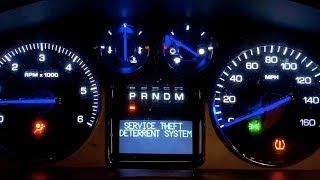
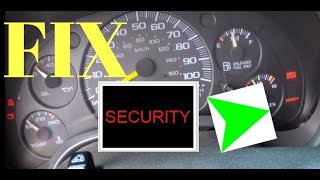
- "Service Theft Deterrent System" message on the driver information center. 🎬 Watch: Troubleshooting the Service Theft Deterrent System message
- A single click from the starter with no crank.
- Bad Starter
- Dead Battery
- Faulty Fuel Pump
- Bad ECM/PCM
Most Likely Causes
- Using an Unprogrammed or Incorrect Key 🔴 High Probability This is the direct trigger for the code by design. It's common after getting a new key cut that hasn't been programmed, or using a non-transponder 'valet' key.
How to confirm: Try using a different, known-good key. If the vehicle starts with another key, the first key is the problem. If you only have one key, a locksmith or dealer can test its transponder.
Typical fix: The key must be programmed to the vehicle using a specific 30-minute relearn procedure or a diagnostic scan tool.
Est. part cost: $0-$150 - Damaged or Faulty Ignition Key Transponder 🟡 Medium Probability Key fobs can be damaged by being dropped, getting wet, or from simple age, causing the internal Philips ID 46 transponder chip to fail.
How to confirm: Test with a spare key. If the spare key works perfectly, the original key is faulty. A locksmith can also use a tool to check if the key is emitting a signal.
Typical fix: Replace the faulty key and program the new one to the vehicle. The OEM key is a B111-PT 'Circle Plus' key.
Est. part cost: $75-$250 - Faulty Ignition Lock Cylinder / Transponder Reader Coil 🟡 Medium Probability The reader coil (exciter coil) that energizes the key's transponder is part of the ignition lock cylinder assembly. Wear and tear or internal failure can cause it to stop reading the key correctly. Owners on forums for platform-mates have fixed the issue by cleaning the lock cylinder contacts.
How to confirm: This is harder to confirm without tools. A technician would check for signals from the coil with an oscilloscope or test the circuit for proper resistance and voltage. Wiggling the key in the ignition may temporarily restore connection, pointing to a worn component.
Typical fix: Replace the ignition lock cylinder and perform the key relearn procedure. Aftermarket options from Dorman and Standard Motor Products are available. 🎬 See this step-by-step ignition lock cylinder replacement walkthrough
Est. part cost: $100-$300 - Radio Frequency Interference (RFI) ⚪ Low Probability As mentioned in GM TSB PIC5650M and its successors, other RFID devices on the keychain (like building access cards, gas station payment fobs, or even keys from other vehicles) can interfere with the signal between the key and the vehicle. Aftermarket electronics like LED lights and cell phone chargers can also be a source of RFI.
How to confirm: Remove all other keys and electronic fobs from the keychain. Try starting the vehicle with only the Escalade key. Turn off any aftermarket chargers or lights.
Typical fix: Keep other RFID-enabled cards and devices separate from the vehicle key when starting the engine.
Est. part cost: $0
Rare But Worth Checking
- Wiring Issue Between TDM and Ignition Switch: The wires leading from the ignition lock cylinder to the Theft Deterrent Module can become loose, chafed, or damaged, causing an intermittent loss of signal. This can be common in vehicles where under-dash work has been performed. A common failure point is chafed wiring in the steering column.
- Failing Theft Deterrent Module (TDM) or Body Control Module (BCM): While less common, the module itself can fail. This is usually the last part to suspect after all keys, wiring, and the ignition cylinder have been ruled out. On this platform, the BCM integrates theft deterrent functions and is located under the driver's side of the dash, above the parking brake pedal area.
- Poor Main Ground or Battery Cable Connection: On GMT900 trucks, corroded or loose main battery ground cables are a known issue that can cause a wide range of bizarre electrical problems, including communication errors between modules that could potentially trigger security faults. Key grounds to inspect include those on the radiator core support (G100/G101) and the engine block (G102/G103/G104).
Diagnosis Steps
- Verify the code with an OBD-II scanner capable of reading Body (B) codes.
- Try starting the vehicle with a known-good spare key. If it starts, the primary key is the issue.
- Remove all other keys, fobs, and RFID cards from the keychain and try starting again to rule out interference.
- Attempt the 30-minute key relearn procedure. Ensure the battery is fully charged or connected to a charger. Turn the key to the 'ON' position (do not start) and wait for the security light to turn off (approx. 10-11 minutes). Turn the key 'OFF' for 30 seconds. Repeat this process two more times for a total of three cycles. On the fourth attempt, the vehicle should start. 🎬 Watch: How to perform the 30-minute security relearn procedure
- If the relearn fails, inspect the wiring and connector at the ignition lock cylinder for any visible damage or looseness. Chafed wires in the steering column are a known issue.
- Check main battery and chassis ground connections for corrosion or looseness, as poor grounds are a known issue on this platform. Key grounds are on the engine block, radiator support, and frame rails.
- If wiring is intact, the next most likely cause is a faulty ignition lock cylinder/reader coil. A forum user reported success by simply cleaning the contacts on the lock cylinder.
- If all else fails, the problem may lie with the Theft Deterrent Module (TDM) or Body Control Module (BCM), which requires professional diagnosis with advanced scan tools.
Parts You'll Likely Need
- Ignition Key with Transponder
(OEM #23372322 (supersedes 15824471, 89024363, and others))— The transponder chip in the key is often the point of failure, or a new key may simply need to be programmed. This is a B111-PT 'Circle Plus' key with a Philips ID 46 chip.
Trusted brands: ACDelco, GM Genuine, Strattec
OEM price range: $40-$100
Aftermarket price range: $15-$50 - Ignition Lock Cylinder with Passkey Sensor — The sensor coil that reads the key's transponder is integrated with the lock cylinder and can fail, preventing the key from being recognized. Replacement often requires coding the new cylinder to the existing keys.
Trusted brands: ACDelco, Dorman (e.g., 924-716), Standard Motor Products (e.g., US615)
OEM price range: $150-$250
Aftermarket price range: $80-$150
Related Codes That Often Appear With This One
- B3055 — This code indicates a problem with the key transponder itself (No Transponder Modulation or No Transponder). It often appears with B3060 as part of the same anti-theft system fault.
- B3935 — Transponder Authentication Failed. This is another related code indicating the TDM could not verify the key's authenticity, often logged alongside B3060.
Technical Service Bulletins (TSBs) & Recalls
- PIC5650M: Addresses intermittent no crank/no start/stall with security light on and DTCs B3055, B3060, B3935, etc., suggesting RFI as a possible cause.
- PIE0232: An engineering information request from GM specifically for low-mileage 2013 models (Silverado/Sierra, Tahoe/Yukon) to gather data on the root cause of B3055, B3060, and B3935.
- PIC5650K / PIC5650C: Later revisions of the original RFI bulletin, expanding the list
Platform-Specific Known Issues
- GM Technical Service Bulletin PIC5650M (and its later revisions like K) notes that intermittent no-start conditions with code B3060 can be caused by Radio Frequency Interference (RFI) from other devices on the owner's keychain, or even aftermarket electronics like LED lights and phone chargers inside the vehicle.
- Owners on forums for the GMT900 platform (Tahoe, Yukon, etc.) frequently report this issue. A common owner experience involves the security light flashing and the truck refusing to start, often solved by the 30-minute relearn procedure or by replacing the ignition switch/lock cylinder.
Hidden / Shadow Codes Worth Checking
- Symptom Byte: GM vehicles often append a 2-digit symptom byte to the main DTC (e.g., B3060 00). While a generic '00' indicates no subtype information, other values can point to specific failure modes like incorrect signal period or short circuits, visible on a Tech 2 or similar advanced scanner. (see via GM Tech 2, GDS2, or other professional-grade scan tool with manufacturer-specific data capabilities.)
Scan Tool Commands That Help
- GM Tech 2: TDM Data List > Transponder Key & Valid Key Parameters — When troubleshooting a new key that won't program or an existing key that stopped working. Insert the key and turn to RUN. The 'Transponder Key' parameter should switch to 'Present'. If it shows 'Not Present', the TDM is not seeing the key at all (possible bad key, RFI, or bad reader coil). If it shows 'Present' but the 'Valid Key' parameter shows 'No', the TDM sees the key but does not recognize its code as authorized.
Wiring & Ground Locations
- BCM (Body Control Module) — Under the driver's side dashboard, located above the parking brake pedal area.. The BCM on the GMT900 platform integrates the Theft Deterrent Module (TDM) functions. All communication from the ignition cylinder's transponder reader flows to the BCM. A poor connection or faulty BCM can be the root cause.
- G100 / G101 — Located on the lower left (G100) and lower right (G101) of the radiator core support.. These are primary chassis grounds. Corrosion here can cause widespread, intermittent electrical issues, including module communication problems that can mimic a security fault.
- G102 / G103 / G104 — These are key engine block grounds. G102 is on the left side of the block below the exhaust manifold. G103 is on the front of the passenger side cylinder head. G104 is on the rear of the left cylinder head.. The PCM and other critical engine sensors ground to the engine block. A poor connection at these points can cause voltage discrepancies between modules, leading to communication errors and various DTCs, including security codes.
- G305 — Under the vehicle to the rear of the left B-pillar, at the third body mount on the frame.. This ground is for components in the rear of the vehicle. A real-world repair story on a related platform vehicle found that a bad ground at G305 caused a lowered 5-volt reference voltage and intermittent no-start conditions.
Real Owner Repair Stories
- GMTNation Forum User (GM GMT-360 Platform Vehicle (similar electrical architecture)) — No power to fuel pump, check engine light, lowered 5-volt reference voltage, no-start condition.
❌ Tried (didn't work) Initially cleaned a different ground (G304) believing it was the correct one.
✅ What actually fixed it The final fix involved correcting two bad grounds: one at G107 on the engine and, critically, the ground at G305 on the left frame rail which was causing the reference voltage issue. A bad relay was also found and replaced. - Chevy Express Van Forum User (2008 Chevy Express Van (uses similar Passkey III+ system)) — Vehicle broken into, ignition column cover and anti-theft module damaged, wires ripped from the connector, resulting in a no-start.
❌ Tried (didn't work) Simply replacing the module was not enough as the wiring was destroyed.
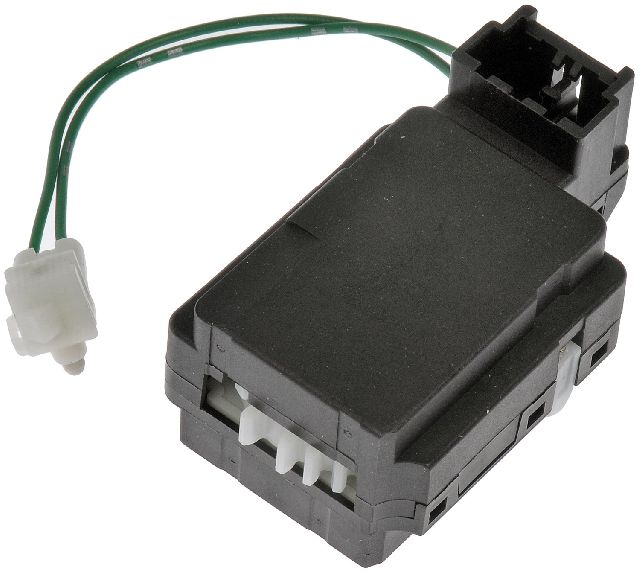
✅ What actually fixed it The owner acquired a new connector pigtail and, using a wiring diagram, correctly re-pinned the four wires (Green, Black, Brown, Red) to the new 5-pin connector for the Theft Deterrent Module. After installing the new module and repaired connector, performing the standard GM VTD relearn procedure allowed the vehicle to start and run.
OEM Part Supersession History
15824471→89024363, then 23372322— Standard part number updates and revisions by GM over time.
Model Year Variations Within This Range
- 2007-2013: While the Passkey III+ system was used throughout this generation, there were no major functional changes affecting the diagnosis of B3060. However, the BCM, which contains the TDM logic, may have had internal hardware or software revisions. Any replacement BCM must be programmed for the specific vehicle using a scan tool with SPS (Service Programming System) access.
Helpful Videos
Used OEM Parts in Stock


New Aftermarket Parts Available


The information in this article is provided for general reference and educational purposes only. Vehicle specifications, procedures, and part compatibility can vary by production date, trim level, and region. Always consult your vehicle's factory service manual and verify part numbers before purchasing or performing repairs. Safety-critical components such as airbags, seat belts, and braking systems should be installed by a qualified professional.
- Cadillac ESCALADE EXT:
- 🎬 Helpful Videos
- 🛍️ Shop This Part
- What's Unique About the 2007-2013 Cadillac ESCALADE EXT
- Diagnostic Flowchart
- Symptoms You May Notice
- Most Likely Causes
- Rare But Worth Checking
- Diagnosis Steps
- Parts You'll Likely Need
- Related Codes That Often Appear With This One
- Technical Service Bulletins (TSBs) & Recalls
- Platform-Specific Known Issues
- Hidden / Shadow Codes Worth Checking
- Scan Tool Commands That Help
- Wiring & Ground Locations
- Real Owner Repair Stories
- OEM Part Supersession History
- Model Year Variations Within This Range
- 🎟️ Get 5% Off