

B3060 on 2015-2022 Cadillac Escalade: Security Fault, No-Start Causes and Fixes
B3060 on a 2015-2022 Escalade means the anti-theft system doesn't recognize your key fob, causing a no-start. The most common cause is radio frequency interference (RFI) from other items on your keychain or aftermarket electronics inside the vehicle. Try starting with the fob alone before replacing parts. If the fob battery is weak, placing it in the designated transmitter pocket may allow the vehicle to start.
- B3060 means your Escalade's anti-theft system has disabled the engine because it doesn't recognize the key fob.
- The most common cause is Radio Frequency Interference (RFI). Before anything else, remove all other keys, cards, and chargers, and try starting the car with the fob by itself.
- If RFI isn't the issue, try the spare key or replace the fob's battery (CR2032 for 2015-20, CR2450 for 2021-22).
- As a backup, you can usually start the car by placing the fob in the designated transmitter pocket inside the center console or cupholder.
- Do not replace the starter or vehicle battery for this code; the problem is with security system communication.
What's Unique About the 2015-2022 Cadillac ESCALADE
This generation of Escalade (fourth-gen K2XX and early fifth-gen T1XX) uses a sophisticated keyless access system that is highly sensitive. GM has issued multiple versions of Technical Service Bulletin (TSB) PIC5650, with the latest being PIC5650M, acknowledging that intermittent no-start conditions with code B3060 are frequently caused by Radio Frequency Interference (RFI). Everyday items like other vehicle fobs, building access cards, aftermarket phone chargers, and even aftermarket LED lights can disrupt the 315 MHz or 433 MHz signal between the key and the vehicle, making this a common and frustrating issue for owners.
Diagnostic Flowchart
Tap your situation to follow the diagnostic path that matches what you're seeing on this vehicle.
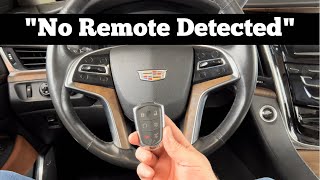
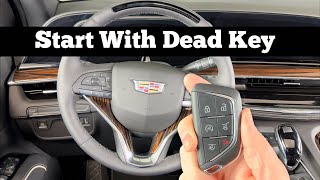
Generation note: This range covers the end of the fourth generation (2015-2020, K2XX platform) and the start of the fifth generation (2021-2022, T1XX platform). While the B3060 code's meaning is the same, the key fob battery type and the location of the transmitter pocket for emergency starting are different. For 2015-2020 models, the battery is a CR2032 and the pocket is a vertical slot in the center console storage area. 🎬 Watch: How to start a 2015-2020 Escalade with a dead fob. For 2021-2022 models, the battery is a CR2450 and the pocket is the front cupholder. 🎬 See how to start 2021-2022 models when no key is detected. The underlying platforms and some electronics are different, but both generations are cited as being susceptible to RFI issues under TSB PIC5650M.
Symptoms You May Notice
- Engine will not crank or start
- Engine starts and immediately stalls
- Security indicator light is on or flashing on the dashboard
- "No Remote Detected" or "No Fob Detected" message on the driver information center (DIC)
- Keyless entry functions (door locks) may not work
- Poor or no RKE (Remote Keyless Entry) range
- Replacing the starter motor. A no-crank condition is a symptom of the security system disabling the starter, not a failure of the starter itself.
- Replacing the main vehicle battery. While a very low battery can cause various electrical problems, code B3060 specifically points to a key recognition issue. Always check for the security light. However, a battery replacement can sometimes de-synchronize the keys, requiring a relearn procedure.
Most Likely Causes
- Radio Frequency Interference (RFI) 🔴 High Probability As noted in TSB PIC5650M, the vehicle's security system is sensitive to external radio signals. Common sources include other key fobs, building access cards, toll passes, aftermarket electronics like cheap USB phone chargers, dash cams, or aftermarket LED lights. The TSB specifically warns that even aftermarket LED dome lights can cause interference when they turn on, preventing subsequent fob button presses from being recognized.
How to confirm: Remove all other keys, cards, and electronic devices from the keychain. Unplug any aftermarket chargers or accessories inside the vehicle. Attempt to start the engine with only the Escalade key fob present. If the problem is intermittent, ask the owner what devices they normally have in the car that might not be present during service.
Typical fix: Isolate the key fob from other electronic devices. If this resolves the issue, no parts are needed. Advise the owner to keep other fobs and RFID cards separate and to remove low-quality aftermarket electronics.
Est. part cost: $0 - Weak or Dead Key Fob Battery 🟡 Medium Probability The key fob requires sufficient battery power to transmit its code to the vehicle. A weak battery can result in a failed, incomplete, or out-of-range signal, triggering a B3060.
How to confirm: Try the spare key fob. If it works, the battery in the primary fob is the likely culprit. You can also try starting the vehicle by placing the weak fob in the designated transmitter pocket (center console for 2015-2020, cupholder for 2021-2022), which allows the car to read the fob's passive transponder even with a low battery.
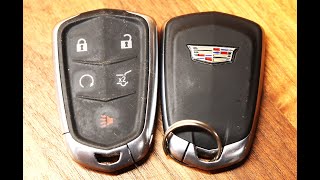
Typical fix: Replace the battery in the key fob. The 2015-2020 models use a CR2032 battery, 🎬 Follow this quick guide to replace your key fob battery. while 2021-2022 models use a CR2450.
Est. part cost: $5-$15 - Faulty Key Fob ⚪ Low Probability The internal transponder chip (e.g., Philips ID 46) or circuitry in the key fob can fail from being dropped, age, or water damage, preventing it from sending the correct code.
How to confirm: If a new battery doesn't fix the issue and the spare key works perfectly, the original key fob is likely defective. A locksmith or dealer can also test the fob's signal output.
Typical fix: Replace the key fob and have it professionally programmed to the vehicle by a dealer or automotive locksmith with the proper tools.
Est. part cost: $150-$400
Rare But Worth Checking
- Failing Body Control Module (BCM): While rare, the BCM is the brain of the security system. If multiple known-good keys fail to work and RFI has been ruled out, the BCM itself may be the problem. This is an expensive last resort and requires professional diagnosis and programming. GM has warned that the BCM can be damaged if its ground path is removed while battery power is connected.
- Damaged Wiring or Antenna: Wiring between the keyless entry antennas (such as the Remote Control Door Lock Receiver or RCDLR) and the BCM can become damaged, loose, or pinched, causing intermittent signal loss. On the related K2XX platform, TSB PIT5288 describes a known issue where a dash harness can be pinched by a mounting bracket, causing various electrical faults, including key detection problems.
Diagnosis Steps
- Verify the complaint: Confirm the no-start condition and check for an illuminated security light and/or a 'No Remote Detected' message on the DIC.
- Rule out RFI: This is the most critical first step. Remove ALL other keys, fobs, and access cards from the keychain. Unplug any aftermarket phone chargers, dash cams, or LED lights. Attempt to start the vehicle with only the Escalade fob present.
- Try the spare key: Attempt to start the vehicle with a known-good spare key. If it works, the issue is with the primary key fob.
- Check the fob battery: If the spare key works, replace the battery in the non-working fob (CR2032 for 2015-2020, CR2450 for 2021-2022).
- Use the transmitter pocket: If no keys work or the battery is suspect, place the fob in the designated transmitter pocket and try to start the engine. This is the center console slot for 2015-2020 models and the front cupholder for 2021-2022 models. A successful start here strongly suggests a weak fob battery or RFI.
- Scan for codes: Use a professional scan tool capable of reading BCM codes to confirm B3060 and check for other related codes like B3055, B3935, or TPMS codes.
- Security Relearn Procedure (Limited Applicability): The traditional 30-minute key relearn procedure (cycling the key for 10 minutes three times) is primarily for older, keyed GM systems. For these push-to-start vehicles, a relearn is typically done with a scan tool during key programming. Disconnecting the vehicle battery for 15-30 minutes may reset modules and sometimes clear the fault, but it is not a guaranteed fix.
- Seek Professional Service: If the issue persists, professional diagnosis is needed to test the RCDLR antennas, check for pinched wiring harnesses, and diagnose the BCM before programming any new components.
Parts You'll Likely Need
- Key Fob Battery
(OEM #CR2032 (2015-2020), CR2450 (2021-2022))— This is the most common and cheapest part to fail, causing a weak or no signal from the key fob.
Trusted brands: Energizer, Duracell, Panasonic
OEM price range: $5-$15
Aftermarket price range: $5-$10 - Keyless Entry Remote Fob
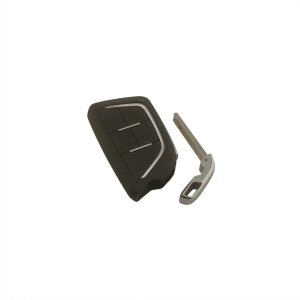
(OEM #13580812 / 13598511 (FCC ID: HYQ2AB, 315MHz) or 13598512 (FCC ID: HYQ2EB, 433MHz) for 2015-2020 models. Verify by VIN.)— If the internal transponder fails, the entire fob must be replaced and programmed to the vehicle.
Trusted brands: ACDelco, Strattec
OEM price range: $150-$400
Aftermarket price range: $80-$200
Related Codes That Often Appear With This One
- B3055 — This code means 'No Transponder Modulation,' indicating the system can't detect a key at all. It often appears with B3060 when the fob battery is dead, there is heavy interference, or an antenna is faulty.
- B3935 — This code means 'Transponder Authentication Failed,' indicating the security 'handshake' failed. It's part of the same diagnostic sequence and is often triggered by the same causes as B3060, as noted in TSB PIC5650M.
- C0750, C0755, C0760, C0765, C0775 — These codes are related to the Tire Pressure Monitoring System (TPMS), which also uses radio frequency signals. TSB PIC5650M notes that significant RFI can disrupt both the security and TPMS systems simultaneously, causing these codes to appear alongside B3060.
Technical Service Bulletins (TSBs) & Recalls
- PIC5650M: Addresses an intermittent no crank, no start, or start stall concern with the security light coming on. Technician may find Diagnostic Trouble Codes B3055, B3060, B3935, C0750, C0755, C0760, C0765, and/or C0775. It strongly points to RFI from aftermarket electronics and other fobs as the primary cause.
- PIT5288H: While not directly for B3060, this TSB is relevant for the K2XX platform (2015-2020) and describes how a pinched instrument panel wiring harness can cause a cluster of electrical issues, including key detection problems and a 'No Remote Detected' message.
Platform-Specific Known Issues
- As per TSB PIC5650M, this platform is highly susceptible to Radio Frequency Interference causing intermittent no-start conditions that can be difficult to duplicate in a shop environment.
- A thread on Tahoe Yukon Forum titled 'Cranks, turns over, runs, then dies' discusses similar symptoms, highlighting the shared nature of this problem across the GM truck/SUV platform.
Hidden / Shadow Codes Worth Checking
- B3060 02: Indicates 'Unprogrammed Transponder Identification Code Received' with a symptom byte of '02' which means 'Signal Erratic'. This points towards intermittent signal loss, often caused by Radio Frequency Interference (RFI) or a loose antenna connection. (see via GM GDS2 (Global Diagnostic System 2) or other professional scan tools capable of reading manufacturer-specific symptom bytes.)
- B3060 04: Indicates 'Unprogrammed Transponder Identification Code Received' with a symptom byte of '04' which means 'Open Circuit'. This would point a technician toward checking for a disconnected antenna or a break in the wiring between the RCDLR and its antenna. (see via GM GDS2 (Global Diagnostic System 2) or other professional scan tools.)
Scan Tool Commands That Help
- GDS2: Module Diagnostics > Body Control Module > Configuration/Reset Functions > Immobilizer Learn — This function is required after replacing the Body Control Module (BCM) or when adding new keys. It guides the technician through the process of programming keys to the vehicle's immobilizer system.
- GDS2: Module Diagnostics > Remote Control Door Lock Receiver > Configuration/Reset Functions > Program Transmitters — Used to program the remote functions (lock/unlock/remote start) of the key fobs to the Remote Control Door Lock Receiver (RCDLR). This is often done at the same time as the immobilizer learn function.
- GDS2: Transmission Service Fast Learn — While not directly for B3060, GM service bulletins for this platform sometimes require a 'Transmission Service Fast Learn' after certain module programming events to ensure all vehicle systems are synchronized. If the BCM was replaced, this may be a necessary final step.
Wiring & Ground Locations
- RCDLR (Remote Control Door Lock Receiver) — On K2XX SUVs (2015-2020), the RCDLR is typically located in the right rear quarter panel area, behind the trim. It is connected via a coax cable to an antenna amplifier and an antenna embedded in the right rear quarter glass.. This module receives the signal from the key fob. A loose coax cable at the module, amplifier, or glass antenna is a known cause for 'No Fob Detected' messages, TPMS alerts, and B3060, as detailed in GM bulletin 16-NA-061.
- G218 — A critical Body Control Module (BCM) ground located under the driver's side dash, near the A-pillar and left speaker.. GM Service Bulletin PIT5405C identifies a poor connection at G218 as a cause for a multitude of electrical issues, including no-start conditions and various communication DTCs. The bulletin notes that sound-deadening material can get trapped under the ground terminal, causing a poor connection.
- G103 — Located on the cowl in the left rear of the engine compartment, near the brake booster.. This is a shared ground point for the RCDLR and the BCM. A poor connection here can cause communication faults between the two modules, leading to key recognition failures.
- Keyless Entry Antennas (Multiple) — These vehicles have multiple low-frequency antennas for the passive entry system: typically one in the center console, one in the rear bumper, and one near the rear of the vehicle cargo area.. While the RCDLR handles the main long-range signal, these smaller antennas detect the fob's proximity for passive entry and push-to-start authorization. A failure or wiring issue with one of these can cause a 'No Remote Detected' message when trying to start the vehicle, even if the remote lock/unlock functions work.
Real Owner Repair Stories
- Tahoe/Yukon Forum User (2018 Tahoe (K2XX Platform)) — Backup camera image becomes shaky and grainy. No other symptoms like radio interference were noted.
❌ Tried (didn't work) Installing ferrite coils on the headlight wiring., Wrapping the headlight dust caps in tin foil to act as a shield.
✅ What actually fixed it The user identified that the issue was caused by inexpensive aftermarket H11 LED headlight bulbs. The problem was resolved by replacing the cheap LEDs with a higher-quality set or by using a relay harness to power the LEDs directly from the battery, isolating them from the factory wiring.
Model Year Variations Within This Range
- 2015-2020 (K2XX): The emergency start transmitter pocket is a vertical slot inside the center console storage bin. The key fob uses a CR2032 battery. The RCDLR is located in the right rear quarter panel area.
- 2021-2022 (T1XX): The emergency start transmitter pocket is located in the front cupholder. The key fob uses a larger CR2450 battery. The vehicle architecture is GM's newer Vehicle Intelligence Platform (VIP), which may involve different module communication protocols.
Helpful Videos

We Have This Part in Stock

The information in this article is provided for general reference and educational purposes only. Vehicle specifications, procedures, and part compatibility can vary by production date, trim level, and region. Always consult your vehicle's factory service manual and verify part numbers before purchasing or performing repairs. Safety-critical components such as airbags, seat belts, and braking systems should be installed by a qualified professional.
- Cadillac ESCALADE:
- 🎬 Helpful Videos
- 🛍️ Shop This Part
- What's Unique About the 2015-2022 Cadillac ESCALADE
- Diagnostic Flowchart
- Symptoms You May Notice
- Most Likely Causes
- Rare But Worth Checking
- Diagnosis Steps
- Parts You'll Likely Need
- Related Codes That Often Appear With This One
- Technical Service Bulletins (TSBs) & Recalls
- Platform-Specific Known Issues
- Hidden / Shadow Codes Worth Checking
- Scan Tool Commands That Help
- Wiring & Ground Locations
- Real Owner Repair Stories
- Model Year Variations Within This Range
- 🎟️ Get 5% Off