

B3060 on 2007-2014 Cadillac CTS: Unprogrammed Key and No-Start Fixes
Code B3060 on a 2007-2014 Cadillac CTS means the car's security system doesn't recognize the key. This causes a no-start or start-and-stall condition. The most common fixes are using a properly programmed key, removing sources of radio frequency interference from the keychain, or in some cases, replacing the ignition lock cylinder/reader.
- B3060 means your car's security system doesn't recognize your key, preventing the engine from starting.
- Before spending any money, try starting the car with the key completely isolated from any other fobs, cards, or keys on your keychain, and unplug any aftermarket chargers or lights.
- If you have a spare key, try it. If the spare works, your primary key is likely faulty.
- Fixing this problem almost always involves key programming, which requires special tools, so a visit to a dealer or automotive locksmith is the usual solution.
What's Unique About the 2007-2014 Cadillac CTS
The second-generation Cadillac CTS (2008-2014) relies on this electronic Pass-Key III+ system for security. While effective, it can be sensitive. A common issue noted in multiple GM Technical Service Bulletins (PIC5650 series) is that other radio-frequency (RFID) devices on the keychain can interfere with the signal between the car key and the ignition reader. Later versions of the TSB expanded this list to include not just office key cards or gas passes, but also aftermarket LED lights, USB phone chargers, and even decorative 'Bedazzle' trim rings placed around the ignition, all of which can cause this code to appear intermittently.
🎬 Watch: A quick explanation of the B3060 security code.Diagnostic Flowchart
Tap your situation to follow the diagnostic path that matches what you're seeing on this vehicle.
Generation note: The 2007-2014 range covers the end of the first generation (2007) and the entire second generation (2008-2014) CTS. Both generations use a transponder-based immobilizer system (Pass-Key III and III+), and the causes and diagnostic principles for B3060 are largely the same.
Symptoms You May Notice
- Engine will not crank or start
- Engine starts briefly then immediately shuts off
- Security indicator light is illuminated or flashing on the dashboard.
- "Service Theft System" message may appear on the driver information center.
- Replacing the battery
- Replacing the starter motor
- Replacing the Engine Control Module (ECM)
Most Likely Causes
- Using an Unprogrammed or Incorrect Key 🔴 High Probability This is the direct trigger for the code by design. It commonly happens with newly cut keys that haven't been programmed, or when using a key from another vehicle.
How to confirm: Try starting the vehicle with a different, known-good key. If the vehicle starts and runs with the other key, the first key is the problem.
Typical fix: The unprogrammed key must be learned to the vehicle. If all keys are lost, a '30-Minute Relearn Procedure' can be performed without a scan tool: 1. Insert the new key and turn to ON for 10.5 minutes. 2. Turn OFF, then back ON for another 10.5 minutes. 3. Repeat for a third 10.5-minute cycle. 4. Turn OFF, then ON again; the key should now be programmed. If adding a spare key, a locksmith or dealer must program it using a tool like a GM Tech2.
Est. part cost: $0 (if reprogramming) - $200 (for new key and programming) - Radio Frequency (RF) Interference 🟡 Medium Probability As noted in GM TSBs PIC5650B through PIC5650K, a wide array of RFID devices can interfere with the 125kHz immobilizer signal. This includes other car fobs, building access cards, toll passes, aftermarket LED lighting, and even some USB phone chargers.
How to confirm: Remove all other keys, fobs, and cards from the keychain. Unplug any aftermarket chargers or accessories. Attempt to start the vehicle with the Cadillac key alone. If it starts consistently, interference was the cause.
Typical fix: Keep other RFID-emitting devices separate from the vehicle key when starting the car. Remove problematic aftermarket electronics.
Est. part cost: $0 - Faulty Ignition Key Transponder 🟡 Medium Probability The electronic chip embedded in the key can fail from being dropped, water damage, or age.
How to confirm: If the vehicle fails to start with one key but starts and runs perfectly with a spare key (after ruling out RF interference), the first key's transponder is likely bad.
Typical fix: Replace the faulty key. A new key must be purchased and programmed by a dealership or automotive locksmith.
Est. part cost: $100-$400 (including key and programming) - Defective Ignition Lock Cylinder / Reader Coil ⚪ Low Probability The exciter coil that powers the key's transponder is part of the ignition lock cylinder assembly. This component can fail electrically, preventing it from reading any key, even known-good ones.
How to confirm: If the vehicle fails to start with all available keys and RF interference has been ruled out, the reader coil is a likely suspect. A technician can test the circuit for continuity and proper function. The replacement procedure involves removing the steering column covers and using a tool to depress a release pin to slide the cylinder out.
Typical fix: Replace the ignition lock cylinder and perform the key relearn procedure.
Est. part cost: $150-$300
Rare But Worth Checking
- Faulty Body Control Module (BCM): While uncommon, the BCM, which houses the Theft Deterrent Module (TDM) logic, can fail internally. This is usually diagnosed after all other possibilities have been eliminated. In some cases, water intrusion from a clogged sunroof drain can corrode the BCM or its connectors, causing this and other electrical faults. Replacement requires programming by a dealer or specialized shop.
- BCM/TCM Wiring or Connector Issues: GM TSB PIC4740E notes that on the CTS and related platforms, unseated pins or chafing in the main transmission harness connector can cause a loss of communication between modules (including the BCM and ECM), leading to a no-crank condition and multiple communication codes alongside security codes. A poor ground connection for the BCM at G200 or G202 can also cause intermittent security issues.
Diagnosis Steps
- Scan the Body Control Module (BCM) for codes. Confirm B3060 is present, along with any related codes like B3055 or B3935.
- Question the driver: Was a new key recently used? Are there other electronic fobs, cards, aftermarket LED lights, or USB chargers in the vehicle?
- Remove all other items from the keychain and unplug all non-factory accessories. Attempt to start the vehicle with only the single Cadillac key. If it starts, the issue is RF interference.
- If the no-start condition persists, try a second, known-good programmed key. If the vehicle starts, the first key is faulty.
- If the vehicle will not start with any known-good key, and you suspect the remaining key is unprogrammed, attempt the 30-Minute Key Relearn Procedure.
- If all key-related steps fail, inspect the wiring and connectors at the steering column (for the reader coil) and at the Body Control Module (BCM), checking for damage or corrosion. Pay close attention to BCM ground points G200 (behind left kick panel) and G202.
- If wiring is intact, the next step is to test the ignition lock cylinder's reader coil circuit.
- If the reader coil tests good, the final suspects are the BCM itself or a related communication network issue, which may require advanced diagnostics.
Parts You'll Likely Need
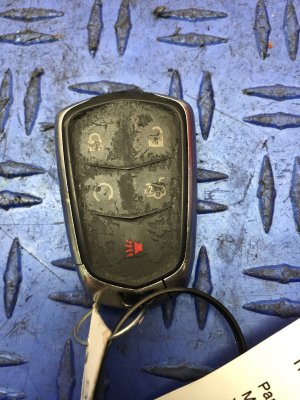
- Transponder Ignition Key
(OEM #GM 22733524 (or Strattec 5913441))— The chip inside the key can fail, or a new key may be unprogrammed, directly causing this code. All keys for the CTS require programming.
Trusted brands: ACDelco, Strattec
OEM price range: $70-$120
Aftermarket price range: $30-$60 - Ignition Lock Cylinder with Passkey Sensor
(OEM #ACDelco D1493F (GM 25832354 is for older models))— The reader coil that communicates with the key's transponder is housed in this assembly. If the coil fails, it cannot read any key, causing a persistent no-start. Note: Part number 25832354 is often listed but fits older GM cars, not the 2007-14 CTS.
Trusted brands: ACDelco, Standard Motor Products
OEM price range: $150-$250
Aftermarket price range: $80-$150
Related Codes That Often Appear With This One
- B3055 — Stands for 'No Transponder Modulation or No Transponder'. It often appears with B3060, indicating a problem with the key itself or the signal transmission, and is frequently cited together in GM service bulletins.
- B3935 — Stands for 'Transponder Authentication Failed'. This code indicates the TDM received a signal but could not validate it, which can happen alongside B3060 during an interference event or with a faulty key.
Technical Service Bulletins (TSBs) & Recalls
- PIC5650M: Addresses intermittent no-crank/no-start or start/stall with security light on and DTCs B3055, B3060, or B3935, often due to RF interference from other devices on the key ring.
- PIC5650B/C/K: Later revisions of the same bulletin, which expand the list of affected models and potential RFI sources to include things like aftermarket LED lighting and cell phone chargers.
- PIC4740E: Addresses a no-crank condition that can be caused by unseated pins in the transmission harness connector, leading to communication issues that can mimic security faults.
- 07-08-47-004D: Warns technicians that the BCM can be damaged if a BCM ground is removed while the battery is still connected. It specifically lists the 2008-2014 CTS and advises to always disconnect the negative battery cable first.
Platform-Specific Known Issues
- As documented in the extensive TSB series PIC5650, these vehicles are highly susceptible to intermittent no-start conditions caused by radio frequency interference. The list of potential culprits has grown over the years to include not just other keys on a ring, but also aftermarket LED lights, various USB and 12V chargers, and even decorative trim rings around the ignition switch.
Mechanic-Grade Diagnostic Values
- Ignition Switch Resistance — expected: Varies by switch position (e.g., ACC, RUN, START) between specific terminals. A technician must consult the service manual test table.. Failure: If resistance values between terminals do not match the specified values for each switch position, the switch is faulty.
- BCM Ground Circuit Resistance — expected: Less than 3.0 Ohms. Failure: A reading higher than 3.0 Ohms between the BCM ground circuit pin (e.g., X4 Pin 9) and a chassis ground indicates high resistance or an open in the ground circuit.
Hidden / Shadow Codes Worth Checking
- B3060 00: The '00' is a symptom byte visible on a professional scan tool like GDS2. For this code, '00' indicates 'No Sub Type Information', meaning the main DTC description is the full extent of the information. (see via GM GDS2 or other professional-grade scan tool with manufacturer-specific data capabilities.)
Scan Tool Commands That Help
- GM Tech2 / GDS2: Body > Remote Control Door Lock Receiver (RCDLR) > Module Setup > Program Key Fobs — This function is used to add new keys, erase all existing keys ('Invalidate All'), or program a key to the next available slot. This is the required procedure when replacing a key or adding a spare.
- GM GDS2: Immobilizer Data Display — When diagnosing an intermittent B3060, a technician can use the live data display to monitor the status of the key, see if a valid transponder is detected, and observe the security system state in real-time as the key is turned.
Wiring & Ground Locations
- BCM (Body Control Module) — Located under the driver's side dashboard, directly above the accelerator pedal.. The BCM contains the Theft Deterrent Module (TDM) logic. All key validation signals are processed here. A faulty BCM or poor connection can directly cause a B3060 code.
- G200 / G201 — G200 is located behind the left kick panel. G201 is behind the right kick panel.. These are primary instrument panel ground points. A loose or corroded ground at G200 can cause intermittent BCM and security system failures.
- G202 — Located near the BCM under the driver's side dash.. This is a specific ground for the Body Control Module. A poor connection here can cause a host of electrical issues, including the B3060 code.
- Engine Block Ground Strap — A main ground cable runs from the engine block to the frame, often near the front of the engine.. While not directly related to the security system logic, a poor or broken engine block ground can cause a no-crank condition with widespread electrical chaos, sometimes leading to erroneous communication and security codes being set.
Real Owner Repair Stories
- Reddit user post on r/Cadillac (2007 Cadillac CTS, 135k miles) — Car alarm going off while driving, windows not working, anti-theft system active, key stuck in ignition, and eventually a crank-no-start.
❌ Tried (didn't work) Replacing spark plugs, fixing a timing chain issue.
✅ What actually fixed it The initial electrical chaos was caused by water leaking from a cowl area onto the Body Control Module (BCM), frying it. The BCM was replaced and programmed, which solved the security system faults. The later no-start was a separate issue.
OEM Part Supersession History
GM 25832354→ACDelco D1493F— Part update and branding change.
Heads up: Part number 25832354 is frequently mis-listed for the 2007-2014 CTS. It is for older GM vehicles like the 1997-2003 Malibu and 1999-2005 Grand Am. The correct part for the second-generation CTS is a different design, often sold under part number 20869121 or aftermarket equivalents of D1493F, which is a broader part family.
Model Year Variations Within This Range
- 2007 vs 2008-2014: The 2007 model is the last year of the first generation, while 2008-2014 is the second generation. While both use a Pass-Key transponder system, the BCM location, wiring, and some specific part numbers for components like the ignition lock cylinder may differ. The diagnostic principles remain the same, but physical locations and part compatibility must be verified by year.
Helpful Videos
We Have This Part in Stock




The information in this article is provided for general reference and educational purposes only. Vehicle specifications, procedures, and part compatibility can vary by production date, trim level, and region. Always consult your vehicle's factory service manual and verify part numbers before purchasing or performing repairs. Safety-critical components such as airbags, seat belts, and braking systems should be installed by a qualified professional.
- Cadillac CTS:
- 🎬 Helpful Videos
- 🛍️ Shop This Part
- What's Unique About the 2007-2014 Cadillac CTS
- Diagnostic Flowchart
- Symptoms You May Notice
- Most Likely Causes
- Rare But Worth Checking
- Diagnosis Steps
- Parts You'll Likely Need
- Related Codes That Often Appear With This One
- Technical Service Bulletins (TSBs) & Recalls
- Platform-Specific Known Issues
- Mechanic-Grade Diagnostic Values
- Hidden / Shadow Codes Worth Checking
- Scan Tool Commands That Help
- Wiring & Ground Locations
- Real Owner Repair Stories
- OEM Part Supersession History
- Model Year Variations Within This Range
- 🎟️ Get 5% Off