

B3060 on 2007 Buick Terraza: Unprogrammed Key, No-Start Causes and Fixes
On a 2007 Buick Terraza, code B3060 means the anti-theft system doesn't recognize the key, causing a no-start or start-and-stall. The most common fixes are trying a spare key, performing a 30-minute key 'relearn' procedure, or replacing a faulty ignition lock cylinder. Before any repair, isolate the key from other fobs to rule out radio frequency interference.
- B3060 means your Terraza's anti-theft system has locked
What's Unique About the 2007-2007 Buick TERRAZA
The Buick Terraza and its platform mates (Chevrolet Uplander, Saturn Relay, Pontiac Montana SV6) use GM's Pass-Key III+ (PK3+) immobilizer system. A key issue, highlighted in GM Technical Service Bulletin #PIC5650M, is the system's susceptibility to Radio Frequency Interference (RFI). This means that intermittent no-start issues with a B3060 code are frequently caused not by a faulty part, but by other electronic devices on the keychain, like other car fobs, office access cards, or even some aftermarket LED lights interfering with the key's signal.
Diagnostic Flowchart
Tap your situation to follow the diagnostic path that matches what you're seeing on this vehicle.
Symptoms You May Notice
- Engine will not crank or start.
- Engine starts briefly and then immediately shuts off.
- The 'SECURITY' light on the instrument cluster is illuminated or flashing.
- A 'Starting Disabled' or 'Service Theft System' message may appear on the driver information center.
- Replacing the starter motor. The security system prevents the starter from engaging; the starter itself is usually not the problem.
- Replacing the battery. While a very low or unstable battery can trigger this issue, a healthy battery will not fix a B3060 code if the root cause is a key or sensor problem.
- Replacing the fuel pump. The security system disables the fuel system, but the pump is not the cause of the failure.
Most Likely Causes
- Radio Frequency Interference (RFI) 🔴 High Probability GM TSB #PIC5650M specifically calls out RFI as a primary diagnostic step before parts replacement for this code. The PK3+ system is sensitive to interference from other fobs, access cards, or even some phone chargers.
How to confirm: Remove all other keys, fobs, and cards from the keychain. Try starting the vehicle with only the single Terraza key. If it starts, RFI was the cause.
Typical fix: Keep the vehicle key isolated from other electronic devices.
Est. part cost: $0 - Faulty or Unprogrammed Ignition Key 🟡 Medium Probability The transponder chip embedded in the plastic head of the key can be damaged from drops, moisture, or simply fail over time.
How to confirm: Try starting the vehicle with a spare, known-good key. If the spare key works consistently, the original key is the problem.
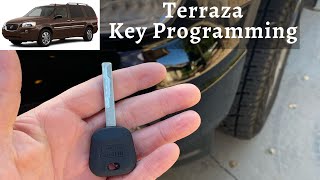
Typical fix: Replace the faulty key (a common blank is B111-PT) and have it cut. 🎬 Watch: How to program a new transponder key yourself. Then perform the 30-minute relearn procedure to program the new key.
Est. part cost: $70-$120 - Key Has Lost Synchronization (Requires Relearn) 🟡 Medium Probability The security system can lose synchronization with the key after a battery replacement, jump-start, or a period of low battery voltage. A user on an Edmunds.com forum with a Chevy Uplander traced a persistent 'Service Theft System' message to faulty factory battery terminals causing unstable voltage.
How to confirm: Attempt the 30-minute relearn procedure. If the procedure completes successfully and the vehicle starts, this was the issue. A battery charger is recommended during this process.
Typical fix: Perform the 30-minute, 3-cycle key relearn procedure. Note that this procedure will erase all previously learned keys from the vehicle's memory.
Est. part cost: $0 - Faulty Ignition Lock Cylinder / Passlock Sensor ⚪ Low Probability The exciter coil (antenna) that reads the key's transponder chip is housed in the ignition lock cylinder. This component can fail, or the thin wires leading from it can break, preventing the key from being read correctly.
How to confirm: If a spare key and the relearn procedure both fail, the lock cylinder is the next likely suspect. A technician can test 🎬 Watch: Step-by-step guide to replacing the ignition lock cylinder. for a signal from the cylinder with a scan tool or check for continuity in the wires.
Typical fix: Replace the ignition lock cylinder and perform a key relearn procedure.
Est. part cost: $100-$250
Rare But Worth Checking
- Faulty Body Control Module (BCM): In some cases, the BCM itself may be the root cause, failing to correctly process the signal. One forum user noted a faulty BCM created a 'broadcast storm' of bad data, causing numerous codes including security lockouts. This is an expensive last resort that requires professional diagnosis and programming.
- Poor BCM Connections or Grounds: Corrosion on the BCM connector pins or a bad ground connection can create high resistance and disrupt the signal from the key. For the Terraza and its platform mates, the BCM is under the driver's side dash, and a key ground point is G201, located nearby on the left side of the instrument panel.
Diagnosis Steps
- Check for the 'SECURITY' light on the dashboard. If it's on or flashing, it confirms a theft-deterrent issue.
- Remove all other keys, fobs, and RFID cards from the keychain to eliminate Radio Frequency Interference (RFI) as per TSB #PIC5650M.
- Try starting the vehicle with a known-good spare key. If it starts, the primary key is faulty.
- Ensure the vehicle battery is fully charged (above 12.4V) and terminals are clean and tight. A low or unstable voltage can cause security system errors.
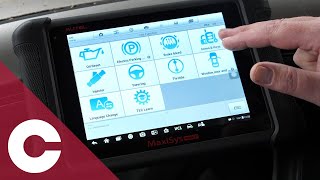
- Perform the 30-minute key relearn procedure: Turn the key to 'ON' (do not start), wait for the security light to go out (approx. 10 minutes), turn the key 'OFF' for 5-10 seconds. Repeat this process two more times for a total of three 10-minute cycles. After the third cycle, the key should be learned 🎬 See a demonstration of the 30-minute security relearn procedure. and the vehicle should start.
- If the relearn fails, use a scan tool to confirm B3060 and check for other codes like B3055 or B3935.
- If all other steps fail, inspect the wiring from the ignition lock cylinder for damage. If wiring is intact, the ignition lock cylinder is the most likely failed component and may require replacement.
Parts You'll Likely Need
- Transponder Ignition Key
(OEM #B111-PT)— The transponder chip inside the key can fail, preventing it from communicating with the vehicle. This is confirmed if a spare key works.
Trusted brands: ACDelco, Strattec
OEM price range: $70-$120
Aftermarket price range: $40-$80 - Ignition Lock Cylinder with Passlock Sensor
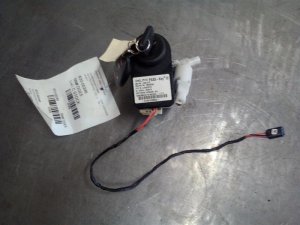
(OEM #ACDelco D1432D / GM 25845213)— This assembly contains the reader coil that energizes and reads the key's transponder. It is the most common hardware failure point when the key itself is not the problem.
Trusted brands: ACDelco (OEM), Strattec (OEM supplier, P/N 704600C), Dorman
OEM price range: $100-$180
Aftermarket price range: $80-$150
Related Codes That Often Appear With This One
- B3055 — B3055 means 'No Transponder Modulation or No Transponder Signal Received'. It often appears with B3060 when the system can't read the key at all, pointing to a dead key chip, a faulty reader coil in the ignition cylinder, or significant RFI.
- B3935 — This code means 'Transponder Authentication Failed' and is part of the same family of security codes, often flagged alongside B3060 when there's a failure in the security handshake between the key and the vehicle.
Technical Service Bulletins (TSBs) & Recalls
- PIC5650M: Addresses intermittent no crank, no start, or start/stall concerns with the security light on, listing B3060, B3055, and B3935. It emphasizes checking for Radio Frequency Interference (RFI) as a primary cause before replacing parts.
Platform-Specific Known Issues
- Per TSB #PIC5650M, this vehicle and its platform mates are highly susceptible to intermittent no-start conditions with code B3060 due to Radio Frequency Interference from other devices on the keychain. This should be the first item checked.
Mechanic-Grade Diagnostic Values
- System Voltage — expected: Greater than 9.0 volts. Failure: If system voltage is below 9.0V, the theft deterrent module may not operate correctly or set false codes.
Hidden / Shadow Codes Worth Checking
- B3060 00: The '00' is a standard GM symptom byte for 'No Sub Type Information'. It signifies that the base code B3060 (Unprogrammed Transponder) contains the complete fault description and no more specific sub-fault was identified by the module. (see via A professional GM-specific scan tool, such as a Tech 2 or GDS2, is required to view symptom bytes.)
Scan Tool Commands That Help
- GM Tech2 / GDS2: Body > Theft Deterrent > Data Display — Use this function to monitor live data parameters like 'TDM Valid Key'. When a known-good key is turned to ON, this should read 'Yes'. If it reads 'No' or the data is blank, it confirms the BCM is not validating the key, pointing to a bad key, a failed exciter coil (in the ignition cylinder), or a wiring issue.
- GM Tech2 / GDS2: Immobilizer Learn / Add or Replace Keys — This is the professional service function used to program new keys to the vehicle's BCM. It is required after replacing the BCM and may be necessary if the standard 30-minute manual relearn procedure fails to resolve the issue.
Wiring & Ground Locations
- BCM (Body Control Module) — Located below the left side of the dashboard, to the left of the steering column.. The BCM is the primary module that manages the Pass-Key III+ anti-theft system. It reads the key data and decides whether to allow the engine to start.
- G201 — A primary ground point located on the left side of the dash support beam, above the BCM.. This is a critical ground point for the BCM. A loose or corroded G201 can cause intermittent BCM failures, leading to false security codes like B3060.
- BCM Connector C1, Pin 21 (Yellow wire) — On the BCM under the driver's side dash.. This is the starter signal wire. The BCM controls the ground for the starter relay. If the BCM does not validate the key, it will not send the signal on this wire to allow the engine to crank.
- BCM Connector C1, Pin 22 (Pink wire) — On the BCM under the driver's side dash.. This is the main ignition 12-volt input to the BCM. Verifying stable power on this pin is a key step in diagnosing any BCM-related issue, including security faults.
Real Owner Repair Stories
- Chevrolet Forum user 'watersteps' (2008 Chevrolet Uplander) — Intermittent no-crank, no-start condition. Turning the key resulted in nothing; no click, no noise, but dash lights worked.
❌ Tried (didn't work) Replacing the CRANK and IGN relays., Removing and testing the starter motor., Using a spare key (ruling out a single bad key).
✅ What actually fixed it The underhood fuse box tray had become partially separated from the main harness connectors below it. The user discovered how to reset the connector locks, allowing the fuse box to be fully seated and snap back into place, which restored the connection and resolved the no-start issue. - Chevrolet Forum user (2008 Chevrolet Uplander) — Click but no crank/no start. Battery voltage was good (12.4V).
❌ Tried (didn't work) Swapping the 'RunRly' and 'IgnMain' relays.
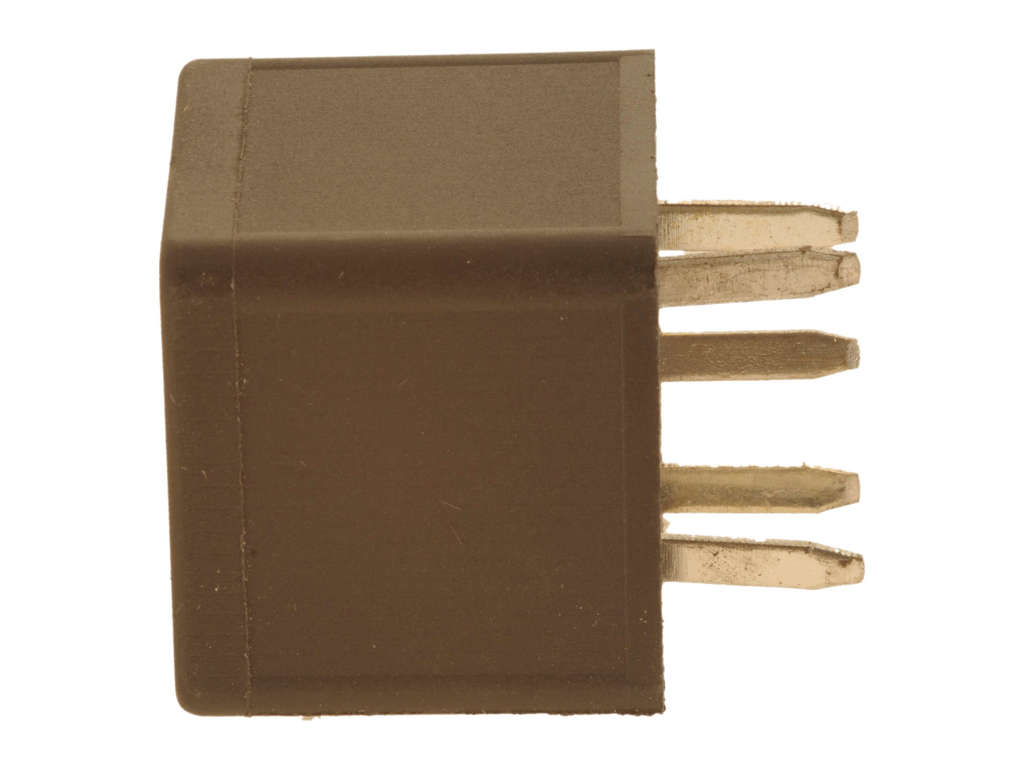
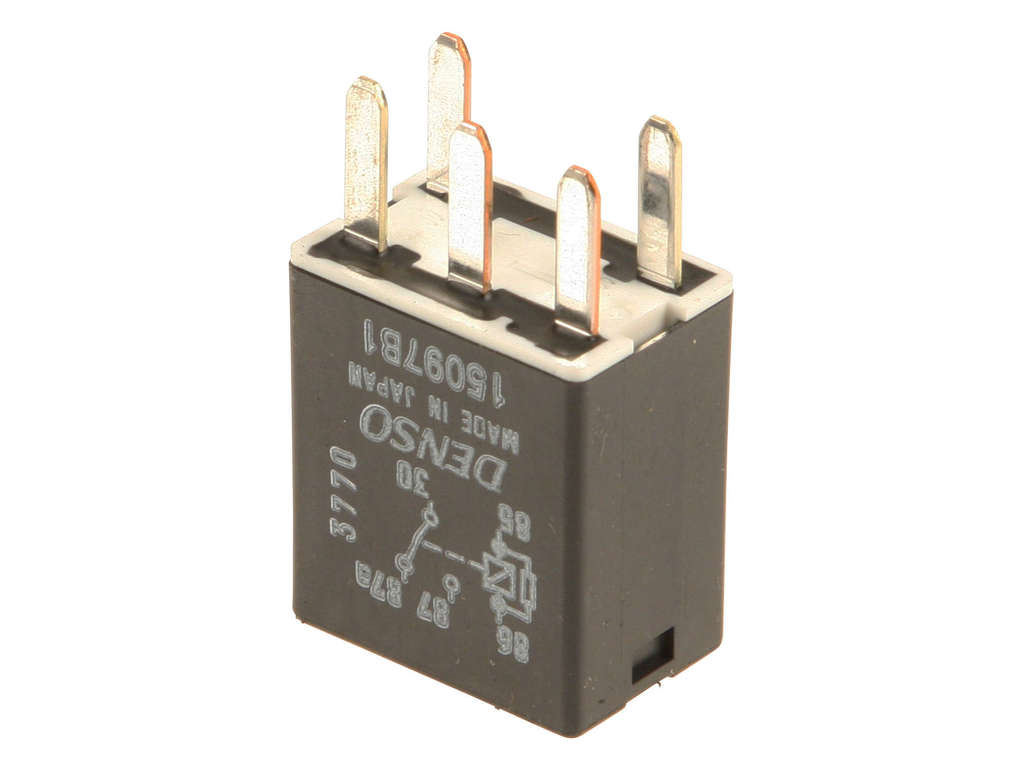
✅ What actually fixed it The user swapped the 'Crnk' (Crank) relay with another identical relay from the fuse box, and the vehicle started. Upon inspecting the original 'Crnk' relay, its internal contacts were found to be dirty. Cleaning the contacts was a temporary fix, and replacing the faulty relay was the final repair.
When the Usual Fixes Don't Work
- While B3060 points directly to the anti-theft system, several owner experiences on platform-mate vehicles (Chevy Uplander) show that the root cause can be more basic electrical issues that mimic a security lockout. In one case, a no-crank condition was ultimately traced to a faulty 'Crank' relay in the underhood fuse box. In another, a more elusive no-crank was fixed by discovering the entire underhood fuse block was not fully seated on its connectors, creating an open circuit. These cases highlight that before replacing expensive security components like the BCM or ignition cylinder, it is critical to verify the integrity of fundamental electrical components like relays and major connection points.
Helpful Videos

Used OEM Parts in Stock
New Aftermarket Parts Available



The information in this article is provided for general reference and educational purposes only. Vehicle specifications, procedures, and part compatibility can vary by production date, trim level, and region. Always consult your vehicle's factory service manual and verify part numbers before purchasing or performing repairs. Safety-critical components such as airbags, seat belts, and braking systems should be installed by a qualified professional.
- Buick TERRAZA:
- 🎬 Helpful Videos
- 🛍️ Shop This Part
- What's Unique About the 2007-2007 Buick TERRAZA
- Diagnostic Flowchart
- Symptoms You May Notice
- Most Likely Causes
- Rare But Worth Checking
- Diagnosis Steps
- Parts You'll Likely Need
- Related Codes That Often Appear With This One
- Technical Service Bulletins (TSBs) & Recalls
- Platform-Specific Known Issues
- Mechanic-Grade Diagnostic Values
- Hidden / Shadow Codes Worth Checking
- Scan Tool Commands That Help
- Wiring & Ground Locations
- Real Owner Repair Stories
- When the Usual Fixes Don't Work
- 🎟️ Get 5% Off